Whitening is straightforward on its own. It becomes complicated the moment there is any other dental work involved, and the sequence errors people make are expensive and entirely avoidable.
The rule that governs everything
Whitening changes natural enamel and does nothing to fillings, crowns, veneers, or bonded composite.
That single fact determines the correct order of operations. Whiten first, wait for the shade to stabilize, then match any restorations to the final result. Do it the other way round and you end up with restorations that read darker than the teeth around them, and the only remedy is replacing them.
The specific mistake to avoid
A patient needs a crown on a front tooth and also wants whiter teeth. The crown is made first, matched to the current shade. Six months later they whiten, and now the crown is conspicuously darker than everything beside it.
The crown cannot be bleached. It has to be remade, at full cost, and the patient has effectively paid twice.
If you are contemplating whitening at any point in the next year or two and restorative work is planned on a visible tooth, say so before the shade is taken. It is a thirty-second conversation that prevents a four-figure problem.
How long to wait between whitening and restoring
Shade continues to settle for a period after whitening finishes, and bonding strength is temporarily reduced immediately afterward because of residual oxygen in the enamel.
Two weeks is a common minimum before taking a final shade or bonding anything. Some dentists prefer longer. Ask, because a restoration matched on the day whitening finishes may end up lighter than the teeth once they settle.
The options, and which suits whom
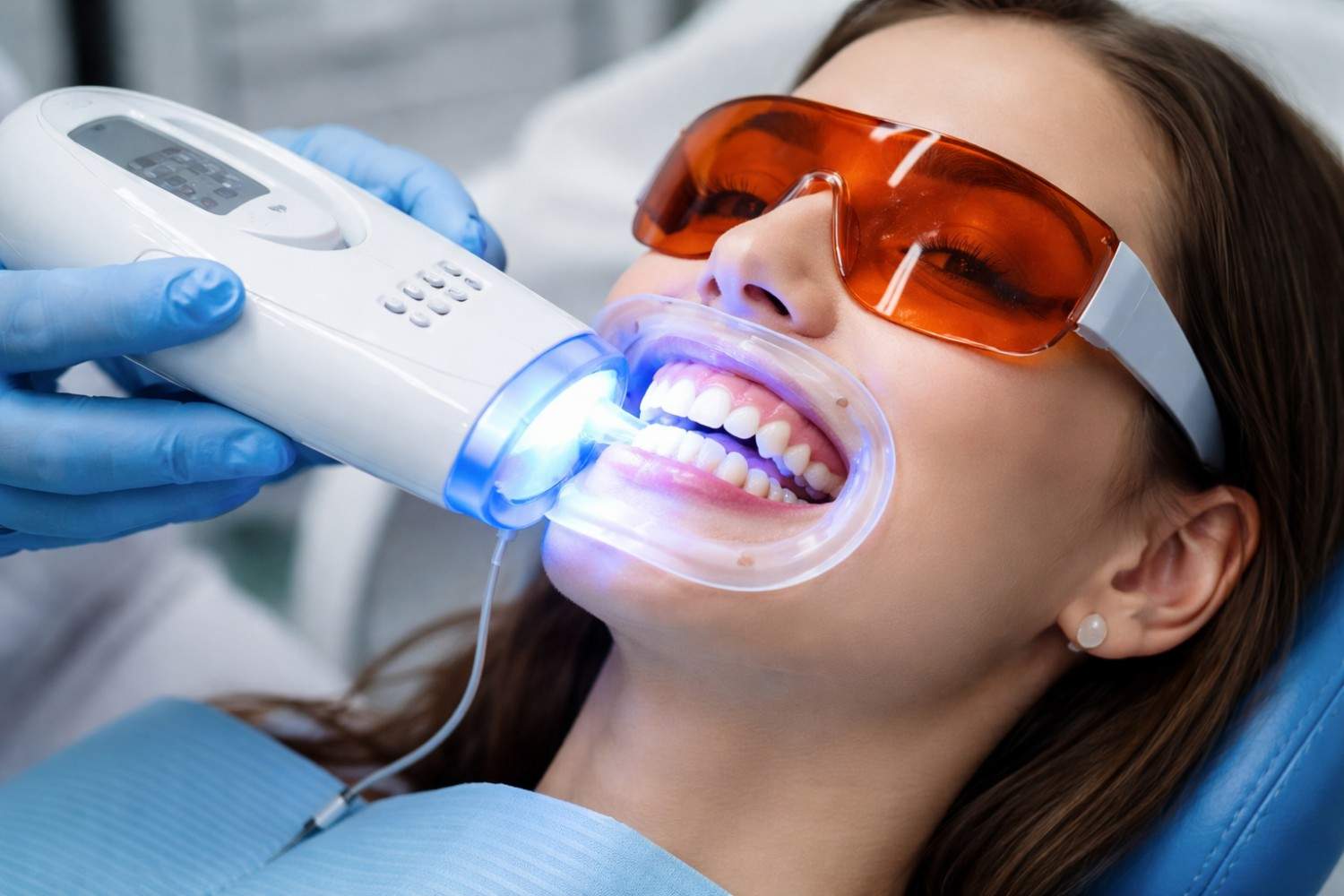
In-office whitening uses a stronger gel with the gums protected and produces a visible result in one appointment. It suits people with a deadline and those who will not persist with trays at home.
Custom take-home trays are made from an impression of your teeth so the gel is held against the surface rather than diluted by saliva. Worn over one to two weeks they achieve comparable results, usually for less, and you keep the trays for touch-ups indefinitely. For most people this is the better value, and the trays are what make maintenance cheap for years afterward.
Many practices combine both: an in-office session for a fast start, then trays for maintenance.
Over-the-counter strips work slowly and unevenly, mostly because they do not fit the teeth and the gel washes away.
What will not respond
Intrinsic discoloration does not bleach. That includes the gray or banded shading from tetracycline exposure in childhood, from excessive fluoride during tooth development, and the darkening of a single tooth years after root canal treatment.
The last one has its own answer: internal bleaching, where the agent is placed inside the tooth rather than on it. It often lightens substantially across a few appointments, costs a fraction of a crown, and removes no tooth structure. It is worth attempting before considering coverage.
Being told at the outset that your discoloration is intrinsic saves a wasted course of treatment.
Sensitivity, managed rather than endured
Temporary sensitivity is common, not evidence of damage, and resolves within days of finishing.
It can be reduced: a potassium nitrate desensitizing gel before and during treatment, shorter wear times, longer gaps between sessions, and sensitivity toothpaste for a couple of weeks beforehand.
Patients with existing recession, exposed root surfaces, or untreated decay feel it considerably more, which is the main argument for an examination before whitening rather than after. Gel reaching a cavity or a leaking margin is genuinely uncomfortable.
Making it last
One to three years is typical, driven mostly by coffee, tea, red wine, and dark sauces.
Rinsing with water after those helps a great deal. Keeping your trays makes touch-ups inexpensive. And avoid brushing immediately after anything acidic, including wine and citrus, since enamel is temporarily softened and brushing then removes more than it cleans. Thirty minutes is enough.
What to avoid entirely
Abrasive and charcoal products remove surface stain by removing surface enamel. The short-term brightening is real and so is the long-term cost, because thinning enamel lets the yellower dentin underneath show through. Enamel does not regenerate.
Whitening around braces and aligners
Another sequencing question worth raising early. Whitening during fixed brace treatment is generally deferred, because the brackets cover part of each tooth and the result is uneven once they come off.
Aligner treatment is different, since the trays come out and can in some cases double as whitening trays. Ask whether that is appropriate for your case, because it can save a separate course of treatment.
Either way, the sensible point to whiten is after orthodontic treatment finishes and before any restorative work is matched.
Getting the sequence planned
If you have any restorative or cosmetic work in mind, raise whitening at the planning stage rather than treating it as a separate decision later.
A local dentist who asks about your whitening intentions before taking a shade is thinking about the whole sequence rather than the appointment in front of them, and that is what keeps you from paying for the same crown twice.

Comments