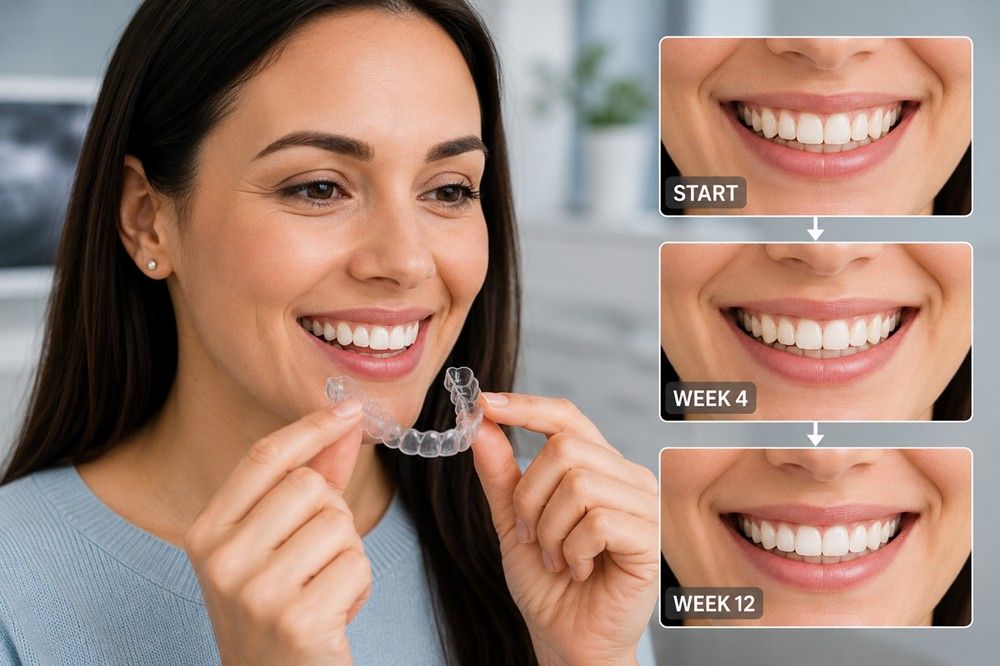
Clear aligners have gone from a niche option to one of the most requested orthodontic treatments for adults. Their appeal is obvious: nearly invisible trays, no brackets or wires, and the freedom to take them out for meals. But aligners are a medical treatment, not a cosmetic accessory, and they work best when patients understand how they function and what they require. This article explains the science behind aligner treatment, what the process involves, and how to tell whether they're right for you.
How Teeth Move
Teeth aren't fixed rigidly in the jaw. Each root is held in its socket by the periodontal ligament, a thin layer of fibers that acts like a shock absorber. When steady, gentle pressure is applied to a tooth, the bone on the pressure side slowly breaks down and new bone forms on the opposite side. The tooth moves a fraction of a millimeter at a time.
Braces create that pressure through brackets and wires. Clear aligners do it through a series of custom plastic trays, each shaped slightly differently from the one before. When you snap in a new tray, it doesn't quite match your teeth, and that small mismatch produces the force that moves them.
From Scan to Trays: The Treatment Process
- Digital scan and records. Instead of messy impressions, most practices use an intraoral scanner to create a detailed 3D model of your teeth. Photos and X-rays check the health of the roots and bone.
- Treatment planning. Software maps out the movement of each tooth from start to finish. The dentist or orthodontist reviews and adjusts the plan, deciding how far each tooth should move per stage and in what order. This clinical judgment is the most important part of the process.
- Attachments. Small tooth-colored bumps may be bonded to certain teeth. They give the aligners something to grip, allowing more complex movements like rotations and tipping.
- Wearing the trays. Patients typically switch to a new set every one to two weeks. Check-ups every six to ten weeks confirm that teeth are tracking as planned.
- Refinements. It's common to need an additional series of aligners near the end to fine-tune the result. This is a normal part of treatment, not a sign that something went wrong.
- Retainers. Once teeth reach their final positions, retainers keep them there.
The 20-to-22-Hour Rule
The single biggest factor in aligner success is wear time. Trays need to be in the mouth 20 to 22 hours a day, which means they come out only for eating, drinking anything other than water, and brushing.
Why is it so strict? Teeth begin to drift back as soon as the pressure is removed. A tray worn only 16 hours a day spends a third of each day letting teeth relax, which slows progress, causes trays to fit poorly, and can lead to extra refinements. Patients who are consistent usually finish on schedule.
Helpful habits include:
- Keeping the case with you at all times
- Brushing or at least rinsing before putting trays back in
- Limiting grazing and sipping sweet drinks throughout the day
- Setting phone reminders for the first few weeks
Who Is a Good Candidate?
Modern clear aligners work well for many common problems:
- Mild to moderate crowding
- Gaps between teeth
- Some overbites, underbites, and crossbites
- Relapse after earlier braces treatment
- Straightening teeth before crowns, veneers, or implants
They may be less suitable for severe crowding, large vertical movements, significant skeletal bite problems, or patients who aren't able to wear them consistently. In those cases, braces may produce a more predictable result.
Before any tooth movement, the gums and teeth need to be healthy. Untreated cavities and gum disease should be addressed first.
Brand Names and What Really Matters
Invisalign is the best-known aligner brand, but it isn't the only one. Several other systems, including some that are provided only through licensed dental professionals, use similar digital planning and custom-fit trays. The brand matters less than two things: the quality of the treatment plan and the clinician supervising it. Aligners prescribed and monitored in person by a dentist or orthodontist, with proper records and regular check-ups, are very different from mail-order systems where no one examines your mouth.
Aligners vs. Braces at a Glance
Clear aligners | Traditional braces | |
Visibility | Nearly invisible | Visible, though ceramic is subtle |
Removable | Yes | No |
Eating restrictions | None, since trays come out | Avoid hard and sticky foods |
Hygiene | Easier to brush and floss | More effort around brackets |
Relies on patient compliance | Heavily | Less so |
Emergency visits | Rare | Occasional broken brackets |
Complex cases | Some limits | Very versatile |
Common Questions
Do aligners hurt? Most people feel pressure for a day or two after switching trays. It's usually milder than the soreness after a braces adjustment.
Will they affect my speech? A slight lisp is common for the first few days and fades as the tongue adjusts.
How long does treatment take? Mild cases may finish in six months. More involved cases often take 12 to 18 months or longer.
Can I drink coffee with them in? It's best to remove them. Hot drinks can warp the plastic, and sugary or acidic drinks trapped under the trays increase the risk of cavities and staining.
Do I need a retainer afterward? Yes. Without one, teeth tend to drift back. Many people wear a clear retainer at night indefinitely.
Caring for Your Aligners
Rinse trays each time you remove them, brush them gently with a soft toothbrush and cool water, and avoid hot water, which can warp them. Always store them in their case. Many lost aligners end up wrapped in a napkin on a restaurant tray.
The Bottom Line
Clear aligners move teeth through the same biology as braces, just with a different tool. They offer comfort, convenience, and discretion, but they only work if worn consistently and supervised by a qualified dental professional. If you're disciplined about wear time and your case is a good fit, aligners can deliver a straighter smile with far less disruption to daily life.

Comments