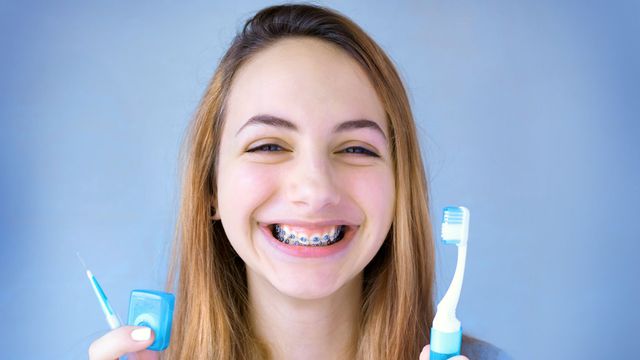
Once the braces are on, the real work begins. Not in the orthodontist's chair, but at home, every single day. As a parent, you play a critical role in making sure your child's treatment stays on track. But here is what I have learned after years of working with families: the parents who succeed are the ones who coach rather than police. There is a meaningful difference between nagging your kid about brushing and equipping them with tools and routines that make good habits natural.
This guide is the practical playbook I wish I could hand every parent on the day their child gets braces. It covers the daily essentials, common problems, and strategies that actually work for real families with busy schedules.
The Daily Brushing Routine
How do kids brush their teeth with braces? The technique matters more than most families realize. Brackets create dozens of tiny ledges where food particles and plaque accumulate, and a quick once-over with a toothbrush leaves most of that buildup in place. The key is angle and attention.
Teach your child to brush at a forty-five degree angle, directing bristles both above and below each bracket. The area between the bracket and the gumline is where most problems develop, so spending extra time there is essential. Then angle downward to clean below each bracket toward the biting edge of the tooth. Each tooth needs individual attention on both the front and back surfaces.
A soft-bristled toothbrush works best. Electric toothbrushes with small round heads are excellent for kids with braces because the rotating motion cleans around brackets more effectively than manual brushing for most children. If your child uses a manual brush, make sure they are spending at least three minutes per session, which is longer than the two minutes typically recommended for patients without braces.
Brushing should happen after every meal, not just morning and night. I know that sounds demanding, especially for school days. A travel toothbrush in their backpack makes lunchtime brushing possible. Even a quick rinse with water after eating is better than nothing when a full brushing session is not feasible.
Flossing With Braces
Flossing is harder with braces, which is exactly why it matters more. The wire connecting brackets prevents regular floss from sliding between teeth the normal way. Your child will need either a floss threader, which feeds floss underneath the wire, or an orthodontic flosser designed specifically for braces. Water flossers are another excellent option that many kids find easier and faster than traditional floss.
I recommend flossing once a day, ideally before bed. It does not need to happen after every meal the way brushing should. But that once-daily session is non-negotiable for preventing cavities between teeth and keeping gums healthy throughout treatment.
For younger children or those with limited dexterity, a water flosser can be a game-changer. The pulsing stream of water dislodges food and reduces plaque in areas that are nearly impossible to reach with string floss alone. It is not a complete replacement for traditional flossing, but it is far better than no interproximal cleaning at all.
When Something Breaks
What happens if my child breaks a bracket? First, do not panic. Broken brackets are one of the most common occurrences in orthodontic treatment, and they are almost never an emergency. The bracket may slide along the wire or hang loose, and while it can be annoying, it is not usually painful or dangerous.
Call your orthodontist's office during business hours to schedule a repair. If the broken bracket is causing irritation, orthodontic wax pressed over it will provide immediate relief. If a wire is poking out and causing discomfort, you can use a clean pencil eraser to gently push the wire flat against the teeth, or cover the end with wax until your repair appointment.
The situations that do require prompt attention include a wire that has come completely out of the last bracket and is poking into the cheek or gum, swelling or signs of infection around a bracket site, or significant pain that does not respond to over-the-counter medication. These are uncommon, but knowing the difference between a minor annoyance and something that needs same-day attention gives parents peace of mind.
I tell families that one or two broken brackets over the course of treatment is normal. More than that, and we should talk about whether certain food habits or activities are contributing to the problem.
Making Habits Stick
The biggest challenge for most families is not knowing what to do. It is doing it consistently for months or years. Here are strategies that I have seen work in real households.
Routine anchoring is powerful. Attach brushing to something your child already does without thinking. If they always shower before bed, brushing happens immediately after the shower. If they eat breakfast at the same time each morning, brushing follows within five minutes. Connecting new habits to established ones dramatically improves consistency.
Visible supplies matter more than you might think. A dedicated caddy on the bathroom counter with their orthodontic toothbrush, floss threaders, wax, and mouthwash serves as a visual cue. When everything is out and organized rather than buried in a drawer, the barrier to compliance drops significantly.
For younger children, a simple chart or sticker system can provide motivation during the first few months until the habit becomes automatic. For teenagers, I find that showing them photos of what happens when braces hygiene is neglected, white spots and decalcification marks, tends to be more motivating than any reward system. Teens care about how their teeth will look after braces come off, and that vanity can be channeled productively.
Diet Reminders Without the Power Struggle
Food rules with braces are a common source of parent-child conflict. My advice is to set clear expectations once, stock your home with braces-friendly options, and avoid turning every snack choice into a confrontation.
Keep cut fruit, soft granola bars, yogurt, string cheese, and other easy options visible and accessible. If the convenient choices in your kitchen are all braces-safe, your child will naturally reach for them most of the time. You cannot control what they eat at a friend's house or at school, but you can control what is available at home.
When they do eat something questionable and nothing breaks, resist the urge to lecture. A calm reminder is fine. A repeated lecture creates resentment and makes your child less likely to tell you when something does go wrong. Trust me on this one. I have seen the pattern many times.
Keeping Appointments on Track
Regular adjustment appointments, typically every four to eight weeks, are essential for treatment progress. Missing or repeatedly rescheduling appointments extends treatment time, sometimes significantly. Build these appointments into your family calendar as non-negotiable commitments, similar to how you would treat a recurring medical appointment.
Many orthodontists offer after-school or early morning slots specifically for student patients. If scheduling is a challenge, ask about available times that minimize school absences. Some offices also provide reminder systems via text or email that help busy families stay organized.
Your child's orthodontist is your partner in this process. If something is not working, whether that is compliance with rubber bands, frustration with hygiene, or concerns about treatment progress, bring it up at appointments. We would rather hear about problems early than discover them months later when they have become harder to fix. Open communication between parents, patients, and the orthodontic team is what produces the best outcomes.

Comments