Not All Orthodontic Problems Are Created Equal
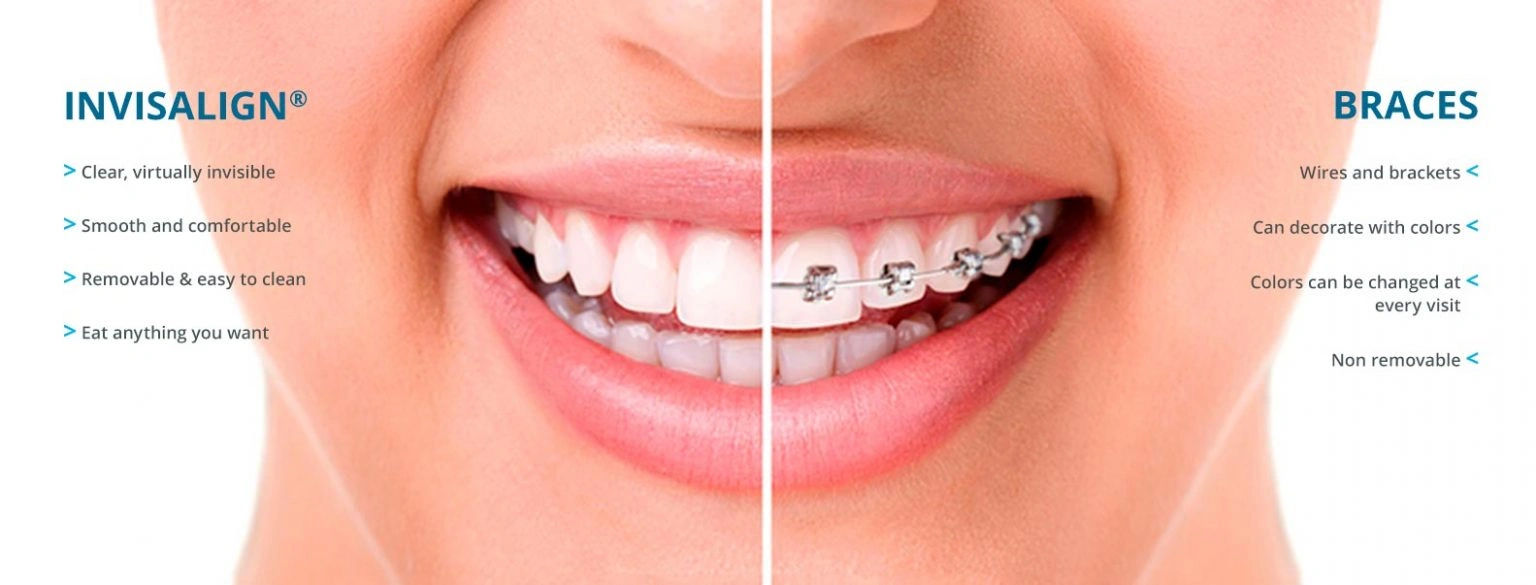
Straightening teeth is one thing. Correcting a bite is something else entirely. I make this distinction early with every patient because it fundamentally affects which treatment approach will work best. Cosmetic alignment, making teeth look straight from the front, is something Invisalign handles beautifully in nearly all cases. But bite correction involves changing how your upper and lower jaws relate to each other, how teeth come together when you chew, and how forces distribute across your entire dental arch. That is a more complex engineering challenge.
Can Invisalign fix an overbite? Yes, in many cases it can. But the type of overbite, its severity, and its underlying cause all influence whether aligners alone will do the job or whether traditional braces offer a more predictable path. I want to give you an honest framework from an orthodontist perspective for understanding when Invisalign excels at bite correction and when it has limitations.
Types of Bite Problems
An overbite refers to excessive vertical overlap of the upper front teeth over the lower front teeth. A moderate overbite, where the upper teeth cover fifty to seventy percent of the lower teeth, is quite common and often treatable with Invisalign. The aligners use intrusion mechanics, gradually pushing the front teeth up into the bone, combined with attachments that provide the necessary grip for vertical tooth movement.
An overjet is different from an overbite, though patients often confuse the two. Overjet refers to the horizontal distance between the upper and lower front teeth. When upper teeth protrude significantly forward, that is an overjet problem. Invisalign can address mild to moderate overjet effectively, particularly when the issue is dental rather than skeletal in origin.
Underbites, where the lower teeth sit in front of the upper teeth, are more challenging for clear aligners. Mild dental underbites, caused by tooth positioning rather than jaw growth discrepancy, can sometimes be treated with Invisalign. Skeletal underbites, where the lower jaw itself has grown too far forward relative to the upper jaw, typically require braces, sometimes in combination with jaw surgery.
Crossbites occur when some upper teeth sit inside the lower teeth rather than outside. Posterior crossbites affecting back teeth can be treated with Invisalign if the issue is dental tipping rather than a true skeletal width discrepancy. Anterior crossbites of one or two teeth often respond well to aligner treatment.
Open bites, where the front teeth do not touch when the back teeth are together, are historically one of the most challenging problems for any orthodontic appliance. Interestingly, Invisalign has shown surprising effectiveness for certain types of anterior open bites because the plastic covering the back teeth can act as a bite block, allowing the front teeth to erupt and close the gap. This is an area where aligners sometimes outperform braces.
Where Invisalign Excels
Is Invisalign as effective as braces for bite problems? For certain bite issues, it is equally effective and sometimes even advantageous. Mild to moderate overbites respond well to Invisalign when the treatment plan includes precision-cut attachments and carefully sequenced movements. Class II corrections using elastics, rubber bands that hook from upper to lower aligners, have become increasingly reliable.
Invisalign also works well for bite problems that require intrusion of teeth, meaning pushing teeth deeper into the jawbone. The full coverage of the aligner acts as a platform for intrusive forces that are actually quite difficult to achieve with traditional braces without additional hardware. For patients with deep bites who have worn down their front teeth, Invisalign can open the bite effectively while simultaneously straightening the teeth.
Another area where aligners shine is in treating posterior open bites and uneven bite planes. The material itself acts therapeutically; by covering the biting surfaces, it controls which teeth are in contact and which are free to erupt or intrude.
Where Braces Still Have the Edge
Braces maintain advantages in several specific clinical scenarios. Significant anteroposterior jaw discrepancies, where the upper and lower jaws are substantially misaligned front to back, often require the heavier forces and more precise three-dimensional control that fixed brackets and wires provide. Cases requiring significant vertical movement of back teeth, such as molar uprighting or impacted tooth guidance, are more predictable with braces.
Complex cases requiring extractions for bite correction also tend to favor braces, particularly when large spaces need to be closed. While Invisalign can close extraction spaces, the mechanics of sliding teeth along an arch are more straightforward with a continuous archwire. The control over root positioning during space closure is generally more precise with brackets.
Severe rotations of premolars and canines, situations requiring torque control of root angles, and cases with significant skeletal components are all areas where I am more likely to recommend traditional braces. This is not a criticism of Invisalign. It is simply an honest assessment of where each tool performs best.
The Hybrid Approach
Something I discuss with patients more frequently now is the hybrid treatment approach. This involves using braces for one phase of treatment, typically the heavy mechanical movements and bite correction, and then transitioning to Invisalign for the finishing and detailing phase. Or vice versa: starting with aligners to address alignment and then using short-term fixed appliances to fine-tune the bite.
I had a patient last year with a significant Class II bite and moderate crowding. We used Invisalign with elastics for the first twelve months to address the crowding and begin the bite correction, then placed partial braces on the upper arch for four months to achieve the final bite precision we wanted. The patient was thrilled because she had braces for only a short period, and the overall result was excellent.
Making the Right Decision
The most important factor in choosing between Invisalign and braces for bite correction is an accurate diagnosis. Not all overbites are the same. Not all underbites have the same cause. A thorough evaluation that includes photographs, digital scans, and radiographs allows your orthodontist to determine exactly what type of movement is needed and which tool will accomplish it most efficiently.
I encourage patients to ask their orthodontist specific questions. What type of bite problem do I have? Is it dental or skeletal? What movements are required to correct it? Are those movements within the predictable range for aligners? If there is any doubt, what is the backup plan? A good orthodontist will welcome these questions and give you honest answers rather than defaulting to one approach for every patient.
Both Invisalign and braces are extraordinary tools, and the best orthodontic outcome comes from choosing the right tool for the specific job. Sometimes that is aligners. Sometimes that is braces. Sometimes it is a combination. The goal is always the same: a healthy, functional bite and a smile you love.

Comments