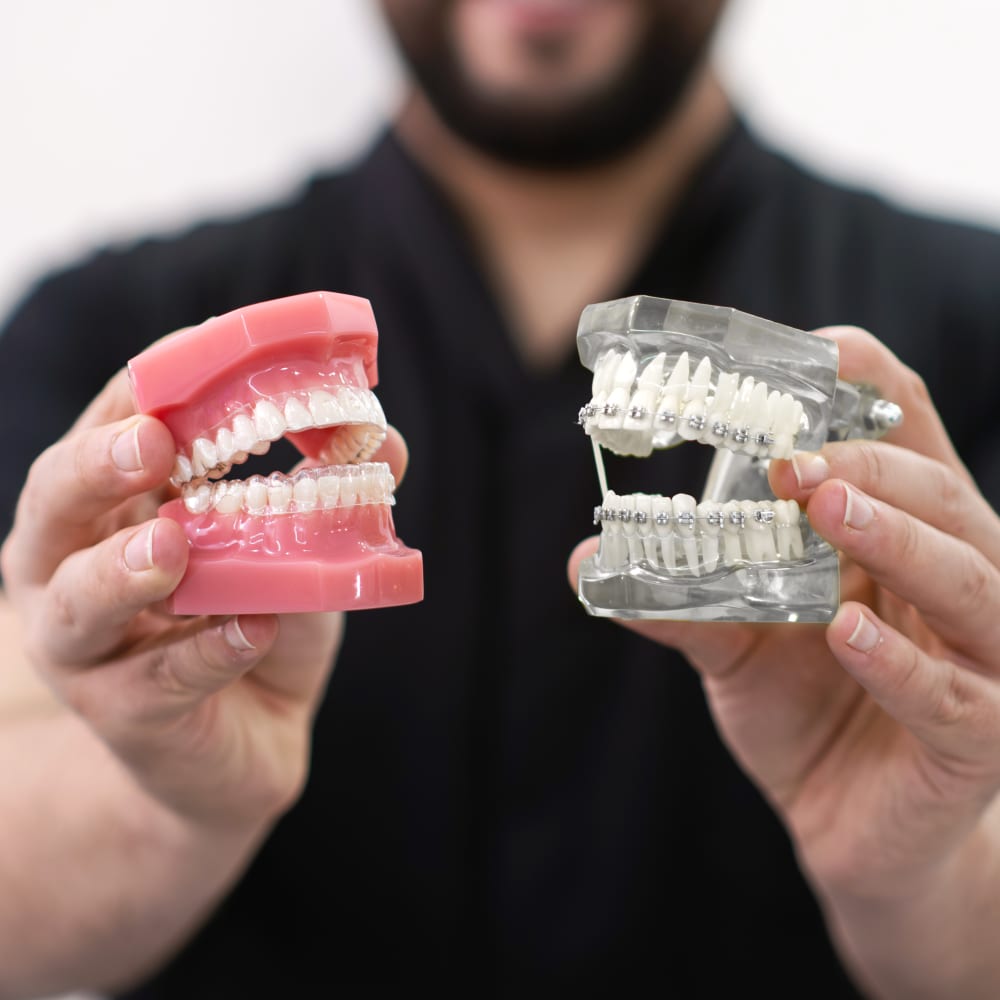
Straightening your teeth is an investment, and protecting that investment along the way takes a little more effort than ordinary brushing. Orthodontic appliances create new nooks and surfaces where food and plaque can hide, which means the months of treatment are exactly when careful hygiene matters most. The good news is that with a few solid habits, you can finish treatment with teeth that are not just straight but genuinely healthy.
Braces are the bigger challenge for cleaning, simply because there is more to clean around. Brackets and wires trap food in ways that bare teeth never do, and the areas around each bracket are prone to plaque buildup. Left alone, that plaque can leave permanent white marks on the enamel, the kind that become obvious only after the braces come off. Nobody wants straight teeth marked by the very treatment that aligned them.
Brushing with braces takes more time and a better technique. The goal is to clean above, below, and around each bracket, not just sweep across the front. Many people find that angling the brush toward the gumline and then toward the chewing surface, working in small sections, does the job. An electric brush can help, but a manual one used carefully works perfectly well. The key is patience, since a rushed thirty seconds will not reach where it needs to.
Flossing is the step people are most tempted to skip with braces, and it is the one that matters a great deal. The wire blocks the normal motion, so you need a floss threader or special orthodontic floss to get underneath it and between the teeth. A water flosser is another excellent tool that many brace wearers swear by, since it flushes out debris around brackets that string floss struggles to reach. Whatever the method, cleaning between the teeth daily is not optional.
Aligners change the hygiene picture but do not remove the responsibility. Because you take them out to eat, you can brush and floss normally, which is a real advantage. The catch is that you must clean your teeth before putting the trays back in. Sealing food and sugar against your teeth under a snug plastic tray for hours is a recipe for decay. Carrying a travel brush for meals away from home solves most of this.
The trays themselves need care too. Rinse them whenever they come out, clean them gently with a soft brush, and avoid hot water that can warp the plastic. Cloudy, smelly aligners are a sign they are not being cleaned often enough. A good local orthodontist will show you exactly how to keep both your teeth and your trays in good shape, and following that guidance keeps treatment on track.
Diet deserves attention during treatment regardless of which appliance you wear. With braces, hard and sticky foods can break brackets or bend wires, leading to extra visits for repairs that slow your progress. With aligners, frequent snacking means frequent removal and cleaning, which gets tiresome and tempts people to cut corners. Being a little more deliberate about what and when you eat pays off in fewer setbacks.
Regular dental cleanings remain important throughout orthodontic treatment, not just the orthodontist visits. Your general dentist and hygienist can reach buildup that is hard to manage at home and can catch early signs of trouble before they grow. Keeping up with these cleanings on schedule, in addition to your adjustment appointments, gives your teeth the best protection during a vulnerable stretch.
Discomfort after adjustments or new aligner trays is normal and temporary, and it should not become an excuse to brush less. If anything, gentle, thorough cleaning helps. Sore spots from a bracket or wire can be soothed with orthodontic wax, and any persistent irritation or a broken appliance is worth a call to your provider rather than waiting it out and risking a delay in your progress.
One habit that makes a surprising difference is keeping a small dental kit with you wherever you go. A travel toothbrush, a bit of floss or some interdental brushes, and a little orthodontic wax fit easily into a bag or a desk drawer. With braces, this lets you clear away food after lunch before it has hours to sit against your teeth. With aligners, it means you can always brush before reinserting the trays rather than skipping it because you are away from home. The patients who finish treatment with the healthiest teeth are almost always the ones who made cleaning convenient enough that they actually did it consistently. Relying on willpower alone tends to fail, but reducing the friction so that good hygiene is easy makes it far more likely to happen. Small preparations like this protect the considerable investment you are making in your smile.
The months of treatment pass faster than you expect, and the habits you build during them tend to stick. Patients who commit to careful hygiene throughout almost always finish with a result they are proud of, while those who let it slide sometimes trade crooked teeth for marked or decayed ones. A straight smile is worth having, and protecting it along the way ensures the smile you reveal at the end is as healthy as it is aligned.

Comments