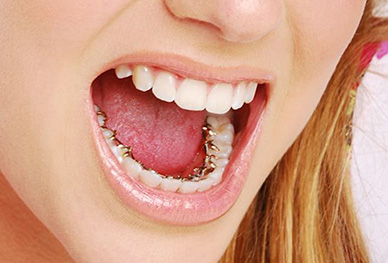
For patients who want their teeth straightened but cannot bear the idea of visible braces, lingual braces offer something genuinely unique. These braces are bonded to the tongue side of the teeth, making them completely invisible from the outside. When I first started offering lingual braces in my practice, I was struck by how emotional some patients became when they realized they could get comprehensive orthodontic treatment without anyone knowing.
Lingual braces are not for everyone, and wearing them is a different experience than wearing traditional braces. I want to give you an honest, detailed look at what to expect.
What Are Lingual Braces
Lingual braces are orthodontic brackets and wires placed on the inner surfaces of the teeth, the surfaces that face the tongue. They work on the same principles as conventional braces: brackets are bonded to the teeth, an archwire connects the brackets, and controlled forces gradually move the teeth into alignment. The difference is entirely in the placement. Because they sit behind the teeth, lingual braces are invisible when you smile, talk, or laugh.
Most lingual systems today use custom-made brackets that are individually designed for each tooth using digital scans and computer-aided manufacturing. This customization is necessary because the lingual surfaces of teeth are far more irregular and varied in shape than the outer surfaces. Off-the-shelf brackets simply do not fit well on the tongue side.
Who Chooses Lingual Braces
In my experience, lingual braces tend to attract adult professionals who need orthodontic treatment but work in industries where appearance matters significantly. I have treated actors, television presenters, executives, and attorneys who all shared the same concern: they did not want anyone to know they were wearing braces.
Lingual braces are also popular among adults who feel they are "too old" for visible braces, even though there is no age limit for orthodontic treatment. The psychological comfort of invisible braces can make a real difference in someone's willingness to pursue treatment they have been putting off for years.
The Adjustment Period
I will be straightforward about this: the first two to four weeks with lingual braces can be challenging. Because the brackets are on the tongue side, your tongue is in constant contact with them. Most patients experience some degree of tongue soreness as the soft tissue adapts to the new hardware. Small sores or irritation spots on the sides and tip of the tongue are common initially.
Speech is often affected in the beginning. Many patients develop a temporary lisp, particularly with "s" and "t" sounds. The tongue needs space to articulate these sounds against the roof of the mouth and the back of the upper front teeth, and the brackets take up some of that space. In my experience, most patients regain normal speech within two to three weeks. A few adjust within days. Reading aloud at home can help speed up the process.
I had a patient who was a high school English teacher. She was nervous about the speech impact, so she scheduled her bonding appointment right before winter break. By the time school resumed in January, her speech was completely back to normal. Planning around the adjustment period like that can make a big difference.
Are Lingual Braces More Painful Than Regular Braces
The discomfort from tooth movement itself is similar with lingual and traditional braces. The forces applied to the teeth are comparable, and the underlying biology is the same. Teeth feel sore and achy for a few days after each adjustment regardless of where the brackets are placed.
Where lingual braces can feel more uncomfortable is in the soft tissue irritation. Traditional braces irritate the lips and cheeks. Lingual braces irritate the tongue. Many patients find tongue irritation more bothersome because the tongue moves constantly during eating, speaking, and swallowing. Orthodontic wax can help cushion rough spots on the brackets, and most patients find that their tongue toughens up and adapts within the first month.
After the initial adjustment period, the majority of my lingual braces patients report that the braces become a background presence. They are aware of them, but the discomfort fades to something very manageable.
Eating and Oral Hygiene
Eating with lingual braces follows the same general rules as eating with traditional braces: avoid hard, sticky, and crunchy foods that could break a bracket. The difference is that food tends to get caught on the tongue side of the teeth, where it is harder to see and sometimes harder to reach with a toothbrush.
Oral hygiene with lingual braces requires extra diligence. Brushing the inner surfaces of the teeth is already the part of brushing that most people do least thoroughly, and having brackets there makes it even trickier. I recommend that my lingual patients invest in a good electric toothbrush, use interdental brushes to clean around each bracket, and consider a water flosser to flush out debris. The effort is greater than with traditional braces, but patients who commit to the routine maintain excellent oral health throughout treatment.
Treatment Time and Effectiveness
Lingual braces can treat the same range of orthodontic problems as traditional braces. They are effective for crowding, spacing, overbites, underbites, open bites, and crossbites. In skilled hands, the results are equivalent to what you would achieve with brackets on the outside of the teeth.
Treatment time with lingual braces is generally similar to traditional braces, though some cases may take slightly longer. The mechanics of working on the tongue side can be more complex, and adjustment appointments tend to take a bit more time for the orthodontist. Access is more limited, and the margin for error in bracket placement is tighter.
Cost and Availability
Lingual braces are typically the most expensive fixed orthodontic option. The custom brackets, the specialized training required, and the longer chair time all contribute to a higher price tag. Depending on the case and the practice, lingual braces can cost significantly more than traditional or ceramic braces.
Not every orthodontist offers lingual braces. The technique requires additional training beyond standard orthodontic residency, and many practitioners choose not to pursue it. If lingual braces interest you, look for an orthodontist who has specific experience and training in lingual techniques.
Is It Worth It
For patients who truly cannot accept visible braces, lingual braces are a remarkable option. The adjustment period is real, the hygiene demands are higher, and the cost is greater. But the ability to go through comprehensive orthodontic treatment without anyone seeing your braces is something that no other fixed appliance can offer. I have seen lingual braces transform the confidence of patients who would otherwise have avoided treatment entirely, and that makes them well worth having in our toolkit.

Comments