The failures in cosmetic dentistry almost never happen in the chair. They happen in the planning, or in the absence of it, weeks before any tooth is touched. A patient who is unhappy with their result usually got competent execution of a design nobody properly agreed on.
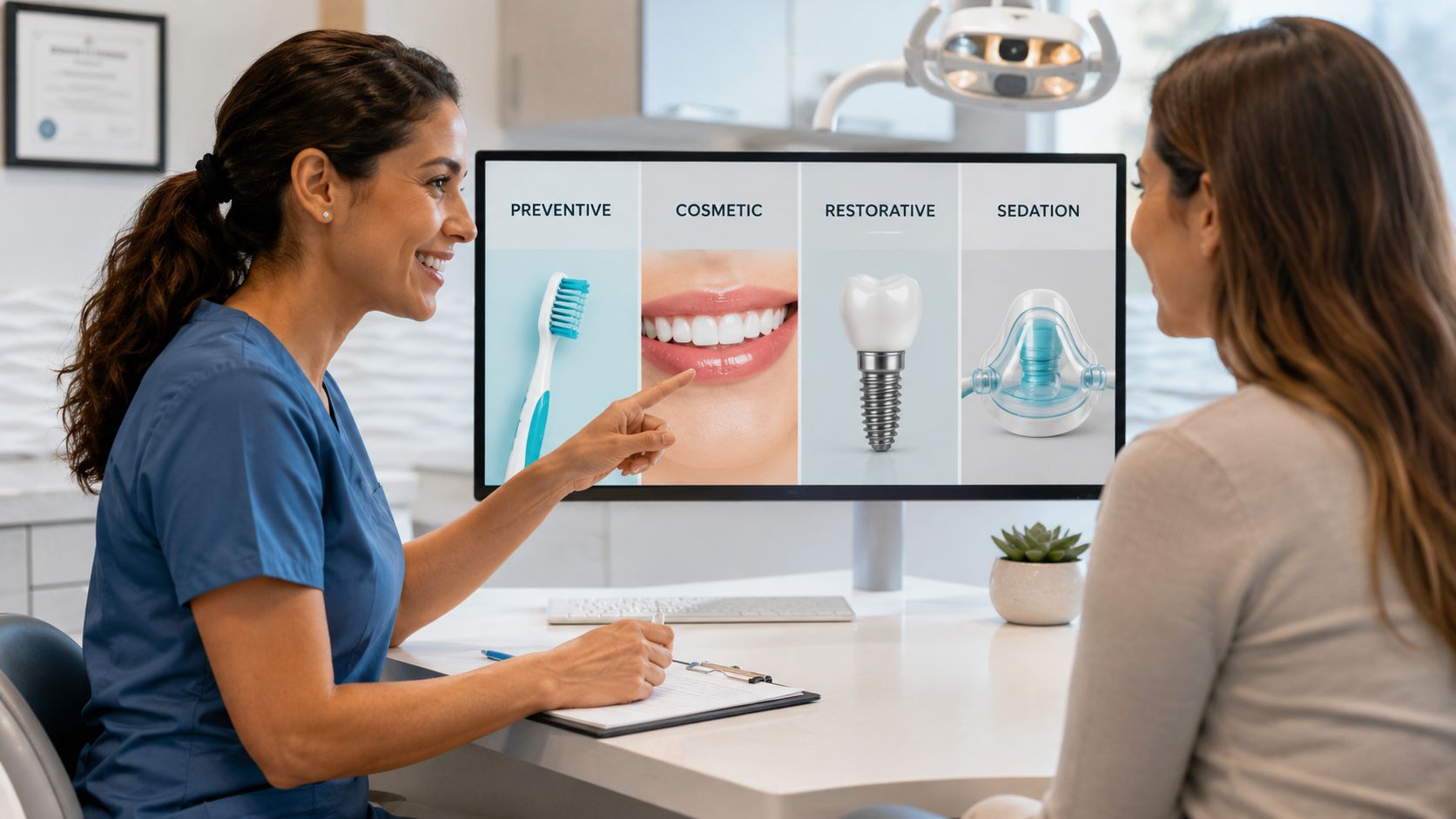
Here is what a well-run cosmetic process looks like before the drill comes out.
The conversation about what is actually bothering you
This sounds obvious and it is skipped constantly. People arrive saying they want a better smile. That could mean color, shape, length, crowding, the amount of gum showing, a single tooth that has always sat oddly, or something about how the smile relates to the rest of the face.
A dentist who starts by asking you to point at what you dislike in a photograph of your own teeth will end up somewhere very different from one who starts by describing a package. If your concern is one discolored front tooth from an old root canal, the answer is likely one crown or internal bleaching, not eight veneers.
Photographs and records
Expect a full photographic series: full face smiling, retracted views of the teeth, close-ups of the front section, and views of how the teeth meet. Expect impressions or a digital scan, and x-rays to confirm that the teeth underneath are healthy enough to restore.
These are not formalities. The photographs are how the dentist assesses tooth proportion, midline, and the relationship between your smile line and your lip. The scan is how the proposed shape gets designed and tested outside your mouth.
The wax-up or digital design
This is the step that separates careful cosmetic dentistry from the rest. Before anything is prepared, the proposed result is built, either physically in wax on a model of your teeth or digitally on a scan.
You should see it. Better still, you should be able to try it. A mock-up can be made from that design and placed temporarily over your existing teeth, without any preparation, so you can look in a mirror, take photographs, show your family, and live with it for a few days.
That trial is where changes are cheap. Wanting the teeth slightly shorter is a five-minute conversation at the mock-up stage and a full remake after the porcelain is bonded.
The health assessment nobody markets
Cosmetic work placed onto an unhealthy foundation fails. Active gum disease has to be treated first, because inflamed tissue recedes and will expose the margins of new restorations within a couple of years. Decay under existing fillings must be addressed. Untreated grinding must be managed.
If your smile concern is partly that your gums show more than you would like, that is a tissue question rather than a tooth question, and the answer may involve gum recontouring rather than restorations. A plan that treats every aesthetic complaint as a porcelain problem is not diagnosing.
Choosing the least invasive option that works
Ranked by how much natural tooth is sacrificed: whitening removes nothing, bonding removes little or nothing, veneers remove a layer of enamel, crowns remove considerably more. A good plan starts at the top of that list and moves down only as far as necessary.
Straightening first often reduces the work needed. A patient with crowded, discolored front teeth might be quoted eight veneers, when six months of aligner treatment followed by whitening and one bonding repair achieves a similar result at lower cost while keeping the teeth intact.
Any plan that jumps straight to the most invasive option without discussing the alternatives deserves a second opinion.
The provisional phase
For larger cases, the teeth are prepared and temporary restorations are placed, made from the approved design. You wear them for a period, and this is your last and best opportunity to identify problems: a tooth that catches your lip, a length that makes speech awkward, an edge that feels wrong.
Report anything that bothers you during this phase. Temporaries are designed to be modified. The final restorations are not.
What it costs to change your mind later
Reversibility is worth pricing into the decision. Whitening can simply be stopped. Bonding can be removed and the tooth returns to roughly its original state. Veneers cannot be undone, and a tooth prepared for one will need a restoration permanently.
That is not a reason to avoid veneers when they are the right treatment. It is a reason to be certain, and to notice when a plan quietly moves you from a reversible option to an irreversible one without that being discussed.
Finding the right practice for this
Ask to see cases the dentist has done personally, ideally with photographs taken years after delivery rather than on the day. Ask how they handle it if you dislike the result at the trial stage. Ask what happens to the fee if the case needs remaking.
Working with a cosmetic dentist who insists on the mock-up stage, even when you are impatient to get started, is a good sign rather than a delay. The practices that skip previews are the ones producing the results people quietly regret.
Cosmetic dentistry done properly is slow at the front end and boring in the middle. That is what makes it look effortless at the end.

Comments