Clear aligners have become popular in recent years, but braces remain the most predictable tool in orthodontics. They can handle severe rotations, significant crowding, and major bite corrections that aligners often cannot manage alone. For patients and parents trying to understand their options, knowing how braces work, which types are available, and what the treatment process involves can make the decision much clearer.
How Braces Move Teeth
Traditional braces are fixed appliances. Small brackets are bonded to each tooth, a thin archwire runs through those brackets, and elastic ties hold the wire in place. The wire applies gentle, continuous pressure, and over time the teeth move into better positions.
Because braces are attached to the teeth, they work around the clock without requiring the patient to remember to wear anything. This is one reason braces are often recommended for younger patients and for cases that require precise control over tooth movement.
Three Types of Braces
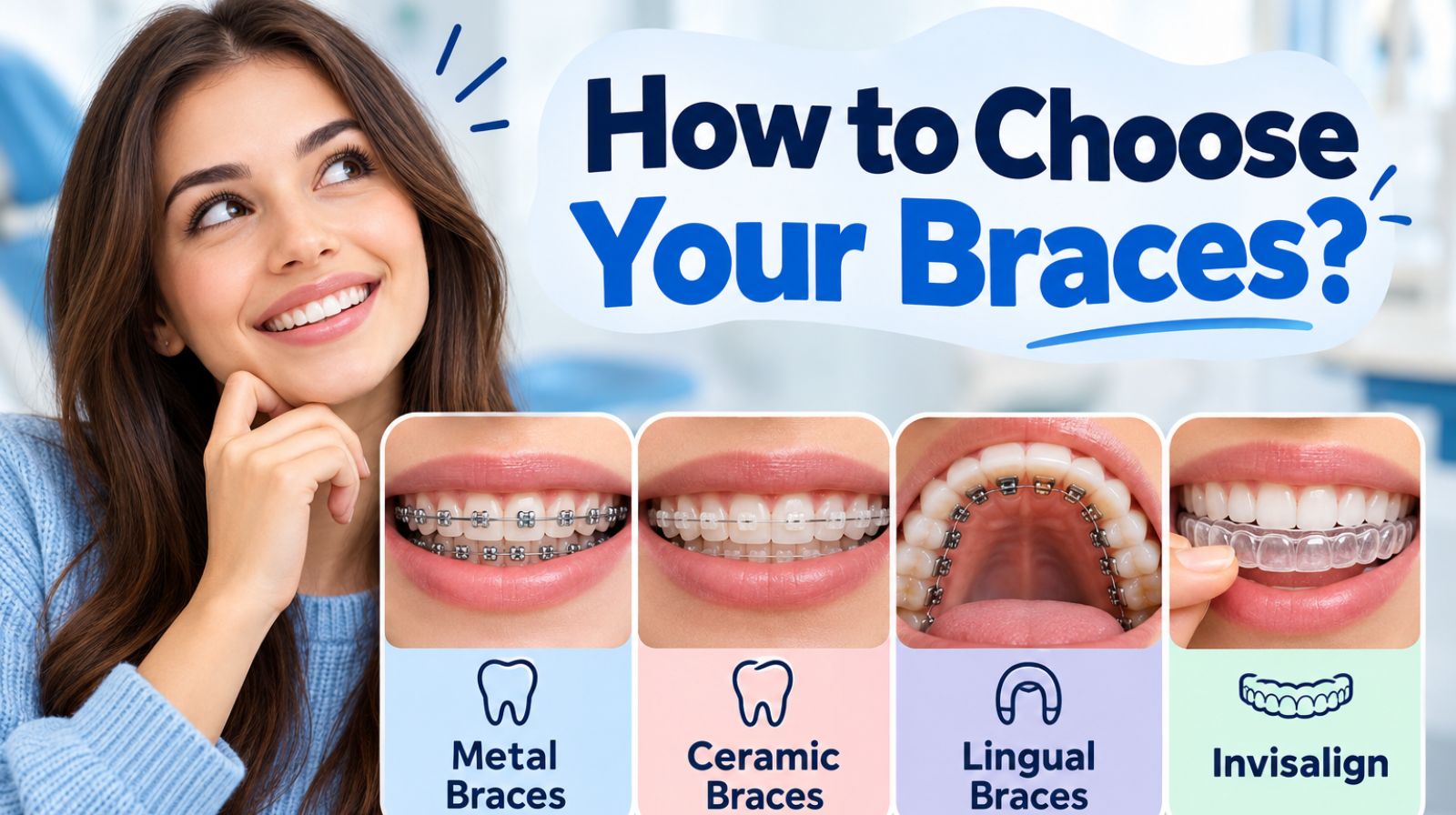
Most modern orthodontic practices offer several braces options. They all rely on the same basic mechanics, but they differ in appearance and placement.
Traditional metal braces use high-grade stainless steel brackets. They are the most versatile option and can handle nearly every case. Many children enjoy choosing new elastic colors at each visit, which adds an element of personal expression to treatment.
Clear ceramic braces use tooth-colored brackets that blend with the enamel. They are less noticeable than metal braces, which makes them a popular choice for adults and image-conscious teens.
Lingual braces use the same components as conventional braces, but they are attached to the back, or tongue side, of the teeth. Because they are hidden behind the teeth, they cannot be seen from the front.
What Braces Can Correct
Braces do considerably more than straighten the front teeth. They are used to correct a wide range of alignment and bite problems, including the following:
Crowding and overlapping teeth.
Gaps and spacing between teeth.
Overbite, where the upper teeth extend too far over the lower teeth.
Underbite, where the lower jaw sits forward past the upper jaw.
Crossbite, where the upper and lower teeth do not line up properly.
Rotated or tipped teeth.
Open bites and deep bites.
Correcting these problems can make teeth easier to clean, improve chewing function, and reduce uneven wear over time.
The Treatment Process Step by Step
Understanding the treatment process helps patients know what to expect from the first appointment to the last.
The process typically begins with a consultation that includes a clinical exam, digital X-rays, and a digital scan of the teeth. Intraoral digital scanning has largely replaced traditional impression trays filled with putty. A small handheld wand captures a precise three-dimensional model of the teeth in minutes. Combined with digital X-rays, which use reduced radiation and provide clear diagnostic images, this approach shortens chair time and supports an accurate treatment plan.
The bonding visit is when the brackets and archwire are placed. This appointment usually takes about an hour to an hour and a half. There are no shots and no drilling. The teeth often feel tender for a few days afterward, and soft foods help during that adjustment period.
Adjustment visits take place roughly every six to eight weeks. During these visits, the orthodontist changes wires, adjusts tension, and checks progress. Most adjustment appointments are quick.
Removal is fast and painless once the teeth have reached their planned positions. After removal, retainers are essential. Teeth have a natural tendency to drift throughout life, and a retainer protects the result.
How Long Treatment Takes
Most braces cases take between 18 and 24 months. Minor crowding may finish sooner, while significant bite correction can take longer. A realistic timeline depends on the complexity of the case and how consistently the patient follows instructions.
Does Treatment Hurt?
Placing braces is not painful. Some soreness usually develops in the first day or two afterward and again briefly after adjustments. Over-the-counter pain relief and soft foods typically manage this discomfort, and it fades as the mouth adapts.
Foods to Avoid
Protecting brackets and wires helps treatment stay on schedule. Patients with braces should avoid hard, sticky, and chewy foods such as ice, hard candy, caramel, gum, popcorn kernels, and whole nuts. Firm fruits and vegetables like apples and carrots should be cut into smaller pieces rather than bitten into directly. A broken bracket usually means an extra visit and can slow progress.
Who Braces Are Right For
The American Association of Orthodontists recommends a first orthodontic evaluation at age seven. Most seven-year-olds do not need treatment yet, but an evaluation at that age allows the orthodontist to see how the jaw is developing. Some problems are far easier to guide early than to fix later.
Braces work well for children, often alongside jaw growth, and for teens, who benefit from an appliance that works whether or not they remember to wear it. Adults are also excellent candidates. Many adults seek treatment because they never had orthodontic care or because their teeth shifted after years without wearing a retainer.
Braces or Clear Aligners?
Braces handle complex movements that aligners may not achieve alone, while clear aligners offer advantages in appearance and allow patients to eat without restrictions. In many cases both are reasonable, and the decision comes down to preference. An honest consultation should explain which option the case actually requires.

Comments