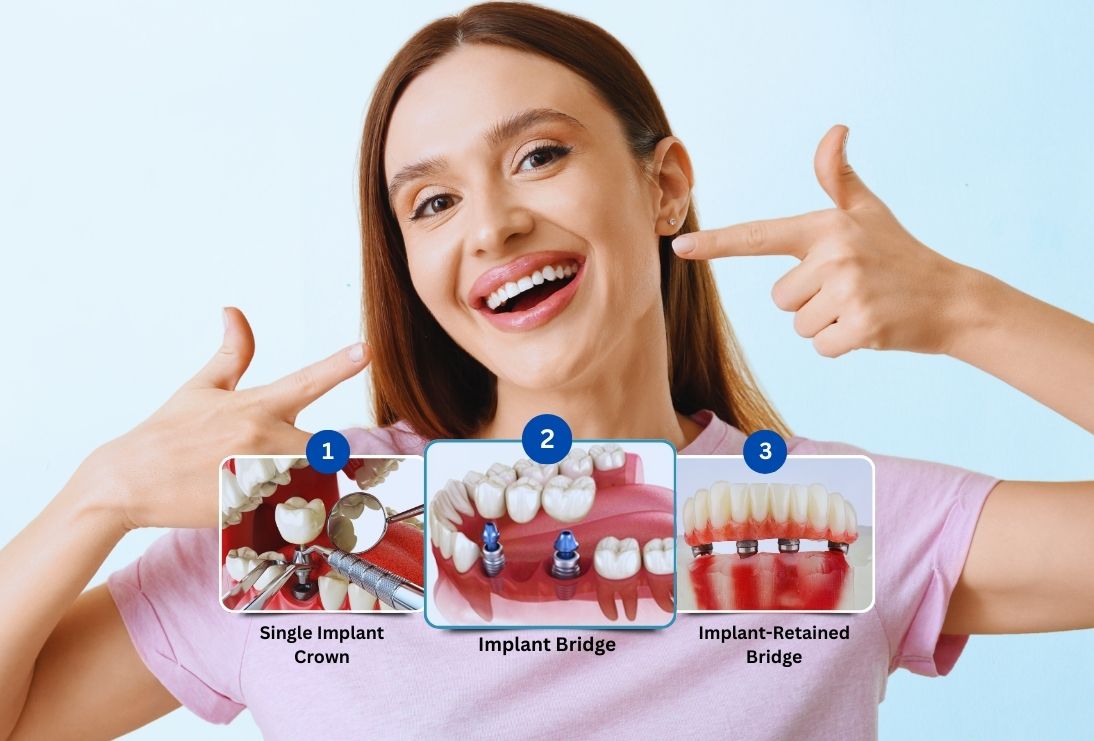
Dental implants are widely considered the most natural-feeling way to replace missing teeth. But many people who come in for an implant consultation hear an unexpected word: grafting. It turns out that the bone under a missing tooth doesn't just sit there waiting. It changes, often dramatically, and that affects whether an implant can be placed. This article explains why bone matters, how grafts and sinus lifts work, and what patients should know before starting treatment.
Why Bone Is the Foundation of an Implant
An implant is a small post, usually titanium, that replaces a tooth's root. After it's placed, the surrounding bone grows onto its surface in a process called osseointegration. Once that bond forms, the implant can support a crown, bridge, or denture under full chewing forces.
For that to happen, the implant needs to be surrounded by enough healthy bone, typically with at least a millimeter or two of bone on every side. Too little height and the implant might reach a nerve or the sinus. Too little width and the implant can be exposed through the side of the ridge.
What Happens to Bone After a Tooth Is Lost
The jawbone around a tooth exists largely to support that tooth. When the tooth is removed, the body no longer gets the stimulation from chewing, and the bone begins to remodel and shrink.
Research has shown that the ridge can lose a substantial share of its width within the first year after an extraction, with most of that change happening in the first few months. Over years, the loss continues. That's why people who have worn dentures for a long time often notice their dentures getting looser and their lower face looking shorter.
Other causes of bone loss include:
- Advanced gum disease
- Infections or cysts
- Trauma to the jaw
- Long-term denture wear
- Developmental conditions
Types of Bone Grafts
A bone graft adds material to the jaw to rebuild lost volume. Over time, the body replaces or incorporates that material with its own bone. Grafts come from several sources:
Autografts use the patient's own bone, often taken from another area of the jaw. They contain living cells and are considered the gold standard for regeneration, but they require a second surgical site.
Allografts come from human donor bone that has been processed and sterilized by a tissue bank.
Xenografts are derived from animal sources, most often bovine bone, and act as a long-lasting scaffold.
Alloplasts are synthetic materials such as calcium phosphate compounds.
Surgeons often combine materials and cover the graft with a membrane that keeps soft tissue out while bone forms underneath. Some practices also use growth factors or platelet concentrates prepared from the patient's own blood to support healing.
Common Grafting Procedures
Socket preservation. Graft material is placed immediately after an extraction to limit the shrinkage that would otherwise occur. It's one of the simplest ways to protect the option of an implant later.
Ridge augmentation. When the ridge is too thin or short, bone is added to rebuild its width or height before or during implant placement.
Block grafts. For larger defects, a solid piece of bone is secured to the jaw with small screws.
Guided bone regeneration. Particulate graft material and a barrier membrane are used to grow bone in a specific area.
The Sinus Lift
In the upper back jaw, the maxillary sinus sits directly above the roots of the premolars and molars. After those teeth are lost, two things tend to happen: the bone shrinks from below, and the sinus expands downward. The result can be only a few millimeters of bone, far too little for an implant.
A sinus lift, or sinus augmentation, solves this by gently raising the thin membrane that lines the floor of the sinus and placing graft material in the space created. There are two main approaches:
- Lateral window technique. A small opening is made in the side wall of the sinus to access the membrane. This is used when a lot of added height is needed.
- Crestal approach. The membrane is lifted through the same site where the implant will go. This is less invasive and used when only a modest increase is needed.
Recovery usually involves some swelling and congestion. Patients are asked to avoid blowing their nose forcefully, sneezing with the mouth closed, and air travel for a short time.
Timing: Staged vs. Simultaneous
Sometimes the graft and the implant are placed in the same appointment. In other cases, the graft is allowed to heal for several months before the implant goes in. Larger grafts and sinus lifts that add a lot of height are more likely to be staged. Healing times commonly range from four to nine months, depending on the size of the graft and the materials used.
Why a Specialist's Experience Matters
Grafting and sinus lifts are technique-sensitive. Planning requires 3D cone-beam imaging to measure bone height, width, density, and the position of nerves and sinuses. Complications such as membrane tears or graft failure are uncommon in experienced hands but more likely without extensive training. A dental implant specialist who performs grafting routinely can often turn a "you're not a candidate" into a workable plan, and can explain realistic timelines and outcomes.
When evaluating a provider, ask:
- How many grafts and sinus lifts do you perform each year?
- Will you take a 3D scan before planning?
- What graft materials do you use, and why?
- Will my graft and implant be placed together or in stages?
- Who designs and makes the final teeth, and is the lab in-house?
Protecting Your Options
If you're facing an extraction and think you might want an implant later, ask about socket preservation at the time the tooth is removed. It's much easier to preserve bone than to rebuild it. And if you've already lost teeth, getting evaluated sooner rather than later limits how much additional bone is lost.
The Bottom Line
Bone loss after tooth loss is normal, but it doesn't have to rule out implants. Bone grafting and sinus lifts are well-established procedures that rebuild the foundation an implant needs. With careful 3D planning and an experienced surgeon, most patients who were once told they didn't have enough bone can still enjoy stable, natural-feeling implant teeth.

Comments