One of the most common questions I get from patients over 40 is whether their age will prevent orthodontic treatment from working properly. I understand the concern. We all know that bones change as we age, and it seems logical that moving teeth through bone would become harder or even risky as the years go by. The reality is more nuanced than a simple yes or no, and I think it is important for patients to understand what actually happens at the biological level when we move teeth.
How Teeth Actually Move Through Bone
To understand how age and bone density factor in, you first need to know the basics of tooth movement. Teeth are not embedded directly in bone like nails in concrete. They are suspended in their sockets by a thin ligament called the periodontal ligament, or PDL. When orthodontic force is applied to a tooth, the PDL on one side compresses while the other side stretches. This triggers a biological response: cells called osteoclasts dissolve bone on the compression side, while osteoblasts build new bone on the tension side. The tooth slowly drifts through the bone as this remodeling cycle continues.
This process works at any age. I have moved teeth successfully in patients in their 70s. The biology does not shut off just because you celebrated a certain birthday. However, the rate and efficiency of this remodeling can change with age, and that is where bone density enters the conversation.
Does Age Affect How Braces Work
Does age affect how braces work? Yes, but perhaps not in the way you might expect. The primary difference is speed. Younger patients, particularly teenagers, have bones that are still developing and remodeling actively. Their cellular turnover is high, which means the osteoclast and osteoblast cycle happens quickly. In adults, especially those over 50, this cellular activity slows somewhat. The result is that teeth may move more gradually, and treatment may take a few additional months compared to the same case in a younger patient.
But slower does not mean impossible, and it does not mean dangerous. In fact, moving teeth slowly and carefully is often ideal because it allows the bone to rebuild properly and reduces the risk of root resorption, which is a slight shortening of the tooth roots that can occasionally occur during orthodontic treatment. Gentle, consistent forces applied over an appropriate timeframe work beautifully in adult bone.
Bone Density and What It Means for Your Teeth
Can you move teeth with less bone density? This is the critical question, and the answer requires some context. Bone density varies throughout the mouth and from person to person. Some adults have dense, thick cortical bone that provides robust support for their teeth. Others, particularly postmenopausal women or individuals with certain medical conditions, may have reduced bone density due to systemic factors like osteoporosis.
Here is the distinction that matters: there is a difference between reduced bone density and reduced bone volume. Density refers to how mineralized and compact the bone is. Volume refers to how much bone is actually present around the teeth. Orthodontic treatment can work with reduced density as long as adequate bone volume exists to support the teeth during movement. When both density and volume are compromised, we need to proceed with extra caution and possibly modify our approach.
I recall a patient in her mid-50s who had been told by another provider that she was not a candidate for braces because of her osteoporosis diagnosis. When I evaluated her, I found that while her systemic bone density scores were low, her jaw bone around the teeth was actually quite adequate. She completed treatment successfully over about 26 months with beautiful results and no complications. The lesson here is that a DEXA scan of your hip or spine does not automatically tell us what your jaw bone looks like.
Medical Conditions That Affect Treatment Planning
Several conditions can affect bone quality in the jaw, and any good orthodontist will ask about them during your initial evaluation. Osteoporosis is the most commonly discussed, but it is not the only factor. Long-term use of certain medications, including bisphosphonates prescribed for bone loss, can actually affect how bone remodels. These medications work by slowing osteoclast activity, which is the very process we rely on for tooth movement. If you take bisphosphonates, your orthodontist needs to know so treatment forces and timelines can be adjusted accordingly.
Diabetes, when poorly controlled, can also affect bone healing and increase the risk of periodontal complications during treatment. Smoking reduces blood flow to the gums and bone, impairing the remodeling process. Vitamin D deficiency, which is remarkably common, can reduce calcium absorption and affect bone quality. These are all manageable factors, not automatic disqualifiers. They simply inform how we approach treatment.
What Your Orthodontist Evaluates Before Starting
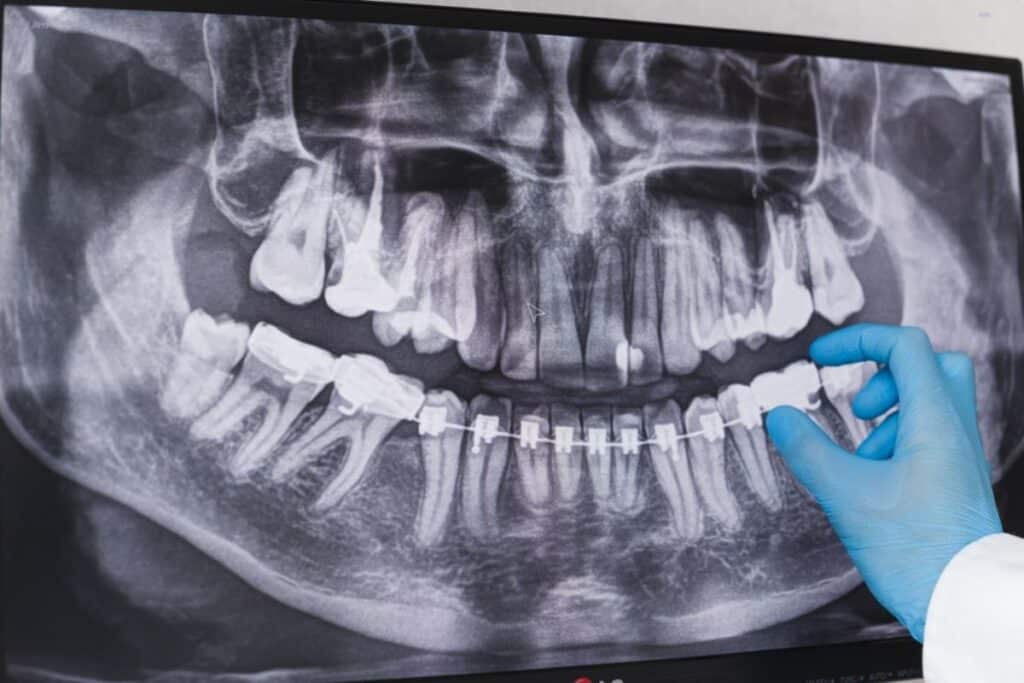
Before beginning treatment on any adult patient, I take a comprehensive set of records that goes beyond what we might need for a teenager. This includes a full-mouth series of dental radiographs to evaluate bone levels around every tooth, a panoramic radiograph to look at overall jaw bone quality, and sometimes a cone-beam CT scan for three-dimensional assessment. I also evaluate the health of the periodontal ligament and gums through probing measurements and clinical examination.
If I see areas of bone loss from previous periodontal disease, those areas need to be stable and well-maintained before we begin moving teeth. Orthodontics and periodontal disease do not mix well. The good news is that once periodontal disease is treated and controlled, orthodontic movement can actually improve bone support in some cases by repositioning teeth into more favorable positions within the bone.
How We Modify Treatment for Bone Concerns
When I treat a patient with bone density concerns, I make several adjustments. First, I use lighter forces. Heavier forces do not move teeth faster; they can actually damage the PDL and surrounding bone. Lighter forces allow for healthier, more predictable remodeling. Second, I extend the intervals between adjustments to give the bone more time to respond and rebuild. Third, I monitor more closely with periodic radiographs to ensure that bone levels remain stable throughout treatment.
I may also coordinate with the patient's physician or periodontist to ensure that any systemic bone health issues are being appropriately managed during treatment. This team approach gives us the best chance of an excellent outcome.
Protecting Your Results Long-Term
One thing adult patients need to understand is that retention after treatment is particularly important when bone density is a factor. Teeth naturally want to drift back toward their original positions, and this tendency can be more pronounced when bone is less dense. Permanent retainers bonded behind the teeth, combined with removable retainers worn at night, provide the stability needed to maintain results for life.
I also encourage my adult patients to maintain excellent oral hygiene, attend regular periodontal maintenance appointments, and address any systemic health factors that could affect their bone over time. Adequate calcium and vitamin D intake, regular exercise, and avoiding smoking all support the bone that holds your newly straightened teeth in place.
The bottom line is this: age and bone density are factors in orthodontic treatment, but they are rarely barriers. With proper evaluation, appropriate force levels, and careful monitoring, adults of nearly any age can achieve the smile they want safely and predictably. If you have been told your bones are too old for braces, I would encourage you to seek a second opinion from an orthodontist who regularly treats adult patients. You might be pleasantly surprised by what is possible.

Comments