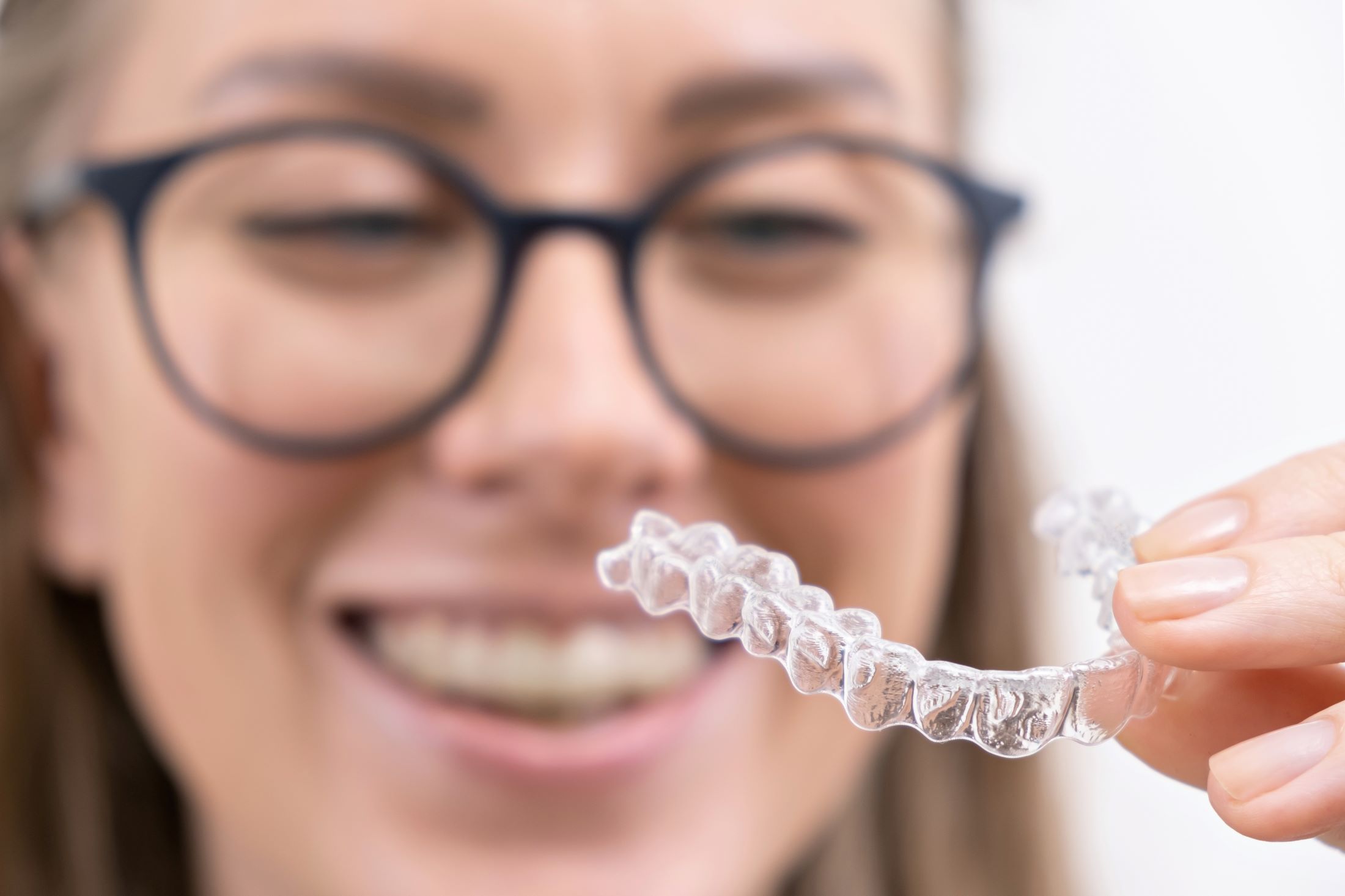
You have worn every single aligner tray in your original set, right on schedule. Your teeth look dramatically better than when you started. And then your orthodontist tells you that you need more aligners. For many patients, this news comes as a surprise, sometimes even a frustration. If the treatment plan said 30 trays, why are there more? The answer lies in a concept called refinement, and it is one of the most important phases of aligner therapy.
What Are Refinement Aligners?
Refinement aligners are additional sets of clear aligner trays prescribed after a patient has completed their initial series. They are designed to address any remaining discrepancies between the planned tooth positions and where the teeth actually ended up. Refinement aligners are not a sign that something went wrong. They are a normal and expected part of the treatment process for the majority of aligner patients.
In my practice, I discuss the possibility of refinement trays with every patient before we even begin treatment. I want people to understand that orthodontic treatment is a biological process, and biology does not always follow a computer model perfectly. The software we use to plan aligner therapy is remarkably sophisticated, but it is predicting how living tissue will respond to forces over months of treatment. Some teeth move exactly as expected. Others move a bit less, or in a slightly different way than predicted. Refinements give us the opportunity to fine-tune those results.
Why You Might Need More Aligners After Your Original Set
There are several reasons why teeth may not reach their ideal positions during the initial set of aligners. One common factor is the biological variability of tooth movement. Different teeth in the same mouth can respond differently to the same type of force. Canines, for example, have long roots and tend to be more resistant to certain movements than lateral incisors. A rotation that was planned to complete in eight trays might only achieve 80 percent of the intended movement, leaving a small discrepancy that needs to be addressed.
Compliance also plays a role. Even diligent patients occasionally fall short of the recommended 22 hours of daily wear. A few days of reduced wear time can accumulate over the course of treatment, leaving certain movements incomplete. Additionally, the physical properties of the aligner material itself can influence outcomes. Aligners lose some of their corrective force as they are worn, which means the last few days in each tray produce less movement than the first few days.
How the Refinement Process Works
When your orthodontist determines that refinements are needed, the process is essentially a mini version of your original treatment setup. New digital scans or impressions are taken of your teeth in their current positions. Your orthodontist evaluates what still needs to change, designs a new set of movements, and orders the refinement trays. The number of refinement trays varies widely depending on what needs to be corrected. Some patients need only three or four trays, while others may need fifteen or more.
I had a patient last year who completed her initial 28 trays with excellent results overall, but one upper premolar had not fully derotated and there was a slight open bite developing between two lower teeth. We took new scans, and her refinement series was just six trays. Those six trays made the difference between a good result and a truly excellent one. She later told me she was glad we took the extra time, because the final outcome exceeded what she had imagined.
How Many Rounds of Refinement Are Typical?
Most patients go through one round of refinements. Some cases, particularly complex ones involving significant crowding, deep bites, or teeth that are resistant to planned movements, may require two rounds. In my experience, it is uncommon to need more than two refinement phases, but it does happen. Each round gets closer to the final goal, and the number of trays in each successive round typically decreases.
The need for multiple refinement rounds is not a reflection of the orthodontist's skill or the quality of the aligner system. It is simply the nature of moving teeth through bone. Even with traditional braces, orthodontists frequently make adjustments and extend treatment to fine-tune the results. The difference with aligners is that each adjustment requires a new set of trays rather than a simple wire change, which can make the process feel more segmented.
Are Refinements Included in Your Treatment Fee?
This varies by practice and by the specific aligner system being used. Many comprehensive aligner treatment packages include refinements as part of the original fee. Some packages include a set number of refinement rounds, while others offer unlimited refinements within a certain timeframe. It is important to ask about this before you begin treatment so there are no surprises. In my office, I make sure patients understand exactly what is and is not included in their treatment fee during the initial consultation.
The Importance of Patience During Refinements
I understand the frustration that some patients feel when they learn they need additional trays. You have already invested months in treatment, and the finish line felt close. But refinements are where the magic of precision happens. The initial series does the heavy lifting, moving teeth from their starting positions into roughly the right area. Refinements handle the detailed work: perfecting rotations, closing tiny residual spaces, making sure the upper and lower teeth fit together properly when you bite, and ensuring the contacts between adjacent teeth are tight and even.
Skipping refinements or rushing through them often leads to results that look acceptable at first glance but do not hold up well over time. Teeth that are not fully in their ideal positions are more prone to shifting after treatment ends, even with retainer wear. Taking the time to get things right during the refinement phase pays dividends for years to come.
Setting Realistic Expectations
The best thing you can do as a patient is enter aligner treatment with realistic expectations about the process. Understand that the number of trays in your initial series is a starting point, not a guarantee of the total treatment duration. Be prepared for the possibility of refinements, and view them not as a setback but as a commitment to precision. Your orthodontist is not prolonging your treatment unnecessarily. They are making sure the final result is one that you will be proud of and that will remain stable for years. The extra weeks or months spent in refinement trays are a small investment compared to the years you will spend enjoying your finished smile.

Comments