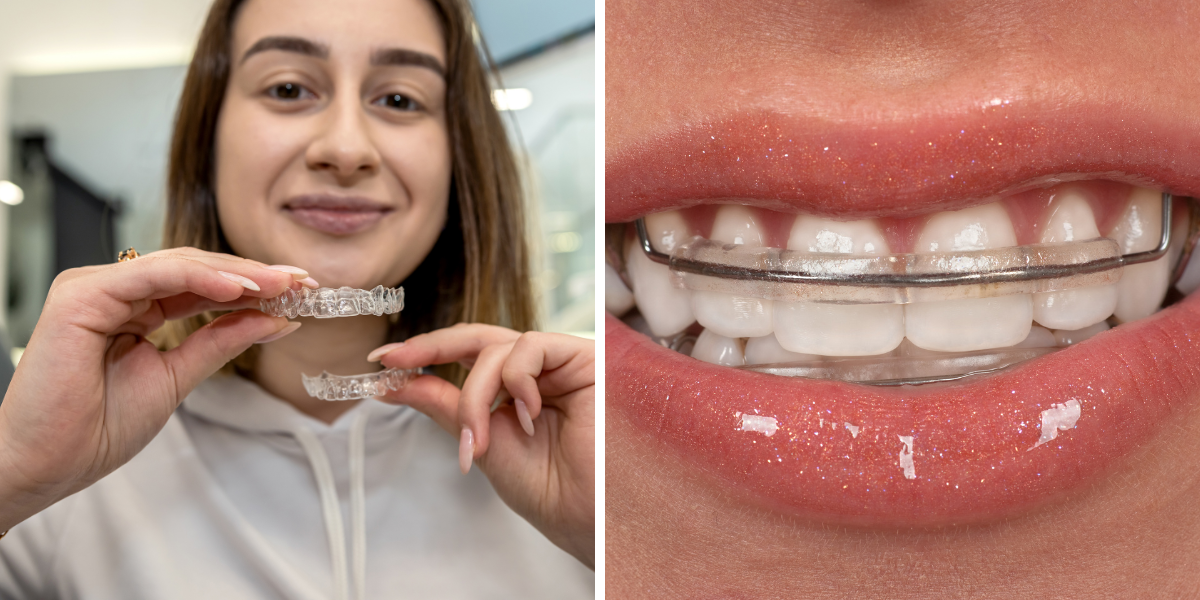
There is a moment of pure relief when braces finally come off or the last aligner tray is set aside. The teeth are straight, the bite feels right, and it is tempting to consider the job finished. But anyone who has been through treatment, or who has watched their own teeth shift after ignoring this advice, knows a hard truth. The result you worked so long to achieve is not permanent on its own. Retainers are what make it last.
To understand why, it helps to know what actually happens during treatment. Teeth are not fixed rigidly in the jaw. They sit in bone, cushioned by ligaments, and orthodontic treatment works by applying steady pressure that gradually remodels that bone and shifts the teeth into new positions. The teeth move because the surrounding tissue adapts, and that is exactly what makes the new arrangement vulnerable right after treatment ends.
Immediately after the braces come off, the bone and ligaments around the newly positioned teeth are still settling. The teeth have a strong tendency to drift back toward where they started, a process orthodontists call relapse. This pull is strongest in the first months and never fully disappears. A retainer holds the teeth in place while the surrounding structures stabilize, and then maintains them over the long term.
There are two main kinds of retainers, and each has its place. Removable retainers are worn on a schedule and taken out for eating and cleaning, which makes them easy to care for but dependent on the patient remembering to wear them. Fixed retainers are thin wires bonded behind the teeth, working quietly around the clock without any effort from the patient, though they require careful cleaning to keep the area healthy.
How long you need to wear a retainer is the question everyone asks, and the honest answer is longer than most people hope. In the beginning, near constant wear is often recommended, gradually tapering to nighttime only. But teeth can shift throughout life, and many orthodontists now advise wearing a retainer at night indefinitely to protect the result. A trusted orthodontist will give you a specific plan based on your case and explain the reasoning behind it.
The most common mistake patients make is treating the retainer as optional once treatment is over. People wear it faithfully for a while, then get casual, then stop. By the time they notice their teeth creeping back out of line, real movement has already happened, and the retainer that once fit no longer does. At that point, getting back on track can mean a new retainer or even a round of touch up treatment.
Caring for a retainer is simple but it does require consistency. Removable retainers should be cleaned gently and regularly, kept away from heat that can warp them, and stored in their case rather than wrapped in a napkin where they get thrown away. Fixed retainers need extra attention with floss threaders or a water flosser to keep plaque from building up around the bonded wire.
Losing or breaking a retainer is common, and the important thing is to act quickly. Teeth can begin shifting within days of going without, so a lost retainer is a reason to call your orthodontist promptly rather than letting weeks slide by. A quick replacement is far cheaper and easier than dealing with teeth that have already moved and need correcting again.
It helps to reframe the retainer not as an afterthought but as the final, essential phase of treatment. The months of braces or aligners moved your teeth into place. The retainer is what makes that investment hold for years and decades. Skipping it is like building a house and then neglecting the foundation, undoing slowly what took so much effort to achieve.
A useful way to think about retainers is to treat the first one you receive as a tool you will likely need to replace over the years rather than a single permanent object. Removable retainers wear out, get lost, or no longer fit perfectly after a long time, and that is entirely normal. Having a fresh one made periodically is far cheaper and simpler than letting your teeth drift while you put it off. Some people keep a spare so that a lost or damaged retainer never means a gap in protection. Whatever approach you take, the goal is continuity, never going long without something holding your teeth in place. Patients who plan for replacement as a routine part of long term maintenance almost never face the disappointment of watching their results slip away. Those who treat the first retainer as the end of the story are the ones who tend to be surprised when their teeth move again.
The encouraging part is that maintaining your results takes so little once the habit is set. A few minutes of wear at night and some basic care is a small price for a smile that stays straight for life. Patients who embrace the retainer as part of their routine rarely think about it after a while, and they get to enjoy the lasting payoff of all that earlier work. The braces get the attention, but the retainer is what makes the result truly yours to keep.

Comments