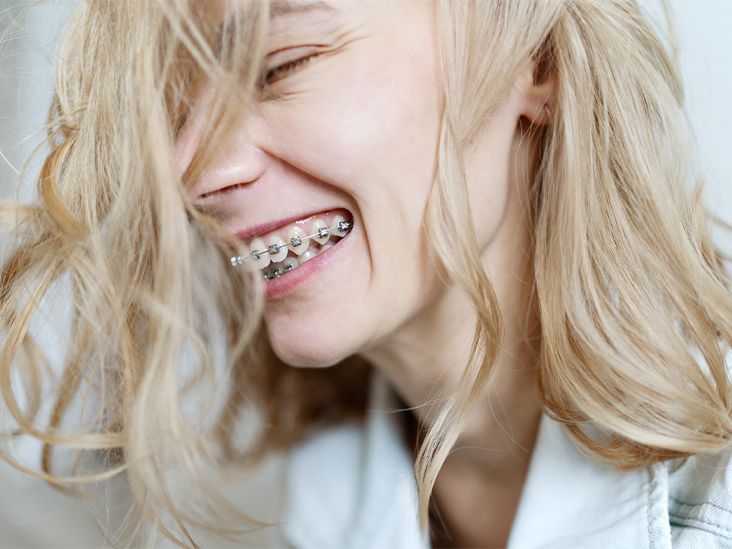
If you have been researching orthodontic options, you may have come across the term "self-ligating braces" and wondered what makes them special. The concept is not new, but the technology has improved so much over the past two decades that self-ligating systems have become a mainstream choice in many orthodontic practices, including my own.
Let me break down what self-ligating braces actually are, how they differ from the traditional brackets most people picture when they think of braces, and what the real-world advantages and limitations look like.
What Are Self-Ligating Braces
Self-ligating braces are a type of fixed orthodontic appliance that uses a built-in clip or door mechanism on each bracket to hold the archwire in place. In traditional braces, tiny elastic bands called ligatures, or sometimes thin metal ties, wrap around each bracket to secure the wire. Self-ligating brackets eliminate that extra piece entirely. The bracket itself has a small gate or slide that opens and closes over the wire.
The two main types of self-ligating systems are passive and active. Passive self-ligating brackets have a slide that holds the wire loosely, allowing it to move freely within the bracket slot. Active self-ligating brackets have a clip that presses the wire more firmly against the bracket. Some systems use passive mechanics in the early stages of treatment and switch to active mechanics later, combining the benefits of both approaches.
How They Differ from Traditional Brackets
The most obvious difference is the absence of elastic ligatures. Those little colored rubber bands that kids love to customize at each appointment are not used with self-ligating braces. Instead, the wire sits inside the bracket's own clip mechanism.
This design difference has several practical consequences. First, adjustment appointments tend to be faster because the orthodontist does not need to remove and replace individual ligatures on every tooth. Opening and closing the bracket clips takes less time than tying in each wire with elastics. For patients, this can mean shorter time in the chair.
Second, self-ligating brackets can reduce friction between the wire and the bracket. In traditional braces, the elastic ligature presses the wire against the bracket, creating friction that the wire must overcome to move teeth. In passive self-ligating systems especially, the wire slides more freely, which can allow teeth to respond to lighter forces.
Are Self-Ligating Braces Faster Than Traditional Braces
This is one of the most debated questions in orthodontics, and I want to give you an honest answer. Some manufacturers and marketing materials suggest that self-ligating braces can shorten treatment time significantly. The clinical reality is more nuanced.
Research studies comparing self-ligating and traditional braces have shown mixed results. Some studies report modestly shorter treatment times with self-ligating systems, particularly in the alignment phase when teeth are moving into initial position. Other well-designed studies have found no statistically significant difference in overall treatment duration.
In my own practice, I have found that self-ligating braces can speed up the early stages of treatment, when you are taking teeth from very crooked to roughly aligned. The low-friction mechanics seem to help during that phase. However, the later stages of treatment, which involve fine-tuning tooth positions and correcting the bite, take about the same amount of time regardless of bracket type. The biology of bone remodeling does not change just because the bracket has a different design.
So are self-ligating braces faster? Sometimes, by a few months. But I would not recommend choosing them solely based on the promise of a dramatically shorter treatment.
Comfort and Hygiene
Many patients report that self-ligating braces feel smoother and more comfortable than traditional braces. Without elastic ligatures wrapping around each bracket, there are fewer edges and surfaces to irritate the lips and cheeks. The brackets themselves tend to have a sleeker, more streamlined profile.
Hygiene is another area where self-ligating braces can offer an advantage. Elastic ligatures are notorious for trapping food particles and plaque. Patients with traditional braces often struggle to keep the areas around their ligatures clean, even with diligent brushing. Without those elastics, self-ligating brackets can be somewhat easier to keep clean. That said, good oral hygiene habits are still essential with any type of braces.
I remember one patient, a college student, who had switched from a traditional bracket system at another practice to self-ligating braces in my office after a relocation. She told me the difference in how clean her teeth felt between appointments was noticeable. Her gum health improved, and she had fewer areas of white-spot decalcification forming around her brackets.
Fewer Appointments
Because self-ligating brackets can sometimes extend the interval between adjustment visits, patients may need fewer total appointments over the course of treatment. Some orthodontists schedule self-ligating patients every eight to ten weeks instead of the more typical four to six weeks with traditional braces.
This can be a real benefit for busy adults, patients who travel frequently, or families juggling multiple schedules. Fewer trips to the office means less time away from work or school.
Appearance Options
Self-ligating braces come in both metal and clear ceramic versions. The ceramic self-ligating brackets offer a less visible option that still provides the mechanical benefits of the self-ligating design. For patients who want the advantages of self-ligating mechanics without the metallic look, this can be an appealing combination.
Limitations to Consider
Self-ligating braces are not a magic solution. They still involve brackets bonded to the teeth and a visible archwire. Patients who want a truly invisible option may be better served by clear aligners or lingual braces.
Cost is another factor. Self-ligating brackets are generally more expensive than traditional brackets, and this cost is often passed along to the patient. The price difference varies, but it is worth discussing with your orthodontist.
Finally, the skill and experience of the orthodontist matter far more than the bracket system. A great orthodontist using traditional brackets will consistently deliver better results than an inexperienced one using the latest self-ligating technology. The tool is only as good as the person using it.
Choosing What Works for You
Self-ligating braces represent a genuine advancement in bracket design. They offer real benefits in terms of comfort, hygiene, and potentially appointment frequency. Whether they are the right choice for you depends on your specific case, your lifestyle, and your priorities. Talk with your orthodontist about whether a self-ligating system is a good match for your treatment plan. The best bracket is the one that your orthodontist knows how to use expertly and that fits your individual needs.

Comments