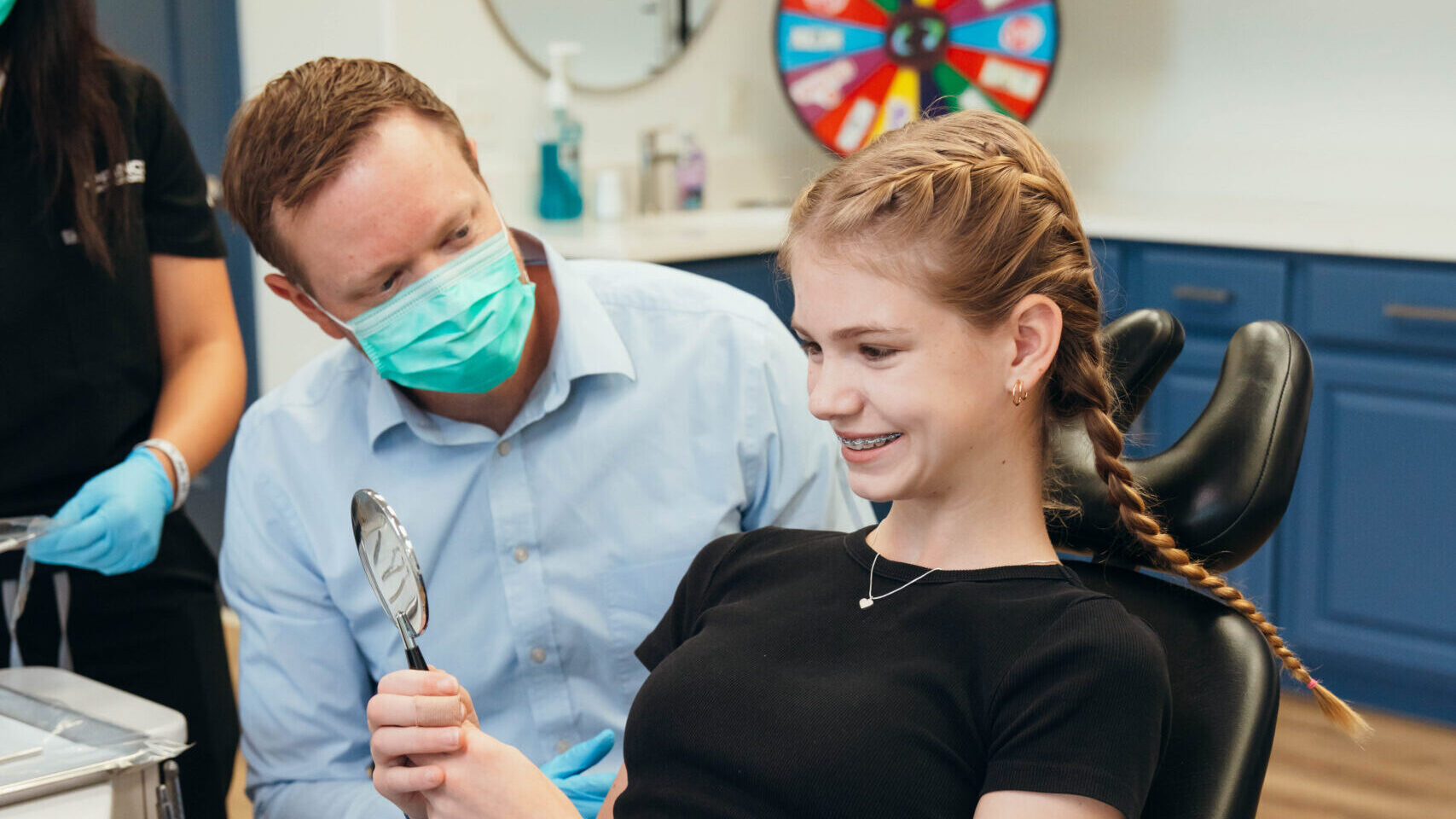
The teenage years are the most common time for orthodontic treatment, and there is a very good reason for that. Adolescence coincides with a period of rapid skeletal growth that orthodontists can use to their advantage. The same growth spurt that makes teenagers outgrow their jeans every few months also creates opportunities to guide jaw development and move teeth with an efficiency that is harder to achieve in adults. But treating teenagers is not just about biology. It also involves managing the unique social, emotional, and practical realities of this age group.
What Is the Best Age for Braces?
The ideal age for comprehensive orthodontic treatment varies from patient to patient, but for most teenagers, the sweet spot falls between eleven and fourteen. By this age, the majority of permanent teeth have erupted, giving the orthodontist a full set of teeth to work with. Just as importantly, the patient is typically in the midst of their adolescent growth spurt, which provides valuable biological momentum for treatment.
That said, there is no single "best" age that applies to everyone. Some children are dental development outliers, with permanent teeth arriving earlier or later than average. The decision about when to start treatment should be based on an individual assessment of dental maturity, skeletal growth status, and the specific problems that need to be addressed. Your orthodontist may use a hand-wrist X-ray or a cervical vertebral maturation assessment to determine where your teenager is in their growth curve and time treatment accordingly.
How Puberty Affects Orthodontic Treatment
Puberty triggers a surge in growth hormone and other factors that accelerate bone remodeling. This is the process by which teeth move through bone during orthodontic treatment. During the pubertal growth spurt, teeth tend to respond more quickly and more predictably to orthodontic forces. Movements that might take several months in an adult can sometimes be accomplished in weeks during peak growth.
The growth spurt also affects the jaws themselves. The lower jaw, in particular, undergoes significant forward and downward growth during puberty. Orthodontists can take advantage of this growth to correct certain bite problems. A teenager with a recessive lower jaw, for example, may respond well to a functional appliance that encourages the lower jaw to grow forward during the peak of the growth spurt. Timing this treatment to coincide with maximum growth gives the best chance of a meaningful skeletal correction.
I treated a thirteen-year-old boy a couple of years ago whose lower jaw was noticeably behind his upper jaw. His cervical vertebral assessment showed he was right at the peak of his growth spurt. We used a Herbst appliance for nine months, and his lower jaw came forward substantially during that time. When we transitioned to braces for the finishing phase, his profile had changed dramatically. His parents were amazed at the transformation, and most of it was achieved by working with his natural growth rather than against it.
Treatment Options for Teenagers
Today's teenagers have more treatment options than ever before. Traditional metal braces remain the most common and are highly effective for a wide range of orthodontic problems. Modern brackets are much smaller and more comfortable than the ones their parents may remember. Ceramic braces offer a less noticeable option, using tooth-colored brackets that blend with the enamel. Clear aligners are increasingly popular among teenagers, particularly those with mild to moderate alignment issues and a good track record of responsibility.
Choosing between these options involves a discussion between the orthodontist, the patient, and the parents. Clinical factors come first: some tooth movements are simply better achieved with braces than aligners, and vice versa. But patient preference matters too. A teenager who feels confident about their treatment choice is more likely to comply with instructions, take care of their appliances, and maintain good oral hygiene throughout the process.
The Compliance Factor
Teenagers are not always the most compliant patients. I say this with affection, having treated thousands of them. Rubber bands get left on the nightstand. Aligners get wrapped in napkins at lunch. Brushing around brackets sometimes gets a half-hearted effort. It comes with the territory, and experienced orthodontists build their treatment plans with some room for imperfect compliance.
That said, there are strategies that help. I find that involving teenagers in the treatment planning process increases buy-in. When a patient understands why they need to wear their rubber bands and can see the specific tooth movement those bands are driving, they tend to be more motivated. Setting clear, achievable short-term goals also helps. Instead of saying "wear your bands for 18 months," I might say, "let us see how much progress we can make by your next visit in eight weeks." Breaking the process into smaller milestones makes it feel more manageable.
Oral Hygiene During Treatment
Maintaining good oral hygiene during orthodontic treatment is important at any age, but it is especially critical for teenagers. Hormonal changes during puberty can make gums more susceptible to inflammation, a condition sometimes called puberty gingivitis. Add brackets and wires that create additional surfaces for plaque to accumulate, and the risk of gum problems and decalcification, those white spots that can form on enamel around brackets, increases substantially.
I spend a significant amount of time at each appointment evaluating my teenage patients' hygiene and coaching them on technique. A soft-bristled toothbrush, fluoride toothpaste, and an interdental brush or water flosser are the essential tools. Some patients benefit from a prescription fluoride rinse for additional protection. The goal is to finish treatment with teeth that are not only straight but also healthy and free of the white marks that can result from poor brushing during braces.
Sports, Music, and Social Life
Teenagers are active, and orthodontic treatment needs to fit into their lives. If your teenager plays contact sports, a properly fitted orthodontic mouthguard is essential. Standard boil-and-bite guards do not work well with braces, so ask your orthodontist for a recommendation. For musicians who play wind or brass instruments, there may be an adjustment period after braces are placed. Most musicians adapt within a few weeks, though some benefit from wax or a lip protector during the transition.
Socially, braces and aligners are far more accepted among teenagers today than in previous generations. With so many of their peers undergoing treatment simultaneously, the stigma that once existed has largely faded. Many teenagers even embrace the process, choosing colored bands and viewing their braces as a form of self-expression. The teenage years are a brief chapter in a person's life, and the investment made during this time pays dividends for decades to come. Working with your teenager's natural growth and development is one of the smartest investments you can make in their long-term dental health.

Comments