Most households have a first-aid kit with bandages and antiseptic. Very few have anything ready for a dental injury. Yet a chipped tooth, a lost crown, or a knocked-out tooth tends to happen at home, on a playing field, or on a weekend, when getting to an office takes time.
A small dental kit, plus a basic understanding of how to use it, can protect a tooth until it can be properly treated. Here is what to include and what each item is for.
What to Put in the Kit
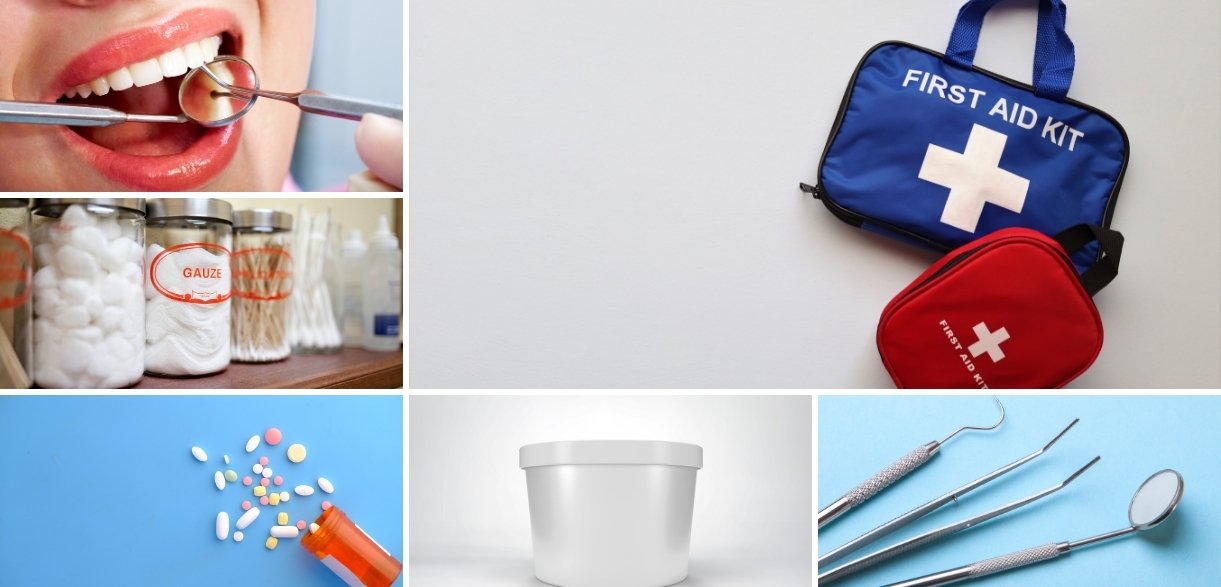
You can fit all of this into a small zippered bag or a plastic container:
- A small container with a lid. For transporting a knocked-out tooth or broken pieces.
- Saline solution or a tooth preservation kit. Saline keeps root cells alive far better than water. Commercial tooth-saving kits contain a balanced solution designed for this exact purpose.
- Sterile gauze. For controlling bleeding and for biting down to hold a tooth in place.
- A cold pack. For swelling after a blow to the face.
- Over-the-counter pain reliever. Choose one that is safe for everyone in the household, and follow the label.
- Temporary dental cement. Sold at most pharmacies. It can hold a loose crown or cover a lost filling for a short time.
- Orthodontic wax. For covering a broken wire or bracket that is cutting the cheek.
- Dental floss. For removing something wedged between teeth.
- A small flashlight. Looking inside a mouth is hard without one.
- A card with your dentist's phone number and after-hours instructions.
Using It: Knocked-Out Tooth
Handle the tooth by the crown only. If it is dirty, rinse it briefly in saline or milk, without scrubbing. Try to place it back into the socket and have the person bite gently on gauze. If that isn't possible, put the tooth in the container with saline or milk and seek care immediately. The best outcomes occur when a tooth is replanted within about an hour.
Do not reinsert a baby tooth. Store it and bring the child in for an exam, since replanting a primary tooth can harm the adult tooth beneath it.
Using It: Bleeding From the Mouth
Lips, tongue, and cheeks have a rich blood supply, so even minor cuts can look alarming. Rinse gently, then press folded gauze firmly against the area for 15 minutes without lifting to check. A cold pack on the outside of the face helps too.
Bleeding that continues after two rounds of steady pressure, a deep cut through the lip, or a cut that gapes open should be seen promptly, since some need stitches.
Using It: Lost Filling or Crown
Keep the crown if you find it. Clean it gently and check whether it fits back on comfortably. A small amount of temporary cement can hold it in place for a day or two until you can be seen. Never use household glue. Superglue and similar products can damage the tooth and make the crown impossible to reuse.
For a lost filling, temporary cement or even sugar-free gum pressed into the hole can reduce sensitivity briefly. Avoid chewing on that side.
Using It: Broken Braces or Wires
A poking wire is uncomfortable but rarely urgent. Press a small ball of orthodontic wax over the sharp end. If a wire is loose, you can sometimes use the eraser end of a pencil to push it to a less irritating position. Don't cut wires yourself unless your orthodontist has told you how. Call the orthodontic office to schedule a repair.
Using It: Toothache
Use floss first. A surprising number of "toothaches" turn out to be a popcorn hull or a seed lodged under the gum. Then rinse with warm salt water and take a pain reliever as directed. Do not hold aspirin against the gum. A cold pack on the cheek can help with throbbing.
If the pain is severe, keeps you awake, or comes with swelling, the problem is likely inside the tooth and needs professional treatment.
When the Kit Isn't Enough
The kit is for buying time. It doesn't treat the underlying problem. Facial swelling that spreads, difficulty swallowing or breathing, a suspected broken jaw, or a head injury along with a dental injury all mean going to an emergency room first.
For tooth-specific problems, it helps to know in advance where you'd go for emergency dental care, and whether your regular office reserves time for urgent cases. Many general dental practices can repair cracked teeth, recement crowns, treat infections, and stabilize injured teeth, then refer to a specialist if needed.
Kids, Sports, and Prevention
Children and teens account for a large share of dental injuries, most of them from falls and sports. A properly fitting mouthguard is the single most effective way to prevent them. Custom-fitted guards made by a dentist tend to be more comfortable, and players who are comfortable actually keep them in.
A few other habits help everyone:
- Avoid chewing ice, hard candy, and popcorn kernels
- Don't open packages or bottles with your teeth
- Address teeth grinding, which weakens teeth over time
- Keep up with checkups so worn fillings and small cracks are caught early
Check the kit every few months, replace anything expired, and make sure everyone in the house knows where it is. It takes ten minutes to put together and can make the difference between saving a tooth and losing it.

Comments