Thumb sucking and pacifier use are two of the most natural self-soothing behaviors in infancy and early childhood. Nearly every baby does one or the other, and during the first couple of years of life, these habits are completely normal and rarely cause any lasting dental concerns. But when the habit persists beyond a certain age, it can begin to reshape the developing jaw and teeth in ways that often require orthodontic correction later.
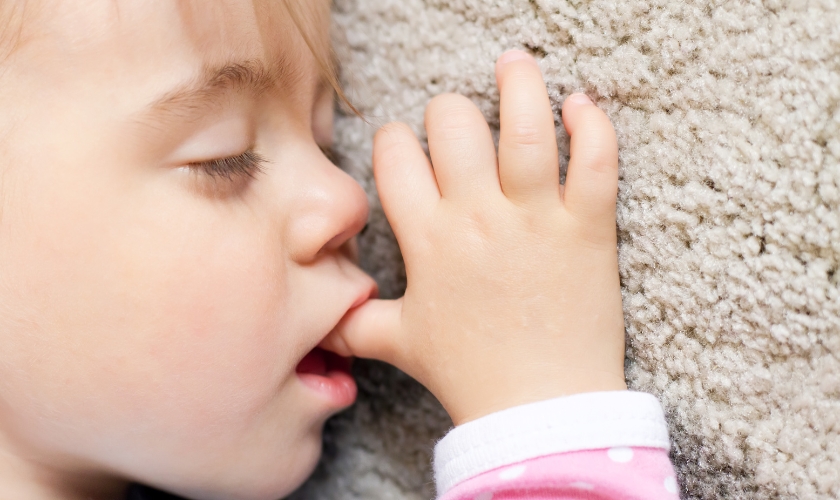
As an orthodontist, I see the downstream effects of prolonged sucking habits regularly. Parents often feel guilty when I explain the connection, but I always reassure them that these habits are normal and that the effects are very treatable. The goal is not to assign blame but to understand what has happened and what can be done about it.
Why Babies Suck Their Thumbs and Use Pacifiers
Sucking is a natural reflex that begins before birth. Ultrasound images sometimes capture babies sucking their thumbs in the womb. This reflex serves an important purpose: it helps infants feed, and it provides comfort and security. For many babies, sucking on a thumb, finger, or pacifier is a way to self-soothe during stressful moments, at bedtime, or when they are tired.
There is nothing wrong with this behavior in infancy and toddlerhood. In fact, the American Academy of Pediatric Dentistry considers non-nutritive sucking habits to be normal in the first few years of life. The concern arises only when the habit continues beyond the age when it can start to interfere with dental development.
Does Thumb Sucking Cause Crooked Teeth
Yes, prolonged thumb sucking can cause crooked teeth, and the effects go beyond just the teeth themselves. The repetitive pressure of a thumb or fingers resting against the front teeth and the roof of the mouth can alter the shape of the developing dental arches and jaw bones.
The most common effect is an anterior open bite, where the upper and lower front teeth do not meet when the mouth is closed. The thumb essentially prevents the front teeth from erupting fully, creating a gap. I have treated many children whose open bites were directly attributable to thumb sucking. In some cases, the gap was so pronounced that the child could not bite through a piece of lettuce with the front teeth.
Another frequent consequence is a narrowed upper jaw, or palate. The thumb pushes up against the roof of the mouth, and the cheek muscles press inward during sucking. This combination of forces narrows the upper arch, which can lead to a posterior crossbite where the upper back teeth sit inside the lower back teeth.
Flared upper front teeth are also common. The pressure of the thumb pushes the upper incisors forward and outward, creating an excessive overjet (the horizontal distance between the upper and lower front teeth). At the same time, the lower front teeth may be pushed backward, compounding the problem.
Pacifiers can cause similar effects, though some research suggests that pacifier habits may be slightly less damaging than thumb sucking because the pacifier is softer and distributes forces differently. However, the distinction is modest. A prolonged pacifier habit can produce the same types of dental changes as thumb sucking.
At What Age Does Thumb Sucking Affect Teeth
At what age does thumb sucking affect teeth? This is one of the most common questions parents ask me, and the answer involves a bit of nuance. Most experts agree that sucking habits are unlikely to cause lasting dental problems if they stop before age four. Between the ages of two and four, some changes to the baby teeth may be visible, but these often self-correct after the habit stops because the permanent teeth have not yet come in.
The critical threshold is around age four to five. By this age, the permanent front teeth are beginning to develop and move into position beneath the baby teeth. Continued thumb sucking during this period can alter the eruption path and positioning of the permanent teeth in ways that do not self-correct.
The intensity and frequency of the habit also matter. A child who gently rests a thumb in the mouth occasionally is less likely to experience significant dental changes than a child who sucks vigorously for hours each day and throughout the night. Duration (how many hours per day) and force (how hard the child sucks) are both important factors.
I recall a patient who stopped thumb sucking at age five, and by the time she was seven, much of the open bite had improved on its own. Another patient who continued until age eight had changes that required a palatal expander and braces to correct. The timing really does make a difference.
How to Help Your Child Stop
Breaking a sucking habit is easier said than done, and patience is essential. For most children, positive reinforcement works better than punishment or constant reminders, which can create anxiety and actually reinforce the habit.
Praise your child when they are not sucking their thumb, especially during times when they usually would be. A reward chart with small incentives can be effective for many children. For nighttime habits, which are often the hardest to break, a sock or bandage over the hand can serve as a gentle reminder.
If the habit persists despite these efforts, your orthodontist can help. A habit-breaking appliance, such as a tongue crib or palatal rake, can be placed in the mouth. These appliances do not hurt, but they make thumb sucking uncomfortable or unsatisfying, which helps the child lose interest in the habit. In my experience, these appliances are very effective, and most children stop the habit within a few weeks of placement.
Treating the Effects
If a prolonged sucking habit has already caused dental changes, the good news is that orthodontic treatment is very effective at correcting them. A palatal expander can widen a narrowed upper jaw. Braces or aligners can close an open bite and realign flared front teeth. If the habit has stopped and the child is still growing, some of these corrections can be surprisingly straightforward.
The most important thing is to address the habit first. Orthodontic treatment will not be effective if the habit is still ongoing, because the forces from the thumb or pacifier will work against the treatment. Once the habit is broken, we can develop a treatment plan that addresses whatever changes have occurred.
If your child is still sucking a thumb or using a pacifier past age three, there is no need to panic, but it is worth starting to gently encourage them to stop. And if the habit has persisted and you are seeing changes in the teeth or bite, an orthodontic evaluation can give you a clear picture of what is happening and what, if anything, needs to be done. These situations are very common, very manageable, and nothing to feel embarrassed about.

Comments