Straight teeth look nice, but the way your teeth fit together affects far more than your smile.
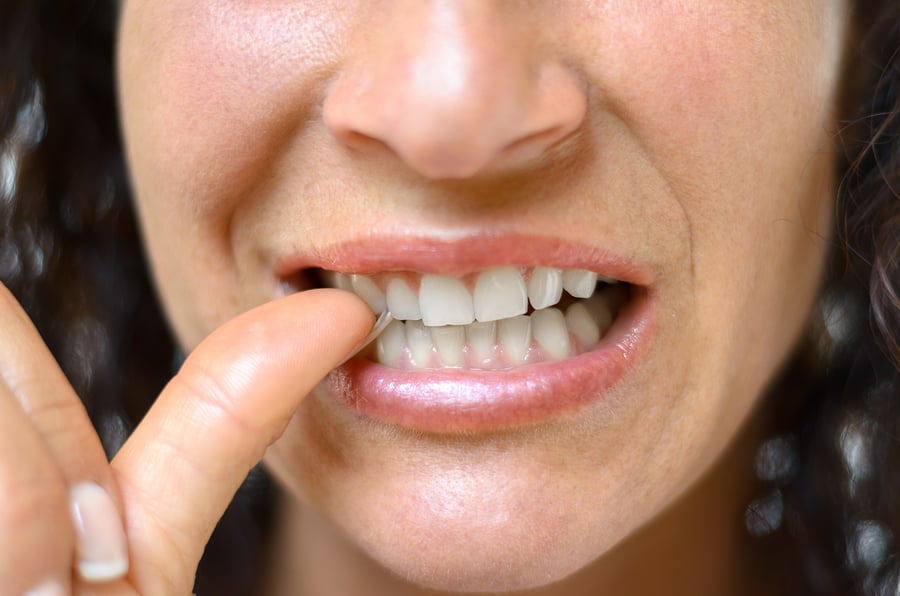
When people picture orthodontic problems, they usually think of crooked front teeth. But orthodontists spend just as much time thinking about the bite, the way the upper and lower teeth meet when the jaw closes. The clinical term for a bite that is off is malocclusion, and understanding it helps explain why orthodontic treatment is about function, not just appearance.
The common types of bite problems
An overbite is when the upper front teeth extend too far over the lower ones. An underbite is the reverse, with the lower teeth sitting in front of the uppers. A crossbite happens when some upper teeth close inside the lower teeth rather than outside them. An open bite leaves a gap between the upper and lower teeth even when the back teeth are together. Add crowding, spacing, and rotated teeth, and you have the full range of issues an orthodontist is trained to correct.
Some of these are inherited, a matter of jaw size and shape passed down through families. Others develop from habits like prolonged thumb sucking or from the early loss of baby teeth. Whatever the cause, the effects tend to compound over time if left unaddressed.
Why an off bite is more than cosmetic
A misaligned bite does real work on your mouth. Teeth that meet unevenly wear down faster, and that enamel does not grow back. An imbalanced bite can overload the jaw joint and surrounding muscles, contributing to soreness, clicking, and headaches. Crowded or overlapping teeth create tight spaces that a toothbrush and floss cannot reach well, which raises the risk of decay and gum disease in exactly the spots that are hardest to clean.
There are practical effects too. Certain bite problems make chewing less efficient or interfere with clear speech. Correcting the alignment can improve how comfortably you eat and talk, not only how you look in photographs.
The encouraging news is that nearly all of these problems are treatable, and treatment is more comfortable and discreet than it used to be. A consultation with an orthodontist near me will usually start with images or a digital scan that reveal exactly how your teeth fit together, followed by a clear explanation of what is happening and what can be done about it.
How bite problems are corrected
Correcting a malocclusion almost always means guiding the teeth, and sometimes the jaws, into a better relationship over time. Braces and clear aligners are the everyday tools, applying gentle, sustained pressure that lets the supporting bone remodel around each tooth in its new position. For growing children, an orthodontist can sometimes use appliances that gently influence how the jaws develop, which is part of why early evaluation is so valuable.
More significant skeletal problems, where the jaws themselves are markedly out of proportion, occasionally call for a combination of orthodontics and other treatment. Those cases are the exception rather than the rule. The vast majority of bite problems are resolved with well-planned braces or aligners, and the earlier a plan begins, the more straightforward the path tends to be. An orthodontist will lay out which category your bite falls into and what a realistic timeline looks like.
It is also reassuring to know how much more comfortable correction has become. Modern brackets are smaller and smoother than the versions many adults remember, wires are gentler and more efficient, and clear aligners offer a nearly invisible route for many cases. Treatment that once felt conspicuous and uncomfortable now fits far more easily into daily life, which removes one of the last reasons people put off fixing a bite that has bothered them for years.
You do not have to diagnose your own bite. If you notice uneven wear, jaw discomfort, difficulty cleaning certain teeth, or simply a bite that has never felt quite right, those are all good reasons to have it evaluated. Fixing a malocclusion is an investment in a mouth that works better and lasts longer, and the visible improvement to your smile is really just the bonus.

Comments