Maybe your teeth have dulled from years of coffee. Maybe there's a small chip on a front tooth, a gap you've always noticed, or a couple of teeth that don't quite line up. None of it may be a health concern, but it can still make you hesitate to smile.
The three most common cosmetic treatments, whitening, bonding, and veneers, solve different problems. Comparing them by what they fix, how long they last, and whether they can be reversed makes the choice much clearer.
Teeth Whitening
What it fixes: Overall discoloration on healthy teeth.
Coffee, tea, red wine, dark sodas, and tobacco stain the outer enamel over time. Aging also plays a role, as enamel thins and the darker layer beneath it shows through more.
Professional whitening uses a stronger bleaching gel than over-the-counter products, either applied in the office or in custom trays you wear at home. The gums are protected during in-office treatment, and custom trays keep the gel where it belongs.
Things to know:
- Whitening only works on natural tooth structure. It won't change the color of crowns, veneers, fillings, or bonding.
- Temporary sensitivity is common and usually fades within a few days.
- Some stains, especially gray discoloration from certain medications or from trauma, respond poorly to bleaching.
- Results fade gradually and can be maintained with occasional touch-ups.
Reversible? It isn't undone, but it doesn't remove enamel either. It's the least invasive option.
Dental Bonding
What it fixes: Small chips, minor gaps, isolated stains, and small shape irregularities.
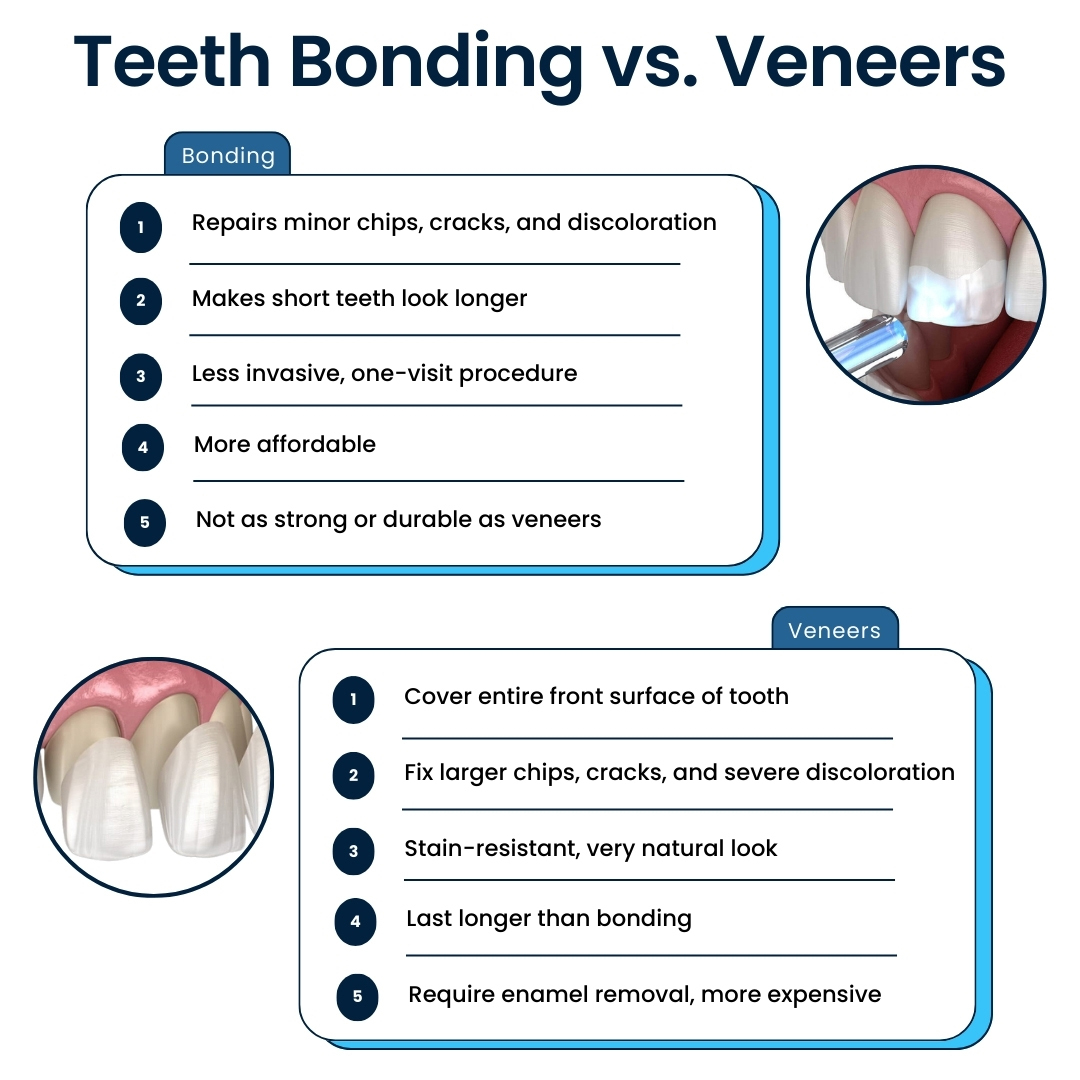
Bonding uses a tooth-colored composite resin, the same type of material used for white fillings. The dentist lightly roughens the tooth surface, applies the resin in layers, sculpts it, hardens it with a curing light, and polishes it.
It works well for:
- Repairing a chipped edge
- Closing a small space between teeth
- Covering a single dark spot
- Lengthening a short tooth or evening out an irregular one
Things to know:
- It's often done in one visit, typically with little or no drilling and frequently without numbing.
- Composite is less stain-resistant and less durable than porcelain. It can pick up stains and may chip, especially on the biting edges.
- Bonding typically lasts several years before it needs repair or replacement.
- If you plan to whiten, do it first. Bonding is matched to your tooth shade at the time it's placed and won't lighten afterward.
Reversible? Largely, since little or no enamel is removed.
Porcelain Veneers
What it fixes: Color, shape, size, and the appearance of mild misalignment across several teeth.
Veneers are thin, custom-made shells of porcelain bonded to the front surfaces of the teeth. Because they cover the entire visible surface, they can make substantial changes, including stains that whitening can't reach, worn edges, and teeth of uneven sizes.
Things to know:
- A thin layer of enamel is usually removed so the veneer sits flush and looks natural.
- The process generally takes at least two visits: preparation and impressions or scans, then bonding the final veneers. Temporary veneers may be worn in between.
- Porcelain is highly stain-resistant and reflects light similarly to natural enamel.
- With good care, veneers commonly last 10 to 15 years or longer.
- They can still chip or debond, especially in people who grind their teeth or bite hard objects.
Reversible? No. Once enamel is removed, the teeth will always need some kind of covering.
A Quick Comparison
Whitening | Bonding | Veneers | |
Best for | Overall discoloration | Small, localized fixes | Larger changes to several teeth |
Enamel removed | None | Little or none | A thin layer |
Typical visits | 1 or home trays | Often 1 | Usually 2 or more |
Durability | Fades gradually | Several years | 10 to 15+ years |
Relative cost | Lowest | Moderate | Highest |
When a Combination Makes Sense
Many smiles benefit from more than one treatment. A common sequence is orthodontic treatment, such as clear aligners, to improve alignment first, then whitening to set the shade, then bonding or veneers on just the teeth that still need it. Straightening first can mean fewer veneers and less enamel removed.
Planning this kind of combination is a core part of cosmetic dentistry. Good results depend on more than color. Tooth proportions, the line of your lips when you smile, and how your teeth meet when you bite all affect whether the outcome looks natural.
Questions to Ask Yourself
- What bothers me most? Color, chips, gaps, shape, or alignment?
- How much change do I want? A subtle refresh or a dramatic transformation?
- How important is reversibility? If you're unsure, start with the least invasive option.
- Are my teeth and gums healthy? Cavities and gum disease need to be treated before cosmetic work.
- Do I grind my teeth? Grinding affects the durability of bonding and veneers, and a night guard may be recommended.
Keeping Results Looking Good
- Keep up with cleanings and checkups
- Rinse with water after coffee, tea, or wine
- Wear a night guard if you clench or grind
- Avoid chewing ice, pens, or fingernails
- Use a non-abrasive toothpaste, especially with bonding
Some people come in expecting to need veneers and find that whitening and a little bonding achieve what they wanted. Understanding the trade-offs is the best way to choose a treatment that fits your goals, your budget, and your teeth.

Comments