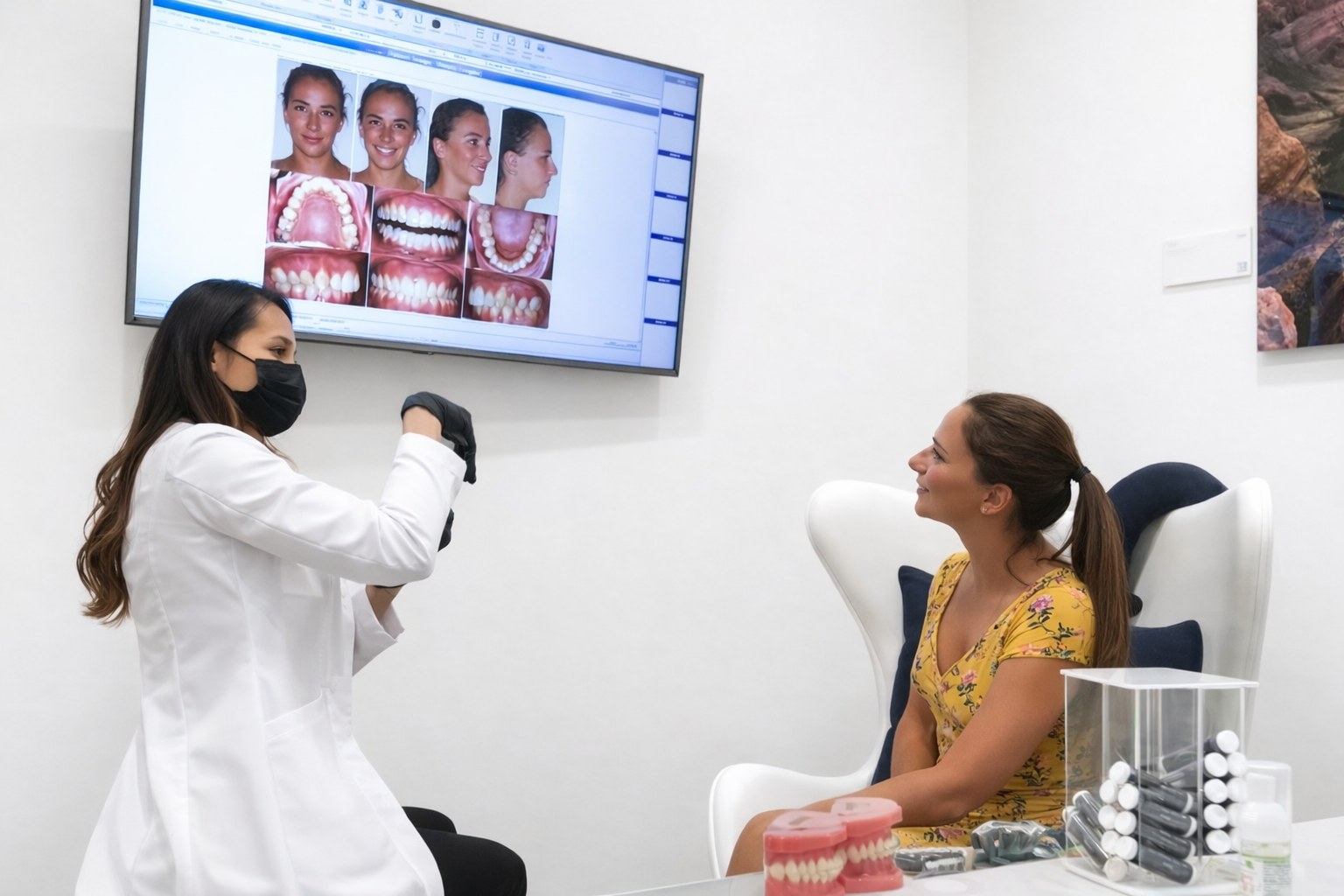
The first orthodontic consultation is where treatment really begins. It is the visit where you learn what is going on with your bite, what your options are, how long treatment might take, and what it will cost. For many people it is also the first time they see detailed images of their own teeth and jaws. Knowing what to expect and arriving with the right questions helps you get the most out of the appointment and make a confident decision.
Before the Visit
A little preparation makes the consultation more productive.
Gather your history. Bring a list of medications and any relevant medical conditions. Note any previous orthodontic treatment, extractions, jaw injuries, or dental work such as crowns, bridges, or implants.
Request recent X-rays. If your general dentist took X-rays in the past year, ask whether they can be shared with the orthodontic office. This can sometimes reduce the need for duplicate images.
Check insurance details. Find out whether your dental plan includes orthodontic coverage, the lifetime maximum, and any age limits. Many plans cover children but not adults, and some cover a fixed amount regardless of total cost.
Write down your goals. Think about what bothers you most. It might be crowded front teeth, a gap, a bite that feels uneven, jaw discomfort, or a child's teeth coming in crooked. Having your priorities clear helps the orthodontist tailor the discussion.
What Happens During the Appointment
Most consultations last between forty-five minutes and an hour and a half. While each office has its own process, a typical visit includes several steps.
Conversation. A team member or the orthodontist will ask about your concerns, health history, and expectations. This is your chance to share what you want to change.
Clinical exam. The orthodontist looks at the teeth, gums, bite, jaw movement, and facial profile. They may check how your jaw opens and closes, whether it shifts to one side, and how your lips and tongue rest.
Photographs. Photos of the face and teeth from several angles document your starting point and help with planning.
Digital scan or impressions. Many offices now use an intraoral scanner, a small wand that captures a three-dimensional model of the teeth in a few minutes. It is faster and more comfortable than traditional impression material.
X-rays. A panoramic X-ray shows all the teeth, roots, and jaw joints, including teeth that have not yet erupted. A cephalometric X-ray, taken from the side, shows how the jaws relate to each other and to the skull. Some offices use three-dimensional cone beam imaging for specific cases, such as impacted teeth.
Diagnosis and discussion. The orthodontist reviews the findings with you, explains the problems identified, and outlines possible treatment approaches.
Understanding Your Diagnosis
Your orthodontist should explain the issues in plain language. Common findings include crowding, spacing, overbite, underbite, crossbite, open bite, and midline shifts. They should also describe whether the problem mostly involves tooth position, jaw position, or both.
For children, the orthodontist will discuss growth and timing. Sometimes the recommendation is to wait and monitor rather than start treatment now. For adults, the discussion may include gum health, existing restorations, and coordination with a general dentist or other specialists.
Exploring Treatment Options
You may be presented with more than one way to address your concerns. Options might include:
- Metal or ceramic braces
- Lingual braces placed behind the teeth
- Clear aligners
- Expanders or other appliances for growing children
- Temporary anchorage devices to assist certain movements
- In some adult cases, a combination of orthodontics and jaw surgery
A good orthodontist will explain the advantages and limitations of each option for your specific case, not just in general.
Questions Worth Asking
Bring a list so nothing is forgotten in the moment:
- What is the main problem, and what causes it?
- What happens if I choose not to treat it?
- Which treatment options are appropriate for me, and why do you recommend one over the others?
- How long is treatment expected to last?
- How often will I need appointments?
- Will any teeth need to be removed?
- What is the total cost, and what does it include?
- Are retainers included, and what is the replacement policy?
- What payment plans are available?
- How do you handle emergencies or broken appliances?
Understanding the Costs
Orthodontic fees vary based on case complexity, treatment length, and the type of appliance. The fee usually covers records, appliances, adjustment visits, and initial retainers, though policies differ. Ask for a written breakdown so you know exactly what is included.
Many practices offer interest-free payment plans spread across the treatment period. Flexible spending and health savings accounts can often be used for orthodontic expenses.
After the Consultation
You do not need to decide on the spot. It is reasonable to take time to review the plan, consider costs, and even seek a second opinion. Pay attention to how you felt during the visit: whether questions were answered clearly, whether the staff was respectful of your time, and whether you felt pressured or informed.
If you move forward, the next step is usually scheduling the appointment to begin treatment, which may involve placing braces, delivering the first aligners, or fitting an appliance.
Making the Most of the First Step
A consultation with an orthodontist is an opportunity to understand your own mouth in detail. Even if you are not ready to start treatment, the information helps you plan for the future and catch potential issues before they become larger problems.
Come prepared, ask questions, and expect clear answers. The right orthodontic team will treat the consultation as the beginning of a long-term partnership aimed at a healthy, stable, and confident smile.

Comments