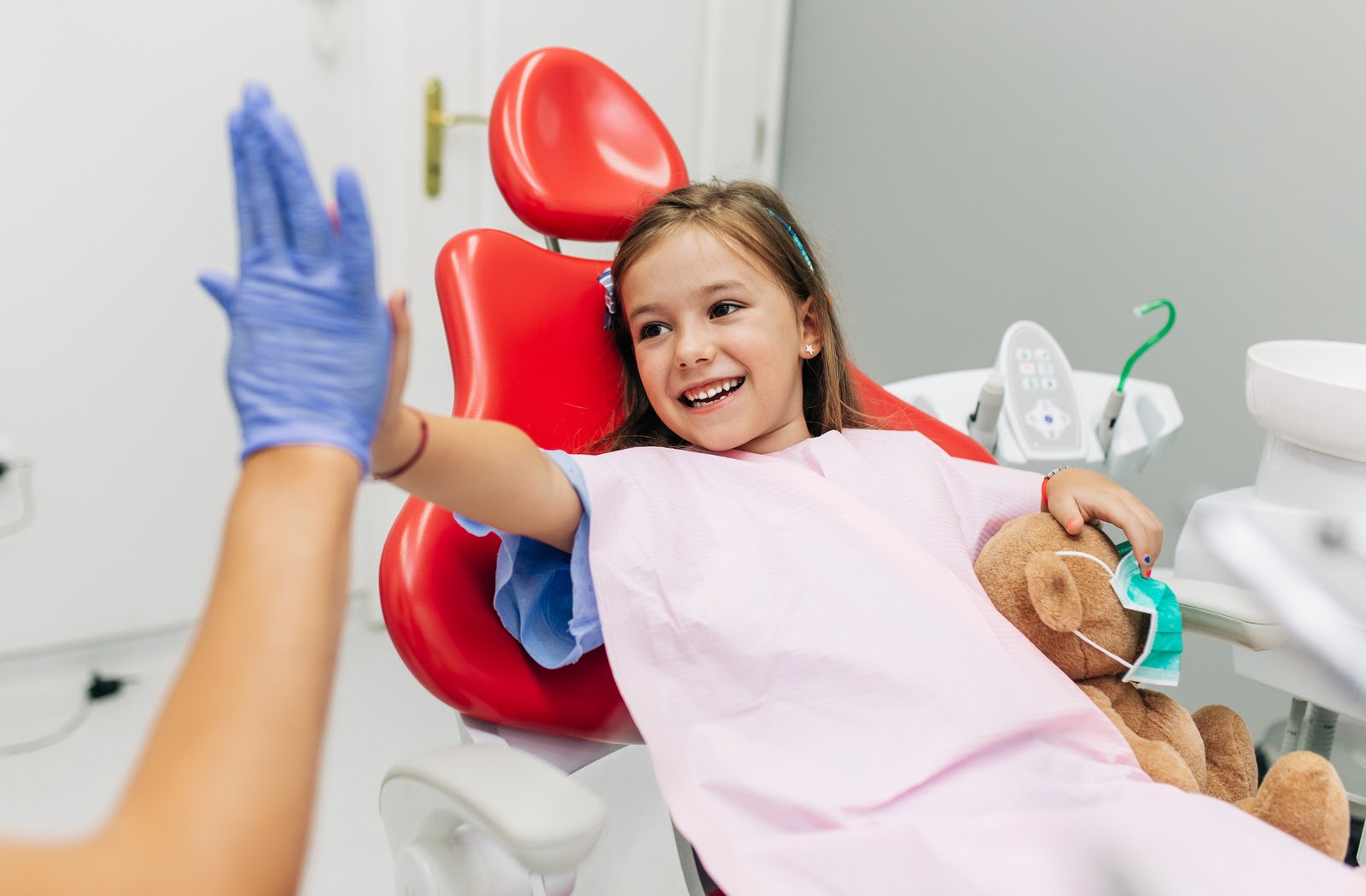
When my oldest was about eighteen months, I put off her first dental visit way longer than I should have. I figured she was too little, that there was nothing to check, and honestly that the appointment would be more trouble than it was worth. I was wrong on all three counts. By the time we finally went, she had a small spot of early decay that could have been avoided if I had known what to watch for. Nobody had explained any of it to me, so I am writing the thing I wish someone had handed me back then.
Here is the first surprise. Tooth decay is the most common chronic condition in childhood, more common than asthma. It is not rare and it is not a sign of bad parenting. Little teeth have thin enamel, kids snack constantly, and brushing a squirming toddler well is genuinely hard. The bacteria that cause cavities can even pass from a parent to a baby through shared spoons and cups. Once you know that, the early checkups make a lot more sense.
The second surprise was how much the right office matters. Our first try was at a general practice that mostly saw adults. The staff was kind, but they were not set up for a wailing toddler, and the visit felt rushed. Switching to a practice built for children changed everything. The waiting room had toys, the appointment moved at a kid friendly pace, and the hygienist talked to my daughter instead of over her head to me.
If you are searching for care, look for a pediatric dentist who clearly enjoys the chaos of small kids and has the patience to match. You can usually tell within the first five minutes of a visit. Do they get down to your child's eye level. Do they narrate what they are doing in simple words. Do they let your kid touch the little mirror before it goes anywhere near their mouth. Those small moves are the difference between a child who trusts the dentist and one who dreads it.
Let me talk about brushing, because this is where most of us struggle. Tiny kids do not have the coordination to brush well on their own until around age six or seven, no matter how independent they want to be. So they brush for fun, and then a grown up brushes for real. I learned to do the real brushing at night with my daughter lying back in my lap, which gave me a clear view and a lot more control. It felt like wrestling at first. It got easier.
Sugar is sneakier than I expected. It is not just candy. It is the crackers, the fruit snacks marketed as healthy, the juice in the sippy cup that gets refilled all afternoon. The problem is not only how much sugar but how often the teeth are bathed in it. A treat eaten in ten minutes is easier on teeth than the same treat nibbled over two hours. Once I started thinking about frequency instead of just amount, our snack routine improved a lot.
Fluoride and sealants were two things I did not understand and almost skipped. Fluoride strengthens enamel and helps reverse the earliest stages of decay. Sealants are a thin coating painted onto the grooves of the back teeth, where toothbrush bristles struggle to reach. Both are quick, painless, and they prevent the kind of cavities that lead to fillings and tears. I now consider them some of the best value in all of childhood healthcare.
I also wish I had known that baby teeth are worth saving. I used to think a cavity in a baby tooth did not matter because the tooth would fall out anyway. But those teeth guide the adult teeth into place, help with speech, and let kids chew real food. Losing one early can cause crowding down the line. Treating a small problem in a baby tooth is far gentler than letting it grow into an abscess that needs urgent care.
The emotional side is real too. Kids pick up on our energy. If a parent walks in tense and apologizing in advance, the child reads that as a warning. I learned to keep my own voice light, to skip scary words entirely, and to treat the visit like a normal errand rather than a big event. The calmer I was, the calmer she was. It sounds simple because it is, but it took me a while to figure out.
One more thing I learned the hard way is that consistency beats intensity every time. I used to swing between weeks of obsessive brushing and stretches where bedtime routines fell apart entirely. What actually worked was a simpler, steadier approach that we could keep up even on chaotic nights. A quick, calm brushing every single night does more good than an occasional marathon session followed by days of neglect. The same goes for visits. Keeping the every six month rhythm, even when life is busy, prevents the small problems that turn into big ones. I stopped treating dental care as something to perfect and started treating it as something to simply maintain, and that shift made all the difference. My kids brush because it is just what we do before bed, not because of any big production, and that ordinariness is exactly the point.
Three kids later, dental visits are a non event in our house. They climb into the chair, get their teeth counted, pick a new toothbrush color, and we are out the door. That is the whole goal. Healthy teeth, sure, but also kids who are not afraid, who will keep going to the dentist long after they leave my house. If you are at the start of this with a little one, take the early visits seriously and find people who are great with children. Future you will be grateful.

Comments