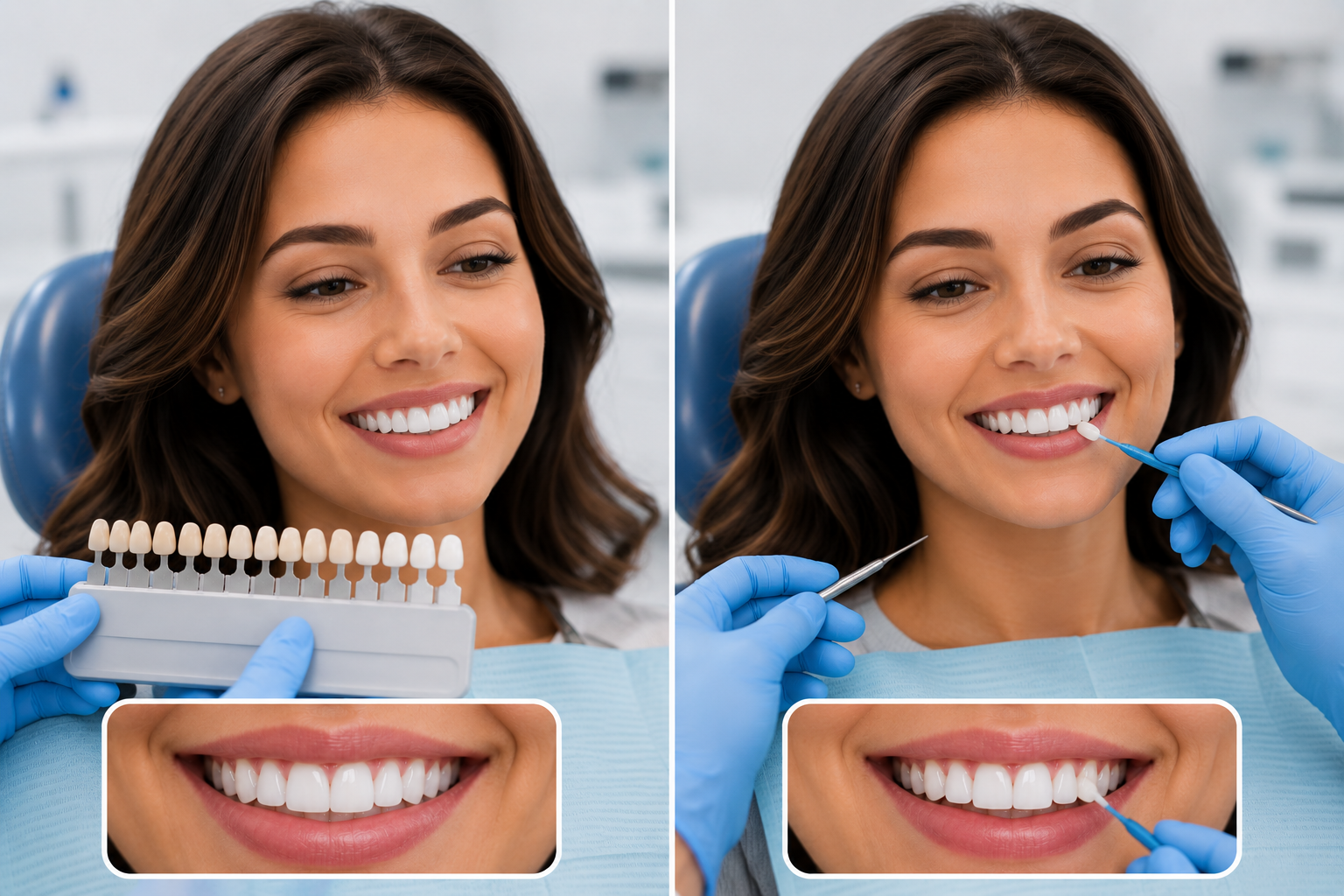
Cosmetic dentistry has become one of the most requested areas of dental care. Patients want brighter, more even smiles, and there are more ways to achieve that than ever before. The challenge is that the options can blur together. Whitening, bonding, veneers, and crowns all change how teeth look, but they differ greatly in how much tooth structure they affect, how long they last, and what problems they can actually solve.
Understanding these differences helps you have a more productive conversation with your dentist and choose a treatment that fits both your goals and your oral health.
Start With the Problem, Not the Procedure
The best cosmetic plans begin with a clear description of what you want to change. Common concerns include:
- Overall yellowing or dullness
- Isolated dark or discolored teeth
- Small chips or rough edges
- Gaps between teeth
- Teeth that look too short, worn, or uneven
- Mild crowding or rotation
- Old fillings or crowns that no longer match
Each of these points toward different solutions. A good evaluation also checks for underlying issues such as decay, gum inflammation, grinding, or bite problems, because cosmetic work placed on an unhealthy foundation will not last.
Professional Teeth Whitening
Whitening is the most conservative cosmetic treatment because it does not remove or add any tooth structure. Peroxide-based gels break down stain molecules within the enamel and dentin, lightening the overall shade.
Best for: General yellowing from aging, coffee, tea, or wine.
Limitations: Whitening does not change the color of fillings, crowns, or veneers. It is less effective on gray discoloration caused by certain medications or on teeth darkened after trauma or root canal treatment. Results fade gradually and need occasional touch-ups.
What to expect: In-office whitening produces faster results in a single visit. Custom take-home trays from a dental office provide gradual whitening over a couple of weeks. Temporary sensitivity is common and usually resolves quickly.
Whitening is often done first when other cosmetic work is planned, because restorations are color-matched to the natural teeth and cannot be whitened later.
Composite Bonding
Bonding uses tooth-colored resin that is applied directly to the tooth, shaped by hand, hardened with a curing light, and polished. Little or no enamel needs to be removed.
Best for: Small chips, minor gaps, slightly uneven edges, and small areas of discoloration.
Limitations: Composite resin can stain over time and is not as strong as porcelain. It may chip, especially on biting edges or in people who grind their teeth. Bonding generally lasts five to ten years before it needs repair or replacement.
What to expect: Treatment is often completed in a single visit without anesthesia. Because it is additive and reversible in many cases, bonding is a good way to make modest changes or to test a new look before committing to something more permanent.
The result depends heavily on the artistic skill of the dentist, since every layer is shaped by hand.
Porcelain Veneers
Veneers are thin shells of porcelain bonded to the front surfaces of teeth. They can change the color, shape, length, and apparent alignment of teeth in a dramatic and natural-looking way.
Best for: Multiple teeth with uneven shapes, chips, stubborn discoloration, worn edges, or small gaps, especially when a patient wants a comprehensive change.
Limitations: Most veneers require removing a thin layer of enamel, which makes the treatment irreversible. Veneers can chip or debond, and they will eventually need replacement, often after ten to twenty years. They are also more expensive than bonding.
What to expect: Treatment typically involves a planning visit, often with digital design or a trial smile, followed by tooth preparation and impressions, temporary veneers, and a final bonding appointment.
Some patients are candidates for minimal-preparation veneers, which remove very little enamel. Whether this is possible depends on the current position and shape of the teeth.
Crowns
Crowns cover the entire visible portion of a tooth. They are not usually the first choice for purely cosmetic reasons because they require removing more tooth structure. However, they are often the right option when a tooth is heavily filled, cracked, or weakened, or when it has had a root canal and needs protection.
Where Orthodontics Fits In
Many patients consider veneers to fix crowding or rotated teeth. In mild cases, this can work. In more significant cases, covering crooked teeth with veneers may require removing a large amount of enamel to make them look straight. Moving the teeth first with clear aligners or braces is often more conservative and allows any veneers or bonding that follow to be thinner and more natural.
A thoughtful cosmetic plan may combine several approaches: a short course of aligners to improve position, whitening to brighten the overall shade, and bonding or veneers on a few teeth to perfect the shape.
Choosing the Right Provider
Cosmetic results depend on both clinical skill and an eye for proportion, color, and facial harmony. When evaluating a cosmetic dentist, consider:
- Before and after photos of the dentist's own patients, especially cases similar to yours
- Use of digital smile design or mock-ups that let you preview results
- Willingness to recommend conservative options when they meet your goals
- Attention to oral health first, including treating decay and gum disease before cosmetic work
- Clear explanations of maintenance, lifespan, and replacement costs
Protecting Your Investment
Whatever treatment you choose, long-term care matters. Brush and floss consistently, keep regular cleanings, and limit staining foods and drinks after whitening or bonding. If you grind your teeth, a night guard protects both natural teeth and restorations. Avoid using your teeth to open packages or bite hard objects.
The most successful cosmetic results are the ones that look natural, last for years, and preserve as much healthy tooth structure as possible. Starting with a clear understanding of your options makes it far more likely you will end up with a smile you are happy to show.

Comments