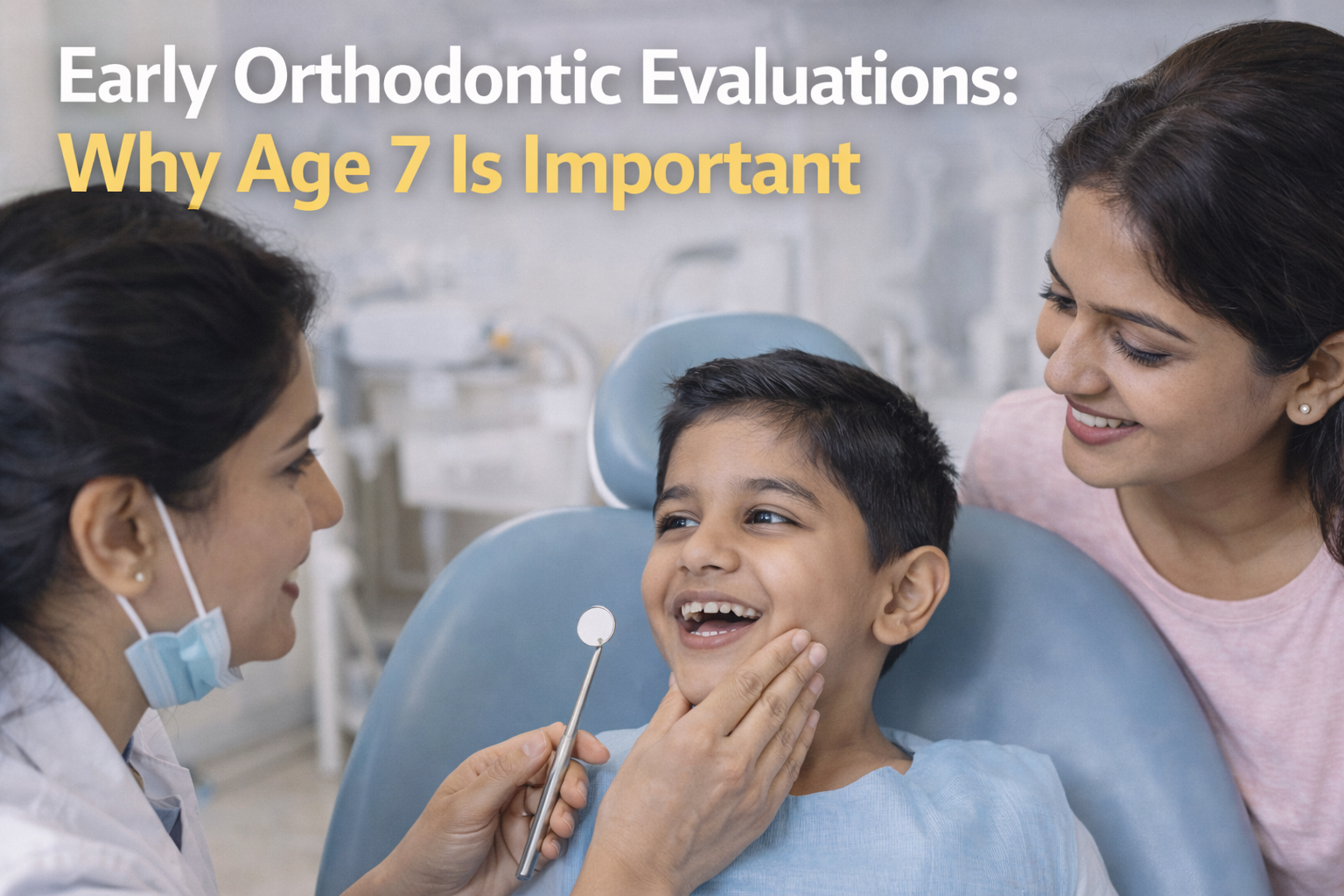
Parents are often caught off guard when they hear that a child should see an orthodontist around age seven. At that age most kids still have a mouth full of baby teeth, and the idea of braces seems years away. Yet this early evaluation is one of the most useful appointments a growing child can have, and understanding why it is timed the way it is helps parents see it as foresight rather than overkill.
By around seven, a child has usually lost some baby teeth and gained their first permanent molars and front teeth. This mix is exactly what makes the moment valuable. There are enough adult teeth in place to reveal how the bite is developing, while there are still enough baby teeth and enough jaw growth ahead to influence the outcome. It is a window where problems are visible but not yet locked in.
An early evaluation rarely leads to immediate treatment, and that surprises people too. In most cases the orthodontist simply takes a careful look, notes how things are progressing, and recommends watching and waiting. The child comes back periodically so the team can track growth and step in at the ideal moment if needed. This monitoring is reassuring and costs little, while catching the cases that truly benefit from early action.
Some issues genuinely are easier to address while a child is still growing. A narrow upper jaw, for instance, can often be widened gently with a simple appliance during childhood, creating room that prevents serious crowding later. A severe crossbite or an underbite may also respond best to early guidance. Waiting until all the adult teeth are in can turn a manageable situation into one that requires more involved treatment.
Habits are another reason early visits matter. Prolonged thumb sucking, tongue thrusting, and mouth breathing can all shape how the teeth and jaw develop, and the effects are easier to correct sooner rather than later. A skilled local orthodontist can spot these patterns early and offer gentle interventions before they cause lasting changes to a child's bite and facial growth.
Early treatment, when it is recommended, is often called the first phase, and it has a specific purpose. It is not about straightening every tooth right away. It is about correcting a developing problem, guiding jaw growth, or making room, so that the later, more comprehensive treatment is simpler and shorter. Many children who have a well timed first phase need less complex work as teenagers than they otherwise would.
Just as important, early monitoring prevents the opposite problem of treating too soon. Not every crooked baby tooth needs attention, and a good orthodontist knows when to leave things alone and let nature take its course. The age seven visit is as much about avoiding unnecessary treatment as it is about catching the cases that benefit from it. Either way, the family ends up with clarity instead of guesswork.
There is a psychological benefit for the child as well. A young patient who visits the orthodontist a few times for friendly, low pressure checkups grows comfortable with the office long before any real treatment begins. When the time comes for braces or aligners as a preteen, it is familiar territory rather than a scary unknown, which tends to make the actual treatment go more smoothly.
For parents, the early evaluation also allows for planning. Knowing in advance that a child will likely need treatment, and roughly when, makes it far easier to prepare financially and to schedule around school and activities. Surprises are expensive and stressful, while a heads up gives a family time to budget and arrange things on their own terms rather than scrambling.
Parents sometimes worry that an early visit will pressure them into starting treatment before they or their child are ready, but a reputable practice operates on the opposite principle. The whole purpose of early monitoring is to act only when acting genuinely helps, and to wait patiently when waiting is wiser. A trustworthy orthodontist will tell you plainly if your child needs nothing yet, and will explain why. They will also be clear about what they are watching for and roughly when the situation might call for a closer look. This measured approach protects families from unnecessary treatment while ensuring that the cases which truly benefit from early action are caught in time. If you ever feel pushed toward treatment that does not seem warranted, that is a reason to seek a second opinion rather than a reason to comply, because good early care is defined as much by restraint as by intervention.
None of this means every seven year old needs braces, or that parents should be alarmed. It simply means a single, low cost evaluation at the right age gives a family valuable information and the chance to act at the most effective moment. If your child is around that age and you have never had their bite checked, scheduling that first look is a small step that can pay off in a healthier, simpler path to a great smile.

Comments