With all the attention that clear aligners receive these days, it would be easy to assume that traditional braces are on their way out, a relic kept around only for those who cannot afford the newer option. Nothing could be further from the truth. Braces remain the most versatile and dependable tool in orthodontics, and for a great many cases they are not the fallback choice but the best one. Understanding why helps put the options in perspective.
Braces work through a beautifully simple principle. Small brackets are bonded to each tooth and connected by a wire, and as the orthodontist adjusts that wire over time, it applies steady, controlled pressure that gradually moves the teeth into position. Because the brackets are fixed to every tooth, the orthodontist has precise command over how each individual tooth moves, in every direction, throughout the entire treatment.
That precision and control are exactly why braces excel at complex cases. When teeth need significant rotation, when there are large gaps to close, or when the bite requires substantial correction, the constant and detailed control that braces provide is hard to match. Aligners have improved dramatically and handle many cases well, but for the most demanding situations, braces often remain the surest path to an excellent result.
There is also a reliability to braces that comes from their being fixed in place. They work twenty four hours a day without depending on the patient to remember anything. With aligners, success hinges on the discipline to wear the trays around twenty two hours a day, and not everyone has that discipline. For children, teens, and anyone who knows they would struggle to keep up with removable trays, the set it and forget it nature of braces is a genuine advantage.
Modern braces are far more refined than the bulky metal many adults remember. Brackets are smaller and less conspicuous, and tooth colored options blend in much better than the hardware of decades past. The wires use advanced materials that apply gentler, more consistent pressure, which can make treatment more comfortable and in some cases more efficient than older systems. The braces of today are not the braces of your childhood memories.
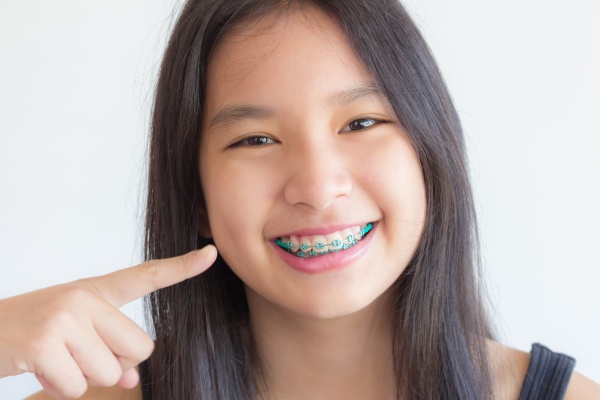
For younger patients, braces offer a practical kind of fun as well, since colored bands let kids and teens personalize their look and even change it at each visit. What might be seen as a drawback becomes a small bright spot, giving young patients a sense of ownership over their treatment. That little bit of enjoyment can make the experience more positive and improve cooperation.
Cost is another area where braces hold appeal, as they are often a comparable or sometimes more economical option depending on the case. Combined with payment plans that many practices offer and orthodontic coverage included in many dental insurance plans, braces remain an accessible choice for a wide range of families. Effective treatment does not have to mean the most expensive option.
Living with braces is more manageable than the apprehension that precedes it. After an adjustment period in the first week or two, when the teeth are tender and the mouth is getting used to the hardware, daily life returns largely to normal. The main ongoing demand is careful hygiene, brushing and flossing thoroughly around the brackets and wires, which protects the teeth during treatment and is well worth the extra few minutes.
It is true that braces are visible in a way aligners are not, and for some patients that matters a great deal. But for many others, particularly children and teens, the visibility is a non issue, and the advantages in control, reliability, and value outweigh it easily. The right choice depends on the individual case and the person's priorities, which is exactly what a consultation is for.
It is also reassuring that braces have such a long and well understood track record, which brings a certain predictability to treatment. Orthodontists have refined the techniques over generations, and the way teeth respond to this method is thoroughly mapped and familiar. That depth of experience means fewer surprises and a high degree of confidence in planning, particularly for the complicated cases where braces shine. Newer methods, for all their appeal, simply do not have the same decades of accumulated knowledge behind them. For a patient, this translates into a treatment whose course and outcome the orthodontist can anticipate with real assurance. There is comfort in choosing an approach that is not experimental but proven, one whose strengths and quirks are completely understood. Far from being a sign of being behind the times, opting for braces in the right case is often the choice grounded in the deepest body of orthodontic experience available.
The lasting popularity of braces is not a matter of tradition or cost alone. It reflects the simple fact that they remain an exceptionally effective and versatile way to straighten teeth and correct bites, suitable for the widest range of cases of any method available. When you understand what braces can do, they look less like an outdated option and more like the dependable workhorse they have always been, still earning their place at the center of orthodontic care.

Comments