Most people hear the phrase bone graft and picture something far more dramatic than what actually happens. In dentistry it is usually a routine, small-volume procedure done under local anesthetic, and it is one of the main reasons implant treatment is available to people who would have been turned away twenty years ago.
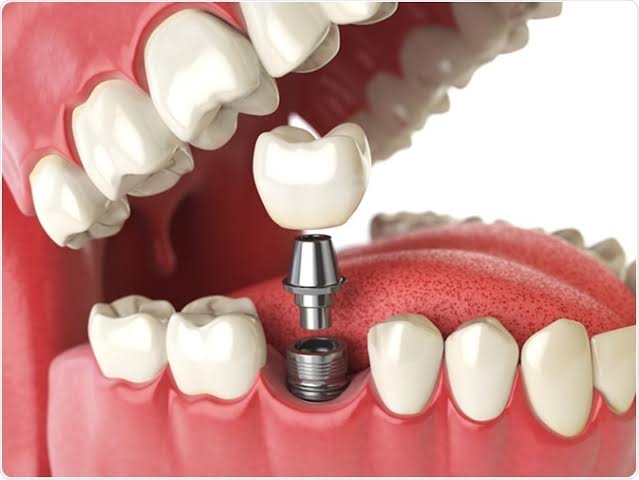
Understanding it makes implant quotes far easier to read, because grafting is frequently the difference between two very different prices for what sounds like the same treatment.
Why the bone disappears in the first place
Jawbone maintains itself through use. A natural tooth root transmits chewing force into the bone around it, and that stimulation is what tells the body to keep the bone there. Remove the tooth and the signal stops.
The loss is fastest in the first six to twelve months after extraction and continues slowly for years. Width goes before height, which matters because an implant needs a certain thickness of bone on all sides to be stable and to stay covered by healthy tissue.
This is why the timing of your decision affects the cost. A site grafted at the time of extraction usually needs nothing further. The same site left empty for five years may need substantially more work to rebuild.
Socket preservation, the cheapest version
When a tooth is removed and an implant is planned, graft material is often placed into the empty socket immediately and covered with a membrane. This is socket preservation, and it adds a modest amount to the extraction fee.
It is the highest-value grafting in dentistry. Rather than rebuilding lost bone later, it holds the shape of what is already there while the site heals, typically over three to four months. Anyone having a tooth removed who might want an implant eventually should ask about it before the extraction, not after.
Ridge augmentation and sinus lifts
When the site has already collapsed, more is required. Ridge augmentation adds width or height to a thin area of jaw, using graft material held in place by a membrane and sometimes secured with small screws or a titanium mesh. Healing runs four to nine months depending on the volume added.
In the upper back jaw there is a specific problem: the maxillary sinus sits directly above the molar roots, and once those teeth are gone the sinus tends to expand downward into the space. A sinus lift raises the sinus membrane and places graft material underneath it to create the bone height an implant needs. It can be done through a small window in the side of the jaw for larger cases, or through the implant site itself when only a few millimeters are needed.
Both are established procedures with high success rates. Both add months to the timeline, and both should be identified at the planning stage rather than discovered mid-treatment.
What the graft material is
Several options, all routine. Material can come from your own body, from a processed human donor source, from an animal source (usually bovine), or from a synthetic mineral. Each behaves slightly differently in how quickly it resorbs and is replaced by your own bone.
Patients often want to know which is best. The honest answer is that the choice depends on the site and the volume needed, and that all of the commonly used options are well studied. What matters more is the diagnosis behind the plan and the technique used to place it.
The scan that makes the plan honest
None of this can be assessed from a standard x-ray, which is a flat image of a three-dimensional problem. A cone beam scan measures bone width, height, and density, and locates the nerve canal in the lower jaw and the sinus floor in the upper.
A consultation that quotes implants without a scan is quoting a guess. This is the single most common reason a price changes partway through treatment, and it is entirely avoidable.
Reading a quote once you know this
Ask whether the figure includes extraction, socket preservation, any ridge or sinus work, the implant itself, the abutment, and the final crown. Ask what happens to the price if the site turns out to need more grafting than the scan suggested.
A practice that answers those in detail is one that has planned the case. Working with a local dentist who does the surgical and restorative phases under one roof tends to produce fewer surprises, because the person deciding whether the site needs grafting is the same person who has to make the final crown fit.
The takeaway for anyone facing an extraction
If a tooth is coming out and there is any chance you will want to replace it, raise grafting before the extraction appointment. It is the cheapest, simplest point in the entire process to protect your options, and it is the one that most often gets missed.

Comments