Dr. Lindsey Koerich's Posts (19)

Sort by

People often know they want straighter teeth without quite understanding what is misaligned or why. Orthodontic problems come in several recognizable types, each with its own causes and its own approaches to correction. Getting familiar with these common issues demystifies the field and helps you understand what an orthodontist is actually looking at when they examine your bite.

orthodontic-problems-1024x538.jpg

Crowding is the problem most people picture first. It happens when the jaw lacks enough room for all the teeth, so they overlap, twist, and crowd together. Beyond the appearance, crowding makes thorough cleaning difficult and raises the risk of decay and gum issues. Treatment typically involves creating or using space, sometimes with expansion in younger patients, and then guiding the teeth into proper alignment with braces or aligners.

Spacing is the reverse situation, with gaps between teeth. These gaps can result from teeth that are small relative to the jaw, from missing teeth, or from certain habits. While some people are content with minor spacing, larger gaps can trap food and affect confidence. Orthodontic treatment closes the spaces by moving the teeth together, and in cases involving missing teeth, the plan may coordinate with other dental work.

Overbite refers to the upper front teeth extending too far over the lower ones. A deep overbite can cause the lower teeth to bite into the roof of the mouth and can contribute to uneven wear over time. Correcting it usually involves moving the teeth and, in growing patients, sometimes guiding jaw development so that the upper and lower arches relate to each other more harmoniously.

Underbite is the opposite, where the lower teeth sit ahead of the upper teeth when biting. It often has a skeletal component related to jaw growth, which is why early evaluation is so valuable in children. A skilled orthodontist can sometimes guide jaw development during childhood to improve an underbite, while more severe cases in adults may require a combination of orthodontics and other interventions.

Crossbite occurs when some upper teeth sit inside the lower teeth rather than outside them, either at the front or sides of the mouth. Left untreated, a crossbite can cause uneven wear, gum problems, and asymmetric jaw growth in children. Treatment may involve widening the upper arch, especially in younger patients whose jaws are still developing, followed by aligning the teeth.

Open bite describes a situation where the upper and lower front teeth do not touch even when the back teeth are closed, leaving a visible gap. It is sometimes linked to habits like prolonged thumb sucking or tongue thrusting. Addressing the underlying habit is part of treatment, alongside orthodontic work to bring the teeth into proper contact so that biting and chewing function correctly.

Protrusion, where the front teeth stick out noticeably, is both a cosmetic and a practical concern, since protruding teeth are more prone to injury. Treatment moves the teeth back into a more protected and balanced position. In growing patients, the approach may also account for jaw relationships, while in adults it focuses on repositioning the teeth themselves.

Midline discrepancies, where the center of the upper teeth does not line up with the center of the lower teeth, are subtler but can affect both appearance and function. Orthodontists assess the midline as part of a complete evaluation, and correcting it is often part of comprehensive treatment that addresses the bite as a whole rather than just one isolated feature.

Understanding these categories also helps patients have more productive conversations with their orthodontist. When you can describe what you are noticing in rough terms, whether it is crowding, a gap, or teeth that do not seem to meet right, you give the provider a useful starting point and you follow their explanation more easily. It also helps you ask better questions about your own treatment, since you understand what is being corrected and why a particular approach was chosen. None of this replaces professional diagnosis, of course, but an informed patient tends to be a more engaged and satisfied one. People who understand the reasoning behind their treatment are more likely to stick with it faithfully and to care for their teeth well throughout. Knowledge turns treatment from something that is done to you into something you participate in, and that sense of partnership consistently leads to better experiences and better results.

What ties all of these together is that an orthodontist does not look at any single problem in isolation. They evaluate how the teeth, the bite, and the jaw all relate, then build a plan that addresses the whole picture. That is why a thorough initial examination is so important, and why two people who both want straighter teeth may end up with quite different treatment plans. Understanding the common problems is a useful start, but a professional evaluation is what turns that general knowledge into a path tailored to you.

Read more…

family%20dentistry%20bangalore.jpg

Deciding to pursue orthodontic treatment is the first step. Deciding where to have it done is the one that shapes the whole experience. Orthodontic care unfolds over many months, sometimes years, with regular visits along the way, so the practice you choose becomes a fixture in your routine for a good while. Picking thoughtfully is worth the effort, and a few clear considerations make the decision easier.

Begin with credentials and experience. An orthodontist completes years of specialized training beyond dental school to focus specifically on the movement of teeth and the development of the jaw. Confirming that the provider is a specialist, and learning how long they have been practicing, gives you a baseline of confidence. Experience with cases similar to yours or your child's is especially reassuring.

The range of treatment options a practice offers matters more than people expect. Some situations call for traditional braces, others for clear aligners, and many can be approached more than one way. A practice that offers and is skilled in multiple approaches can tailor the plan to your needs rather than fitting you into whatever they happen to do. Flexibility is a sign of a practice that puts patients first.

Pay attention to how the team communicates during your first contact. A good orthodontic practice explains things clearly, answers questions patiently, and never makes you feel rushed or pressured. The initial consultation is a revealing test. If they take time to understand your goals and lay out options honestly, that bodes well. If they push you to commit on the spot, treat it as a warning.

Convenience is a practical factor that affects whether you actually keep up with treatment. The location, the office hours, and how easy it is to schedule appointments all matter when you are returning regularly over a year or more. A practice that is a major hassle to reach or that cannot accommodate your schedule becomes a source of friction. The right orthodontic practice should fit into your life rather than complicate it.

The atmosphere of the office tells you a lot, particularly for families with children. Notice whether the space is clean and well organized, whether the staff is friendly, and whether kids seem comfortable there. A welcoming environment makes the regular visits something to tolerate easily rather than dread, and for anxious children it can be the difference between cooperation and resistance.

Transparency about cost is essential and should be addressed early. A reputable practice will give you a clear breakdown of the total fee, explain what is and is not included, and lay out payment plan options without evasion. They should also help you understand how your insurance applies. Vague answers about money are a red flag, since financial surprises later damage trust and strain the relationship.

Reviews and word of mouth carry real weight, used wisely. Hearing about other families' experiences, whether through online reviews or personal recommendations, helps you gauge a practice's reputation for results and for how they treat people. Look for patterns rather than fixating on any single review, and pay particular attention to comments about communication, wait times, and how problems were handled.

Consider the technology and methods a practice uses, without being dazzled by gadgets for their own sake. Modern tools like digital scanning can make treatment more comfortable and precise, and they are worth having. At the same time, the skill and judgment of the orthodontist matter far more than the newest device in the room. Good technology in capable hands is the ideal combination.

It can also be illuminating to ask a prospective practice how they handle the parts of treatment that do not go perfectly to plan, because every honest provider has them. How do they respond to a broken appliance, a missed appointment, or a result that needs extra fine tuning. A practice that answers these questions openly, with clear policies and a calm attitude, tends to be one that will support you well through the inevitable bumps. Evasiveness or irritation at the question is itself informative. You are choosing a partner for a process that unfolds over many months, and how a practice manages the imperfect moments often matters more than how they present the ideal ones. The smoothest sales pitch does not always come from the practice that will serve you best when something needs sorting out, so it is worth probing beyond the polished first impression to see how they operate when things get real.

Finally, trust your overall impression. After a consultation, you will have a feel for whether these are people you want to work with over the long haul. Did they listen. Did they explain. Did you leave feeling informed rather than sold to. The clinical quality matters enormously, but so does the relationship, because you are choosing a partner for a journey that takes time. When the credentials, the communication, and your gut all point the same way, you have likely found the right fit.

Read more…

Clear+vs+Permanent+Retainers_+Which+One+Prevents+Teeth+Crowding+Best.png

There is a moment of pure relief when braces finally come off or the last aligner tray is set aside. The teeth are straight, the bite feels right, and it is tempting to consider the job finished. But anyone who has been through treatment, or who has watched their own teeth shift after ignoring this advice, knows a hard truth. The result you worked so long to achieve is not permanent on its own. Retainers are what make it last.

To understand why, it helps to know what actually happens during treatment. Teeth are not fixed rigidly in the jaw. They sit in bone, cushioned by ligaments, and orthodontic treatment works by applying steady pressure that gradually remodels that bone and shifts the teeth into new positions. The teeth move because the surrounding tissue adapts, and that is exactly what makes the new arrangement vulnerable right after treatment ends.

Immediately after the braces come off, the bone and ligaments around the newly positioned teeth are still settling. The teeth have a strong tendency to drift back toward where they started, a process orthodontists call relapse. This pull is strongest in the first months and never fully disappears. A retainer holds the teeth in place while the surrounding structures stabilize, and then maintains them over the long term.

There are two main kinds of retainers, and each has its place. Removable retainers are worn on a schedule and taken out for eating and cleaning, which makes them easy to care for but dependent on the patient remembering to wear them. Fixed retainers are thin wires bonded behind the teeth, working quietly around the clock without any effort from the patient, though they require careful cleaning to keep the area healthy.

How long you need to wear a retainer is the question everyone asks, and the honest answer is longer than most people hope. In the beginning, near constant wear is often recommended, gradually tapering to nighttime only. But teeth can shift throughout life, and many orthodontists now advise wearing a retainer at night indefinitely to protect the result. A trusted orthodontist will give you a specific plan based on your case and explain the reasoning behind it.

The most common mistake patients make is treating the retainer as optional once treatment is over. People wear it faithfully for a while, then get casual, then stop. By the time they notice their teeth creeping back out of line, real movement has already happened, and the retainer that once fit no longer does. At that point, getting back on track can mean a new retainer or even a round of touch up treatment.

Caring for a retainer is simple but it does require consistency. Removable retainers should be cleaned gently and regularly, kept away from heat that can warp them, and stored in their case rather than wrapped in a napkin where they get thrown away. Fixed retainers need extra attention with floss threaders or a water flosser to keep plaque from building up around the bonded wire.

Losing or breaking a retainer is common, and the important thing is to act quickly. Teeth can begin shifting within days of going without, so a lost retainer is a reason to call your orthodontist promptly rather than letting weeks slide by. A quick replacement is far cheaper and easier than dealing with teeth that have already moved and need correcting again.

It helps to reframe the retainer not as an afterthought but as the final, essential phase of treatment. The months of braces or aligners moved your teeth into place. The retainer is what makes that investment hold for years and decades. Skipping it is like building a house and then neglecting the foundation, undoing slowly what took so much effort to achieve.

A useful way to think about retainers is to treat the first one you receive as a tool you will likely need to replace over the years rather than a single permanent object. Removable retainers wear out, get lost, or no longer fit perfectly after a long time, and that is entirely normal. Having a fresh one made periodically is far cheaper and simpler than letting your teeth drift while you put it off. Some people keep a spare so that a lost or damaged retainer never means a gap in protection. Whatever approach you take, the goal is continuity, never going long without something holding your teeth in place. Patients who plan for replacement as a routine part of long term maintenance almost never face the disappointment of watching their results slip away. Those who treat the first retainer as the end of the story are the ones who tend to be surprised when their teeth move again.

The encouraging part is that maintaining your results takes so little once the habit is set. A few minutes of wear at night and some basic care is a small price for a smile that stays straight for life. Patients who embrace the retainer as part of their routine rarely think about it after a while, and they get to enjoy the lasting payoff of all that earlier work. The braces get the attention, but the retainer is what makes the result truly yours to keep.

Read more…

braces-invisalign.jpg

Straightening your teeth is an investment, and protecting that investment along the way takes a little more effort than ordinary brushing. Orthodontic appliances create new nooks and surfaces where food and plaque can hide, which means the months of treatment are exactly when careful hygiene matters most. The good news is that with a few solid habits, you can finish treatment with teeth that are not just straight but genuinely healthy.

Braces are the bigger challenge for cleaning, simply because there is more to clean around. Brackets and wires trap food in ways that bare teeth never do, and the areas around each bracket are prone to plaque buildup. Left alone, that plaque can leave permanent white marks on the enamel, the kind that become obvious only after the braces come off. Nobody wants straight teeth marked by the very treatment that aligned them.

Brushing with braces takes more time and a better technique. The goal is to clean above, below, and around each bracket, not just sweep across the front. Many people find that angling the brush toward the gumline and then toward the chewing surface, working in small sections, does the job. An electric brush can help, but a manual one used carefully works perfectly well. The key is patience, since a rushed thirty seconds will not reach where it needs to.

Flossing is the step people are most tempted to skip with braces, and it is the one that matters a great deal. The wire blocks the normal motion, so you need a floss threader or special orthodontic floss to get underneath it and between the teeth. A water flosser is another excellent tool that many brace wearers swear by, since it flushes out debris around brackets that string floss struggles to reach. Whatever the method, cleaning between the teeth daily is not optional.

Aligners change the hygiene picture but do not remove the responsibility. Because you take them out to eat, you can brush and floss normally, which is a real advantage. The catch is that you must clean your teeth before putting the trays back in. Sealing food and sugar against your teeth under a snug plastic tray for hours is a recipe for decay. Carrying a travel brush for meals away from home solves most of this.

The trays themselves need care too. Rinse them whenever they come out, clean them gently with a soft brush, and avoid hot water that can warp the plastic. Cloudy, smelly aligners are a sign they are not being cleaned often enough. A good local orthodontist will show you exactly how to keep both your teeth and your trays in good shape, and following that guidance keeps treatment on track.

Diet deserves attention during treatment regardless of which appliance you wear. With braces, hard and sticky foods can break brackets or bend wires, leading to extra visits for repairs that slow your progress. With aligners, frequent snacking means frequent removal and cleaning, which gets tiresome and tempts people to cut corners. Being a little more deliberate about what and when you eat pays off in fewer setbacks.

Regular dental cleanings remain important throughout orthodontic treatment, not just the orthodontist visits. Your general dentist and hygienist can reach buildup that is hard to manage at home and can catch early signs of trouble before they grow. Keeping up with these cleanings on schedule, in addition to your adjustment appointments, gives your teeth the best protection during a vulnerable stretch.

Discomfort after adjustments or new aligner trays is normal and temporary, and it should not become an excuse to brush less. If anything, gentle, thorough cleaning helps. Sore spots from a bracket or wire can be soothed with orthodontic wax, and any persistent irritation or a broken appliance is worth a call to your provider rather than waiting it out and risking a delay in your progress.

One habit that makes a surprising difference is keeping a small dental kit with you wherever you go. A travel toothbrush, a bit of floss or some interdental brushes, and a little orthodontic wax fit easily into a bag or a desk drawer. With braces, this lets you clear away food after lunch before it has hours to sit against your teeth. With aligners, it means you can always brush before reinserting the trays rather than skipping it because you are away from home. The patients who finish treatment with the healthiest teeth are almost always the ones who made cleaning convenient enough that they actually did it consistently. Relying on willpower alone tends to fail, but reducing the friction so that good hygiene is easy makes it far more likely to happen. Small preparations like this protect the considerable investment you are making in your smile.

The months of treatment pass faster than you expect, and the habits you build during them tend to stick. Patients who commit to careful hygiene throughout almost always finish with a result they are proud of, while those who let it slide sometimes trade crooked teeth for marked or decayed ones. A straight smile is worth having, and protecting it along the way ensures the smile you reveal at the end is as healthy as it is aligned.

Read more…

If you have decided to straighten your teeth, the next question lands almost immediately. Do you go with traditional braces or clear aligners. Both work, both have loyal fans, and both have genuine strengths. The right answer is not the same for everyone, and it depends as much on your habits and lifestyle as on the technical details of your case. Sorting through the differences honestly helps you land on a choice you will be happy with.

invisible-braces.png

Traditional braces use metal brackets bonded to each tooth and connected by a wire that the orthodontist adjusts over time. They have been refined over many decades and remain the most versatile tool available. For complex cases involving significant rotation, large gaps, or major bite correction, braces often have an edge because they give the orthodontist precise, constant control over how each tooth moves.

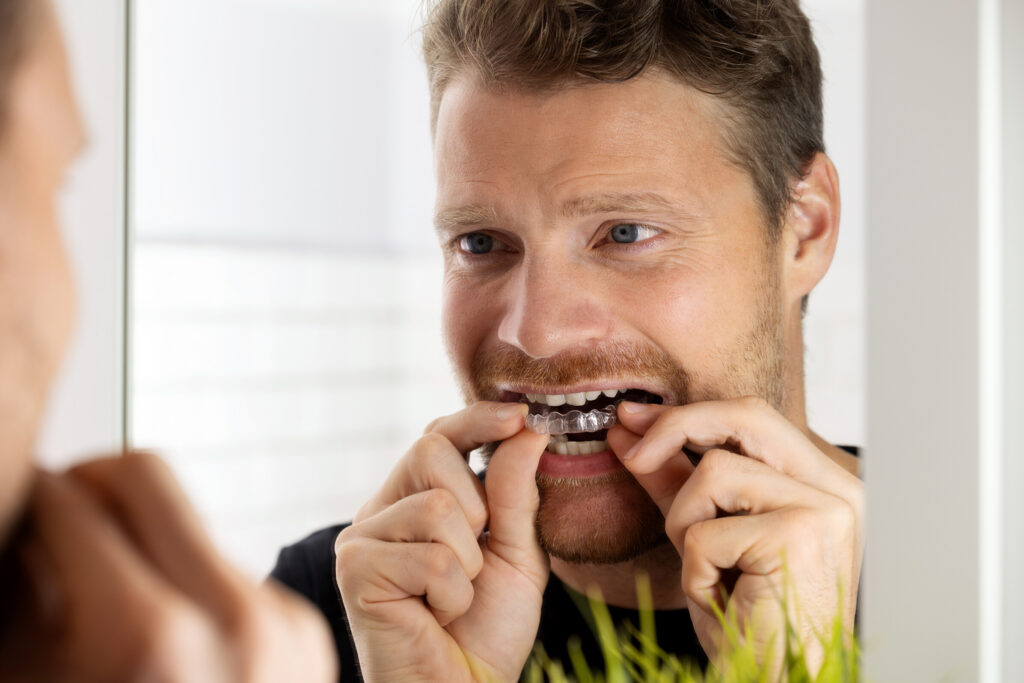
Clear aligners take a different approach. They are a series of custom, transparent trays that you swap out every week or two, each one nudging your teeth a little closer to the goal. Their headline appeal is that they are nearly invisible and removable. You take them out to eat, brush, and floss, which many people find far more convenient than working around fixed brackets and wires.

Appearance is the deciding factor for a lot of adults. Aligners let you go through treatment without it being obvious to coworkers, clients, or anyone across a dinner table. Teenagers sometimes feel the same way, though plenty are perfectly happy with braces, especially since modern brackets are smaller and colored bands let them have a bit of fun with the look.

Discipline is the quiet variable that decides whether aligners succeed. They only work if you wear them around twenty two hours a day, removing them just for meals and cleaning. For a responsible adult or a motivated teen, that is manageable. For someone who is likely to leave them out for hours or lose a tray, fixed braces may actually be the more reliable path, since they are working whether you think about them or not. A consultation at a local orthodontic office can help you judge this honestly about yourself.

Eating habits differ between the two as well. With braces, certain foods are off limits for the duration, things that are hard, sticky, or chewy and could damage the brackets. With aligners, you simply take them out and eat whatever you like, then brush before putting them back. That freedom is a real plus, though it does require the discipline to actually clean your teeth before re inserting the trays.

Maintenance and comfort round out the comparison. Braces can irritate the inside of the lips and cheeks at first and require careful brushing around the brackets. Aligners are smooth and easy to clean, but they must be rinsed and cared for, and you have to be the kind of person who will not lose them. Both cause some pressure and soreness when adjustments happen, which is simply the feeling of teeth moving and fades within a few days each time.

Cost is often similar between the two these days, though it varies by case and provider. Complex situations can run higher with either method. Many practices offer payment plans for both, and insurance that covers orthodontics generally applies regardless of which you choose. It is worth getting specific numbers for your own case rather than relying on general impressions.

Treatment time depends far more on the complexity of your teeth than on the method. Simple cases can finish in well under a year with either option, while involved ones take longer. An orthodontist can give you a realistic estimate once they have examined your mouth, and that estimate should factor into your decision alongside everything else.

It is also worth thinking past the treatment itself to the maintenance that follows, because that can subtly factor into your choice. Both braces and aligners require a retainer afterward to hold the result, and the habits you build during treatment often carry forward. Someone who has spent months diligently caring for aligners has already practiced the discipline that retainer wear demands. Someone who relied on the set and forget nature of braces will need to build that habit fresh. Neither is better or worse, but it is a useful thing to be honest with yourself about as you decide. The method that fits your temperament during treatment tends to fit it afterward too. Whichever you choose, going in with a clear sense of the full journey, including the part that comes after the teeth are straight, helps you commit to the option that you will actually follow through on from start to finish.

The honest bottom line is that there is no universally better choice, only the better choice for you. Think about how you live, how disciplined you are likely to be, how much the appearance matters to you, and what your case actually requires. A trustworthy provider will lay out both options fairly and help you weigh them rather than steering you toward whichever is easier for them. With the right fit, both braces and aligners deliver the same thing in the end, a smile you are glad to show.

Read more…

What-to-Expect-at-Your-First-Orthodontic-Visit.jpg

The first orthodontic consultation carries a surprising amount of mystery for something so routine. People often arrive unsure whether they will leave with braces glued on that same day, whether it will hurt, or whether they are about to be talked into something expensive. Understanding what really happens at that first visit takes most of the anxiety out of it and helps you get more from the appointment.

The visit usually begins with a conversation rather than any equipment. The orthodontist or a team member will ask what brought you in, what bothers you about your teeth or bite, and what you hope to achieve. This matters more than it might seem. Your goals shape the entire plan, and a good provider listens carefully here, because the same set of teeth can be approached in different ways depending on what the patient actually wants.

Next comes the examination. The orthodontist looks closely at your teeth, gums, and the way your upper and lower teeth come together when you bite. They check how your jaw moves and opens, feel for any tenderness, and note things you may never have noticed yourself. This part is painless and quick, but it is where the real assessment begins, since how the teeth fit together tells the practiced eye a great deal.

Most consultations include some form of imaging. Digital photographs of your face and teeth, along with X rays, give a complete picture of what is happening below the surface, including the position of roots and any teeth that have not yet erupted. Many practices now use a digital scanner that builds a three dimensional model of your mouth in minutes, replacing the uncomfortable putty molds that older patients remember with a clear dislike.

Once the provider has gathered this information, you move to the part most people came for, the explanation. This is where good orthodontics really shows its value, because the provider translates all that data into plain language. They will tell you what they see, whether treatment is recommended, what options exist, roughly how long it would take, and what results you can realistically expect. You should never leave this conversation more confused than you arrived.

It is worth knowing that you almost certainly will not have braces placed at this first visit. The consultation is for evaluation and planning. If you decide to move forward, the actual start of treatment is scheduled for a later appointment, giving you time to think, ask questions, and sort out the practical details. Anyone pressuring you to commit on the spot is a reason for caution rather than a reason to rush.

Cost and logistics typically come up before you leave. A treatment coordinator often reviews the total fee, explains payment plan options, and helps you understand what your insurance might cover. Getting these numbers in writing is reasonable and expected. A transparent practice wants you to understand the financial side clearly, because surprises later benefit no one and damage trust.

This is also your chance to interview the practice, even if it does not feel that way. Notice how the team treats you, whether they answer questions patiently, and whether the office feels organized and clean. You may be visiting this place regularly for a year or more, so the relationship and the atmosphere matter. Trust your read on whether these are people you want to work with over that stretch of time.

Coming prepared makes the visit far more useful. Jot down your questions beforehand so you do not forget them in the moment. Bring any relevant dental history, and if you have insurance, have the details handy. If you are considering treatment for a child, think in advance about their school schedule and activities so you can discuss realistic timing with the team.

It can also help to bring along anyone who will be part of the decision, whether that is a spouse, a parent, or for a child, both parents if possible. Orthodontic treatment is a shared commitment of time and resources, and having everyone hear the same explanation firsthand prevents the game of telephone that often follows a solo visit. People absorb information differently, and a question that does not occur to one person will occur to another. A good practice welcomes this and will happily address the whole group rather than rushing one person out the door. Leaving the consultation with everyone on the same page, having heard the options together, makes the eventual decision easier and reduces second guessing later. It also signals to the practice that you are taking the choice seriously, which tends to bring out their most thorough and patient explanations in return.

By the end of a good consultation, you should have a clear picture of where your teeth stand, what your options are, and what the path forward would look like if you choose to take it. There is no obligation to decide anything that day. The whole point is to replace uncertainty with information, so that when you do make a choice about your smile, you are making it from a position of genuine understanding.

Read more…

When a family starts thinking about orthodontic care, it often begins with one person. A child whose adult teeth are coming in crowded, or a parent who has finally decided to fix a bite that has bothered them for years. What surprises many households is how quickly that single concern turns into a shared one, with siblings, parents, and sometimes even grandparents all ending up in treatment within a few seasons of each other.

AdobeStock_205091844-768x512-1.jpeg.webp

There is a practical logic to keeping that care under one roof. Coordinating appointments for several family members at a single practice saves an enormous amount of time and driving. Instead of juggling visits across different offices on different days, a family can often stack appointments together, turning what could be a scattered errand into one efficient stop. For busy parents, that convenience alone is worth a great deal.

Beyond logistics, there is real value in continuity. A practice that has treated your older child already knows your family's history, your preferences, and the way you like to communicate. When the younger sibling reaches treatment age, there is no starting from scratch. That familiarity tends to make each successive case smoother, and it builds a relationship of trust that a one time visit never could.

Treating patients across a range of ages is exactly what a family orthodontist is set up to do. Children, teenagers, and adults each have different needs, different concerns, and different ideal approaches. A practice geared toward families keeps options on hand for all of them, from early guidance for young children whose jaws are still growing to discreet aligners for an adult who would rather treatment not be obvious at work.

Children benefit from an environment that does not feel intimidating. When a young child sees an older sibling or a parent going through treatment without drama, braces and aligners stop seeming scary. The shared experience normalizes the whole thing. Kids who might otherwise be anxious often walk in relaxed because they have watched someone they trust do it first and come out smiling.

Adults sometimes find their own motivation through their children. A parent who brings a child in for a consultation may hear, almost in passing, that their own bite could be improved too. More than a few adults have started treatment this way, having never seriously considered it until they were already sitting in the chair for someone else. Families have a way of encouraging one another into good decisions.

Cost is easier to manage across a family as well. Many practices offer family considerations or flexible payment plans that make treating multiple members more affordable than handling each as a separate, unrelated case. When the same office is coordinating everything, billing and insurance also become simpler to track, with one team familiar with your situation rather than several who are not.

The teenage years bring their own dynamics, and a family oriented practice tends to handle them well. Teens care about how treatment looks and fits into their social lives, and a team experienced with that age group knows how to keep them engaged and compliant. Parents appreciate having a partner who can talk to their teenager directly and keep the treatment on track without it becoming a constant battle at home.

There is also something reassuring about long term care from people who know you. Orthodontic treatment does not end the day the braces come off. Retainers, follow up checks, and the occasional adjustment are part of keeping the results stable for years. A practice that has cared for your whole family is far more likely to be there for that long arc than a place you visited once and moved on from.

There is also a practical benefit to how a family oriented practice handles records and history across siblings. When the same team has guided an older child through treatment, they often have useful insight into patterns that may run in the family, from the way teeth tend to erupt to common bite tendencies. That accumulated familiarity lets them anticipate rather than merely react, which can make a younger sibling's care more proactive and better timed. Parents appreciate not having to re explain the family situation from scratch each time, and the continuity tends to make every successive case feel smoother than the last. It is the kind of advantage that is hard to quantify but easy to feel, the difference between being known and being processed. Over the years, that relationship becomes a quiet asset, one that families come to value as much as the clinical results themselves.

In the end, choosing a single orthodontist for the family is about more than convenience, though the convenience is considerable. It is about building a relationship with a team that understands your household, treats each member according to their needs, and grows familiar with your family over the years. For a lot of households, that sense of being known and cared for is what turns a series of appointments into genuine, lasting trust.

Read more…

Essential-Guide-to-Adult-Orthodontic-Care-in-New-Jersey-1.jpg

There is a quiet assumption many adults carry, that braces are something you either got as a teenager or missed your chance at forever. It is one of the most common misunderstandings in dental care, and it keeps a lot of people from a treatment that could genuinely improve their lives. The truth is that teeth respond to gentle, steady pressure at almost any age, and adults make up a growing share of orthodontic patients every year.

The reasons adults seek treatment vary widely. Some never had access to care as children. Others wore braces years ago but skipped retainers, and their teeth gradually drifted back. A few notice new crowding in their thirties or forties as small, lifelong shifts finally add up to something visible. Whatever the path, the goal tends to be the same, a smile that feels comfortable and looks the way they want it to.

Health is often the underrated motivator. Straighter teeth are easier to clean, which lowers the long term risk of decay and gum disease. A balanced bite distributes the force of chewing evenly, protecting teeth from the uneven wear that misalignment causes over decades. For adults who have already invested in dental work like crowns or implants, proper alignment helps protect that investment by keeping pressure where it belongs.

One of the biggest changes in recent years is how discreet treatment has become. Clear aligners are nearly invisible and can be removed for meals and special occasions. Tooth colored brackets blend in far better than the metal of decades past. For professionals who spend their days in meetings or in front of clients, these options remove the self consciousness that once made adults hesitate. You can pursue alignment without it announcing itself to everyone you meet.

Modern orthodontics has also gotten more precise and often more comfortable. Digital scanning replaces the messy molds many people remember, and treatment can be mapped out on a screen before it begins, so you can see the projected result in advance. The field of orthodontics has advanced enough that many adult cases move faster and with less guesswork than they would have a generation ago.

That said, adult treatment does have its own considerations. Adult bone is fully mature, so some movements take a bit longer than they would in a still growing teenager. Existing dental work sometimes needs to be coordinated into the plan. None of this is a barrier, but it is why a thorough evaluation matters. An experienced provider will tailor the approach to your specific mouth rather than applying a one size template.

The emotional payoff is something adults describe again and again. There is a particular kind of confidence that comes from finally addressing something you have been self conscious about for years. People talk about smiling more freely in photos, feeling more at ease in social settings, and a general sense of having done something good for themselves. It is easy to dismiss this as vanity, but feeling comfortable in your own skin is a real and worthwhile thing.

Practical concerns like cost and scheduling are very manageable for most adults. Payment plans spread the expense over the months of treatment, and many dental plans include orthodontic coverage that adults forget applies to them too. Appointments are typically spaced weeks apart and are short, which fits more easily into a working adult's calendar than people expect.

If you are an adult who has wondered about treatment, the kindest thing you can do is gather information rather than keep guessing. A consultation will tell you whether your goals are realistic, what the options are, and roughly how long and how much. There is no commitment in simply asking, and many people are pleasantly surprised by how straightforward their situation turns out to be.

Adults considering treatment sometimes worry about how it will affect their daily responsibilities, and this is a fair concern worth addressing plainly. The honest answer is that modern treatment fits around a working life far more easily than people assume. Appointments are short and spaced weeks apart, and with discreet options most colleagues never even notice. There is a brief adjustment period when treatment begins or when an appliance changes, but it settles quickly and rarely interferes with work or social plans. Many adults report that within a couple of weeks the whole thing simply blends into their routine. The mental image of treatment as a constant disruption comes mostly from outdated impressions rather than current reality. When you weigh a few minor adjustments over several months against a result you keep for the rest of your life, the trade tends to look very favorable, which is why so many busy professionals decide it is worth it.

The years are going to pass no matter what. The question is whether you arrive in them with the smile you have quietly wished for or with the same hesitation you have today. Plenty of people in their forties, fifties, and beyond have decided it was finally their turn, and very few regret it. If the idea has crossed your mind more than once, that is usually a sign it is worth a real look.

Read more…

Orthodontic-Treatment-in-hyderabad.png

Almost everyone who eventually gets braces or aligners has a story about how long they waited first. Years, sometimes decades. The teeth bother them in photos, or food keeps getting stuck, or a dentist mentions the bite at every cleaning, and still the appointment never gets made. I understand the instinct. Treatment feels like a big commitment of time and money, and there is always something more urgent. But waiting has its own costs, and they are easy to underestimate.

Start with the dental health side of things. Crowded and overlapping teeth create tight spots that a toothbrush cannot reach well and floss can barely squeeze into. Over time, plaque settles into those hidden corners and turns into decay or gum inflammation. What begins as a cosmetic annoyance slowly becomes a maintenance problem, and the fillings or deep cleanings that follow cost real money that a straighter set of teeth might have avoided.

A misaligned bite adds another layer. When upper and lower teeth do not meet evenly, certain teeth take more force than they were built to handle. The result, played out over years, is uneven wear, chipped edges, and sometimes cracked teeth that need crowns. None of this happens overnight, which is exactly why it sneaks up on people. By the time the damage is obvious, it is harder and more expensive to fix than the original alignment would have been.

There is a comfort cost too. Jaw soreness, clicking, and tension headaches are common companions of a bite that is out of balance. People adapt to low level discomfort so gradually that they stop noticing it, then are surprised when treatment relieves something they assumed was just part of life. You do not always know how much a problem was bothering you until it is gone.

Then there is the simple matter of how you feel about your smile. Confidence is hard to put a price on, but anyone who has hidden their teeth in pictures or covered their mouth when they laugh knows the weight of it. Putting off treatment means more years of that small daily friction. Many adults who finally commit say their only regret is not doing it sooner, because the boost to how they carry themselves was bigger than expected.

The encouraging news is that getting started is easier than it used to be. A consultation with a local orthodontist is usually free or low cost, and it gives you concrete answers instead of vague worry. You learn what your specific situation calls for, how long treatment would take, and what payment plans are available. That clarity often dissolves the very fears that kept you waiting in the first place.

Cost is the hurdle people name most often, so it is worth addressing directly. Many practices offer monthly payment plans that spread treatment over its full length, and a lot of dental insurance includes an orthodontic benefit that people forget they have. Health savings accounts can be used as well. When you break the total into manageable pieces, the number that felt impossible often turns out to be workable.

Time is the other common concern. Yes, treatment can take a year or two, but that time passes regardless of whether you start. The choice is not between a long treatment and no treatment. It is between arriving two years from now with straighter teeth or arriving at the same point with the same crowding you have today. Framed that way, the wait stops looking like the safe option.

For parents weighing treatment for a child, the timing argument is even stronger. Young jaws are still growing, which gives an orthodontist room to guide development in ways that become impossible once growth finishes. Catching an issue early can sometimes shorten or simplify the treatment a child needs later, turning what might have been a complex case into a straightforward one.

I want to be clear that none of this is about chasing perfection or feeding insecurity. Plenty of people have slightly imperfect teeth and feel completely fine about them, and that is wonderful. The point is narrower than that. If your teeth genuinely bother you, whether for how they look or how they function, then waiting does not make that feeling go away. It usually just postpones the relief while the underlying issue holds steady or slowly worsens. The people I have watched go through treatment were not vain. They were simply tired of carrying a small frustration year after year, and they finally decided to do something about it. There is a quiet satisfaction in addressing a thing you have put off for ages, in discovering that the obstacle you built up in your mind was smaller than you thought. Whatever you decide, deciding on purpose beats drifting along by default.

None of this is meant to pressure anyone into a decision they are not ready for. It is simply an honest accounting of what waiting actually costs, because that side of the ledger rarely gets discussed. If your teeth have been on your mind for a while, the smartest first move is not to commit to anything. It is just to get the facts from a professional, so that whatever you decide, you are deciding with open eyes.

Read more…

orthodontic-appointments-20260205224352.webp

Life gets busy. I understand that better than most, because I see it play out in my schedule every single week. A family vacation runs long. A work meeting cannot be moved. A teenager forgets to tell their parent about an appointment until the day has already passed. Missing an orthodontic appointment happens, and when it does, the first thing I want patients to know is that it is not the end of the world. But I also want to be honest: it does matter, and here is why.

How Often You Need to See the Orthodontist

How often do you need to see the orthodontist during treatment? For most patients in active treatment with braces, appointments are scheduled every four to eight weeks. The exact interval depends on the stage of treatment, the type of mechanics being used, and how the teeth are responding. Early in treatment, when we are doing significant alignment work, visits may be more frequent. Later, during fine-tuning stages, we might space them out a bit more.

For patients in clear aligners, the schedule can vary. Some aligner protocols involve check-ins every six to ten weeks, while others may extend to twelve weeks if things are progressing smoothly. Your orthodontist sets these intervals based on clinical judgment about what your teeth need and how closely your progress needs to be monitored.

Each appointment serves a specific purpose. We are not just tightening wires for the sake of it. At each visit, we evaluate how teeth have responded since the last adjustment, make changes to the wire or appliance to guide the next phase of movement, check for any issues like loose brackets or signs of decalcification, and ensure everything is progressing according to plan.

What Happens When You Miss a Visit

What happens if you miss an orthodontist appointment? The immediate consequence is that your teeth stop receiving the guidance they need to continue moving in the right direction. Orthodontic wires are designed to deliver forces over a specific timeframe. Once that timeframe passes, the wire may have fully expressed its intended movement, and teeth simply sit where they are until the next adjustment gives them new instructions.

In some cases, teeth may actually begin to drift back toward their original positions if left without active force for too long. This is especially true early in treatment when teeth have not yet been stabilized in their new positions. The periodontal ligament has memory, and without continued guidance, it can pull teeth back toward where they came from.

Missing one appointment by a week or two is unlikely to cause significant problems. Your treatment might be extended by a similar amount of time, but the overall outcome should not be compromised. The concern grows when appointments are missed repeatedly or when gaps become longer, stretching into months.

The Cumulative Effect of Multiple Missed Appointments

I had a patient, a college freshman, who left for school across the state and missed three consecutive appointments over about four months. When he finally came back during winter break, his teeth had shifted enough that we essentially needed to restart a portion of his treatment. What should have been a remaining eight months of treatment turned into fourteen months. He was frustrated, and I understood, but the biology does not negotiate.

When multiple appointments are missed, several things can happen. Wires that have become passive cannot guide further movement. Elastic chains lose their force and stop closing spaces. Power chains degrade in the mouth and become ineffective. Teeth that were nearly aligned begin to relapse. And the overall treatment plan, which was designed as a sequence of carefully staged movements, gets disrupted.

The financial impact is worth mentioning as well. Extended treatment often means additional costs, whether through extended payment plans, additional appliance fees, or simply the opportunity cost of wearing braces for many extra months.

Clear Aligners and Missed Check-Ins

For aligner patients, the dynamics are slightly different but the principle is the same. If you are diligently wearing your aligners and progressing through your trays on schedule, a missed check-in appointment is less immediately impactful because the aligners themselves are providing the force. However, the orthodontist needs to verify that the teeth are actually tracking with the aligners as expected. Without that verification, you might continue wearing trays that are no longer fitting properly, which means teeth are not actually moving as planned.

I have seen aligner patients who skipped two or three check-ins, continued advancing through their trays on their own, and arrived months later with aligners that did not fit at all. At that point, we often need to take new scans and order a refinement set of aligners, which adds time and complexity to the process.

How to Get Back on Track

If you have missed an appointment, the most important step is simply to call and reschedule as soon as possible. Do not let embarrassment or guilt prevent you from picking up the phone. Orthodontic offices deal with missed appointments constantly, and no one is going to lecture you. We just want to get you back in the chair so we can assess where things stand and make a plan to move forward.

When you come in after a gap, your orthodontist will evaluate the current position of your teeth, determine whether any regression has occurred, and adjust the treatment plan accordingly. Sometimes we can pick up right where we left off. Other times, we may need to add steps or change our approach. Either way, the sooner you come back, the less time and effort will be needed to correct course.

Tips for Staying on Schedule

I know that keeping regular appointments is easier said than done, especially for families juggling multiple schedules. Here are a few strategies that help my patients stay on track. First, schedule your next appointment before you leave the office. Having that date on the calendar immediately makes it harder to forget. Second, opt in to text or email reminders if your office offers them. Third, if you know about an upcoming schedule conflict, like a vacation or a busy season at work, call ahead and reschedule rather than simply not showing up.

For my teenage patients, I encourage parents to put the appointment in the teen's phone as well as their own. Building shared responsibility for scheduling helps teenagers develop the habit of managing their own healthcare, which will serve them well into adulthood.

The Bigger Picture

Orthodontic treatment is a partnership between the patient and the provider. I can design the best treatment plan in the world, use the most advanced materials, and apply my years of training at every appointment. But if a patient is not showing up regularly, the treatment simply cannot progress as intended. Consistency is one of the most underrated factors in achieving a great orthodontic result.

Think of it this way: each appointment is a small step toward your goal. Skip one step and you might barely notice. Skip several and you start losing ground. Stay consistent and you will reach the finish line on time, with the result you and your orthodontist envisioned from the very beginning.

Read more…

large-shutterstock_2485895317.jpg

When patients come in for their orthodontic consultation, I ask about their medications and medical history. Sometimes people are surprised by this. They wonder what their thyroid medication or their teenager's growth hormones have to do with straightening teeth. The answer is quite a lot, actually. Orthodontic treatment relies on biological processes happening inside bone and connective tissue, and those processes are influenced by hormones, medications, and overall systemic health in ways that many patients do not realize.

How Tooth Movement Works at the Biological Level

To understand why hormones and medications matter, it helps to know what actually happens when teeth move. When an orthodontic force is applied to a tooth, it creates areas of compression and tension in the bone surrounding the root. The body responds by activating cells called osteoclasts, which break down bone on the compression side, and osteoblasts, which build new bone on the tension side. This constant cycle of bone breakdown and rebuilding is what allows teeth to travel through the jaw.

This process is not purely mechanical. It is deeply biological. Anything that affects bone metabolism, inflammatory responses, or cellular activity can influence how quickly or slowly teeth move. That includes hormones your body produces naturally and medications you take for other health conditions.

Hormonal Influences on Treatment

Can hormones slow down orthodontic treatment? They certainly can, and in some cases they can speed it up. The relationship between hormones and tooth movement is complex and varies depending on which hormones are involved.

Thyroid hormones play a significant role in bone metabolism. Patients with hypothyroidism, where the thyroid is underactive, may experience slower tooth movement because their overall metabolic rate is reduced. Conversely, patients with hyperthyroidism may see faster movement, though this can also increase the risk of root resorption if not managed carefully.

Estrogen and progesterone also influence orthodontic treatment. These hormones affect bone density and the inflammatory response. Some research suggests that tooth movement may vary slightly across the menstrual cycle, though the clinical significance is debatable. What is more relevant is that postmenopausal women, who have lower estrogen levels, may experience different rates of tooth movement compared to younger women. Hormone replacement therapy can influence these dynamics as well.

Growth hormone is particularly relevant for adolescent patients. The pubertal growth spurt is associated with increased bone turnover, which can actually facilitate tooth movement. This is one reason why adolescence is often considered an ideal time for orthodontic treatment; the biology is working in our favor.

I treated a patient in her fifties who was on thyroid replacement medication for Hashimoto's disease. Her tooth movement was noticeably slower than what I would typically expect. We adjusted our appointment intervals and managed expectations accordingly. By the end of treatment, we achieved an excellent result; it simply took a few months longer than the average case.

Medications That Can Affect Tooth Movement

Do medications affect braces? Yes, several categories of medications can influence orthodontic treatment in meaningful ways. The most commonly discussed are anti-inflammatory drugs, bisphosphonates, corticosteroids, and certain antidepressants.

Nonsteroidal anti-inflammatory drugs, commonly known as NSAIDs, deserve special attention. These include ibuprofen, naproxen, and aspirin. Because tooth movement depends on an inflammatory response in the periodontal ligament, medications that reduce inflammation can theoretically slow that process. Some studies have shown that chronic NSAID use is associated with reduced rates of tooth movement. For patients who take NSAIDs occasionally for a headache, this is not clinically significant. But for patients on daily anti-inflammatory therapy for arthritis or chronic pain, it is something I monitor.

Bisphosphonates, used to treat osteoporosis, have a profound effect on bone remodeling. These medications work by inhibiting osteoclast activity, which is the very process that allows teeth to move through bone. Patients on bisphosphonates may experience significantly slower tooth movement, and in some cases, treatment may need to be modified or reconsidered entirely. If you are taking medications like alendronate or risedronate, it is critical to disclose this to your orthodontist.

Corticosteroids, taken chronically for conditions like asthma, lupus, or inflammatory bowel disease, can affect bone density and healing. Short-term steroid use is generally not a concern, but long-term use may influence treatment planning and timeline.

Certain antidepressants, particularly selective serotonin reuptake inhibitors, have been studied for their effects on bone metabolism. The evidence is still emerging, but some research suggests these medications may slightly reduce bone mineral density over time. For orthodontic purposes, this is usually a minor consideration rather than a contraindication to treatment.

Supplements and Their Role

Vitamin D and calcium are essential for healthy bone metabolism, and deficiencies in either can affect orthodontic outcomes. Vitamin D helps the body absorb calcium, which is necessary for the bone rebuilding that occurs during tooth movement. Patients who are deficient in vitamin D may experience slower treatment progress. I encourage all my patients to ensure they are getting adequate vitamin D and calcium through diet or supplementation.

Communication Is Key

The most important thing you can do as an orthodontic patient is to be completely transparent about your medical history and medications. This includes prescription drugs, over-the-counter medications you take regularly, supplements, and any changes to your health status during treatment. If your doctor starts you on a new medication midway through your braces journey, let your orthodontist know at your next appointment.

Your orthodontist can then adjust the treatment plan as needed. This might mean changing the force levels on your wires, adjusting appointment intervals, or simply setting realistic expectations about timeline. None of these medications make orthodontic treatment impossible; they just mean we need to be thoughtful about how we proceed.

A Collaborative Approach

In complex medical situations, I sometimes communicate directly with a patient's physician or endocrinologist to coordinate care. This collaborative approach ensures that orthodontic treatment does not interfere with medical management and vice versa. Good healthcare is always a team effort, and your orthodontist should be a willing participant in that team.

Your body is a complex system where everything is connected. The same hormones that regulate your energy, your mood, and your bone health also play a role in how your teeth respond to orthodontic forces. Understanding these connections does not need to create worry. It simply means that open communication and individualized care lead to the best possible outcomes.

Read more…

A few months ago, a mother brought her twelve-year-old son into my office for a consultation. She was upfront about it: they had already seen another orthodontist, received a treatment plan, and she was here because something about that plan did not sit right with her. She felt a little guilty, as if she were being disloyal. I told her what I tell every patient in her situation: getting a second opinion is not only normal, it is smart. It shows that you are an engaged and thoughtful advocate for your family's health.

Why Second Opinions Are Valuable

Can-a-Second-Opinion-Make-a-Difference--281-29-640w.png

Should you get a second opinion on braces? In many cases, absolutely. Orthodontics is both a science and an art. While the underlying biology of tooth movement is well established, the approach to treatment can vary significantly from one practitioner to another. Two equally qualified orthodontists might look at the same set of teeth and recommend different appliances, different timelines, or different extraction decisions. Neither is necessarily wrong; they simply have different philosophies and experiences that inform their clinical judgment.

A second opinion gives you a broader perspective. It helps you understand the range of treatment options available, compare costs, and evaluate how comfortable you feel with different providers. It is not about finding fault with the first orthodontist. It is about making sure you have enough information to make a confident decision.

When a Second Opinion Makes Sense

Is it normal to see two orthodontists before starting treatment? Completely. I would say at least a third of my new patients have seen at least one other orthodontist before choosing my practice. Some have seen three or four. This is a major investment of time, money, and trust, and no reasonable provider would be offended by your desire to explore options.

There are several specific situations where I strongly encourage seeking a second opinion. If a treatment plan includes extracting permanent teeth, that is worth verifying with another provider. Extractions are sometimes necessary, but not always, and different orthodontists may have different thresholds for recommending them. If jaw surgery is proposed, that is another situation where a second perspective can be invaluable, since surgical orthodontics involves significant commitment and risk.

Other reasons to seek another opinion include a treatment timeline that seems unusually long or short, a recommendation for an appliance or approach you have never heard of, a cost that seems significantly higher or lower than what you expected, or simply a gut feeling that something was not adequately explained.

What to Look for in a Second Consultation

When you visit a second orthodontist, pay attention to the thoroughness of the examination. A quality consultation should include a clinical exam, diagnostic records such as X-rays or scans, and a clear explanation of the findings. The orthodontist should explain what problems they see, why those problems need to be addressed, and how they propose to fix them.

Notice whether the orthodontist explains things in terms you can understand. Do they take time to answer your questions? Do they show you models, images, or simulations? Do they present more than one treatment option when appropriate? A provider who rushes through the consultation or seems annoyed by questions may not be the right fit for a relationship that could last two or three years.

I had a patient come to me after receiving a treatment plan elsewhere that recommended four extractions and headgear for their teenager. They were unsettled by the aggressiveness of the approach. After my own examination and records, I was able to offer a non-extraction plan using different mechanics that would achieve a very similar result. The family was grateful they had sought another perspective, and the teenager was certainly relieved.

Questions Worth Asking

Come prepared with questions when you seek a second opinion. Here are some that I think are particularly useful. What specific problems do you see with my bite or alignment? What treatment approach do you recommend and why? Are there alternative approaches we could consider? What happens if I choose not to treat this issue? How long will treatment take, and what factors could extend that timeline? What is the total cost, and what does that include?

Also ask about the orthodontist's experience with your particular issue. If you have a complex case involving impacted teeth, an open bite, or a skeletal discrepancy, it is reasonable to ask how many similar cases the provider has treated and what outcomes they typically achieve.

Do not be afraid to ask what could go wrong. Every treatment carries some risk, whether it is root shortening, relapse, or less-than-ideal aesthetics. A trustworthy orthodontist will be honest about limitations rather than promising perfection.

Comparing Treatment Plans

When you have two treatment plans in hand, compare them side by side. Look at the diagnosis first: do both orthodontists identify the same problems? If one identifies issues the other missed, that is significant. Look at the proposed mechanics: are both using braces, or is one recommending aligners? Look at the timeline: are the estimates similar, or is there a large discrepancy?

Cost differences are common and not always meaningful. One practice may include retainers in their fee while another charges separately. One may include emergency visits and broken bracket repairs while another does not. Make sure you are comparing equivalent packages before assuming one is more expensive than the other.

If the two plans are dramatically different in approach, it is worth asking each provider why they would not recommend the other's plan. Their reasoning will give you insight into their clinical thinking and help you make a more informed choice.

The Relationship Factor

Beyond the clinical plan, consider the human element. You will be visiting your orthodontist every four to eight weeks for one to three years. You want a provider and a team that you feel comfortable with, that communicates well, and that respects your time. The office environment, the friendliness of the staff, the convenience of the location, and the ease of scheduling all matter.

Trust your instincts here. If you felt rushed, dismissed, or confused during a consultation, that feeling is unlikely to improve once treatment starts. If you felt heard, respected, and well-informed, that is a strong signal that you have found the right fit.

Making Your Decision with Confidence

After gathering your opinions and comparing your options, make the choice that gives you the most confidence. You might go with the first orthodontist after realizing their plan was solid all along. You might choose the second provider because their approach resonated more with your values or concerns. Either outcome is perfectly fine.

The goal of seeking a second opinion is not to create confusion. It is to build confidence. When you understand your options and have had your questions thoroughly answered, you can begin treatment knowing you made a thoughtful, informed decision. That peace of mind is worth the extra appointment every time.

Read more…

I cannot tell you how many times patients have asked me, "What is the difference between an orthodontist and a dentist, really?" Usually this question comes up because they have been offered braces or aligners at their general dental office and they are wondering whether they should go to an orthodontist or dentist for braces. It is a fair question, and the answer matters more than most people realize.

Dentist-vs-orthodontist-Whats-the-difference.jpg

Let me start with a simple analogy. All orthodontists are dentists, but not all dentists are orthodontists. It is similar to how all heart surgeons are doctors, but not all doctors are heart surgeons. The distinction comes down to additional training, focus, and experience. And when it comes to something as important as reorganizing the structures of your mouth, those differences can have a real impact on your outcome.

The Training Difference

Every dentist completes four years of dental school after college. During those four years, they learn about all areas of dentistry: fillings, crowns, root canals, extractions, gum treatment, and yes, some orthodontics. The orthodontic component of dental school is relatively brief, typically a few months of coursework and limited clinical exposure. It provides a basic foundation, but it is not designed to produce an orthodontic specialist.

An orthodontist, after finishing dental school, goes on to complete an additional two to three years of full-time residency training exclusively in orthodontics. During that residency, they treat hundreds of cases under expert supervision, study craniofacial growth and development in depth, learn biomechanics and advanced techniques, and dive deep into the science of how teeth and bone respond to orthodontic forces. By the time they finish, they have spent thousands of hours focused solely on diagnosing and treating bite and alignment problems.

I remember my own residency vividly. The cases we managed were complex. Children with cleft palates, adults with severe skeletal discrepancies requiring surgery, patients whose previous orthodontic treatment had failed and needed retreatment. That intensity of training builds a level of expertise that simply cannot be replicated in a weekend course or online certification program.

Why Specialization Matters for Your Mouth

Orthodontics is not just about making teeth straight. It is about understanding how the entire system works together: the teeth, the bone that holds them, the jaw joints, the muscles, the airway, and the facial aesthetics. Moving teeth improperly can cause root damage, bone loss, gum recession, jaw joint problems, or an unstable result that relapses quickly. An orthodontist is trained to anticipate and avoid these complications.

I had a patient come to me after receiving aligner treatment from a general dentist. Her teeth looked straighter from the front, but her bite was completely off. She could only make contact on two teeth when she closed her mouth, which meant those two teeth were bearing all the force of her chewing. She was experiencing jaw pain and headaches that had never been present before treatment. Fixing the bite required eighteen months of braces. This is not a rare story in orthodontic offices.

The issue is not that general dentists are incompetent. Most are excellent at what they do. The issue is that orthodontics requires a specific body of knowledge and clinical judgment that comes from specialized training. Recognizing when a case is straightforward versus when it has hidden complexity is itself a skill that develops through years of focused experience.

What General Dentists Can and Cannot Offer

Many general dentists who offer orthodontic services have taken continuing education courses in clear aligner therapy. Some have invested significant time in this training and do good work on mild cases. Simple crowding in an adult with a good bite may be well within the scope of what a skilled general dentist can manage with aligners.

However, there are situations where the risks of non-specialist treatment increase considerably. Cases involving bite correction, jaw discrepancies, impacted teeth, mixed dentition in children, surgical planning, or significant tooth movement benefit enormously from specialist oversight. The challenge is that patients often cannot tell the difference between a simple case and a complex one. Something that looks like mild crowding on the surface might actually involve a bite issue that requires careful management.

Should you go to an orthodontist or a dentist for braces? My honest recommendation is to at least consult with an orthodontist, even if you are considering treatment with your general dentist. An orthodontist can evaluate your situation and let you know whether your case is straightforward or whether it involves complexities that warrant specialist care. Many orthodontists offer free consultations, so there is no financial barrier to getting that expert opinion.

The Day-to-Day Practice Difference

Beyond training, there is a practical difference in how orthodontists and general dentists experience their daily work. An orthodontist spends every single working day diagnosing and treating orthodontic cases. That is all they do. They see the full spectrum of problems and complications, and they develop pattern recognition that comes only from volume and repetition.

A general dentist divides their time among many procedures: cleanings, fillings, crowns, extractions, cosmetic work, and perhaps some orthodontics. Even a dentist who dedicates a meaningful portion of their practice to orthodontics is still splitting focus. They might see a few orthodontic patients a day, while an orthodontist sees dozens. This volume difference matters because orthodontic treatment requires constant course corrections and clinical judgment calls throughout the process.

I make adjustments to treatment plans all the time. A tooth that is not tracking as expected, a bite that needs refinement, a patient whose growth pattern is changing. These mid-treatment decisions require deep orthodontic experience to handle correctly. When something unexpected happens, you want a provider who has seen that situation many times before and knows exactly how to respond.

Financial Considerations

Some patients choose a general dentist for orthodontics because they assume it will be cheaper or more convenient. In some cases that is true; you might save a few hundred dollars or avoid driving to a separate office. But orthodontic treatment that does not achieve an ideal result, or that creates new problems, ultimately costs more in the long run when correction is needed.

It is also worth noting that orthodontic fees at specialist offices and general dental offices are often quite similar. Orthodontists have invested in the efficiency of their practices because orthodontics is their only focus, and they can often offer competitive pricing as a result. Many also provide flexible payment plans that make specialist care accessible.

Making Your Decision

Ultimately, the choice of where to get orthodontic treatment is a personal one. But I encourage every patient to make that choice from a place of full information. Understand the training difference. Ask your provider about their experience with cases like yours. Ask how many orthodontic cases they complete per year. Ask what happens if something goes wrong or the result is not as expected.

Your smile is something you will live with for the rest of your life. The alignment of your teeth and bite affects how you eat, how you breathe, how your jaw joints function, and how your teeth wear over time. These are not small stakes. Investing in the right provider from the start is one of the most important decisions you can make for your long-term oral health. Take the time to research, ask questions, and choose a provider whose training and experience match the complexity of your needs.

Read more…

Tooth-With-Root-Canal-Hurt-With-Pressure-TruSmile-Dental.png

For many people, the phrase “root canal” still brings back memories of long appointments and uncomfortable dental visits. Yet modern dentistry has quietly transformed this procedure into something far more precise, efficient, and recovery-focused. Today’s techniques are designed not only to treat infection but also to protect natural teeth while reducing discomfort and healing time.

Interestingly, conversations around advanced dental care are no longer limited to fillings or cosmetic procedures. Even professionals such as an orthodontist in Burtonsville, MD may encourage patients to address deep tooth infections early, since untreated dental damage can eventually affect overall bite alignment and long-term oral stability.

The biggest shift in root canal treatment is not just about technology. It is about improving the entire recovery experience. Patients now spend less time dealing with soreness, swelling, and repeated appointments compared to older methods. Modern tools allow dentists to work with greater accuracy while preserving more healthy tooth structure.

Key Takeaways

  • Modern root canal procedures are faster and more comfortable than before
  • Digital imaging improves treatment accuracy and diagnosis
  • Advanced cleaning systems help reduce recovery complications
  • New materials strengthen treated teeth for long-term durability
  • Recovery times are becoming shorter with minimally invasive methods

Digital Imaging Is Improving Precision

One of the most important advances in root canal treatment is the use of high-resolution digital imaging. Traditional X-rays often provided only a limited view of the tooth. New imaging systems now allow dentists to examine tiny root canals, hidden fractures, and infection pathways with far greater clarity.

This matters because even a small untreated canal can allow bacteria to remain inside the tooth. With better visualization, dentists can clean infected areas more thoroughly while avoiding unnecessary removal of healthy tissue.

Three-dimensional scans have also improved treatment planning. Dentists can study the tooth from multiple angles before beginning the procedure, which helps reduce surprises during treatment and creates a smoother recovery process afterward.

Rotary Instruments Are Reducing Treatment Time

Older root canal techniques relied heavily on manual instruments that required more time and repeated movements inside the tooth. Modern rotary systems use flexible nickel-titanium instruments that move more efficiently through curved canals.

These tools help orthodontist clean infected areas faster and with greater consistency. Because the instruments are more flexible, they can follow the natural shape of the tooth instead of forcing straight access paths.

For patients, this often means shorter appointments and less irritation to surrounding tissues. Reduced trauma inside the tooth can directly contribute to quicker healing after the procedure.

Advanced Disinfection Is Changing Recovery Outcomes

Cleaning the inside of a tooth has always been one of the most important parts of a root canal. However, older methods sometimes struggled to eliminate bacteria hiding deep within microscopic spaces.

Today, advanced irrigation and activation systems are making a major difference. Ultrasonic cleaning technology helps disinfect solutions move more effectively throughout the canal system. Some practices also use laser-assisted techniques to improve bacterial removal.

The result is a cleaner internal environment that supports better healing. When bacteria are removed more thoroughly, patients are less likely to experience lingering infection or post-treatment complications.

Better Filling Materials Are Strengthening Teeth

In the past, some treated teeth became more fragile over time. Modern root canal materials are helping change that outcome.

New biocompatible sealers are designed to bond more effectively within the canal space while reducing leakage risks. These materials help create a stronger seal against future bacterial invasion.

Dentists are also using improved restorative techniques after treatment. Stronger crowns and advanced bonding materials help preserve tooth function and durability for many years.

This focus on long-term strength is especially important because saving the natural tooth is usually better than replacing it whenever possible.

Minimally Invasive Dentistry Is Preserving Healthy Structure

A growing trend in modern dentistry is the idea of preserving as much natural tooth structure as possible. Root canal procedures are benefiting from this philosophy as well.

Instead of creating large access openings, many dentists now use conservative techniques that maintain more of the tooth’s original strength. Microscopes and enhanced lighting systems allow dentists to work in smaller areas with greater accuracy.

By preserving healthy enamel and dentin, the treated tooth often remains stronger after recovery. Patients may also experience less sensitivity following the procedure.

Recovery Is Becoming More Comfortable

Perhaps the biggest change patients notice is the improvement in overall comfort. Modern anesthesia techniques, better instruments, and more precise treatment planning have significantly reduced the fear traditionally associated with root canals.

Many patients now compare the experience to receiving a standard dental filling rather than a major procedure. Mild soreness may still occur for a short period, but recovery is often far smoother than expected.

Dentists also provide more personalized aftercare guidance today, helping patients manage healing with better confidence and fewer complications.

Looking Ahead at the Future of Root Canal Care

The future of root canal treatment continues to move toward greater efficiency and patient comfort. Researchers are exploring regenerative techniques that may one day help damaged dental tissues heal naturally instead of simply being cleaned and sealed.

Artificial intelligence is also beginning to assist with diagnostics, helping dentists detect hidden issues earlier and plan treatments more accurately.

These innovations reflect a broader shift in dentistry toward preventive, minimally invasive care that prioritizes long-term oral health instead of temporary fixes.

Final Thoughts

Root canal treatment has evolved far beyond outdated stereotypes. With advanced imaging, improved disinfection methods, stronger restorative materials, and minimally invasive techniques, modern dental recovery is becoming faster and more predictable than ever before.

For patients dealing with deep tooth infections, these advancements offer more than convenience. They provide a chance to preserve natural teeth with greater comfort, confidence, and long-term success.

Read more…

Bowling-Green-Orthodontist-881x587.jpg

If you have ever wondered what goes on behind the scenes after your first orthodontic consultation, you are not alone. Most patients walk out of that initial appointment knowing they need treatment, but feeling a bit uncertain about what comes next. I get it. There is a gap between "yes, you need braces" and actually getting them placed, and that gap can feel mysterious. Let me walk you through exactly what happens during that time, because understanding the process can make the whole experience feel less intimidating.

Your First Appointment Is More Than a Quick Look

What happens at your first orthodontist appointment is actually quite involved, even if it feels brief from your perspective. When you sit in my chair for the first time, I am doing far more than glancing at your teeth to see if they are crooked. I am evaluating your entire oral system: how your jaws relate to each other, how your teeth fit together when you bite, whether there are any airway concerns, and how your facial profile balances overall.

During that first visit, we typically take a series of diagnostic records. These usually include digital X-rays, including a panoramic image that shows all your teeth and jaw structures, plus a cephalometric X-ray that gives us a side profile view of your skull. We also take photographs of your face and teeth from multiple angles, and in many offices today, we use an intraoral scanner to create a precise three-dimensional digital model of your teeth. Gone are the days when everyone had to bite into trays of goopy impression material, though some offices still use traditional impressions for certain situations.

I also spend time during that first visit simply talking with you. What bothers you about your smile? Are you experiencing jaw pain or headaches? Do you have trouble chewing? Your concerns and goals matter enormously in shaping the treatment plan, because orthodontics is not one-size-fits-all.

The Diagnostic Process Behind the Scenes

After your first appointment ends, my work is really just beginning. This is the part patients rarely see, but it is where the most critical thinking happens. I sit down with all those records and begin a thorough analysis. The cephalometric X-ray gets traced, either digitally or by hand, to measure the angles and relationships between your upper jaw, lower jaw, and skull base. These measurements tell me whether a bite problem is caused by tooth position, jaw position, or some combination of both.

I study the panoramic X-ray to check for missing teeth, extra teeth, root issues, or any pathology that might affect treatment. I examine how much bone surrounds each tooth, because that influences how and where we can safely move things. For younger patients, I look at growth potential, estimating how much jaw growth remains and whether we can use that growth to our advantage.

The digital models or scans let me measure crowding or spacing down to the millimeter. I can see exactly how much room we need to create, or how much excess space needs to be closed. I analyze your bite from every angle: front, back, left side, right side. Every single detail matters when the goal is a result that looks great, functions perfectly, and stays stable long term.

How the Treatment Plan Takes Shape

So how do orthodontists decide on a treatment plan? It is a process of weighing all the diagnostic information against your specific goals and circumstances. There is rarely just one way to fix a problem; there are usually several approaches, each with different trade-offs regarding treatment time, aesthetics during treatment, cost, and long-term stability.

For example, a patient with moderate crowding might be treated by expanding the arch, by removing two or four teeth to create space, or by slimming the teeth slightly between contacts. Each approach has pros and cons, and the best choice depends on factors like facial profile, lip position, gum health, and patient preference. I have seen cases where two equally qualified orthodontists might choose different paths for the same patient, and both could achieve excellent results.

I also consider the appliance options. Traditional metal braces, ceramic braces, lingual braces placed behind the teeth, and clear aligners are all tools in our toolbox. Not every tool works for every situation. Severe bite problems might require braces for optimal control, while mild crowding in an adult might be beautifully managed with aligners. Part of my job is matching the right tool to the right problem.

When Additional Steps Are Needed First

Sometimes the treatment plan involves steps that must happen before orthodontic appliances go on. A patient with active gum disease needs that managed first, because moving teeth through inflamed tissue is like building a house on a shaky foundation. Someone with a cavity needs that filled. An impacted canine might require a minor surgical procedure to expose it so we can guide it into position.

For growing patients, we might recommend a phase of early treatment to correct a jaw discrepancy before comprehensive braces later. I recently had a nine-year-old patient whose lower jaw was growing ahead of the upper jaw, creating a crossbite. We addressed that with a palatal expander first, then waited for more permanent teeth to come in before starting full braces. Timing matters in orthodontics, and sometimes waiting is actually the most strategic choice.

The Presentation Appointment

Once I have completed the analysis and designed a plan, you come back for what we often call the consultation or case presentation appointment. This is where I walk you through everything: what the problems are, how I propose to fix them, how long treatment will likely take, and what it will cost. I show you your X-rays and photos, explain what I see, and make sure you understand why I am recommending what I am recommending.

This appointment is your opportunity to ask every question on your mind. How often will I need to come in for adjustments? Will I need rubber bands? Will it hurt? What happens if I choose not to treat? Good orthodontists welcome these questions because informed patients make better partners in their own care. I would rather spend an extra twenty minutes answering questions than have a patient feel uncertain or rushed.

Getting Started With Treatment

After you have agreed to the plan and handled the financial arrangements, we schedule your bonding appointment or your first aligner delivery. Depending on the office and the complexity of your case, this might be a week later or a month later. Some treatments require lab work, custom appliances to be fabricated, or aligners to be manufactured, all of which take time.

The day you actually get your braces on or pick up your first set of aligners, the treatment plan that took weeks of careful analysis and planning finally becomes visible. But all that invisible work is what makes the visible result possible. Every bracket is placed at a specific angle and height, calculated to move each tooth to its ideal position. Every wire is selected for its specific properties. Nothing is random.

I share all of this because I want patients to understand that orthodontic treatment planning is genuinely complex. It requires years of specialty training beyond dental school, and it involves a level of analysis that goes far beyond what meets the eye. When there is a gap between your first visit and the start of treatment, that time is being used wisely. Your orthodontist is crafting a plan designed specifically for you, and that careful planning is what makes excellent results possible.

Read more…

main-dentalcheckupimportance.jpg

I had a patient come in last year who had not seen a dentist in about seven years. He was in his early 40s, generally healthy, and had avoided dental care not because of fear or financial hardship, but simply because nothing seemed wrong. His teeth did not hurt. He brushed every day. He figured he was fine. By the time he showed up in my office, he had three teeth that needed crowns, two that needed root canals, and one that was beyond saving entirely. His treatment plan totaled several thousand dollars and required months of appointments. The thing that struck me most was his genuine shock. He had no idea so much could go wrong while feeling perfectly normal.

Why Dental Problems Are Silent

What happens if you do not go to the dentist for years? The short answer is that problems develop, progress, and compound, often without any symptoms at all. This is the fundamental challenge of dental health that many people do not grasp intuitively. This is also why pediatric dentists are so important. Unlike a sprained ankle or a sore throat, most dental diseases are painless in their early and middle stages. A cavity does not hurt until it reaches the nerve of the tooth. Gum disease does not cause discomfort until it has already destroyed significant bone support. By the time you feel something, the problem has usually been developing for months or years.

This is fundamentally different from most health issues people are familiar with. We are conditioned to think that our body will alert us when something is wrong. For dental problems, that alert system is delayed so significantly that by the time it activates, the problem has often escalated from simple to complex, from inexpensive to costly, from fixable to potentially irreversible.

The Progression of Untreated Decay

Let me walk you through a typical progression. A small area of decay begins where bacteria have penetrated the enamel, usually between teeth or in the grooves of a molar. At this stage, the cavity is tiny. Treating it takes about fifteen minutes and involves removing a minimal amount of tooth structure and placing a small filling. You feel nothing because the decay is nowhere near the nerve. Cost is modest. Discomfort during treatment is essentially zero.

Skip your checkup, and that cavity grows. Within a year or two, it has expanded into the dentin layer beneath the enamel, which is softer and decays faster. The filling needed now is larger. Still no pain, but more tooth structure is lost. Give it another year or two without treatment, and the decay approaches the nerve. At this point you might start experiencing sensitivity to cold or sweets, but many people dismiss these as normal. The filling option is no longer on the table; now we are talking about a crown to restore the weakened tooth structure, or a root canal if the nerve becomes infected.

Wait even longer and the infection can spread to the bone at the tip of the root, forming an abscess. Now you have pain, swelling, and possibly a systemic infection requiring antibiotics. The tooth may still be saveable with a root canal and crown, or it may be so compromised that extraction is the only option. Replacing an extracted tooth with an implant costs considerably more than any of the earlier interventions would have.

Gum Disease: The Other Silent Threat

Tooth decay gets most of the attention, but periodontal disease is actually the leading cause of tooth loss in adults. It begins as gingivitis, a reversible inflammation of the gums caused by bacterial plaque accumulation. You might notice some bleeding when you brush or floss, but it does not hurt and many people ignore it. Professional cleanings at regular intervals prevent gingivitis from progressing.

Without those cleanings, gingivitis can advance to periodontitis, where the infection moves below the gum line and begins destroying the bone that holds teeth in place. This bone loss is irreversible. It does not grow back. As the bone recedes, teeth gradually loosen. Pockets form between the gums and teeth, harboring more bacteria and accelerating the destruction. Advanced periodontitis can lead to multiple tooth loss, and the treatment to manage it involves deep cleaning procedures, possible surgery, and lifelong maintenance appointments every three to four months.

How Often Should You Really See a Dentist

How often should you really see a dentist? For most people, the traditional recommendation of every six months remains sound. This interval allows us to catch decay early, monitor gum health, and remove calculus buildup before it causes problems. However, some patients benefit from more frequent visits. If you have active gum disease, a history of frequent cavities, diabetes, or a compromised immune system, visits every three to four months may be appropriate.

Conversely, a patient with consistently excellent oral health, no history of decay, healthy gums, and good home care might be fine stretching to annual visits. The key is that the interval should be determined by your individual risk factors and discussed with your dentist, not arbitrarily decided based on how your teeth feel at any given moment.

The Financial Reality

The irony of skipping dental visits to save money is that it almost always costs more in the long run. A routine exam and cleaning twice a year is a predictable, manageable expense. The emergency root canal at two in the morning, the crown that follows, the implant to replace the tooth that could not be saved: these are the expenses that strain budgets and create financial stress. Preventive care is not just medically superior; it is financially superior by a wide margin.

I understand that dental care has real costs and that not everyone has insurance or flexible spending accounts. But even patients with limited budgets benefit from prioritizing preventive visits. Many practices offer payment plans, sliding scale fees, or in-house savings programs. Dental schools provide quality care at reduced rates. Community health centers offer services on an income-based scale. The options exist if you seek them out.

What Happens at That Comeback Visit

If you have been away for years and you are reading this with some apprehension, let me tell you what to expect. We will take comprehensive radiographs to see what is happening in areas we cannot examine visually. We will do a thorough clinical exam. We will measure your gum health. And then we will sit down and talk about what we find. If treatment is needed, it will be prioritized. We address urgent issues first, then work through remaining needs at a pace that works for you clinically and financially.

I never expect a patient who has been away for seven years to complete all their treatment in one visit. We develop a plan, we tackle it in stages, and we get your mouth to a healthy baseline from which preventive care can do its job. The first step is simply showing up. What follows is always manageable when approached systematically.

Your teeth are non renewable resources. You get one set of adult teeth, and they need to last the rest of your life. The maintenance required to keep them healthy is minimal compared to the intervention required to repair or replace them once they fail. Those routine visits are not just appointments; they are investments in your future comfort, health, and financial wellbeing. If it has been a while, this is your reminder that the best time to go back is now, before the small problems you cannot feel become big problems you cannot ignore.

Read more…

Eating-and-Drinking-with-Invisalign.jpg

The Official Rules Versus Daily Reality

Every Invisalign patient receives the same basic instructions. Remove your aligners before eating or drinking anything other than water. Brush your teeth before putting them back in. Wear them twenty to twenty-two hours per day. Simple enough on paper. But after treating thousands of patients with clear aligners, I can tell you that the real-world experience of managing food and drink with Invisalign involves far more nuance than those three bullet points suggest.

I want to give you the honest version. The version that accounts for business lunches that run long, morning coffee rituals, date nights, and the general messiness of human life. These are the things my patients ask me about behind closed doors, and I think everyone deserves straight answers before starting treatment.

The Coffee Question

Can you drink coffee with Invisalign? This is probably the single most asked question in my practice, and I understand why. For many people, coffee is non-negotiable. Here is the reality. If you drink hot coffee with your aligners in, two things will happen. First, the heat can slightly warp the plastic over time, potentially affecting the fit and effectiveness of your trays. Second, coffee will stain your aligners, turning them yellow or brown and making them far more visible on your teeth.

My recommendation is straightforward. Remove your aligners for coffee. If you drink one cup in the morning, take the trays out, enjoy your coffee, brush your teeth or at least rinse thoroughly, and put them back in. The whole process adds maybe five minutes to your morning routine. If you are someone who sips coffee for two hours straight, that is a bigger challenge. You might consider switching to drinking your coffee in a more condensed window rather than nursing it all morning.

I have had patients ask about drinking iced coffee through a straw with aligners in. While a straw reduces contact with the trays, it does not eliminate it entirely. The liquid still swishes around in your mouth. It is not the worst thing in the world if it happens occasionally, but making it a daily habit will discolor your aligners and potentially trap sugary or acidic liquid against your teeth.

What You Can Actually Eat

What can you eat with Invisalign? The beautiful answer is: anything. Unlike traditional braces, which come with a long list of forbidden foods like popcorn, caramel, hard candy, and corn on the cob, Invisalign has no food restrictions whatsoever. You simply remove your trays, eat whatever you want, clean up, and put them back.

This is one of the genuine advantages of clear aligners that I emphasize with patients. Want a steak? Go for it. Craving an apple? Bite right in. That bag of sticky caramels your coworker brought back from vacation? Help yourself. The freedom to eat without restriction is a significant quality-of-life benefit compared to traditional braces, and it is one that patients consistently cite as a major reason they chose Invisalign.

The catch, of course, is the time factor. Every eating occasion requires tray removal and reinsertion, and you need to keep your total daily wear time at twenty-two hours. That means you have roughly two hours per day allocated to eating and oral hygiene. For most people, that breaks down to about thirty to forty minutes per meal for three meals. Snacking between meals eats into that allowance quickly.

The Brushing Dilemma

In a perfect world, you would brush and floss after every single meal before reinserting your aligners. In reality, that is not always possible. You are at a restaurant, at a work meeting, at a picnic. I tell patients that the ideal is to brush, but when that is not feasible, rinsing your mouth thoroughly with water is an acceptable temporary solution. Swish vigorously for thirty seconds, rinse your aligners under water, and put them back in. Then brush properly as soon as you can.

What you should never do is eat, skip any rinsing, and immediately put your trays back over food-covered teeth. This traps food debris and sugars against your enamel for hours, which is a recipe for cavities and gum problems. The aligners essentially seal everything against your teeth, creating the perfect environment for bacteria to thrive if food particles are present.

Alcohol and Social Situations

Social drinking presents its own set of considerations. Clear spirits mixed with plain soda or water are the least problematic if you occasionally take a sip with trays in. Red wine, beer, and cocktails with sugar or coloring agents will stain aligners and should always be consumed with trays removed.

I tell patients heading to a social event to plan ahead. Remove your trays, enjoy the event, eat and drink freely, and reinsert when you get home after brushing. If the event runs three or four hours, yes, that exceeds your daily allotment. One evening here and there will not derail your treatment. It is the pattern that matters. If you are removing your trays for extended periods multiple times per week, your treatment timeline will be affected.

A practical tip: bring a small case for your aligners whenever you go out. I cannot count the number of patients who have wrapped their trays in a napkin at a restaurant and accidentally thrown them away. An aligner case in your pocket or purse prevents this surprisingly common and expensive mistake.

Hot Beverages and Temperature

Beyond coffee, patients ask about tea, hot chocolate, and soup. The same principle applies: hot liquids and aligners do not mix well. The thermoplastic material can deform with heat, even if the change is subtle. Room temperature and cold beverages are generally safe with trays in, provided they are just plain water. Anything with sugar, acid, or coloring should still be consumed with trays removed.

Plain sparkling water is a gray area. It is slightly acidic due to carbonation, but in my experience, occasional consumption with trays in does not cause problems. I would not recommend it as your all-day beverage choice, but a glass here and there is unlikely to cause any issues.

Building Sustainable Habits

The patients who manage eating and drinking most successfully with Invisalign are those who establish a routine early and stick with it. They eat structured meals rather than grazing all day. They drink their coffee in one sitting rather than sipping over hours. They carry a small kit with a toothbrush, travel toothpaste, and their aligner case wherever they go.

I also notice that patients do best when they stop thinking of the aligner routine as a burden and start thinking of it as a structure that simplifies their day. You eat at meal times, you take care of your teeth, and the rest of the time your aligners are in and working. Many patients tell me that the routine actually improved their overall dental hygiene habits because they were brushing more frequently and more mindfully than they ever had before.

The key takeaway is this: Invisalign does not restrict what you eat, only when and how you manage the process around it. With a little planning and the right mindset, the adjustment becomes second nature within the first few weeks of treatment.

Read more…

Understanding Dental Crowding

Crowding is one of the most common reasons patients walk through my door. Teeth overlap, twist, and stack up when there simply is not enough space in the jaw for everything to sit neatly in a row. It can range from mild, where one or two teeth are slightly rotated, to severe, where teeth are significantly displaced and layered. For years, traditional braces were considered the only reliable option for anything beyond minor crowding. That has changed substantially.

Can Invisalign fix crowded teeth? Yes, it can, and it does so routinely in my practice. Clear aligners have evolved significantly over the past decade. The technology behind treatment planning, the materials used in the trays, and the ability to use attachments and auxiliary features have made Invisalign a viable option for moderate and even many severe crowding cases. However, the answer comes with important nuances that every patient should understand before choosing a treatment path.

How Aligners Create Space

When teeth are crowded, the fundamental problem is a space deficit. There is not enough room for all teeth to align properly. Invisalign addresses this through several mechanisms, and the treatment plan typically uses a combination of them depending on the severity of your case.

The first and most common approach is called interproximal reduction, or IPR. This involves carefully removing tiny amounts of enamel from between specific teeth to create small increments of space. We are talking about fractions of a millimeter at each site, well within safe limits and completely painless. Across multiple teeth, these small reductions can add up to several millimeters of total space gained. I explain it to patients by comparing it to sanding the edges of puzzle pieces so they fit together without overlapping.

The second mechanism is arch expansion. Aligners can gradually widen the dental arch, particularly in the premolar region, to create additional room. This is done slowly and predictably, and the clear plastic trays are surprisingly effective at producing this type of movement.

The third approach is proclination, which means tipping the front teeth slightly forward to create more room along the arch. This is used judiciously because excessive proclination can look unnatural and may not be stable long term. A good treatment plan balances all three approaches to achieve the best result.

Mild Versus Moderate Versus Severe

For mild crowding, where teeth are off by one to three millimeters, Invisalign is exceptionally effective. These cases are often straightforward, require fewer trays, and finish quickly. Most mild crowding cases can be resolved in four to six months.

Moderate crowding, in the range of four to six millimeters of discrepancy, is where the treatment plan becomes more involved. These cases typically require attachments, which are small tooth-colored bumps bonded to certain teeth that give the aligners something to grip. They also often require IPR at multiple sites and may involve more trays and a longer treatment timeline. I treat moderate crowding with Invisalign regularly, and the results are excellent.

Severe crowding, generally seven millimeters or more, is where the conversation gets more nuanced. Can Invisalign handle it? In many cases, yes, but not all. Severe crowding sometimes involves teeth that are so displaced that an extraction may be necessary to create enough space. Invisalign can absolutely be used in extraction cases, but the treatment is more complex and requires careful planning. Some severe cases with significant vertical displacement of teeth or extreme rotations may still be better served by traditional braces, at least for part of the treatment.

Treatment Duration for Crowding Cases

How long does Invisalign take for crowding? This is one of the most common questions I hear, and the answer depends on severity. For mild crowding, treatment typically ranges from four to eight months. Moderate crowding usually takes twelve to eighteen months. Severe crowding cases can take eighteen to twenty-four months or longer, particularly if extractions are involved or if the treatment plan includes sequential movements that must happen in a specific order.

I always tell patients that these timelines assume good compliance, meaning you are wearing your aligners for twenty to twenty-two hours per day and switching trays on schedule. Patients who wear their trays less consistently will see their treatment timelines extend. I have had patients turn a twelve-month case into an eighteen-month case simply by being inconsistent with wear time.

Attachments and Crowding

If your crowding is anything beyond mild, you will almost certainly have attachments placed on some of your teeth. I want to set realistic expectations here because many patients choose Invisalign specifically for its invisibility, and attachments do add some visibility to the treatment. They are tooth-colored and relatively small, but they are noticeable up close.

Attachments are essential for crowding cases because they provide the leverage and grip points that allow aligners to rotate teeth, extrude them, or move them bodily rather than just tipping them. Without attachments, aligners would simply slide over severely crowded teeth without producing the precise movements needed. Think of them as handles that let the aligner do its work effectively.

When Braces Might Be the Better Choice

I believe in being honest with patients. There are crowding situations where I will recommend braces over Invisalign, or suggest a combination approach. Teeth that are severely rotated, particularly premolars and canines, can be challenging for aligners alone. Cases where teeth are impacted or partially erupted typically need braces. Patients who know they will struggle with compliance, removing and inserting trays consistently, may get better results with fixed braces that work around the clock without patient cooperation.

That said, these situations represent a minority of crowding cases in my practice. The vast majority of patients with crowded teeth, even those with moderate to moderately severe crowding, are excellent candidates for Invisalign. The technology has reached a point where the deciding factor is often patient preference rather than clinical limitation.

What to Expect During Treatment

Treating crowding with aligners is not a perfectly smooth process. Some trays will feel tighter than others, particularly those responsible for the biggest movements. You may notice that certain teeth feel sore for a few days after switching trays, then settle down. This is normal and expected. Your orthodontist will monitor your progress at regular check-in appointments and may make adjustments to the plan if teeth are not tracking as predicted.

Refinement trays are common in crowding cases. After you finish your initial set of aligners, your orthodontist will likely take new scans and order additional trays to fine-tune the result. This is not a failure of the treatment. It is a normal part of the process, especially for more complex crowding. I set this expectation early so patients are not discouraged when they learn they need another round of trays.

The end result, though, is worth the journey. Patients who started with significantly crowded teeth and finish with a beautifully aligned smile consistently tell me it was one of the best decisions they ever made. The fact that they achieved it without metal brackets and wires makes it even more satisfying for them.

Read more…

The Honeymoon Phase Is Real, But So Is the Adjustment

How-long-do-you-wear-your-first-set-of-Invisalign-trays-1296x500.jpg

I hand patients their first set of Invisalign trays with a mix of excitement and gentle warning. On one hand, they are starting a journey toward the smile they have always wanted. On the other hand, I know the next fourteen days will involve a learning curve that no brochure fully prepares you for. I have worn aligners myself, so I speak from both professional and personal experience when I say the first two weeks are their own unique chapter in the Invisalign story.

What is it like to wear Invisalign? The honest answer is that it feels strange at first, then mildly annoying, then completely normal. But that progression takes time, and the first couple of weeks are where most of the strangeness lives. Let me walk you through what actually happens so you know what to expect.

The First Day and Night

When you first snap in your aligners, you will feel pressure. Not sharp pain, but a firm, squeezing sensation across your teeth. It is the feeling of plastic that has been engineered to move your teeth from where they are to where they need to be. Some patients describe it as tightness, others say it feels like their teeth are being hugged. I tell patients to put their first trays in at night, ideally right before bed. This way, the initial hours of adjustment happen while you sleep, and by morning the most intense pressure has already begun to fade.

Does Invisalign hurt the first week? For most patients, I would describe the sensation as discomfort rather than true pain. On a scale of one to ten, most people rate it between a two and a four during the first few days. It is comparable to the soreness you feel after a tough workout, except it is in your mouth. Over-the-counter pain relievers like ibuprofen can take the edge off, and cold water or smoothies feel soothing during those initial days.

Talking with Trays In

Nobody warns you about the lisp. It is temporary, it is minor, but it is real. For the first few days, you may notice a slight change in the way certain sounds come out of your mouth. The S and TH sounds are most commonly affected. I had a patient who was a trial attorney, and she was horrified the first morning she tried to practice her opening statement. By day four, she told me she could not even notice it anymore.

The lisp resolves because your tongue adapts remarkably quickly. Within three to five days, most patients report that their speech sounds completely normal. Reading aloud or talking more during those first days actually speeds up the adaptation. Your tongue simply needs practice navigating around the new plastic in your mouth.

The Eating and Drinking Routine

Here is where the real lifestyle adjustment happens. You need to remove your aligners every time you eat or drink anything other than plain water. That sounds simple until you realize how many times a day you casually sip coffee, snack on something, or grab a handful of trail mix. Suddenly, every bite of food requires a removal, eating, brushing, and reinsertion routine.

During the first week, this routine feels tedious. Patients tell me it takes them fifteen to twenty minutes from start to finish: removing trays, eating, brushing teeth, rinsing trays, and putting them back in. By the second week, most people have it down to five or seven minutes. You get faster at everything, from popping the trays out to brushing efficiently.

Some patients find that they snack less simply because the hassle of removing and reinserting trays is not worth it for a handful of crackers. I have had more than one patient tell me they accidentally lost a few pounds in the first month. That is not the goal, of course, but it is a commonly reported side effect of the routine.

Dry Mouth and Excess Saliva

Your mouth does not know what to make of the aligners at first. Some patients experience dry mouth because they unconsciously breathe through their mouth more, while others produce excess saliva as their body tries to figure out what this foreign object is. Both responses are normal and both settle down within the first week or so.

I recommend keeping a water bottle with you at all times during those early days. Staying hydrated helps with both dry mouth and the general adjustment. Some patients find that their lips feel a bit dry or chapped in the first week as well, so a good lip balm is worth having on hand.

Soreness When Removing Trays

Taking your aligners out will be awkward at first. You have not yet developed the technique, and your fingernails may feel too short for the task. Many patients find that starting from the back molars on one side and working forward is the easiest approach. There are also small plastic tools called aligner removal hooks that can help if you struggle.

Your teeth may feel tender when you first remove the trays, especially during the first few days of a new set. Biting into something immediately after removal can feel odd because your teeth have been under constant gentle pressure. This tenderness is completely temporary and diminishes significantly by the end of the first week.

Sleep and Nighttime Wear

Most patients adjust to sleeping with aligners faster than they expect. The first night might feel unusual. You may notice you clench slightly or wake up aware of the trays. By the third or fourth night, most people forget they are wearing anything at all. If you tend to grind your teeth, the aligners actually serve as a protective barrier, similar to a night guard.

I do hear from occasional patients that they produce more saliva during sleep in the first few nights, which can be mildly annoying. A towel on the pillow helps if this is an issue, and it typically resolves within the first week.

The Emotional Arc

I think it is worth acknowledging the emotional component of those first two weeks. Around day three or four, many patients hit a low point. The novelty has worn off, the routine feels burdensome, their teeth are sore, and they start wondering if they made the right choice. This is entirely normal. I call it the day-four dip, and I tell every patient about it in advance so they recognize it when it happens.

By the end of the second week, something shifts. The routine becomes automatic. The soreness has faded. Your speech is normal. You can remove and insert trays without thinking. You stop noticing the aligners when you look in the mirror. Patients often tell me at their next appointment that week two felt dramatically easier than week one, and that by the time they switched to their second set of trays, the adjustment was minimal.

The first two weeks are the hardest part of Invisalign treatment. Everything after that is repetition with minor discomfort each time you switch to a new tray. If you can get through those fourteen days with patience and a sense of humor, the rest of the journey is genuinely manageable. I promise it gets easier, and I have thousands of patients who would back me up on that.

Read more…