All Posts (5103)

Sort by

images?q=tbn:ANd9GcSysdK3lMTnrL3ZQuiVoN-YEQNSe_U1Es7MyVqOk1JIoD3YJ4OwPogiFQ08&s=10

For most families, the question is not whether straighter teeth would be nice but how on earth to fit treatment into an already packed schedule. Between school, work, sports, and everything else, the idea of adding months of regular dental appointments can feel like one obligation too many. The reassuring truth is that orthodontic treatment is more flexible and less disruptive than parents often fear, and a little planning makes it genuinely manageable.

It helps to understand the actual time commitment, which is smaller than people imagine. After the initial appointments to start treatment, most visits are brief check ins spaced several weeks apart. These adjustment appointments are usually quick, and they do not require the patient to clear an entire day. Once you see the real rhythm of treatment laid out, it tends to look far less intrusive than the vague dread suggested.

Scheduling strategically can ease the burden considerably. Many practices offer early morning or after school appointments, and planning visits around the natural breaks in your week reduces the disruption. For students, the occasional appointment can often be timed to minimize missed class. A practice that is accommodating about scheduling makes a real difference, which is one reason to weigh flexibility when choosing where to go.

Families with more than one child can often coordinate appointments to save time. Booking siblings together, when the practice can arrange it, turns two separate errands into one trip. This kind of coordination is something a family minded practice handles routinely, and it can meaningfully reduce the number of times a parent has to leave work or rearrange the afternoon. A well run orthodontic practice will help you set this up rather than leaving you to juggle it alone.

Location plays a large role in how sustainable treatment feels. A practice close to home or school keeps each visit short and simple, while a distant one turns every appointment into a major outing. Over a year or more of regular visits, that difference compounds enormously. Choosing a conveniently located practice from the start is one of the most effective ways to keep treatment from overwhelming your schedule.

The choice between braces and aligners can also factor into how treatment fits your life. Aligners require discipline but offer flexibility around eating and special events, since they can be removed. Braces require no remembering but come with food restrictions and more careful cleaning. Neither is inherently more convenient for everyone, and the right fit depends on your family's habits and routines, something worth discussing openly with your provider.

Emergencies and small issues are part of treatment, and planning for them reduces stress. Knowing that a loose bracket or a lost aligner can be handled with a quick call and a short visit keeps these moments from becoming crises. Families who choose a nearby, responsive practice find that these inevitable hiccups barely register, while those with distant care often find them genuinely disruptive.

Communication with the practice keeps everything running smoothly. A team that sends reminders, is easy to reach, and works with you on scheduling makes the logistics far lighter. When you feel like the practice is a partner in managing the treatment rather than just a place you have to get to, the whole experience becomes less of a chore and more of a routine you can sustain without strain.

It also helps to keep the timeline in perspective. Treatment that takes a year or two sounds long in the abstract, but it passes within the ordinary flow of family life, alongside school years and seasons and everything else. The visits become a familiar part of the calendar rather than a constant intrusion, and before long the treatment is complete and the schedule returns to normal, with a lasting result to show for it.

A small but meaningful piece of advice for busy families is to build the appointments into the calendar the moment they are scheduled, treating them with the same firmness as any other commitment. The visits that get rescheduled repeatedly are usually the ones left as vague intentions rather than fixed plans. When an adjustment appointment is locked into the family calendar weeks ahead, alongside everything else, it stops competing for attention in the moment and simply happens. Pairing it with another routine errand in the same area can make it even more efficient. Families who treat orthodontic visits as movable tend to fall behind, which can actually lengthen treatment, while those who treat them as fixed sail through on schedule. It is a tiny shift in mindset, but over a year or more of regular visits it adds up to the difference between treatment that drags and treatment that finishes right on time with minimal stress.

Ultimately, fitting orthodontic treatment into a busy family's life is a matter of choosing the right practice, planning thoughtfully, and keeping realistic expectations. The commitment is real but modest, and the disruption is far less than the worry that precedes it. With a convenient, accommodating practice and a bit of coordination, even the busiest households find that giving their children, or themselves, a healthy smile fits into real life more easily than they ever expected.

Read more…

orthodentics.jpg

If your mental image of braces comes from your own childhood or from movies, it is probably out of date. Orthodontics has changed dramatically over the past decade, with advances in technology, materials, and methods reshaping nearly every part of the experience. For anyone considering treatment now, understanding how far the field has come makes the prospect far less daunting than old impressions suggest.

Perhaps the most visible change is the rise of clear aligners. A decade ago they were a novelty suited only to the simplest cases. Today, improvements in design and planning have expanded what they can handle, and they have become a mainstream option for a wide range of situations. The appeal of straightening teeth almost invisibly has drawn in countless adults and teens who would never have considered traditional braces.

Digital scanning has quietly revolutionized the start of treatment. The putty molds that older patients remember with a shudder, gagging on a tray of goop, are increasingly a thing of the past. A handheld scanner now captures a precise three dimensional image of the teeth in minutes, more comfortable for the patient and more accurate for the orthodontist. That single change has made the first steps of treatment far more pleasant.

Treatment planning has grown more sophisticated as well. With digital models, an orthodontist can map out the entire course of movement on a computer, anticipate how the teeth will respond, and even show the patient a projected result before anything begins. This precision allows for more predictable outcomes and helps patients understand and commit to their treatment with a clear sense of where it is heading.

The braces themselves have improved for those who still choose them. Brackets are smaller and less obtrusive than they once were, and tooth colored options blend in far better than the bulky metal of the past. Wires have advanced too, using materials that apply gentler, more consistent pressure, which can make treatment more comfortable and in some cases more efficient. A modern local orthodontist has tools available that simply did not exist a generation ago.

Efficiency has been a major focus of recent advances. Various techniques and technologies aim to move teeth more predictably and sometimes more quickly, shortening treatment timelines for suitable cases. While there is no magic shortcut and biology still sets limits, the steady refinement of methods means many patients spend less time in treatment than they would have a decade ago for a comparable result.

Comfort has improved across the board. Beyond gentler wires and smoother brackets, the overall experience has been refined with the patient in mind. Appointments are often more efficient, communication is clearer, and the tools used cause less irritation. The cumulative effect is that treatment feels less like an ordeal to endure and more like a manageable process that fits into a normal life.

Accessibility has widened too, partly because the discreet options have removed the social hesitation that once kept adults away. When treatment no longer means a conspicuous mouth full of metal, more people feel free to pursue it at any age. This shift has changed the very face of orthodontic practices, where adults seeking treatment are now a common sight rather than a rare exception.

It is worth noting that not everything has changed, and that is reassuring. The fundamental science of moving teeth with steady, controlled pressure remains the same, and the skill and judgment of the orthodontist are as central as ever. Technology has made the process more comfortable and precise, but it has not replaced the expertise that guides it. The best outcomes still come from capable hands using these improved tools well.

For all these advances, it is worth keeping expectations grounded, because progress in this field is evolutionary rather than magical. There is no technology that straightens teeth overnight or removes the need for patience and good care. Biology still governs how teeth move, and rushing that process invites problems. What the past decade has delivered is not shortcuts but refinement, treatment that is more comfortable, more discreet, more precise, and somewhat more efficient than before, all while remaining grounded in the same fundamental science. That is genuine progress, and it has made treatment accessible and appealing to people who would once have declined. But the best results still come from realistic expectations paired with a skilled provider and a committed patient. Understanding both how far the field has come and what has not changed gives you the clearest picture of what to anticipate, and protects you from marketing claims that promise more than any method can responsibly deliver.

For someone weighing treatment today, all of this adds up to an experience that is more comfortable, more discreet, more efficient, and more predictable than it was even ten years ago. The braces of the past, with their discomfort and their conspicuous look, have given way to options that fit far more easily into modern life. If old impressions have made you hesitant, it may be time to take a fresh look at what orthodontic care actually involves now.

Read more…

10-myths-about-braces-you-should-stop-believing.webp

Orthodontic treatment has been around for generations, and along the way it has collected a surprising amount of folklore. Some of these beliefs are simply outdated, lingering from an era when braces really were different. Others were never true to begin with. Either way, these myths keep people from pursuing treatment that could help them, so they are worth clearing up plainly and directly.

The first myth is that braces are only for children and teenagers. This idea is so common that many adults assume their chance has passed. In reality, teeth can be moved at almost any age, and adults now make up a large and growing share of orthodontic patients. Whether someone never had treatment as a child or saw their teeth shift over the years, adult treatment is both effective and increasingly common. Age is rarely the obstacle people imagine it to be.

The second myth is that straightening teeth is purely cosmetic. It is true that a nicer smile is a welcome result, but alignment affects far more than looks. Crowded teeth are harder to clean and more prone to decay and gum disease. A misaligned bite can wear teeth unevenly and strain the jaw. Treating these issues protects long term dental health, which means orthodontics is often as much about function as it is about appearance.

The third myth is that braces are unbearably painful. This one has a kernel of truth wrapped in exaggeration. There is mild soreness when braces are first placed and for a day or two after adjustments, as the teeth respond to new pressure. But this discomfort is temporary, manageable, and far from the agony some people fear. Most patients are surprised by how quickly they adjust and how normal treatment feels after the first week.

The fourth myth is that treatment takes forever no matter what. The length of treatment depends heavily on the complexity of the case, and many situations are resolved in a year or less. A good orthodontist can give you a realistic timeline after an examination, and modern techniques have made many cases more efficient than they used to be. The vague sense that braces mean endless years is simply not accurate for most people.

The fifth myth is that you can straighten your teeth safely on your own with mail order kits or by following advice online. This one is genuinely risky. Moving teeth without professional supervision can cause real harm, including damage to the roots, gum problems, and bite issues that are harder to fix than the original concern. Orthodontists train for years precisely because moving teeth safely requires expertise and ongoing monitoring that a remote kit cannot provide.

Beyond the big five, smaller misconceptions float around too. Some people believe braces will set off metal detectors or interfere with electronics, which is not the case. Others think that once the braces come off, the teeth stay put forever without any maintenance, ignoring the essential role of retainers. These smaller myths cause less harm but still muddy people's understanding of what treatment really involves.

There is also a persistent belief that orthodontic treatment is unaffordable for ordinary families. While it is a real expense, most practices offer payment plans that spread the cost over the months of treatment, and many dental insurance plans include orthodontic benefits. Health savings accounts can help as well. The total can feel daunting, but broken into manageable pieces it is within reach for far more families than assume otherwise.

Why do these myths matter enough to bother debunking. Because each one talks someone out of care that could improve their health and confidence. The adult who thinks it is too late, the person who fears unbearable pain, the family that assumes it is unaffordable, all of them may be missing out based on information that is simply wrong. Replacing the folklore with facts opens the door for people who would genuinely benefit.

Why these myths persist is itself worth a moment of thought, because understanding their staying power helps inoculate against them. Many were true once, in an era of bulkier hardware and more limited options, and they simply lingered after the reality changed. Others spread because a single bad experience, retold often enough, hardens into accepted wisdom. And some endure because they offer a convenient excuse to avoid a decision that feels daunting. Recognizing this makes it easier to hold these beliefs at arm's length and ask whether they actually apply to you today. The field has moved on considerably, and what your aunt or your old schoolmate experienced years ago may bear little resemblance to what treatment involves now. The remedy for outdated folklore is current information from a qualified source, which is exactly why a consultation is so much more reliable than the secondhand impressions that tend to accumulate around any long established treatment.

The honest reality of modern orthodontic treatment is far more encouraging than the myths suggest. It is available to adults and children alike, it serves health as well as appearance, it is manageable rather than agonizing, it often takes less time than feared, and it is safest in professional hands. If outdated beliefs have kept you from even asking the question, a simple consultation is the surest way to replace assumption with the truth about your own situation.

Read more…

142739866-lg.jpg

We tend to talk about orthodontic treatment in clinical terms, alignment and bites and hygiene, and all of that matters. But there is another side that patients bring up again and again once treatment is done, and it has little to do with the technical results. It is the way a smile they finally feel good about changes how they move through the world. Confidence is hard to measure, yet it is often the most lasting benefit of all.

Think about how central the smile is to human connection. It is one of the first things people notice, a key part of how we greet, express warmth, and put others at ease. When someone is self conscious about their teeth, they often hold that smile back, covering their mouth, keeping their lips closed in photos, laughing with restraint. That small, constant guarding takes a quiet toll over the years.

The freedom that comes from no longer hiding is something patients describe with real feeling. After treatment, people talk about smiling without thinking, laughing openly, and stopping for photos instead of dodging them. These are not dramatic transformations on the surface, but they reflect a meaningful shift in how at ease a person feels in their own skin. That ease ripples into countless small moments.

Confidence in your smile can influence professional life in ways that are easy to underestimate. So much of work involves communication, presenting ideas, meeting clients, building rapport. A person who feels comfortable smiling tends to come across as more approachable and self assured, and that impression matters in interviews, negotiations, and everyday interactions. Feeling good about your smile lets you focus on the conversation rather than on hiding your teeth.

Social life benefits in similar ways. Dating, making friends, and simply feeling relaxed in a crowd are all easier when you are not preoccupied with how your teeth look. Many adults who pursue treatment later in life say their main regret is having waited so long, because the boost to their social confidence was larger than they ever anticipated. A skilled orthodontist helps make that change possible, but the lift it brings belongs entirely to the patient.

It is worth pushing back on the idea that caring about your smile is vain or superficial. Wanting to feel good about your appearance is a normal, healthy part of being human, and confidence is closely tied to overall wellbeing. Mental and emotional health are real components of health, and feeling comfortable presenting yourself to the world is not a frivolous concern. It is a legitimate reason to pursue treatment.

The investment angle is fair to consider too, because orthodontic treatment does cost time and money. But like other investments in yourself, the returns play out over a long horizon. A confident smile is something you carry every day for the rest of your life, in every interaction and every photograph. Spread across decades, the value of feeling good about that smile is considerable, even if it resists a tidy number.

Treatment also delivers practical health benefits alongside the confidence, which makes the investment easier to justify. Straighter teeth are easier to clean and a balanced bite protects against uneven wear, so the same treatment that lifts your confidence also serves your long term dental health. You are not choosing between looking good and being healthy, since well done orthodontics supports both at once.

For those hesitating, it helps to remember that the modern experience is far more discreet and comfortable than the braces of decades past. Clear aligners and subtle brackets mean you can pursue the smile you want without it dominating your appearance during treatment. The barriers that once made adults postpone care have largely fallen away, leaving fewer reasons to keep waiting.

There is something worth saying, too, about how confidence tends to feed on itself once it takes hold. A person who starts smiling more freely often finds that others respond in kind, that conversations come a little easier, that they put themselves forward in situations they might once have shrunk from. None of this is about the teeth in isolation. It is about the way feeling good about a visible part of yourself loosens a knot you may not have fully realized you were carrying. Patients describe it as no longer thinking about their smile at all, which is its own kind of freedom, the freedom of attention returned to the moment rather than spent on self monitoring. That redirected energy goes into being present with people, into work, into living. Seen this way, the value of the treatment is not the smile as an object but everything the ease around it lets you do.

In the end, the decision to invest in your smile is deeply personal, and the confidence it can bring is a benefit that does not show up on any X ray. Patients who take the step rarely frame it afterward as being about teeth at all. They talk about feeling more like themselves, about a weight lifted, about smiling freely for the first time in years. That quiet power is what makes the investment, for so many, entirely worth it.

Read more…

best-boynton-beach-family-photographers.jpg

For families in Boynton Beach considering orthodontic treatment, one of the most practical questions is simply where to go. It is easy to focus entirely on the clinical side of the decision and overlook how much the location of a practice shapes the whole experience. Treatment stretches across many months, and the realities of getting there week after week deserve as much thought as the treatment itself.

Orthodontic care is built around regular visits. Every few weeks, a patient returns so the orthodontist can adjust the appliance, check progress, and make sure everything is moving as planned. When the office is close to home, these appointments fit neatly into a busy week. When it is across town or farther, each visit eats up far more time than the appointment itself, and that adds up quickly over a year or more of treatment.

The South Florida pace of life, with its commutes and full schedules, makes convenience matter even more. A practice within easy reach means a child can be seen after school without missing half a day, and a working parent can keep their own treatment on track without rearranging their week around every visit. The closer the care, the more sustainable the commitment becomes.

Small issues are part of any orthodontic journey, and being near your provider turns them from crises into minor errands. A loose bracket, a poking wire, or a misplaced aligner is quickly handled when help is just a short drive away. Families who choose a distant practice often find themselves living with these annoyances longer than they should, simply because fixing them is such a hassle.

There is also something to be said for choosing a provider embedded in your own community. A practice that serves Boynton Beach families is part of the neighborhood, with a local reputation it works to uphold. Finding the right orthodontist nearby often means finding a team that treats patients like neighbors rather than numbers, which tends to show in the quality of the care and the warmth of the experience.

Modern local practices offer the full range of contemporary options, so choosing nearby does not mean compromising on quality. Digital scanning, clear aligners, and traditional braces are all widely available, which means families can have both the convenience of a close office and the up to date methods they expect. The choice is not between convenient and good, since a strong local practice delivers both.

For households with multiple children, a nearby practice is close to essential. Coordinating appointments for two or three kids, stacking them together when possible, and managing several treatment timelines all become far more manageable when the office is close. What would be a logistical headache at a distant practice becomes a routine part of family life when everything is nearby.

The first step for any family is a consultation, and proximity makes that easy to actually do. Because there is no major trip involved, families are more likely to schedule the evaluation that answers their questions about whether treatment is needed, what it would involve, and what it would cost. That initial visit is low pressure and high value, replacing uncertainty with a clear picture.

Children in particular benefit from familiar, nearby care. A child who visits an office close to home, without a long and tiring drive attached, tends to arrive more relaxed and cooperative. Over the course of treatment, that ease makes a real difference, turning orthodontic care into a normal part of growing up rather than a recurring ordeal.

It is also worth remembering that a smile is a long term investment, and the relationship you build with a nearby practice extends well past the day treatment ends. The retainer phase, occasional check ins, and any future questions all benefit from having a trusted office close by. Families who choose a distant provider sometimes find that connection hard to maintain once the active treatment wraps up, while those who stayed local have a familiar place to return to for years. In a community where many families plan to stay and grow, that continuity carries real weight. The convenience that mattered during treatment continues to matter afterward, and the team that came to know you over those months remains a resource rather than a closed chapter. For Boynton Beach families thinking past the immediate decision, the lasting value of local care is a meaningful part of the picture worth weighing alongside everything else.

When Boynton Beach families weigh their options, the convenience of staying local deserves real consideration alongside the clinical factors. A nearby practice keeps treatment sustainable, handles the inevitable small issues with minimal fuss, and connects you with a team rooted in your own community. For most families, that combination is what makes the long road to a confident, healthy smile feel entirely doable.

Read more…

Clear aligners have changed the way a lot of people think about straightening their teeth. The idea of correcting a smile without a mouth full of metal appeals to teenagers and adults alike, and the technology behind these nearly invisible trays has matured considerably. Understanding how aligners actually work helps you judge whether they are a good fit for your situation rather than relying on advertising impressions.

blog-headerJuly4_2e30ac88-d44e-4cdd-84a7-d3fd2ef00ea4.jpg

At their core, clear aligners are a series of custom made transparent trays, each one shaped slightly differently from the last. You wear each tray for a week or two, then move on to the next in the sequence. With every change, the teeth are nudged a tiny bit closer to their planned final position. The cumulative effect of all these small moves, played out over months, is a straightened smile.

The process begins with a detailed digital scan of your teeth, which has replaced the uncomfortable putty molds of the past. From that scan, the orthodontist maps out the entire treatment on a computer, planning each stage of movement from start to finish. This digital plan is then used to manufacture the full series of trays, custom fitted to your mouth and calibrated to move your teeth in the intended sequence.

One of the appealing features of this approach is that you can often preview the projected result before treatment even begins. Because the whole sequence is planned digitally, your orthodontist can show you a simulation of how your teeth are expected to look at the end. Seeing that outcome in advance helps many people commit with confidence, knowing roughly what they are working toward.

The single most important factor in aligner success is wear time. The trays only move teeth while they are in your mouth, and the standard recommendation is to wear them around twenty two hours a day, removing them only for eating, drinking anything other than water, and cleaning. This is where personal discipline matters enormously. A reputable orthodontic office will be honest with you about whether your habits suit this kind of treatment.

The removability that makes aligners convenient is also their main demand on the patient. Being able to take the trays out for meals means no food restrictions and easier brushing and flossing, which is a genuine advantage over fixed braces. But it also means the responsibility for keeping them in falls on you. People who tend to leave them out too long simply do not get the results the plan predicted.

Comfort is generally good with aligners, though not entirely without sensation. Each new tray applies fresh pressure, so the first day or two of a new stage often brings mild tightness or soreness as the teeth respond. This is normal and a sign that things are working. The smooth plastic is gentle on the cheeks and lips, avoiding the irritation that brackets and wires can cause.

Aligners handle a wide range of cases well, but they are not the answer for every situation. Mild to moderate crowding, spacing, and many bite issues respond beautifully. Very complex cases, severe rotations, or significant skeletal problems sometimes call for braces or a combined approach. An honest evaluation will tell you whether aligners alone can achieve your goals or whether another method would serve you better.

Caring for the trays is simple but necessary. They should be rinsed whenever they come out, cleaned gently to avoid scratching, and kept away from hot water that can warp them. Just as important, you must clean your teeth before reinserting them, since sealing food and sugar against your enamel for hours invites decay. A small travel kit makes this easy to manage away from home.

A point worth emphasizing for anyone weighing this option is that clear aligners reward planning ahead in daily life. Because you remove them to eat and need to brush before putting them back, a little forethought keeps treatment on track. Carrying a small kit, building a habit of cleaning your teeth after meals, and keeping the trays in their case rather than loose in a pocket all become second nature within the first couple of weeks. People who thrive with aligners tend to be those who fold these small routines into their day without resentment. It is not difficult, but it does require a willingness to adjust a few habits for the duration. For someone who travels often, eats out frequently, or simply values not having food restrictions, that small trade is well worth it. Understanding the lifestyle fit, alongside the clinical fit, is what makes the difference between a smooth experience and a frustrating one.

For the right person with the right case and the discipline to wear them faithfully, clear aligners offer a discreet, comfortable, and effective path to a straighter smile. The technology is impressive, but it works in partnership with the patient rather than on its own. If the idea appeals to you, the sensible next step is a professional evaluation to confirm that aligners suit both your teeth and your habits, so that the result lives up to the promise.

Read more…

Our-Practice-update.jpg.webp

Choosing where to receive orthodontic treatment is a decision that plays out over many months, and for families in and around Paducah, staying close to home carries real advantages. Treatment is not a single appointment but a series of visits spread across a year or more, which makes the convenience of a nearby practice far more valuable than it first appears. Understanding what local care looks like helps families plan with confidence.

The rhythm of orthodontic treatment involves regular check ins, typically every several weeks, so the orthodontist can adjust the appliance and monitor progress. When the office is a short drive away, these visits slot easily into a normal week. When it is far, every appointment becomes a half day expedition that strains work schedules and school attendance. Proximity is not a luxury here, it is what keeps treatment on track.

Local care also means that the occasional small emergency is no big deal. A bracket comes loose, a wire starts poking, an aligner gets lost. These things happen during treatment, and they are minor when help is nearby. A quick visit resolves the issue and you are on your way. Without a local option, these small hiccups turn into stressful, time consuming problems that tempt people to put off getting them fixed.

There is a relationship dimension to choosing local that is easy to overlook. A practice rooted in your community tends to know its patients, sees them around town, and has a reputation to maintain among neighbors. That accountability often translates into care that feels personal rather than transactional. The team is not a faceless operation but people who are part of the same community you live in.

For families with more than one child, a nearby practice becomes even more valuable. Coordinating treatment for siblings, stacking appointments on the same afternoon, and managing the logistics of multiple cases all get dramatically easier when the office is close. A convenient local orthodontist office can turn what would be a scheduling nightmare into a manageable part of family life.

Modern orthodontic care delivered locally does not mean settling for less in terms of technology or options. Today's practices commonly offer digital scanning, clear aligners, and a full range of treatment approaches, so choosing local rarely means trading away quality or choice. You can have the convenience of a nearby office and the modern methods you would expect from anywhere.

The first step is usually a consultation, and a local practice makes even that easy to pursue. Because there is no major travel involved, families are more likely to actually schedule the evaluation that answers their questions. That initial visit provides a clear assessment of what treatment, if any, makes sense, along with honest information about timelines and cost, all without a significant commitment of time.

Cost and payment are handled directly and transparently at a good local practice, and being nearby makes those conversations easier to have in person. Many offices offer payment plans that spread the expense over the course of treatment and will help you understand how your insurance applies. Sorting these details out face to face, close to home, tends to feel more reassuring than navigating them from a distance.

For children especially, a familiar, nearby office reduces anxiety. A child who passes the practice regularly and visits without a long, tiring trip beforehand arrives more relaxed and cooperative. The treatment becomes a normal part of growing up rather than an ordeal attached to a long drive, which makes the whole experience smoother for parents and kids alike.

There is also a reassuring continuity that comes from receiving care in the place where you live and plan to stay. Orthodontic treatment, and the retainer phase that follows it, can stretch across years, and a practice rooted in the same community is far more likely to be there for the entire arc. If a retainer needs replacing five years down the line, or a question comes up long after the braces are off, having a local relationship to return to is genuinely valuable. Families who travel far for treatment sometimes find that the connection fades once the active phase ends, leaving them without an easy place to turn. Choosing local from the start builds a lasting relationship rather than a temporary arrangement. For a community like Paducah, where people often put down deep roots, that kind of continuity fits naturally with how families already prefer to handle the things that matter to them.

When you add it all up, choosing orthodontic care close to home in the Paducah area is about more than saving a few minutes of driving. It is about making treatment sustainable over its full length, handling the inevitable small issues without stress, and building a relationship with a team embedded in your community. For most families, that combination of convenience, accountability, and modern care is exactly what makes the long journey to a great smile feel manageable.

Read more…

People often know they want straighter teeth without quite understanding what is misaligned or why. Orthodontic problems come in several recognizable types, each with its own causes and its own approaches to correction. Getting familiar with these common issues demystifies the field and helps you understand what an orthodontist is actually looking at when they examine your bite.

orthodontic-problems-1024x538.jpg

Crowding is the problem most people picture first. It happens when the jaw lacks enough room for all the teeth, so they overlap, twist, and crowd together. Beyond the appearance, crowding makes thorough cleaning difficult and raises the risk of decay and gum issues. Treatment typically involves creating or using space, sometimes with expansion in younger patients, and then guiding the teeth into proper alignment with braces or aligners.

Spacing is the reverse situation, with gaps between teeth. These gaps can result from teeth that are small relative to the jaw, from missing teeth, or from certain habits. While some people are content with minor spacing, larger gaps can trap food and affect confidence. Orthodontic treatment closes the spaces by moving the teeth together, and in cases involving missing teeth, the plan may coordinate with other dental work.

Overbite refers to the upper front teeth extending too far over the lower ones. A deep overbite can cause the lower teeth to bite into the roof of the mouth and can contribute to uneven wear over time. Correcting it usually involves moving the teeth and, in growing patients, sometimes guiding jaw development so that the upper and lower arches relate to each other more harmoniously.

Underbite is the opposite, where the lower teeth sit ahead of the upper teeth when biting. It often has a skeletal component related to jaw growth, which is why early evaluation is so valuable in children. A skilled orthodontist can sometimes guide jaw development during childhood to improve an underbite, while more severe cases in adults may require a combination of orthodontics and other interventions.

Crossbite occurs when some upper teeth sit inside the lower teeth rather than outside them, either at the front or sides of the mouth. Left untreated, a crossbite can cause uneven wear, gum problems, and asymmetric jaw growth in children. Treatment may involve widening the upper arch, especially in younger patients whose jaws are still developing, followed by aligning the teeth.

Open bite describes a situation where the upper and lower front teeth do not touch even when the back teeth are closed, leaving a visible gap. It is sometimes linked to habits like prolonged thumb sucking or tongue thrusting. Addressing the underlying habit is part of treatment, alongside orthodontic work to bring the teeth into proper contact so that biting and chewing function correctly.

Protrusion, where the front teeth stick out noticeably, is both a cosmetic and a practical concern, since protruding teeth are more prone to injury. Treatment moves the teeth back into a more protected and balanced position. In growing patients, the approach may also account for jaw relationships, while in adults it focuses on repositioning the teeth themselves.

Midline discrepancies, where the center of the upper teeth does not line up with the center of the lower teeth, are subtler but can affect both appearance and function. Orthodontists assess the midline as part of a complete evaluation, and correcting it is often part of comprehensive treatment that addresses the bite as a whole rather than just one isolated feature.

Understanding these categories also helps patients have more productive conversations with their orthodontist. When you can describe what you are noticing in rough terms, whether it is crowding, a gap, or teeth that do not seem to meet right, you give the provider a useful starting point and you follow their explanation more easily. It also helps you ask better questions about your own treatment, since you understand what is being corrected and why a particular approach was chosen. None of this replaces professional diagnosis, of course, but an informed patient tends to be a more engaged and satisfied one. People who understand the reasoning behind their treatment are more likely to stick with it faithfully and to care for their teeth well throughout. Knowledge turns treatment from something that is done to you into something you participate in, and that sense of partnership consistently leads to better experiences and better results.

What ties all of these together is that an orthodontist does not look at any single problem in isolation. They evaluate how the teeth, the bite, and the jaw all relate, then build a plan that addresses the whole picture. That is why a thorough initial examination is so important, and why two people who both want straighter teeth may end up with quite different treatment plans. Understanding the common problems is a useful start, but a professional evaluation is what turns that general knowledge into a path tailored to you.

Read more…

family%20dentistry%20bangalore.jpg

Deciding to pursue orthodontic treatment is the first step. Deciding where to have it done is the one that shapes the whole experience. Orthodontic care unfolds over many months, sometimes years, with regular visits along the way, so the practice you choose becomes a fixture in your routine for a good while. Picking thoughtfully is worth the effort, and a few clear considerations make the decision easier.

Begin with credentials and experience. An orthodontist completes years of specialized training beyond dental school to focus specifically on the movement of teeth and the development of the jaw. Confirming that the provider is a specialist, and learning how long they have been practicing, gives you a baseline of confidence. Experience with cases similar to yours or your child's is especially reassuring.

The range of treatment options a practice offers matters more than people expect. Some situations call for traditional braces, others for clear aligners, and many can be approached more than one way. A practice that offers and is skilled in multiple approaches can tailor the plan to your needs rather than fitting you into whatever they happen to do. Flexibility is a sign of a practice that puts patients first.

Pay attention to how the team communicates during your first contact. A good orthodontic practice explains things clearly, answers questions patiently, and never makes you feel rushed or pressured. The initial consultation is a revealing test. If they take time to understand your goals and lay out options honestly, that bodes well. If they push you to commit on the spot, treat it as a warning.

Convenience is a practical factor that affects whether you actually keep up with treatment. The location, the office hours, and how easy it is to schedule appointments all matter when you are returning regularly over a year or more. A practice that is a major hassle to reach or that cannot accommodate your schedule becomes a source of friction. The right orthodontic practice should fit into your life rather than complicate it.

The atmosphere of the office tells you a lot, particularly for families with children. Notice whether the space is clean and well organized, whether the staff is friendly, and whether kids seem comfortable there. A welcoming environment makes the regular visits something to tolerate easily rather than dread, and for anxious children it can be the difference between cooperation and resistance.

Transparency about cost is essential and should be addressed early. A reputable practice will give you a clear breakdown of the total fee, explain what is and is not included, and lay out payment plan options without evasion. They should also help you understand how your insurance applies. Vague answers about money are a red flag, since financial surprises later damage trust and strain the relationship.

Reviews and word of mouth carry real weight, used wisely. Hearing about other families' experiences, whether through online reviews or personal recommendations, helps you gauge a practice's reputation for results and for how they treat people. Look for patterns rather than fixating on any single review, and pay particular attention to comments about communication, wait times, and how problems were handled.

Consider the technology and methods a practice uses, without being dazzled by gadgets for their own sake. Modern tools like digital scanning can make treatment more comfortable and precise, and they are worth having. At the same time, the skill and judgment of the orthodontist matter far more than the newest device in the room. Good technology in capable hands is the ideal combination.

It can also be illuminating to ask a prospective practice how they handle the parts of treatment that do not go perfectly to plan, because every honest provider has them. How do they respond to a broken appliance, a missed appointment, or a result that needs extra fine tuning. A practice that answers these questions openly, with clear policies and a calm attitude, tends to be one that will support you well through the inevitable bumps. Evasiveness or irritation at the question is itself informative. You are choosing a partner for a process that unfolds over many months, and how a practice manages the imperfect moments often matters more than how they present the ideal ones. The smoothest sales pitch does not always come from the practice that will serve you best when something needs sorting out, so it is worth probing beyond the polished first impression to see how they operate when things get real.

Finally, trust your overall impression. After a consultation, you will have a feel for whether these are people you want to work with over the long haul. Did they listen. Did they explain. Did you leave feeling informed rather than sold to. The clinical quality matters enormously, but so does the relationship, because you are choosing a partner for a journey that takes time. When the credentials, the communication, and your gut all point the same way, you have likely found the right fit.

Read more…

Clear+vs+Permanent+Retainers_+Which+One+Prevents+Teeth+Crowding+Best.png

There is a moment of pure relief when braces finally come off or the last aligner tray is set aside. The teeth are straight, the bite feels right, and it is tempting to consider the job finished. But anyone who has been through treatment, or who has watched their own teeth shift after ignoring this advice, knows a hard truth. The result you worked so long to achieve is not permanent on its own. Retainers are what make it last.

To understand why, it helps to know what actually happens during treatment. Teeth are not fixed rigidly in the jaw. They sit in bone, cushioned by ligaments, and orthodontic treatment works by applying steady pressure that gradually remodels that bone and shifts the teeth into new positions. The teeth move because the surrounding tissue adapts, and that is exactly what makes the new arrangement vulnerable right after treatment ends.

Immediately after the braces come off, the bone and ligaments around the newly positioned teeth are still settling. The teeth have a strong tendency to drift back toward where they started, a process orthodontists call relapse. This pull is strongest in the first months and never fully disappears. A retainer holds the teeth in place while the surrounding structures stabilize, and then maintains them over the long term.

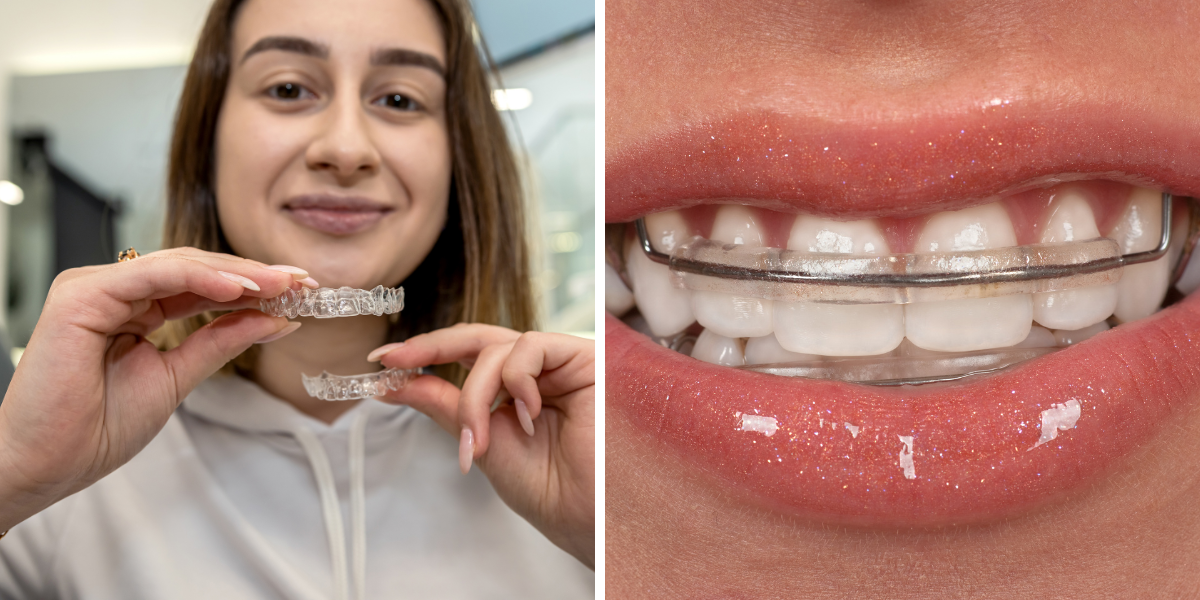
There are two main kinds of retainers, and each has its place. Removable retainers are worn on a schedule and taken out for eating and cleaning, which makes them easy to care for but dependent on the patient remembering to wear them. Fixed retainers are thin wires bonded behind the teeth, working quietly around the clock without any effort from the patient, though they require careful cleaning to keep the area healthy.

How long you need to wear a retainer is the question everyone asks, and the honest answer is longer than most people hope. In the beginning, near constant wear is often recommended, gradually tapering to nighttime only. But teeth can shift throughout life, and many orthodontists now advise wearing a retainer at night indefinitely to protect the result. A trusted orthodontist will give you a specific plan based on your case and explain the reasoning behind it.

The most common mistake patients make is treating the retainer as optional once treatment is over. People wear it faithfully for a while, then get casual, then stop. By the time they notice their teeth creeping back out of line, real movement has already happened, and the retainer that once fit no longer does. At that point, getting back on track can mean a new retainer or even a round of touch up treatment.

Caring for a retainer is simple but it does require consistency. Removable retainers should be cleaned gently and regularly, kept away from heat that can warp them, and stored in their case rather than wrapped in a napkin where they get thrown away. Fixed retainers need extra attention with floss threaders or a water flosser to keep plaque from building up around the bonded wire.

Losing or breaking a retainer is common, and the important thing is to act quickly. Teeth can begin shifting within days of going without, so a lost retainer is a reason to call your orthodontist promptly rather than letting weeks slide by. A quick replacement is far cheaper and easier than dealing with teeth that have already moved and need correcting again.

It helps to reframe the retainer not as an afterthought but as the final, essential phase of treatment. The months of braces or aligners moved your teeth into place. The retainer is what makes that investment hold for years and decades. Skipping it is like building a house and then neglecting the foundation, undoing slowly what took so much effort to achieve.

A useful way to think about retainers is to treat the first one you receive as a tool you will likely need to replace over the years rather than a single permanent object. Removable retainers wear out, get lost, or no longer fit perfectly after a long time, and that is entirely normal. Having a fresh one made periodically is far cheaper and simpler than letting your teeth drift while you put it off. Some people keep a spare so that a lost or damaged retainer never means a gap in protection. Whatever approach you take, the goal is continuity, never going long without something holding your teeth in place. Patients who plan for replacement as a routine part of long term maintenance almost never face the disappointment of watching their results slip away. Those who treat the first retainer as the end of the story are the ones who tend to be surprised when their teeth move again.

The encouraging part is that maintaining your results takes so little once the habit is set. A few minutes of wear at night and some basic care is a small price for a smile that stays straight for life. Patients who embrace the retainer as part of their routine rarely think about it after a while, and they get to enjoy the lasting payoff of all that earlier work. The braces get the attention, but the retainer is what makes the result truly yours to keep.

Read more…

When people imagine getting braces, they tend to picture either a quick, painless process or a year of constant misery, and neither extreme is accurate. The real experience lands somewhere comfortably in the middle, with a rhythm that becomes routine surprisingly fast. Knowing roughly what each stretch of the journey feels like takes the fear out of starting and helps you settle in with realistic expectations.

happy-teens-with-braces.webp

The first day is mostly about novelty. Having brackets placed does not hurt, though it takes a while and your mouth will feel crowded and strange by the end. You will run your tongue over the new hardware constantly, and your lips may sit a little differently. Nothing is painful yet. The sensation is simply that of having something new in your mouth that you are not used to.

The first week is the genuine adjustment period, and it is the part people remember. As the teeth begin to respond to pressure, they get tender, and biting into anything firm is uncomfortable for several days. This is the stretch where soft foods become your friends, soup and pasta and smoothies and anything that does not require hard chewing. The soreness is real but it is also temporary, and it eases noticeably within a few days.

Your cheeks and lips also need time to toughen up against the brackets in that first week. Until they do, the inside of your mouth can feel rubbed and raw in spots. Orthodontic wax, pressed over any bracket that is irritating you, makes a real difference and gets you through the worst of it. By the end of the first week or two, the soft tissue has adapted and this stops being an issue.

After that initial period, life with braces becomes remarkably normal. You eat most foods again, you talk without thinking about it, and the braces fade into the background of your day. The main ongoing adjustment is to your hygiene routine, which takes longer and demands more care than before. A good local orthodontist will have shown you how to brush and floss around the hardware, and that becomes the daily habit that protects your teeth.

Adjustment appointments arrive every several weeks, and they reset the cycle briefly. When the orthodontist tightens or changes the wire, the teeth feel sore again for a day or two as they respond to the new pressure. By now you know the drill, soft foods for a couple of days and the discomfort passes. These appointments are usually short, and the brief soreness afterward is a reassuring sign that things are moving.

Somewhere in the middle of treatment, the small annoyances become old hat. You learn which foods to avoid so you do not break a bracket, you keep wax in your bag out of habit, and you get fast at cleaning your teeth. The occasional poking wire or loose bracket happens, and a quick call to the office handles it. None of it is dramatic once you have done it a few times.

There is a psychological middle stretch worth naming, where the novelty has worn off and the finish line still feels distant. This is normal. Many patients hit a point of being simply tired of the braces. The trick is to remember how far the teeth have already moved, which is often dramatic by this stage even if you have stopped noticing the gradual change in the mirror.

As the end approaches, the excitement builds. The teeth look noticeably straighter, the orthodontist begins fine tuning rather than making big moves, and the conversation turns to removal. Taking the braces off is painless and quick, and the first time you run your tongue over smooth, bare teeth is a genuinely satisfying moment that patients look forward to for months.

A practical tip that veterans of braces pass along is to keep a simple emergency kit on hand for the small mishaps that inevitably occur. Orthodontic wax for a bracket that is rubbing, a clean pair of tweezers to nudge a stray wire, and something for soreness after an adjustment will handle the vast majority of minor issues without a trip to the office. Knowing you can manage these little problems yourself takes away much of the anxiety that surrounds them. Most of what feels alarming in the moment, a poking wire or a loose band, turns out to be easily handled and rarely urgent. Saving your orthodontist's number where you can find it quickly rounds out the kit, so that when something does need professional attention you are not scrambling. A little preparation transforms the occasional bump in the road from a source of stress into a minor, manageable footnote in an otherwise smooth journey.

Then comes the part people forget to plan for, the retainer. After all that work, the teeth want to drift back, and wearing a retainer as directed is what keeps them where they belong. It is a small commitment compared to the months of treatment, and skipping it undoes the very result you worked for. Treated as the final, non negotiable step, it ensures that the straight smile you earned actually lasts.

Read more…

37108.webp

It is easy to think of orthodontic treatment as a purely cosmetic pursuit, a way to look better in photographs and feel more confident. That benefit is real, but it tells only part of the story. The alignment of your teeth and the way your bite fits together influence aspects of health that reach far beyond appearance, and appreciating those connections changes how you think about treatment.

Start with the most direct link, which is the ability to keep your mouth clean. Crowded, overlapping teeth create tight spaces that resist brushing and trap food and plaque. Over time, those neglected areas become breeding grounds for the bacteria behind cavities and gum disease. Straightening the teeth opens those spaces up, making daily cleaning genuinely effective and reducing the long term risk of decay and inflammation.

Gum health matters more than most people realize, because the mouth does not exist in isolation from the rest of the body. Research has linked chronic gum inflammation to a range of broader health concerns, including cardiovascular issues and complications with blood sugar control. While straight teeth alone are not a cure for anything, the easier hygiene they allow supports healthier gums, which is a meaningful piece of overall wellness.

The bite itself plays a quiet but important role in daily function. When upper and lower teeth meet evenly, the force of chewing is distributed across many teeth as nature intended. When the bite is off, certain teeth absorb more pressure than they should, leading to uneven wear, chips, and cracks over the years. Correcting alignment protects the teeth from this slow, avoidable damage.

Jaw comfort is another area where alignment quietly matters. A bite that forces the jaw into an unnatural position can contribute to soreness, clicking, and tension that some people carry as low grade headaches for years without connecting the dots. An evaluation by a local orthodontist can determine whether your jaw discomfort has a structural cause that treatment could relieve, something many patients never think to ask about.

Chewing efficiency affects digestion in ways that are easy to overlook. The first stage of digestion happens in the mouth, where food is broken down mechanically before it ever reaches the stomach. Teeth that do not meet properly cannot do this job as well, which can make eating less comfortable and digestion less smooth. A functional bite is not glamorous, but it serves you at every single meal.

Speech can be influenced by tooth and jaw position too. Certain sounds depend on where the tongue meets the teeth, and significant misalignment sometimes interferes with clear speech, particularly in children who are still developing. Correcting these issues can improve not just how a person sounds but how confidently they communicate, which has ripple effects in school and social life.

Then there is the matter of sleep and breathing, an area that orthodontics increasingly considers. The shape and width of the upper jaw can affect the airway, and in some cases guiding jaw development in childhood supports better breathing. While this is a specialized topic that requires careful evaluation, it illustrates how the structures orthodontists work with connect to functions far beyond the smile.

The confidence benefit, while often dismissed as superficial, has genuine effects on wellbeing. People who feel good about their smile tend to smile more, engage more easily with others, and carry themselves with greater ease. Mental and emotional health are part of overall health, and feeling comfortable in your own skin is not a trivial thing. The boost many patients describe after treatment is real and worth acknowledging.

It is also worth recognizing how these benefits compound over a lifetime rather than appearing all at once. The teeth that are easier to clean today are the teeth less likely to need fillings or crowns a decade from now. The bite that distributes force evenly spares enamel that would otherwise wear down slowly over many years. None of these gains is dramatic in any single month, which is exactly why they are easy to undervalue in the moment. But health is the accumulation of small advantages held steady over time, and a properly aligned mouth quietly stacks those advantages in your favor year after year. When patients look back several years after treatment, they often appreciate not just the straighter smile but the absence of the problems they never developed. Prevention rarely announces itself, yet it may be the most valuable return that orthodontic treatment offers over the long run.

Seen this way, orthodontic treatment is less a cosmetic luxury and more an investment in how your mouth functions and how your body fares over a lifetime. Straighter teeth that are easier to clean, a bite that protects rather than wears your teeth, and the confidence that comes with both, all contribute to health in the fullest sense. If you have thought of alignment as purely about looks, it may be worth considering everything else it quietly supports.

Read more…

ChatGPT-Image-Feb-13-2026-02_04_28-PM.png

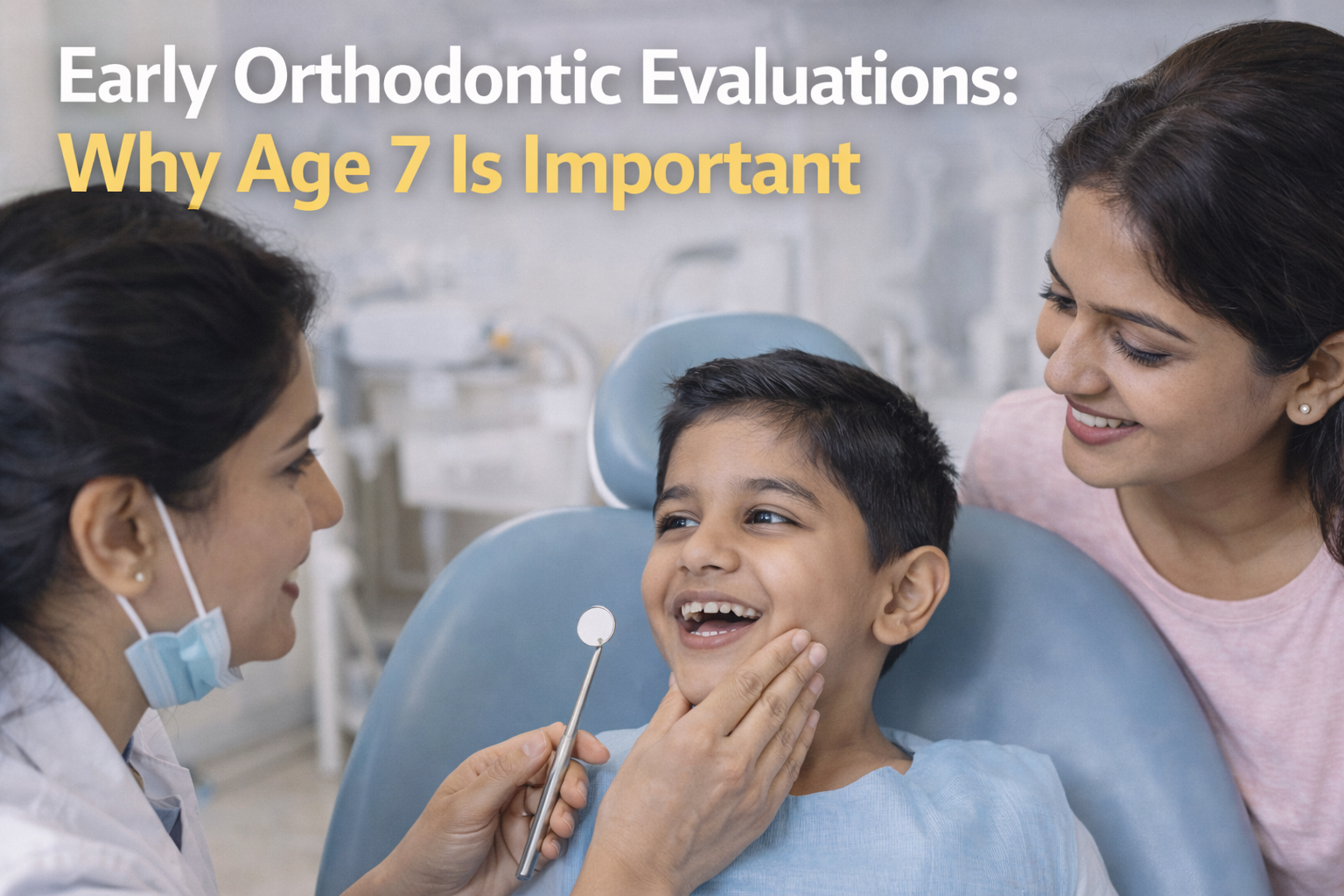
Parents are often caught off guard when they hear that a child should see an orthodontist around age seven. At that age most kids still have a mouth full of baby teeth, and the idea of braces seems years away. Yet this early evaluation is one of the most useful appointments a growing child can have, and understanding why it is timed the way it is helps parents see it as foresight rather than overkill.

By around seven, a child has usually lost some baby teeth and gained their first permanent molars and front teeth. This mix is exactly what makes the moment valuable. There are enough adult teeth in place to reveal how the bite is developing, while there are still enough baby teeth and enough jaw growth ahead to influence the outcome. It is a window where problems are visible but not yet locked in.

An early evaluation rarely leads to immediate treatment, and that surprises people too. In most cases the orthodontist simply takes a careful look, notes how things are progressing, and recommends watching and waiting. The child comes back periodically so the team can track growth and step in at the ideal moment if needed. This monitoring is reassuring and costs little, while catching the cases that truly benefit from early action.

Some issues genuinely are easier to address while a child is still growing. A narrow upper jaw, for instance, can often be widened gently with a simple appliance during childhood, creating room that prevents serious crowding later. A severe crossbite or an underbite may also respond best to early guidance. Waiting until all the adult teeth are in can turn a manageable situation into one that requires more involved treatment.

Habits are another reason early visits matter. Prolonged thumb sucking, tongue thrusting, and mouth breathing can all shape how the teeth and jaw develop, and the effects are easier to correct sooner rather than later. A skilled local orthodontist can spot these patterns early and offer gentle interventions before they cause lasting changes to a child's bite and facial growth.

Early treatment, when it is recommended, is often called the first phase, and it has a specific purpose. It is not about straightening every tooth right away. It is about correcting a developing problem, guiding jaw growth, or making room, so that the later, more comprehensive treatment is simpler and shorter. Many children who have a well timed first phase need less complex work as teenagers than they otherwise would.

Just as important, early monitoring prevents the opposite problem of treating too soon. Not every crooked baby tooth needs attention, and a good orthodontist knows when to leave things alone and let nature take its course. The age seven visit is as much about avoiding unnecessary treatment as it is about catching the cases that benefit from it. Either way, the family ends up with clarity instead of guesswork.

There is a psychological benefit for the child as well. A young patient who visits the orthodontist a few times for friendly, low pressure checkups grows comfortable with the office long before any real treatment begins. When the time comes for braces or aligners as a preteen, it is familiar territory rather than a scary unknown, which tends to make the actual treatment go more smoothly.

For parents, the early evaluation also allows for planning. Knowing in advance that a child will likely need treatment, and roughly when, makes it far easier to prepare financially and to schedule around school and activities. Surprises are expensive and stressful, while a heads up gives a family time to budget and arrange things on their own terms rather than scrambling.

Parents sometimes worry that an early visit will pressure them into starting treatment before they or their child are ready, but a reputable practice operates on the opposite principle. The whole purpose of early monitoring is to act only when acting genuinely helps, and to wait patiently when waiting is wiser. A trustworthy orthodontist will tell you plainly if your child needs nothing yet, and will explain why. They will also be clear about what they are watching for and roughly when the situation might call for a closer look. This measured approach protects families from unnecessary treatment while ensuring that the cases which truly benefit from early action are caught in time. If you ever feel pushed toward treatment that does not seem warranted, that is a reason to seek a second opinion rather than a reason to comply, because good early care is defined as much by restraint as by intervention.

None of this means every seven year old needs braces, or that parents should be alarmed. It simply means a single, low cost evaluation at the right age gives a family valuable information and the chance to act at the most effective moment. If your child is around that age and you have never had their bite checked, scheduling that first look is a small step that can pay off in a healthier, simpler path to a great smile.

Read more…

braces-invisalign.jpg

Straightening your teeth is an investment, and protecting that investment along the way takes a little more effort than ordinary brushing. Orthodontic appliances create new nooks and surfaces where food and plaque can hide, which means the months of treatment are exactly when careful hygiene matters most. The good news is that with a few solid habits, you can finish treatment with teeth that are not just straight but genuinely healthy.

Braces are the bigger challenge for cleaning, simply because there is more to clean around. Brackets and wires trap food in ways that bare teeth never do, and the areas around each bracket are prone to plaque buildup. Left alone, that plaque can leave permanent white marks on the enamel, the kind that become obvious only after the braces come off. Nobody wants straight teeth marked by the very treatment that aligned them.

Brushing with braces takes more time and a better technique. The goal is to clean above, below, and around each bracket, not just sweep across the front. Many people find that angling the brush toward the gumline and then toward the chewing surface, working in small sections, does the job. An electric brush can help, but a manual one used carefully works perfectly well. The key is patience, since a rushed thirty seconds will not reach where it needs to.

Flossing is the step people are most tempted to skip with braces, and it is the one that matters a great deal. The wire blocks the normal motion, so you need a floss threader or special orthodontic floss to get underneath it and between the teeth. A water flosser is another excellent tool that many brace wearers swear by, since it flushes out debris around brackets that string floss struggles to reach. Whatever the method, cleaning between the teeth daily is not optional.

Aligners change the hygiene picture but do not remove the responsibility. Because you take them out to eat, you can brush and floss normally, which is a real advantage. The catch is that you must clean your teeth before putting the trays back in. Sealing food and sugar against your teeth under a snug plastic tray for hours is a recipe for decay. Carrying a travel brush for meals away from home solves most of this.

The trays themselves need care too. Rinse them whenever they come out, clean them gently with a soft brush, and avoid hot water that can warp the plastic. Cloudy, smelly aligners are a sign they are not being cleaned often enough. A good local orthodontist will show you exactly how to keep both your teeth and your trays in good shape, and following that guidance keeps treatment on track.

Diet deserves attention during treatment regardless of which appliance you wear. With braces, hard and sticky foods can break brackets or bend wires, leading to extra visits for repairs that slow your progress. With aligners, frequent snacking means frequent removal and cleaning, which gets tiresome and tempts people to cut corners. Being a little more deliberate about what and when you eat pays off in fewer setbacks.

Regular dental cleanings remain important throughout orthodontic treatment, not just the orthodontist visits. Your general dentist and hygienist can reach buildup that is hard to manage at home and can catch early signs of trouble before they grow. Keeping up with these cleanings on schedule, in addition to your adjustment appointments, gives your teeth the best protection during a vulnerable stretch.

Discomfort after adjustments or new aligner trays is normal and temporary, and it should not become an excuse to brush less. If anything, gentle, thorough cleaning helps. Sore spots from a bracket or wire can be soothed with orthodontic wax, and any persistent irritation or a broken appliance is worth a call to your provider rather than waiting it out and risking a delay in your progress.

One habit that makes a surprising difference is keeping a small dental kit with you wherever you go. A travel toothbrush, a bit of floss or some interdental brushes, and a little orthodontic wax fit easily into a bag or a desk drawer. With braces, this lets you clear away food after lunch before it has hours to sit against your teeth. With aligners, it means you can always brush before reinserting the trays rather than skipping it because you are away from home. The patients who finish treatment with the healthiest teeth are almost always the ones who made cleaning convenient enough that they actually did it consistently. Relying on willpower alone tends to fail, but reducing the friction so that good hygiene is easy makes it far more likely to happen. Small preparations like this protect the considerable investment you are making in your smile.

The months of treatment pass faster than you expect, and the habits you build during them tend to stick. Patients who commit to careful hygiene throughout almost always finish with a result they are proud of, while those who let it slide sometimes trade crooked teeth for marked or decayed ones. A straight smile is worth having, and protecting it along the way ensures the smile you reveal at the end is as healthy as it is aligned.

Read more…

If you have decided to straighten your teeth, the next question lands almost immediately. Do you go with traditional braces or clear aligners. Both work, both have loyal fans, and both have genuine strengths. The right answer is not the same for everyone, and it depends as much on your habits and lifestyle as on the technical details of your case. Sorting through the differences honestly helps you land on a choice you will be happy with.

invisible-braces.png

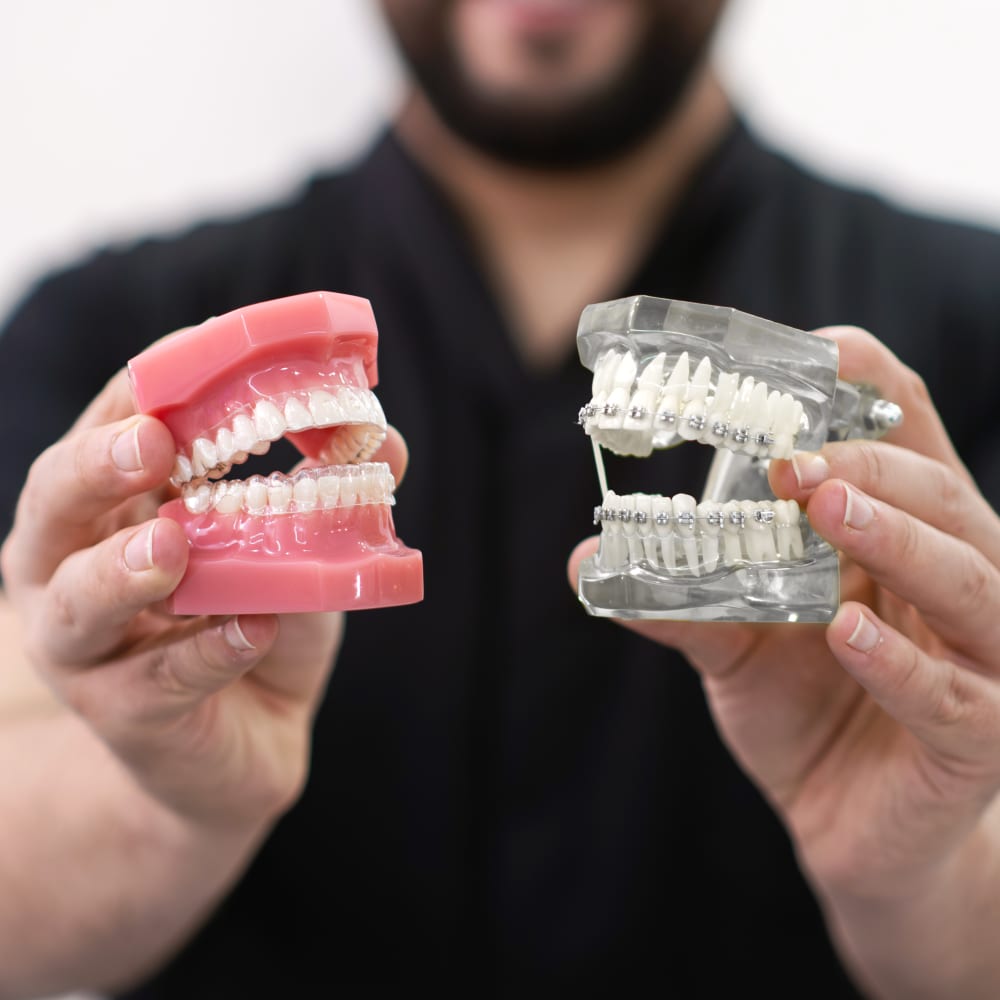
Traditional braces use metal brackets bonded to each tooth and connected by a wire that the orthodontist adjusts over time. They have been refined over many decades and remain the most versatile tool available. For complex cases involving significant rotation, large gaps, or major bite correction, braces often have an edge because they give the orthodontist precise, constant control over how each tooth moves.

Clear aligners take a different approach. They are a series of custom, transparent trays that you swap out every week or two, each one nudging your teeth a little closer to the goal. Their headline appeal is that they are nearly invisible and removable. You take them out to eat, brush, and floss, which many people find far more convenient than working around fixed brackets and wires.

Appearance is the deciding factor for a lot of adults. Aligners let you go through treatment without it being obvious to coworkers, clients, or anyone across a dinner table. Teenagers sometimes feel the same way, though plenty are perfectly happy with braces, especially since modern brackets are smaller and colored bands let them have a bit of fun with the look.

Discipline is the quiet variable that decides whether aligners succeed. They only work if you wear them around twenty two hours a day, removing them just for meals and cleaning. For a responsible adult or a motivated teen, that is manageable. For someone who is likely to leave them out for hours or lose a tray, fixed braces may actually be the more reliable path, since they are working whether you think about them or not. A consultation at a local orthodontic office can help you judge this honestly about yourself.

Eating habits differ between the two as well. With braces, certain foods are off limits for the duration, things that are hard, sticky, or chewy and could damage the brackets. With aligners, you simply take them out and eat whatever you like, then brush before putting them back. That freedom is a real plus, though it does require the discipline to actually clean your teeth before re inserting the trays.

Maintenance and comfort round out the comparison. Braces can irritate the inside of the lips and cheeks at first and require careful brushing around the brackets. Aligners are smooth and easy to clean, but they must be rinsed and cared for, and you have to be the kind of person who will not lose them. Both cause some pressure and soreness when adjustments happen, which is simply the feeling of teeth moving and fades within a few days each time.

Cost is often similar between the two these days, though it varies by case and provider. Complex situations can run higher with either method. Many practices offer payment plans for both, and insurance that covers orthodontics generally applies regardless of which you choose. It is worth getting specific numbers for your own case rather than relying on general impressions.

Treatment time depends far more on the complexity of your teeth than on the method. Simple cases can finish in well under a year with either option, while involved ones take longer. An orthodontist can give you a realistic estimate once they have examined your mouth, and that estimate should factor into your decision alongside everything else.

It is also worth thinking past the treatment itself to the maintenance that follows, because that can subtly factor into your choice. Both braces and aligners require a retainer afterward to hold the result, and the habits you build during treatment often carry forward. Someone who has spent months diligently caring for aligners has already practiced the discipline that retainer wear demands. Someone who relied on the set and forget nature of braces will need to build that habit fresh. Neither is better or worse, but it is a useful thing to be honest with yourself about as you decide. The method that fits your temperament during treatment tends to fit it afterward too. Whichever you choose, going in with a clear sense of the full journey, including the part that comes after the teeth are straight, helps you commit to the option that you will actually follow through on from start to finish.

The honest bottom line is that there is no universally better choice, only the better choice for you. Think about how you live, how disciplined you are likely to be, how much the appearance matters to you, and what your case actually requires. A trustworthy provider will lay out both options fairly and help you weigh them rather than steering you toward whichever is easier for them. With the right fit, both braces and aligners deliver the same thing in the end, a smile you are glad to show.

Read more…

What-to-Expect-at-Your-First-Orthodontic-Visit.jpg

The first orthodontic consultation carries a surprising amount of mystery for something so routine. People often arrive unsure whether they will leave with braces glued on that same day, whether it will hurt, or whether they are about to be talked into something expensive. Understanding what really happens at that first visit takes most of the anxiety out of it and helps you get more from the appointment.

The visit usually begins with a conversation rather than any equipment. The orthodontist or a team member will ask what brought you in, what bothers you about your teeth or bite, and what you hope to achieve. This matters more than it might seem. Your goals shape the entire plan, and a good provider listens carefully here, because the same set of teeth can be approached in different ways depending on what the patient actually wants.

Next comes the examination. The orthodontist looks closely at your teeth, gums, and the way your upper and lower teeth come together when you bite. They check how your jaw moves and opens, feel for any tenderness, and note things you may never have noticed yourself. This part is painless and quick, but it is where the real assessment begins, since how the teeth fit together tells the practiced eye a great deal.

Most consultations include some form of imaging. Digital photographs of your face and teeth, along with X rays, give a complete picture of what is happening below the surface, including the position of roots and any teeth that have not yet erupted. Many practices now use a digital scanner that builds a three dimensional model of your mouth in minutes, replacing the uncomfortable putty molds that older patients remember with a clear dislike.

Once the provider has gathered this information, you move to the part most people came for, the explanation. This is where good orthodontics really shows its value, because the provider translates all that data into plain language. They will tell you what they see, whether treatment is recommended, what options exist, roughly how long it would take, and what results you can realistically expect. You should never leave this conversation more confused than you arrived.

It is worth knowing that you almost certainly will not have braces placed at this first visit. The consultation is for evaluation and planning. If you decide to move forward, the actual start of treatment is scheduled for a later appointment, giving you time to think, ask questions, and sort out the practical details. Anyone pressuring you to commit on the spot is a reason for caution rather than a reason to rush.

Cost and logistics typically come up before you leave. A treatment coordinator often reviews the total fee, explains payment plan options, and helps you understand what your insurance might cover. Getting these numbers in writing is reasonable and expected. A transparent practice wants you to understand the financial side clearly, because surprises later benefit no one and damage trust.

This is also your chance to interview the practice, even if it does not feel that way. Notice how the team treats you, whether they answer questions patiently, and whether the office feels organized and clean. You may be visiting this place regularly for a year or more, so the relationship and the atmosphere matter. Trust your read on whether these are people you want to work with over that stretch of time.

Coming prepared makes the visit far more useful. Jot down your questions beforehand so you do not forget them in the moment. Bring any relevant dental history, and if you have insurance, have the details handy. If you are considering treatment for a child, think in advance about their school schedule and activities so you can discuss realistic timing with the team.

It can also help to bring along anyone who will be part of the decision, whether that is a spouse, a parent, or for a child, both parents if possible. Orthodontic treatment is a shared commitment of time and resources, and having everyone hear the same explanation firsthand prevents the game of telephone that often follows a solo visit. People absorb information differently, and a question that does not occur to one person will occur to another. A good practice welcomes this and will happily address the whole group rather than rushing one person out the door. Leaving the consultation with everyone on the same page, having heard the options together, makes the eventual decision easier and reduces second guessing later. It also signals to the practice that you are taking the choice seriously, which tends to bring out their most thorough and patient explanations in return.

By the end of a good consultation, you should have a clear picture of where your teeth stand, what your options are, and what the path forward would look like if you choose to take it. There is no obligation to decide anything that day. The whole point is to replace uncertainty with information, so that when you do make a choice about your smile, you are making it from a position of genuine understanding.

Read more…

When a family starts thinking about orthodontic care, it often begins with one person. A child whose adult teeth are coming in crowded, or a parent who has finally decided to fix a bite that has bothered them for years. What surprises many households is how quickly that single concern turns into a shared one, with siblings, parents, and sometimes even grandparents all ending up in treatment within a few seasons of each other.

AdobeStock_205091844-768x512-1.jpeg.webp

There is a practical logic to keeping that care under one roof. Coordinating appointments for several family members at a single practice saves an enormous amount of time and driving. Instead of juggling visits across different offices on different days, a family can often stack appointments together, turning what could be a scattered errand into one efficient stop. For busy parents, that convenience alone is worth a great deal.

Beyond logistics, there is real value in continuity. A practice that has treated your older child already knows your family's history, your preferences, and the way you like to communicate. When the younger sibling reaches treatment age, there is no starting from scratch. That familiarity tends to make each successive case smoother, and it builds a relationship of trust that a one time visit never could.

Treating patients across a range of ages is exactly what a family orthodontist is set up to do. Children, teenagers, and adults each have different needs, different concerns, and different ideal approaches. A practice geared toward families keeps options on hand for all of them, from early guidance for young children whose jaws are still growing to discreet aligners for an adult who would rather treatment not be obvious at work.

Children benefit from an environment that does not feel intimidating. When a young child sees an older sibling or a parent going through treatment without drama, braces and aligners stop seeming scary. The shared experience normalizes the whole thing. Kids who might otherwise be anxious often walk in relaxed because they have watched someone they trust do it first and come out smiling.

Adults sometimes find their own motivation through their children. A parent who brings a child in for a consultation may hear, almost in passing, that their own bite could be improved too. More than a few adults have started treatment this way, having never seriously considered it until they were already sitting in the chair for someone else. Families have a way of encouraging one another into good decisions.

Cost is easier to manage across a family as well. Many practices offer family considerations or flexible payment plans that make treating multiple members more affordable than handling each as a separate, unrelated case. When the same office is coordinating everything, billing and insurance also become simpler to track, with one team familiar with your situation rather than several who are not.

The teenage years bring their own dynamics, and a family oriented practice tends to handle them well. Teens care about how treatment looks and fits into their social lives, and a team experienced with that age group knows how to keep them engaged and compliant. Parents appreciate having a partner who can talk to their teenager directly and keep the treatment on track without it becoming a constant battle at home.

There is also something reassuring about long term care from people who know you. Orthodontic treatment does not end the day the braces come off. Retainers, follow up checks, and the occasional adjustment are part of keeping the results stable for years. A practice that has cared for your whole family is far more likely to be there for that long arc than a place you visited once and moved on from.

There is also a practical benefit to how a family oriented practice handles records and history across siblings. When the same team has guided an older child through treatment, they often have useful insight into patterns that may run in the family, from the way teeth tend to erupt to common bite tendencies. That accumulated familiarity lets them anticipate rather than merely react, which can make a younger sibling's care more proactive and better timed. Parents appreciate not having to re explain the family situation from scratch each time, and the continuity tends to make every successive case feel smoother than the last. It is the kind of advantage that is hard to quantify but easy to feel, the difference between being known and being processed. Over the years, that relationship becomes a quiet asset, one that families come to value as much as the clinical results themselves.

In the end, choosing a single orthodontist for the family is about more than convenience, though the convenience is considerable. It is about building a relationship with a team that understands your household, treats each member according to their needs, and grows familiar with your family over the years. For a lot of households, that sense of being known and cared for is what turns a series of appointments into genuine, lasting trust.

Read more…

Essential-Guide-to-Adult-Orthodontic-Care-in-New-Jersey-1.jpg

There is a quiet assumption many adults carry, that braces are something you either got as a teenager or missed your chance at forever. It is one of the most common misunderstandings in dental care, and it keeps a lot of people from a treatment that could genuinely improve their lives. The truth is that teeth respond to gentle, steady pressure at almost any age, and adults make up a growing share of orthodontic patients every year.

The reasons adults seek treatment vary widely. Some never had access to care as children. Others wore braces years ago but skipped retainers, and their teeth gradually drifted back. A few notice new crowding in their thirties or forties as small, lifelong shifts finally add up to something visible. Whatever the path, the goal tends to be the same, a smile that feels comfortable and looks the way they want it to.

Health is often the underrated motivator. Straighter teeth are easier to clean, which lowers the long term risk of decay and gum disease. A balanced bite distributes the force of chewing evenly, protecting teeth from the uneven wear that misalignment causes over decades. For adults who have already invested in dental work like crowns or implants, proper alignment helps protect that investment by keeping pressure where it belongs.

One of the biggest changes in recent years is how discreet treatment has become. Clear aligners are nearly invisible and can be removed for meals and special occasions. Tooth colored brackets blend in far better than the metal of decades past. For professionals who spend their days in meetings or in front of clients, these options remove the self consciousness that once made adults hesitate. You can pursue alignment without it announcing itself to everyone you meet.

Modern orthodontics has also gotten more precise and often more comfortable. Digital scanning replaces the messy molds many people remember, and treatment can be mapped out on a screen before it begins, so you can see the projected result in advance. The field of orthodontics has advanced enough that many adult cases move faster and with less guesswork than they would have a generation ago.

That said, adult treatment does have its own considerations. Adult bone is fully mature, so some movements take a bit longer than they would in a still growing teenager. Existing dental work sometimes needs to be coordinated into the plan. None of this is a barrier, but it is why a thorough evaluation matters. An experienced provider will tailor the approach to your specific mouth rather than applying a one size template.

The emotional payoff is something adults describe again and again. There is a particular kind of confidence that comes from finally addressing something you have been self conscious about for years. People talk about smiling more freely in photos, feeling more at ease in social settings, and a general sense of having done something good for themselves. It is easy to dismiss this as vanity, but feeling comfortable in your own skin is a real and worthwhile thing.

Practical concerns like cost and scheduling are very manageable for most adults. Payment plans spread the expense over the months of treatment, and many dental plans include orthodontic coverage that adults forget applies to them too. Appointments are typically spaced weeks apart and are short, which fits more easily into a working adult's calendar than people expect.

If you are an adult who has wondered about treatment, the kindest thing you can do is gather information rather than keep guessing. A consultation will tell you whether your goals are realistic, what the options are, and roughly how long and how much. There is no commitment in simply asking, and many people are pleasantly surprised by how straightforward their situation turns out to be.

Adults considering treatment sometimes worry about how it will affect their daily responsibilities, and this is a fair concern worth addressing plainly. The honest answer is that modern treatment fits around a working life far more easily than people assume. Appointments are short and spaced weeks apart, and with discreet options most colleagues never even notice. There is a brief adjustment period when treatment begins or when an appliance changes, but it settles quickly and rarely interferes with work or social plans. Many adults report that within a couple of weeks the whole thing simply blends into their routine. The mental image of treatment as a constant disruption comes mostly from outdated impressions rather than current reality. When you weigh a few minor adjustments over several months against a result you keep for the rest of your life, the trade tends to look very favorable, which is why so many busy professionals decide it is worth it.

The years are going to pass no matter what. The question is whether you arrive in them with the smile you have quietly wished for or with the same hesitation you have today. Plenty of people in their forties, fifties, and beyond have decided it was finally their turn, and very few regret it. If the idea has crossed your mind more than once, that is usually a sign it is worth a real look.

Read more…

Orthodontic-Treatment-in-hyderabad.png

Almost everyone who eventually gets braces or aligners has a story about how long they waited first. Years, sometimes decades. The teeth bother them in photos, or food keeps getting stuck, or a dentist mentions the bite at every cleaning, and still the appointment never gets made. I understand the instinct. Treatment feels like a big commitment of time and money, and there is always something more urgent. But waiting has its own costs, and they are easy to underestimate.

Start with the dental health side of things. Crowded and overlapping teeth create tight spots that a toothbrush cannot reach well and floss can barely squeeze into. Over time, plaque settles into those hidden corners and turns into decay or gum inflammation. What begins as a cosmetic annoyance slowly becomes a maintenance problem, and the fillings or deep cleanings that follow cost real money that a straighter set of teeth might have avoided.

A misaligned bite adds another layer. When upper and lower teeth do not meet evenly, certain teeth take more force than they were built to handle. The result, played out over years, is uneven wear, chipped edges, and sometimes cracked teeth that need crowns. None of this happens overnight, which is exactly why it sneaks up on people. By the time the damage is obvious, it is harder and more expensive to fix than the original alignment would have been.

There is a comfort cost too. Jaw soreness, clicking, and tension headaches are common companions of a bite that is out of balance. People adapt to low level discomfort so gradually that they stop noticing it, then are surprised when treatment relieves something they assumed was just part of life. You do not always know how much a problem was bothering you until it is gone.

Then there is the simple matter of how you feel about your smile. Confidence is hard to put a price on, but anyone who has hidden their teeth in pictures or covered their mouth when they laugh knows the weight of it. Putting off treatment means more years of that small daily friction. Many adults who finally commit say their only regret is not doing it sooner, because the boost to how they carry themselves was bigger than expected.

The encouraging news is that getting started is easier than it used to be. A consultation with a local orthodontist is usually free or low cost, and it gives you concrete answers instead of vague worry. You learn what your specific situation calls for, how long treatment would take, and what payment plans are available. That clarity often dissolves the very fears that kept you waiting in the first place.

Cost is the hurdle people name most often, so it is worth addressing directly. Many practices offer monthly payment plans that spread treatment over its full length, and a lot of dental insurance includes an orthodontic benefit that people forget they have. Health savings accounts can be used as well. When you break the total into manageable pieces, the number that felt impossible often turns out to be workable.

Time is the other common concern. Yes, treatment can take a year or two, but that time passes regardless of whether you start. The choice is not between a long treatment and no treatment. It is between arriving two years from now with straighter teeth or arriving at the same point with the same crowding you have today. Framed that way, the wait stops looking like the safe option.

For parents weighing treatment for a child, the timing argument is even stronger. Young jaws are still growing, which gives an orthodontist room to guide development in ways that become impossible once growth finishes. Catching an issue early can sometimes shorten or simplify the treatment a child needs later, turning what might have been a complex case into a straightforward one.

I want to be clear that none of this is about chasing perfection or feeding insecurity. Plenty of people have slightly imperfect teeth and feel completely fine about them, and that is wonderful. The point is narrower than that. If your teeth genuinely bother you, whether for how they look or how they function, then waiting does not make that feeling go away. It usually just postpones the relief while the underlying issue holds steady or slowly worsens. The people I have watched go through treatment were not vain. They were simply tired of carrying a small frustration year after year, and they finally decided to do something about it. There is a quiet satisfaction in addressing a thing you have put off for ages, in discovering that the obstacle you built up in your mind was smaller than you thought. Whatever you decide, deciding on purpose beats drifting along by default.

None of this is meant to pressure anyone into a decision they are not ready for. It is simply an honest accounting of what waiting actually costs, because that side of the ledger rarely gets discussed. If your teeth have been on your mind for a while, the smartest first move is not to commit to anything. It is just to get the facts from a professional, so that whatever you decide, you are deciding with open eyes.

Read more…

when-should-i-see-an-orthodontist-1-e1769730390849.webp

Most people assume orthodontic care is only about crooked teeth, and that the only sign you need it is a smile that looks a little uneven in photos. The reality is broader than that. Bite problems,jaw discomfort, trouble cleaning certain teeth, and even some speech issues can all point toward treatment that goes well beyond appearance. Knowing the early signals helps families act at the right moment rather than waiting until a small issue becomes a stubborn one.

Crowding is the most familiar reason people seek help. When the jaw does not have enough room for all the teeth, they overlap, twist, and push against one another. Beyond the look of it, crowded teeth are harder to brush and floss, which raises the risk of decay and gum trouble over time. If you find yourself skipping floss in certain spots because the teeth are simply too tight, that is a practical sign worth paying attention to.

Spacing is the opposite problem and just as common. Gaps between teeth can come from a mismatch between tooth size and jaw size, from missing teeth, or from habits in childhood. Some people are perfectly happy with a small gap, and that is a valid choice. Others find that food traps in the spaces or that they feel self conscious, and for them closing the gaps brings both comfort and confidence.

Bite issues are where things get more technical. An overbite, underbite, or crossbite changes how the upper and lower teeth meet. Over years, a misaligned bite can wear enamel unevenly, strain the jaw joint, and make chewing less efficient than it should be. Many people live with these problems for decades without realizing that the occasional jaw soreness or the chipped edge on a tooth traces back to how their bite lines up.

Children have their own set of early warning signs. Difficulty chewing, mouth breathing, thumb sucking that continues past the toddler years, and baby teeth that fall out very early or very late can all hint at developing issues. This is why experienced orthodontists recommend a first evaluation around age seven, when enough permanent teeth have arrived to reveal patterns while the jaw is still growing and easy to guide.

Adults sometimes assume the window for treatment has closed, but that is a myth. Teeth can be moved at almost any age, and a large share of orthodontic patients today are grown adults who either never had treatment or saw their teeth shift after years. Modern options, including clear aligners and discreet brackets, make it far easier to pursue care without it dominating your appearance during the months of treatment.

Jaw pain and frequent headaches deserve a mention because they are so often overlooked. While many things can cause them, a bite that forces the jaw into an unnatural resting position is a real possibility. If you wake with a sore jaw, hear clicking when you chew, or notice that your teeth do not seem to meet evenly, an orthodontic evaluation can determine whether alignment is part of the picture.

A consultation is the natural next step once you notice these signs, and it carries no obligation. A good first visit includes a thorough look at your teeth and bite, often with images, and an honest conversation about whether treatment makes sense for you. Sometimes the answer is that everything looks healthy and no work is needed. That reassurance alone can be worth the appointment.

It helps to come prepared with questions. Ask what the treatment would involve, how long it might take, what it would cost, and what the options are. A trustworthy practice will explain the trade offs clearly rather than pushing a single path. You should leave understanding not just what they recommend but why, so you can make a confident decision on your own terms.

It is worth adding that the signs pointing toward treatment are not always dramatic, and that is precisely why they get overlooked. A tooth that has always sat slightly behind the others, a bite that feels a little off when you really pay attention, a habit of chewing mostly on one side. These small things become so familiar that they fade into the background, and people assume they are simply how their mouth is. Yet many of them are exactly the kind of thing an orthodontist can improve, often more easily than the patient expects. The value of an evaluation is that a trained eye notices what you have stopped noticing, and can tell you whether it matters. You are never obligated to act on what they find, but knowing gives you the choice. Awareness, in the end, is what turns a vague sense that something is off into a decision you can actually make.

The teeth you have are meant to last a lifetime, and how they fit together affects far more than your reflection. Acting on the early signs, whether for yourself or your child, is one of the more sensible investments in long term health you can make. If any of the signals described here sound familiar, a simple evaluation is a low risk way to find out where you stand and what, if anything, is worth doing.

Read more…