Dr. Lindsey Koerich's Posts (53)

Sort by

GOHIGHLEVEL-FOR-DENTISTS.jpg

Dental practices rely on a steady flow of new patients, fast follow-up, effective appointment management and strong patient retention. However, many dentists still use several disconnected systems for enquiries, bookings, reminders, reviews, email marketing and lead management.

GoHighLevel gives dental practices a central platform for managing these processes. When it is built and managed by an experienced dentist  GoHighLevel agency, it can help dentists improve patient communication, reduce administrative work and convert more enquiries into booked appointments.

What Is GoHighLevel for Dentists?

GoHighLevel is an all-in-one CRM, marketing and automation platform. It allows a dental practice to manage leads, patient enquiries, appointments, follow-up campaigns, reputation management and sales pipelines from one system.

Rather than relying on separate tools for forms, email marketing, SMS reminders and lead tracking, dentists can bring these functions together inside GoHighLevel.

The platform can be customised around the exact patient journey of the practice, from the first website enquiry through to treatment, follow-up and future recall campaigns.

Respond to New Patient Enquiries Faster

Patients often contact several dental practices before deciding where to book. The practice that responds first is frequently in the strongest position to secure the appointment.

GoHighLevel can automatically respond to new enquiries by SMS and email within seconds. This can apply to leads generated through:

  • The dental practice website
  • Google Ads
  • Facebook and Instagram campaigns
  • Landing pages
  • Online consultation forms
  • Social media messages
  • Missed telephone calls

An immediate response reassures the patient that their enquiry has been received and gives them a clear next step.

A specialist GHL agency can also create follow-up workflows that continue contacting the patient until they book, reply or ask to stop receiving messages.

Convert More Enquiries Into Appointments

Many dental practices do not have a lead-generation problem. They have a follow-up problem.

A potential patient may enquire about dental implants, Invisalign, cosmetic dentistry or emergency treatment but fail to book immediately. Without a structured follow-up process, that lead can easily be forgotten.

GoHighLevel allows the practice to build automated nurture sequences using SMS, email, voicemail and internal reminders.

For example, a patient who enquires about dental implants could receive:

  1. An immediate confirmation message
  2. Information about the implant consultation
  3. A patient testimonial or case study
  4. Answers to common treatment questions
  5. A reminder to schedule an appointment
  6. A final follow-up from the dental team

This creates a more consistent experience and gives the practice more opportunities to convert the enquiry.

Reduce Missed Appointments

No-shows and late cancellations can cost dental practices thousands of pounds every year.

GoHighLevel can send automated appointment confirmations and reminders at carefully selected intervals. Patients could receive a reminder several days before the appointment, another the day before and a final message on the morning of the visit.

Messages can include:

  • Appointment date and time
  • Practice address
  • Parking information
  • Preparation instructions
  • Rescheduling links
  • Cancellation policies
  • Treatment-specific guidance

A GoHighLevel agency can tailor these workflows to different appointment types, including consultations, hygiene appointments, emergency bookings and treatment sessions.

Manage Dental Leads Through a Clear Pipeline

GoHighLevel provides visual pipelines that show the status of every enquiry.

A dental practice might use stages such as:

  • New enquiry
  • Contact attempted
  • Consultation booked
  • Consultation completed
  • Treatment plan issued
  • Deposit paid
  • Treatment started
  • Treatment completed
  • Follow-up required

This gives reception staff, treatment coordinators and practice managers a clear view of what is happening with each prospective patient.

It also makes it easier to identify leads that have not been contacted, patients who have not accepted a treatment plan and appointments that still require confirmation.

Automate Missed-Call Text Messages

Missed calls are a major source of lost revenue for dental practices, particularly during busy periods or outside normal opening hours.

GoHighLevel can automatically send a text message when a call goes unanswered.

The message might say:

“Sorry we missed your call. How can we help, and would you like us to arrange an appointment?”

This gives the caller an immediate response and allows the conversation to continue by text.

For emergency dental enquiries, this type of automation can be particularly valuable because patients are likely to contact another practice quickly when they cannot get through.

Generate More Patient Reviews

Online reviews play an important role in how patients choose a dentist.

GoHighLevel can automatically request a review after a completed appointment or treatment. Satisfied patients can be directed to the practice’s preferred review platform, while unhappy patients can be encouraged to provide private feedback to the practice first.

A consistent review process can help a dental practice:

  • Improve its Google Business Profile
  • Build trust with prospective patients
  • Strengthen local search visibility
  • Gather useful patient feedback
  • Showcase positive patient experiences

A specialist GHL agency can ensure review requests are sent at the most appropriate stage of the patient journey.

Re-engage Previous Patients

Existing and past patients are extremely valuable to a dental practice.

GoHighLevel can be used to create reactivation campaigns for patients who have not booked recently. These campaigns may promote:

  • Routine dental examinations
  • Hygiene appointments
  • Teeth whitening
  • Invisalign consultations
  • Dental implant consultations
  • Facial aesthetics
  • Seasonal offers
  • Unfinished treatment plans

Instead of relying on staff to contact patients individually, the practice can run targeted campaigns based on treatment history, enquiry type or the date of the patient’s last visit.

Improve Treatment Plan Follow-Up

Some patients attend a consultation and receive a treatment plan but do not make an immediate decision.

GoHighLevel can help the practice follow up professionally without placing the entire responsibility on the treatment coordinator.

The system can automatically send:

  • Treatment information
  • Finance details
  • Frequently asked questions
  • Patient testimonials
  • Before-and-after examples
  • Consultation follow-ups
  • Reminders to contact the practice

This can be especially useful for higher-value treatments such as dental implants, veneers, Invisalign and full-mouth rehabilitation.

Centralise Patient Communication

Dental teams often communicate with patients through several different platforms. Telephone calls, emails, text messages, website enquiries and social media conversations may all be stored separately.

GoHighLevel can centralise much of this communication into one conversation view.

Staff can see previous messages, lead information, appointment activity and follow-up history without switching between multiple systems.

This creates a more organised process and reduces the risk of patients being contacted twice, ignored or given inconsistent information.

Track Marketing Performance

Dentists need to know which marketing campaigns are generating genuine patients rather than simply clicks or website traffic.

GoHighLevel can track leads from different campaigns and show what happens after the initial enquiry.

A practice can monitor:

  • Number of leads generated
  • Speed of response
  • Appointments booked
  • Consultation attendance
  • Treatment acceptance
  • Revenue by campaign
  • Lead source performance
  • Conversion rates at each stage

This allows the practice to make better decisions about Google Ads, Facebook Ads, SEO and other marketing channels.

Support Multiple Dental Services

A dental practice may offer general dentistry, cosmetic treatments, orthodontics, implants, hygiene services and emergency care. Each service has a different patient journey.

GoHighLevel can create separate funnels, forms, pipelines and automations for each treatment.

For example, an emergency dental enquiry requires rapid contact and immediate availability. An implant lead may need a longer educational sequence, while a hygiene patient may only need regular recall reminders.

A properly configured system ensures that each patient receives communication relevant to their needs.

Save Time for Reception and Administrative Teams

Dental reception teams often spend a significant amount of time sending reminders, returning missed calls, chasing consultations and requesting reviews.

Automation does not replace the personal service provided by staff. Instead, it handles repetitive tasks so the team can focus on patients who need direct attention.

GoHighLevel can automate routine communication while creating internal tasks when human involvement is required.

This can reduce administrative pressure and improve consistency across the practice.

Why Work With a Specialist GoHighLevel Agency?

GoHighLevel is a powerful platform, but simply opening an account does not create an effective dental automation system.

The platform needs to be configured around the practice’s services, staff, booking process and patient journey.

A specialist GoHighLevel agency can help with:

  • CRM setup
  • Dental lead pipelines
  • Website forms
  • Landing pages
  • Calendar configuration
  • SMS and email automation
  • Missed-call text-back
  • Review campaigns
  • Lead nurturing
  • Treatment plan follow-up
  • Patient reactivation
  • Reporting dashboards
  • Third-party integrations
  • Staff training
  • Ongoing technical support

The agency can also identify gaps in the current process and design a system that connects marketing, reception and treatment coordination.

Custom Automation Is Better Than a Generic Template

Every dental practice operates differently.

Some practices focus heavily on dental implants, while others generate most of their revenue from Invisalign, cosmetic dentistry, emergency appointments or family dentistry.

A generic GoHighLevel template may provide a starting point, but it will rarely match the practice’s exact processes.

A specialist agency can build workflows around:

  • Opening hours
  • Treatment types
  • Staff responsibilities
  • Consultation availability
  • Lead sources
  • Patient finance options
  • Cancellation policies
  • Follow-up timeframes
  • Existing software

This creates a system that supports how the dental practice actually operates.

Integrating GoHighLevel With Existing Dental Software

GoHighLevel is generally used as a CRM, marketing and communication platform rather than a replacement for specialist clinical dental software.

A GHL agency may be able to connect GoHighLevel with existing tools using native integrations, APIs, webhooks, Zapier or Make.

This can allow information to move between platforms while keeping clinical and marketing functions appropriately separated.

The exact integration options will depend on the dental software currently being used and the level of access it provides.

Is GoHighLevel Worth It for Dentists?

GoHighLevel can be particularly valuable for dental practices that generate a regular volume of enquiries or offer higher-value treatments.

Even a modest improvement in enquiry response time, consultation attendance or treatment acceptance can produce a significant financial return.

The system is most effective when the practice has:

  • A reliable source of new leads
  • Several members of staff managing enquiries
  • High-value treatment options
  • A need for better follow-up
  • Problems with missed calls or no-shows
  • Multiple marketing campaigns
  • Limited visibility over lead performance

The value does not simply come from the software. It comes from building the correct processes inside it.

Choosing a GoHighLevel Agency for Your Dental Practice

When selecting a GoHighLevel agency, dentists should look for a team that understands both automation and the commercial patient journey.

The agency should be able to explain:

  • What will be built
  • How enquiries will be managed
  • Which tasks will be automated
  • How staff will use the system
  • What integrations are required
  • How performance will be measured
  • What support is available after launch

The goal should not be to add unnecessary technology. It should be to create a simpler, faster and more effective process for converting and retaining patients.

Final Thoughts

GoHighLevel can help dental practices respond to patients faster, reduce no-shows, improve follow-up and gain greater control over their marketing.

However, the biggest benefits come when the platform is properly customised around the practice.

Working with an experienced GoHighLevel agency allows dentists to create a complete system for capturing enquiries, booking consultations, nurturing patients, requesting reviews and tracking performance.

For growing dental practices, this can lead to better organisation, a stronger patient experience and more revenue from the leads they already generate.

Read more…

Braces do the straightening, but the daily habits around them decide how smooth and successful the journey is.

tips-for-keeping-your-teeth-healthy-and-beautiful-after-getting-braces-treatment.jpg

Getting braces is a milestone, and it comes with a learning curve. For the months or years that brackets and wires are doing their work, a few new habits make the difference between a smooth path to a great smile and a bumpy one marked by broken brackets and unexpected problems. None of it is difficult, but it does take some care.

Keeping braces clean

Brackets and wires create lots of new nooks where food and plaque can hide, which makes hygiene both harder and more important during treatment. Brushing after meals, not just morning and night, keeps food from sitting around the brackets. Angling the brush to clean above and below each bracket, and taking the time to reach the gumline, prevents the white spots and decay that can otherwise appear once the braces come off.

Flossing takes extra effort with braces, but it is not optional. Floss threaders and small interdental brushes make it possible to clean between teeth and under the wire. A daily routine that includes cleaning between the teeth protects your gums and keeps them from swelling, which can slow treatment.

Eating and comfort

Certain foods are the enemy of braces. Hard foods like nuts, ice, and hard candy can snap a bracket or bend a wire, and sticky foods like caramel and gum can pull brackets loose. Even healthy favorites like whole apples or corn on the cob are better cut into pieces. Each broken bracket usually means an extra visit and can lengthen the overall treatment, so a little caution at mealtimes pays off.

Some soreness is normal, especially in the first days and after each adjustment. Soft foods, over-the-counter pain relievers, and orthodontic wax to cover any bracket that is irritating your cheek all help. The discomfort fades quickly as your mouth adapts, and it is a sign that the braces are doing their job of gradually moving your teeth.

Throughout treatment, your braces specialist is your partner. Keeping every scheduled adjustment appointment is essential, since those visits are when the braces are tightened and progress is checked, and calling promptly about a broken bracket or a poking wire keeps small issues from derailing your timeline.

The retainer phase is not optional

The day the braces come off feels like the finish line, but there is one more habit that determines whether the result lasts. Teeth have memory, and without something holding them in place they will gradually drift back toward where they started. That is what a retainer prevents. Wearing it exactly as your orthodontist directs, often full-time at first and then nightly, is what makes the months of treatment permanent rather than temporary.

It helps to think of the retainer as the final, easiest stage of treatment rather than an afterthought. Keep it clean, store it in its case rather than a napkin where it can be thrown away, and replace it if it cracks or stops fitting well. A small nightly routine is a modest price for keeping a smile you worked months or years to achieve, and patients who take retention seriously are the ones still enjoying straight teeth decades later.

It also helps to know that braces are not one single thing. Traditional metal brackets are the most common and the most economical, while clear or tooth-colored ceramic brackets offer a more subtle look. Some patients are candidates for clear aligners instead, and certain cases call for specific appliances to address bite issues along the way. A specialist will recommend the option that best matches your goals, your budget, and the complexity of your case, so it is always worth asking what is available for your particular situation.

Braces reward good habits. Clean carefully, eat thoughtfully, manage the occasional soreness, and stay on schedule, and the months will pass faster than you expect. When the braces finally come off, the reward is not only straighter teeth but a healthy mouth you have taken good care of along the way, and a retainer routine to keep that new smile exactly where it belongs.

Read more…

Some dental problems call for specialized surgical care, and knowing when helps you get the right treatment sooner.

IMG_8854.png

Most dental care happens with your general dentist, and for good reason. But certain situations call for an oral and maxillofacial surgeon, a specialist with additional years of training in surgical procedures of the mouth, jaw, and face. Understanding when that referral makes sense helps take the worry out of it.

The most common reason: wisdom teeth

Wisdom teeth, the third molars at the very back of the mouth, are the classic reason people meet an oral surgeon. They usually try to emerge in the late teens or early twenties, and by then there is often not enough room for them. When a wisdom tooth cannot fully erupt, it becomes impacted, trapped against the neighboring tooth or the jawbone. Impacted wisdom teeth can cause pain, infection, damage to adjacent teeth, and cysts, which is why they are so often removed.

Not everyone needs their wisdom teeth out, but when the teeth are impacted or positioned poorly, an oral surgeon is well equipped to remove them safely and comfortably, frequently with sedation. Doing it earlier, before the roots are fully formed and the bone hardens with age, tends to make recovery easier.

The wider scope of oral surgery

Oral surgeons handle much more than wisdom teeth. Dental implants, the modern standard for replacing missing teeth, are surgically placed by these specialists, who also perform bone grafting to rebuild jaw structure when needed. They manage complex extractions, treat facial and jaw injuries, biopsy and remove suspicious lesions, and correct significant jaw alignment problems through corrective jaw surgery. Persistent jaw pain, cysts or tumors, and facial trauma all fall within their expertise.

A referral to a surgeon is not a cause for alarm. It simply means your situation benefits from a specialist's training and surgical setting, the same way a complex medical issue might send you from a family doctor to a specialist. Your dentist and the surgeon typically work together, sharing records and coordinating your care.

If your dentist recommends a procedure beyond routine care, or if you are dealing with jaw pain, a difficult tooth, or a missing tooth you want replaced, consulting a local oral surgeon gives you access to specialized care and a clear explanation of your options, including anesthesia and what recovery will look like.

What recovery usually looks like

One of the biggest sources of anxiety about oral surgery is the unknown of recovery, and here reassurance is warranted. For a common procedure like wisdom tooth removal, most people are back to normal activities within a few days, with the first two or three being the most noticeable for swelling and tenderness. Following the surgeon's instructions closely, resting, using cold compresses, eating soft foods, and keeping the area clean, makes recovery smoother and lowers the risk of complications.

Every procedure is different, and your surgeon will walk you through what to expect for your specific case, including how to manage discomfort and which activities to avoid temporarily. Knowing the plan in advance removes much of the worry. Modern anesthesia and surgical techniques have made these procedures far more comfortable than their reputation suggests, and a good surgical team stays available to answer questions during the days that follow.

Dental implants deserve a closer look, because they represent one of the most valuable services an oral surgeon provides. An implant is a small titanium post placed in the jawbone to act as an artificial tooth root, onto which a natural-looking replacement tooth is later attached. Unlike other tooth-replacement options, an implant stimulates the surrounding bone the way a real root does, which helps preserve the jaw over time. For someone who has lost a tooth to injury, decay, or extraction, it is often the closest thing to getting the original tooth back.

Surgical care of the mouth and jaw has advanced tremendously, with techniques and anesthesia that make procedures far more comfortable than most people expect. Whether it is a set of crowded wisdom teeth or a plan to restore a missing tooth with an implant, knowing when to turn to an oral surgeon means you get the right care from the right hands, and usually a smoother recovery for it.

Read more…

It often causes little pain until it is advanced, which is exactly what makes gum disease so worth understanding.

Gum-Disease-Silent-Signs.png

Most people worry about cavities, but the leading cause of tooth loss in adults is something quieter: gum disease. It tends to develop slowly and painlessly, which means many people have it without knowing. Learning to recognize the signs, and understanding how it progresses, is one of the most useful things you can do for your long-term dental health.

How it starts and how it advances

Gum disease begins with plaque, the sticky bacterial film that constantly forms on teeth. When plaque is not thoroughly removed, it irritates the gums and causes the earliest stage, called gingivitis. At this point the gums may be red, swollen, or bleed when you brush. The important thing about gingivitis is that it is reversible. With good cleaning and a professional visit, the gums can return to full health.

Left unchecked, gingivitis can progress to periodontitis. Here the infection spreads below the gumline, and the body's response begins to break down the bone and tissue that hold teeth in place. Pockets form between the teeth and gums, the gums may recede, teeth can loosen, and eventually they may be lost. Unlike gingivitis, the damage from advanced periodontitis cannot be fully reversed, only managed.

The signs and the risk factors

Because it is often painless, gum disease relies on subtler clues. Bleeding when brushing or flossing, persistent bad breath, gums that look red or swollen or that are pulling away from the teeth, and teeth that feel loose or have shifted are all warning signs. Certain factors raise the risk, including smoking, diabetes, some medications, hormonal changes, and simply a family history of gum problems.

This is why professional care is so central. A dentist or hygienist measures the depth of the pockets around your teeth at checkups, a quick step that detects the disease long before you would notice it. Early gum disease is treated with thorough cleaning and improved home care. More advanced cases may need deeper cleaning below the gumline or other periodontal treatment.

The most reliable protection is consistency. Brushing twice daily, cleaning between the teeth every day, and seeing a dentist near me on a regular schedule together keep gum disease either from starting or from advancing beyond the reversible stage.

How gum disease is treated

Treatment depends on how far the disease has progressed, which is another reason early detection matters so much. In the gingivitis stage, a thorough professional cleaning combined with better daily habits at home is often enough to return the gums to health. This is the ideal scenario, because it fully reverses the problem before any lasting damage is done.

When the disease has advanced into periodontitis, treatment steps up. A deep cleaning known as scaling and root planing removes plaque and tartar from below the gumline and smooths the root surfaces so the gums can reattach. Some cases benefit from localized medication or, in more severe situations, periodontal procedures to restore lost support. Even when the disease cannot be fully reversed, consistent professional care and diligent home cleaning can halt its progress and keep the teeth stable for years. The takeaway is that gum disease is manageable at every stage, but always easier the earlier it is caught.

It is worth knowing which risk factors you can influence. Smoking and other tobacco use are among the strongest contributors to gum disease, and they also mask the warning signs by reducing the bleeding that would otherwise alert you. Quitting meaningfully improves gum health. Managing conditions like diabetes, eating a balanced diet, and staying consistent with home care all tilt the odds in your favor. You cannot change your genetics, but you can control enough of the picture to make a real difference.

Gum disease earns its reputation as a silent problem because it rarely announces itself until damage is done. But it is also highly preventable and, caught early, very treatable. Pay attention to your gums, take bleeding seriously rather than brushing it aside, and keep up with professional care. Healthy gums are the foundation that holds your teeth in place, and they are well worth protecting.

Read more…

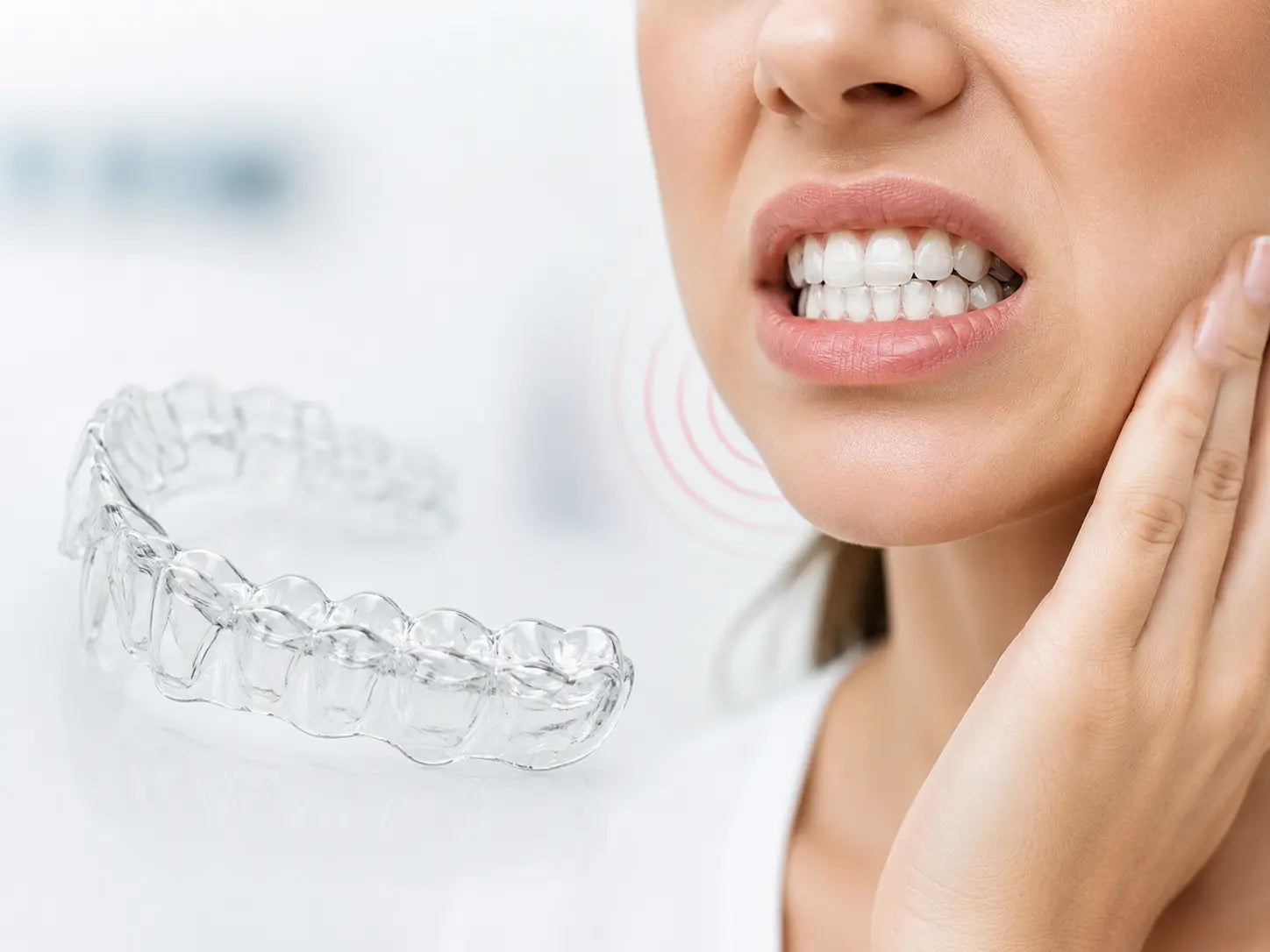
Invisible trays can straighten teeth remarkably well, but only when they are used the right way.

Can_Clear_Aligners_Help_with_Teeth_Grinding_bruxism_61d871a0-1c1d-4210-97f3-c78c03eeabce.webp?v=1781592903

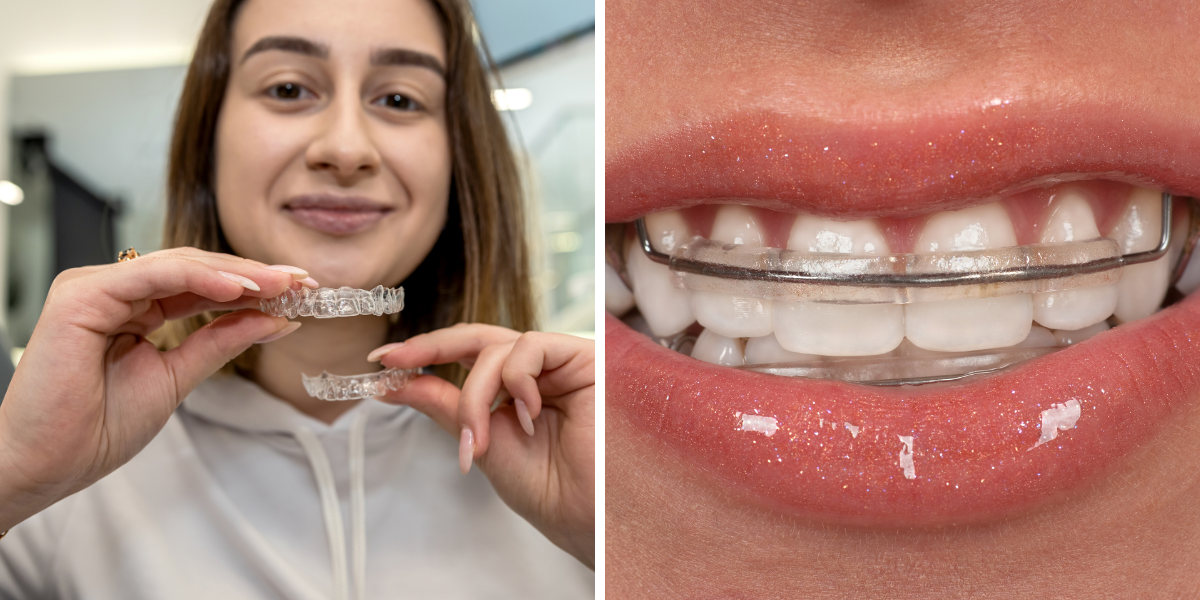
Clear aligners have transformed orthodontics by offering a nearly invisible way to straighten teeth. But their smooth, simple appearance hides a surprising amount of engineering, and the results depend heavily on how the patient uses them. Understanding the mechanics helps explain both why they work and why compliance matters so much.

The science behind the trays

Teeth are not fixed permanently in the jaw. Each one sits in bone that constantly remodels in response to pressure, which is the same principle behind traditional braces. Clear aligners apply that pressure through a series of custom trays, each one shaped slightly differently from the last. When you put in a new tray, it does not quite match your current tooth positions, and that gentle mismatch is what nudges the teeth to move.

You progress through the series, changing to the next tray every one to two weeks as directed. With each switch, the teeth shift a little closer to the final goal. Small tooth-colored attachments are often bonded to certain teeth to give the aligners something to grip, allowing more complex movements like rotations that plastic alone could not achieve.

Why wear time makes or breaks the result

Here is the part that patients most often underestimate. Aligners only move teeth while they are being worn, and the standard prescription is 20 to 22 hours a day. That leaves just enough time to remove them for eating, drinking anything other than water, and brushing. Wear them faithfully and the teeth track along the planned path. Leave them out too long and the teeth do not keep up with the trays, the fit gets off, and treatment stalls or has to be redone.

Caring for the aligners is part of success too. Rinse and gently clean them so they stay clear and odor free. Never eat with them in, since chewing can crack them and trapped food feeds bacteria. And always wear the current tray until your provider says to advance, even if it starts to feel loose.

It is also worth remembering that the trays are only as good as the plan behind them. A skilled provider maps out every movement in advance, which is why Invisalign treatment supervised by an experienced orthodontist tends to produce more predictable results than mail-order kits that skip the in-person planning and monitoring.

Who is a good candidate

Clear aligners handle a wide range of cases today, from mild crowding and spacing to more involved bite corrections that once would have required braces. Advances in the technology, along with the small bonded attachments and techniques an experienced provider uses, have steadily expanded what aligners can accomplish. That said, some complex situations are still better served by braces, and the only way to know for certain is a professional evaluation.

The other half of candidacy is honesty about compliance. Aligners reward discipline, so they tend to suit people who will commit to wearing them 20 to 22 hours a day and keeping their trays and teeth clean. For a motivated patient who values the discretion and the freedom to remove the trays for meals, they are an excellent fit. A consultation, usually including a digital scan, is where a provider confirms whether your specific case and habits line up well with aligner treatment.

People often ask how aligners compare to braces on cost and time. In many cases the two are broadly comparable, and the better choice comes down to the specifics of the bite and personal preference rather than price alone. Aligners win on discretion and the freedom to remove them for meals and cleaning, while braces do not depend on the wearer remembering to keep them in. An honest provider will tell you when either would work well and when one clearly fits your case better.

Used correctly, clear aligners offer a genuinely excellent combination of discretion, comfort, and effectiveness. The technology does the heavy lifting, but the outcome still rests on two things: a well-designed treatment plan and a patient disciplined enough to keep the trays in. Get both right, and the near-invisible path to a straighter smile lives up to its reputation.

Read more…

The routine cleaning you may be tempted to skip is quietly doing some of the most important work in preventive care.

A professional cleaning is easy to take for granted. You sit back, someone scrapes and polishes for a while, and you leave with a slick, minty smile. But behind that routine is a well-designed process that prevents problems most people never see coming. Understanding what happens, and why the timing matters, makes it a lot easier to keep those appointments.

Plaque, tartar, and the reason for the tools

Every day, a soft film of bacteria called plaque forms on your teeth. Brushing and flossing remove most of it, but not all, and the spots that get missed do not stay soft for long. Within a day or two, plaque hardens into tartar, a crusty deposit that brushing cannot remove. Only professional instruments can. This is the core reason cleanings exist: to remove the buildup that daily care leaves behind, especially along the gumline and between teeth.

During the cleaning, a hygienist uses hand instruments or an ultrasonic scaler to remove tartar, then polishes the teeth to smooth the surfaces and remove surface stains. Many visits finish with a fluoride treatment to strengthen the enamel. Along the way, the hygienist measures the health of your gums, which is one of the earliest windows into brewing problems.

The exam is half the value

A checkup is not just a cleaning. The dentist examines your teeth for early decay, checks existing fillings and crowns, evaluates your gums for signs of disease, and often performs an oral cancer screening. X-rays taken periodically reveal what the naked eye cannot, such as decay between teeth or problems below the gumline. Catching these early is the difference between a small filling and a root canal, or between reversible gum inflammation and irreversible bone loss.

The six-month interval is not arbitrary. For most people, it is roughly the window in which plaque, tartar, and early decay can accumulate to a point worth addressing, but before they progress into something serious. Some patients with higher risk are seen more often. The point is to stay ahead of problems rather than chase them.

If it has been longer than six months, or longer than you would like to admit, the fix is simple. Finding a dentist near me and getting back on a regular schedule is one of the most cost-effective health decisions you can make, because prevention is almost always cheaper and easier than repair.

What you do between visits still matters most

Professional cleanings are essential, but they happen only a couple of times a year. The other 363 days are up to you, and daily habits are what determine how much work each cleaning requires. Brushing twice a day for a full two minutes with fluoride toothpaste, and cleaning between the teeth once a day, remove the plaque before it has a chance to harden into tartar. That home routine is the real front line.

Diet plays a quieter role that adds up over time. Frequent snacking and sugary or acidic drinks keep the teeth under repeated attack, while drinking water, especially fluoridated tap water, helps rinse the mouth and strengthen enamel. None of this replaces professional care, but it makes each visit easier and less likely to turn up something that needs fixing. Good home care and regular cleanings are partners, and neither works nearly as well without the other.

Technique matters as much as frequency. Hold a soft-bristled brush at a slight angle to the gumline and use gentle, short strokes rather than hard scrubbing, which can wear enamel and irritate the gums over time. An electric brush can help, especially for anyone who tends to rush, and replacing the brush or brush head every three months keeps it effective. These small refinements make your two minutes count for far more.

Think of routine cleanings as maintenance, the same way you change the oil in a car before the engine complains. Skipping them rarely causes an immediate problem, which is exactly why they are so easy to neglect. But kept faithfully, they are the quiet backbone of a healthy mouth and a big reason serious dental work can often be avoided altogether.

Read more…

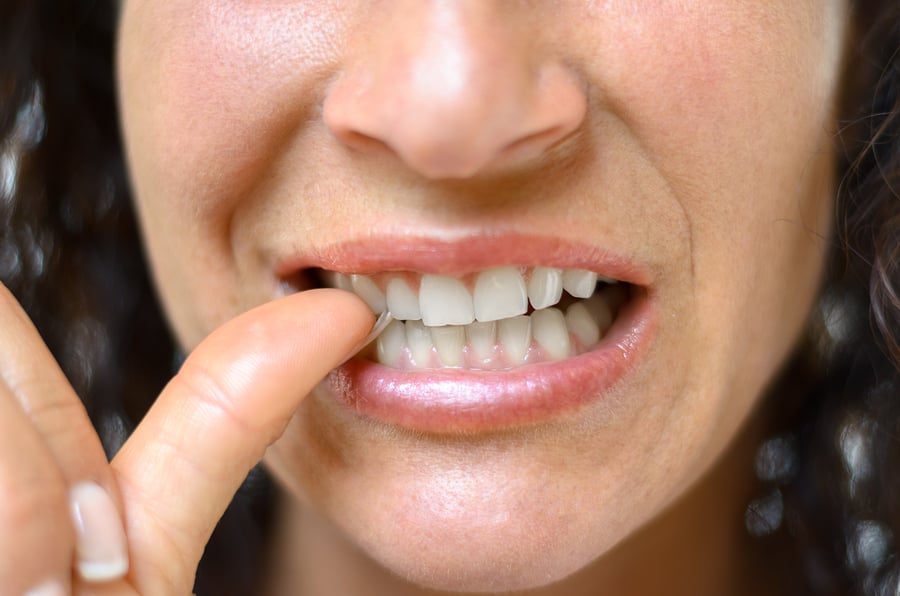
Straight teeth look nice, but the way your teeth fit together affects far more than your smile.

bigstock-Anxious-Young-Woman-Biting-Her-138728891.jpg

When people picture orthodontic problems, they usually think of crooked front teeth. But orthodontists spend just as much time thinking about the bite, the way the upper and lower teeth meet when the jaw closes. The clinical term for a bite that is off is malocclusion, and understanding it helps explain why orthodontic treatment is about function, not just appearance.

The common types of bite problems

An overbite is when the upper front teeth extend too far over the lower ones. An underbite is the reverse, with the lower teeth sitting in front of the uppers. A crossbite happens when some upper teeth close inside the lower teeth rather than outside them. An open bite leaves a gap between the upper and lower teeth even when the back teeth are together. Add crowding, spacing, and rotated teeth, and you have the full range of issues an orthodontist is trained to correct.

Some of these are inherited, a matter of jaw size and shape passed down through families. Others develop from habits like prolonged thumb sucking or from the early loss of baby teeth. Whatever the cause, the effects tend to compound over time if left unaddressed.

Why an off bite is more than cosmetic

A misaligned bite does real work on your mouth. Teeth that meet unevenly wear down faster, and that enamel does not grow back. An imbalanced bite can overload the jaw joint and surrounding muscles, contributing to soreness, clicking, and headaches. Crowded or overlapping teeth create tight spaces that a toothbrush and floss cannot reach well, which raises the risk of decay and gum disease in exactly the spots that are hardest to clean.

There are practical effects too. Certain bite problems make chewing less efficient or interfere with clear speech. Correcting the alignment can improve how comfortably you eat and talk, not only how you look in photographs.

The encouraging news is that nearly all of these problems are treatable, and treatment is more comfortable and discreet than it used to be. A consultation with an orthodontist near me will usually start with images or a digital scan that reveal exactly how your teeth fit together, followed by a clear explanation of what is happening and what can be done about it.

How bite problems are corrected

Correcting a malocclusion almost always means guiding the teeth, and sometimes the jaws, into a better relationship over time. Braces and clear aligners are the everyday tools, applying gentle, sustained pressure that lets the supporting bone remodel around each tooth in its new position. For growing children, an orthodontist can sometimes use appliances that gently influence how the jaws develop, which is part of why early evaluation is so valuable.

More significant skeletal problems, where the jaws themselves are markedly out of proportion, occasionally call for a combination of orthodontics and other treatment. Those cases are the exception rather than the rule. The vast majority of bite problems are resolved with well-planned braces or aligners, and the earlier a plan begins, the more straightforward the path tends to be. An orthodontist will lay out which category your bite falls into and what a realistic timeline looks like.

It is also reassuring to know how much more comfortable correction has become. Modern brackets are smaller and smoother than the versions many adults remember, wires are gentler and more efficient, and clear aligners offer a nearly invisible route for many cases. Treatment that once felt conspicuous and uncomfortable now fits far more easily into daily life, which removes one of the last reasons people put off fixing a bite that has bothered them for years.

You do not have to diagnose your own bite. If you notice uneven wear, jaw discomfort, difficulty cleaning certain teeth, or simply a bite that has never felt quite right, those are all good reasons to have it evaluated. Fixing a malocclusion is an investment in a mouth that works better and lasts longer, and the visible improvement to your smile is really just the bonus.

Read more…

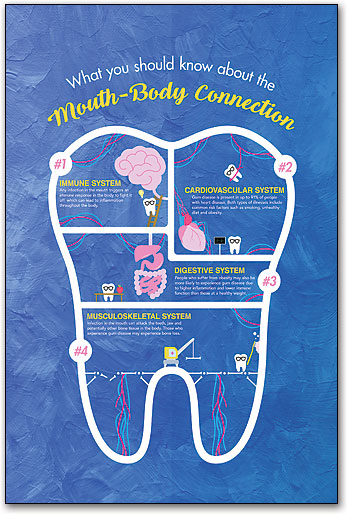
PT05021.jpg

For a long time, dentistry and general medicine were treated as separate worlds. Your teeth were one thing, your body another. Research over the past few decades has steadily dismantled that idea. The mouth is not a sealed compartment. It is a gateway to the rest of the body, and its condition both reflects and influences your overall health.

The gum disease connection

The clearest example is periodontal disease, the chronic infection of the gums and bone that support your teeth. When gums are inflamed, the bacteria and inflammatory chemicals involved do not stay put. They can enter the bloodstream and contribute to inflammation elsewhere in the body. Studies have repeatedly associated gum disease with a higher risk of heart disease, stroke, and clogged arteries.

The relationship with diabetes runs in both directions. People with diabetes are more prone to gum infections, and severe gum disease can in turn make blood sugar harder to control. Managing one often helps the other, which is why physicians and dentists increasingly view them as connected rather than separate concerns.

Beyond the heart and blood sugar

The links do not stop there. Pregnant women with untreated gum disease have been associated with higher rates of premature birth and low birth weight. Poor oral health has been connected to respiratory infections, since the mouth can harbor bacteria that are inhaled into the lungs. Researchers are even studying possible connections between oral bacteria and cognitive decline. The picture that emerges is consistent: a healthy mouth supports a healthier body.

There is a hopeful side to this. The same simple habits that keep your teeth and gums healthy also reduce these broader risks. Brushing twice a day, cleaning between your teeth daily, eating a diet low in added sugar, avoiding tobacco, and keeping regular dental visits are not just about avoiding cavities. They are part of caring for your whole self.

Regular professional cleanings and exams are where much of this prevention happens, because a dentist can detect and treat gum problems long before you would notice them yourself. Finding a trusted dentist near me and keeping to a routine of checkups is one of the most underrated things you can do for your long-term wellness.

The mouth as an early warning system

One of the most useful aspects of this connection is that the mouth often shows signs of trouble before other symptoms appear. A dentist may spot the effects of acid reflux on the enamel, signs of teeth grinding tied to stress, or oral changes that can accompany diabetes, nutritional gaps, or certain autoimmune conditions. Dry mouth, mouth sores that will not heal, and unusual gum changes can all be worth flagging to a physician.

This is part of why dental visits are more than a check on cavities. Your dentist sees a part of your body that is closely watched and easy to examine, and they are trained to notice when something looks off. In that sense, keeping up with dental care adds a second set of informed eyes to your overall health, catching clues that might otherwise go unnoticed until later.

The unifying thread behind all of these connections is inflammation. Chronic inflammation in the gums does not stay neatly contained, and the same low-grade inflammatory process is implicated in many of the conditions researchers have tied to oral health. Calming it at the source, by keeping the gums healthy, is a small act with outsized reach. That is a genuinely empowering idea, because it means the toothbrush in your bathroom is doing more for your body than its size would suggest.

The next time you are tempted to skip a cleaning or brush off bleeding gums, it helps to remember what the science is telling us. Oral care is not a cosmetic afterthought. It is a meaningful piece of preventive healthcare, and your mouth is often the first place your body signals that something needs attention.

Read more…

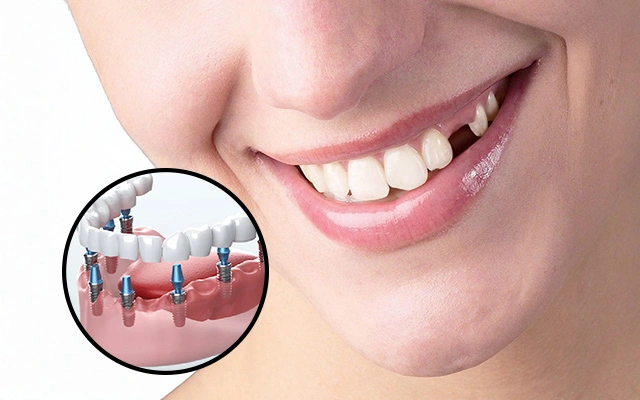
The-Benefits-of-Dental-Implants-Why-Theyre-the-Best-Choice-for-Replacing-Missing-Teeth.webp

Losing a tooth as an adult is more common than people like to admit. Whether it happens through injury, decay, or gum disease, the gap that follows is more than a cosmetic problem. It affects how you chew, how you speak, and over time even the shape of your face. For most of dental history, the options for replacing a lost tooth were limited and imperfect. The arrival of modern implants changed that picture considerably.

To appreciate why implants matter, it helps to understand what a natural tooth actually is. A tooth is not just the visible crown but a root anchored in the jawbone, and that root does important work. Every time you chew, it stimulates the bone around it, keeping that bone healthy and dense. When a tooth is lost, the root goes with it, and the bone in that area begins to shrink from disuse, a slow process that affects neighboring teeth and facial structure.

Traditional replacements addressed the visible gap but not this underlying issue. A bridge fills the space by anchoring to the teeth on either side, which means grinding down otherwise healthy teeth to support it. Removable dentures sit on top of the gums and can slip, click, or feel unstable. Both restore appearance to a degree, but neither replaces the root or stops the bone loss that follows a missing tooth.

Implants take a fundamentally different approach by replacing the root itself. A small post, usually made of titanium, is placed into the jawbone where the tooth used to be. Over the following months, the bone grows around and fuses to this post in a process that creates a remarkably stable foundation. A natural looking crown is then attached on top, completing a replacement that functions much like the original tooth.

The benefits of this approach are substantial. Because the implant is anchored in the bone, it provides the stimulation that keeps the bone healthy, helping to prevent the shrinkage that other options allow. It does not rely on neighboring teeth for support, so healthy teeth are left untouched. And it stays firmly in place, letting you eat, speak, and smile without the worry of slipping that dentures can bring. For many people, well placed dental implants feel and function so much like natural teeth that they nearly forget which tooth was replaced.

The process does require patience, since the fusion of bone to the implant takes time and cannot be rushed. From the initial placement to the final crown, treatment often spans several months. This may seem long compared to a quick bridge, but the result is built to last, frequently for decades, which makes the investment of time worthwhile for a permanent solution rather than one that needs redoing.

Candidacy depends on a few factors, chiefly having enough healthy bone to support the implant and good overall oral health. People who have lost significant bone after a tooth has been missing for a long time may need additional procedures to rebuild it first. A thorough evaluation determines whether implants are right for you and what, if any, preparatory steps are needed.

Caring for an implant is refreshingly straightforward. It is brushed and flossed like a natural tooth, and it cannot develop a cavity, though the surrounding gum tissue still needs to be kept healthy. With good hygiene and regular dental visits, an implant can serve for the rest of your life, which is a level of permanence that other replacement options simply cannot match.

Cost is a real consideration, as implants typically involve a larger upfront investment than a bridge or denture. But the calculation looks different over the long term. Because implants are so durable and help preserve the surrounding bone and teeth, they often prove to be a sound value across the years, sparing the repeated repairs or replacements that other options may require. Many practices offer financing to make the investment more manageable.

It is also reassuring to know how natural an implant feels once the process is complete and healing has settled. Because it is anchored firmly in the bone, there is no slipping, no special adhesive, and no sensation of something foreign sitting in the mouth. Patients routinely describe biting into an apple or a steak without a second thought, something that bridges and dentures can make uncertain. The crown is shaped and colored to match the surrounding teeth, so it blends in visually as well. For many people, the moment that confirms the value of the procedure is not the day it is finished but the realization weeks later that they have stopped thinking about it entirely, that the replacement has simply become one of their teeth. That seamless return to normal function and appearance is the whole point, and it is what sets a well placed implant apart from every other option for replacing a missing tooth.

For anyone living with a missing tooth, or facing the loss of one, it is worth understanding that the options today are far better than they once were. Implants offer a way to truly replace a tooth, root and all, restoring function and appearance while protecting the health of the jaw. A conversation with a knowledgeable dental provider is the best way to learn whether this modern solution is the right fit for your situation.

Read more…

Orthodontic care is often thought of as a single event, the time you spend wearing braces or aligners. In reality it is a journey with distinct phases, each serving a purpose, and understanding the full arc helps patients and parents know what to expect from start to finish. Knowing the phases turns a vague, open ended commitment into a clear path with recognizable milestones.

the-journey-to-a-perfect-smile-understanding-orthodontic-treatment.jpg

The journey begins with evaluation and diagnosis. At the first consultation, the orthodontist examines the teeth, bite, and jaw, usually with the help of images and a digital scan. This phase is about understanding the situation thoroughly before any decisions are made. The provider identifies what issues exist, what is causing them, and what the realistic options are, then discusses goals and expectations with the patient.

From that evaluation comes the planning phase, where the orthodontist designs a tailored approach. This is where the strategy is set, whether the case calls for braces, aligners, or a combination, and how long treatment is likely to take. With modern digital tools, this plan can be mapped out in detail, sometimes including a preview of the projected result, so the patient understands the road ahead before committing.

For some patients, especially younger children, there is an early or first phase of treatment. This is not about straightening every tooth but about addressing developing problems while the jaw is still growing. Guiding jaw width, correcting a crossbite, or making room can all be done more easily during this window. A well timed first phase can simplify or shorten the comprehensive treatment that follows later.

The active treatment phase is the part most people picture, when the braces or aligners are actually doing their work. Over months, steady pressure moves the teeth into their planned positions, with regular adjustment appointments to keep things progressing. This phase requires patience and good hygiene, and it is the heart of the process. Choosing thoughtful orthodontic treatment for this stage matters, because the skill guiding these movements shapes the final result.

Throughout active treatment, monitoring is continuous. At each visit the orthodontist checks progress, makes adjustments, and addresses any issues like a loose bracket or a tray that no longer fits well. This ongoing oversight is what keeps treatment on course and allows the plan to adapt if the teeth respond differently than expected. It is a collaborative phase, with the patient's care at home playing a major role in success.

As the teeth approach their target positions, treatment shifts into a finishing phase. Here the orthodontist fine tunes the details, perfecting the bite and the alignment rather than making large movements. This is where the difference between a good result and an excellent one is often made, as small refinements bring everything into proper harmony. It can feel slow because the changes are subtle, but it is important work.

The removal of braces or the end of the aligner series is a milestone, but it is not the end of the journey. It marks the transition into the retention phase, which is essential and lifelong in spirit. The teeth, freshly moved, have a strong tendency to drift back, and retainers are what hold them in place while the surrounding bone and tissue stabilize and beyond.

The retention phase deserves more respect than it usually gets. Wearing a retainer as directed, often nightly over the long term, is what protects everything the earlier phases accomplished. Patients who treat retention casually sometimes watch their results slowly unravel, while those who embrace it enjoy a straight smile for decades. It is the quiet but crucial final chapter of the whole journey.

It helps patients to understand that these phases are not rigidly separate boxes but a connected flow, with each one preparing the ground for the next. The thoroughness of the evaluation shapes the quality of the plan. The care taken during active treatment determines how little finishing is needed. The diligence of the retention phase decides whether all the earlier work endures. Because the phases build on one another, effort and attention at every stage pays dividends down the line, while shortcuts at any point tend to create problems later. Viewing treatment as a continuous journey rather than a single procedure encourages the patience and consistency that good outcomes require. Patients who grasp this tend to stay engaged from the first consultation through the last retainer check, and they are the ones who most reliably end up with results they are proud of and that hold steady for the long haul.

Seen as a complete arc, orthodontic care is a thoughtful, staged process rather than a single ordeal, and each phase builds on the last. Evaluation leads to planning, planning to treatment, treatment to finishing, and finishing to retention that preserves the result. Understanding these phases helps patients stay engaged and patient throughout, knowing that each step has its purpose and that the eventual payoff, a healthy and confident smile, is the product of the entire journey.

Read more…

images?q=tbn:ANd9GcSysdK3lMTnrL3ZQuiVoN-YEQNSe_U1Es7MyVqOk1JIoD3YJ4OwPogiFQ08&s=10

For most families, the question is not whether straighter teeth would be nice but how on earth to fit treatment into an already packed schedule. Between school, work, sports, and everything else, the idea of adding months of regular dental appointments can feel like one obligation too many. The reassuring truth is that orthodontic treatment is more flexible and less disruptive than parents often fear, and a little planning makes it genuinely manageable.

It helps to understand the actual time commitment, which is smaller than people imagine. After the initial appointments to start treatment, most visits are brief check ins spaced several weeks apart. These adjustment appointments are usually quick, and they do not require the patient to clear an entire day. Once you see the real rhythm of treatment laid out, it tends to look far less intrusive than the vague dread suggested.

Scheduling strategically can ease the burden considerably. Many practices offer early morning or after school appointments, and planning visits around the natural breaks in your week reduces the disruption. For students, the occasional appointment can often be timed to minimize missed class. A practice that is accommodating about scheduling makes a real difference, which is one reason to weigh flexibility when choosing where to go.

Families with more than one child can often coordinate appointments to save time. Booking siblings together, when the practice can arrange it, turns two separate errands into one trip. This kind of coordination is something a family minded practice handles routinely, and it can meaningfully reduce the number of times a parent has to leave work or rearrange the afternoon. A well run orthodontic practice will help you set this up rather than leaving you to juggle it alone.

Location plays a large role in how sustainable treatment feels. A practice close to home or school keeps each visit short and simple, while a distant one turns every appointment into a major outing. Over a year or more of regular visits, that difference compounds enormously. Choosing a conveniently located practice from the start is one of the most effective ways to keep treatment from overwhelming your schedule.

The choice between braces and aligners can also factor into how treatment fits your life. Aligners require discipline but offer flexibility around eating and special events, since they can be removed. Braces require no remembering but come with food restrictions and more careful cleaning. Neither is inherently more convenient for everyone, and the right fit depends on your family's habits and routines, something worth discussing openly with your provider.

Emergencies and small issues are part of treatment, and planning for them reduces stress. Knowing that a loose bracket or a lost aligner can be handled with a quick call and a short visit keeps these moments from becoming crises. Families who choose a nearby, responsive practice find that these inevitable hiccups barely register, while those with distant care often find them genuinely disruptive.

Communication with the practice keeps everything running smoothly. A team that sends reminders, is easy to reach, and works with you on scheduling makes the logistics far lighter. When you feel like the practice is a partner in managing the treatment rather than just a place you have to get to, the whole experience becomes less of a chore and more of a routine you can sustain without strain.

It also helps to keep the timeline in perspective. Treatment that takes a year or two sounds long in the abstract, but it passes within the ordinary flow of family life, alongside school years and seasons and everything else. The visits become a familiar part of the calendar rather than a constant intrusion, and before long the treatment is complete and the schedule returns to normal, with a lasting result to show for it.

A small but meaningful piece of advice for busy families is to build the appointments into the calendar the moment they are scheduled, treating them with the same firmness as any other commitment. The visits that get rescheduled repeatedly are usually the ones left as vague intentions rather than fixed plans. When an adjustment appointment is locked into the family calendar weeks ahead, alongside everything else, it stops competing for attention in the moment and simply happens. Pairing it with another routine errand in the same area can make it even more efficient. Families who treat orthodontic visits as movable tend to fall behind, which can actually lengthen treatment, while those who treat them as fixed sail through on schedule. It is a tiny shift in mindset, but over a year or more of regular visits it adds up to the difference between treatment that drags and treatment that finishes right on time with minimal stress.

Ultimately, fitting orthodontic treatment into a busy family's life is a matter of choosing the right practice, planning thoughtfully, and keeping realistic expectations. The commitment is real but modest, and the disruption is far less than the worry that precedes it. With a convenient, accommodating practice and a bit of coordination, even the busiest households find that giving their children, or themselves, a healthy smile fits into real life more easily than they ever expected.

Read more…

orthodentics.jpg

If your mental image of braces comes from your own childhood or from movies, it is probably out of date. Orthodontics has changed dramatically over the past decade, with advances in technology, materials, and methods reshaping nearly every part of the experience. For anyone considering treatment now, understanding how far the field has come makes the prospect far less daunting than old impressions suggest.

Perhaps the most visible change is the rise of clear aligners. A decade ago they were a novelty suited only to the simplest cases. Today, improvements in design and planning have expanded what they can handle, and they have become a mainstream option for a wide range of situations. The appeal of straightening teeth almost invisibly has drawn in countless adults and teens who would never have considered traditional braces.

Digital scanning has quietly revolutionized the start of treatment. The putty molds that older patients remember with a shudder, gagging on a tray of goop, are increasingly a thing of the past. A handheld scanner now captures a precise three dimensional image of the teeth in minutes, more comfortable for the patient and more accurate for the orthodontist. That single change has made the first steps of treatment far more pleasant.

Treatment planning has grown more sophisticated as well. With digital models, an orthodontist can map out the entire course of movement on a computer, anticipate how the teeth will respond, and even show the patient a projected result before anything begins. This precision allows for more predictable outcomes and helps patients understand and commit to their treatment with a clear sense of where it is heading.

The braces themselves have improved for those who still choose them. Brackets are smaller and less obtrusive than they once were, and tooth colored options blend in far better than the bulky metal of the past. Wires have advanced too, using materials that apply gentler, more consistent pressure, which can make treatment more comfortable and in some cases more efficient. A modern local orthodontist has tools available that simply did not exist a generation ago.

Efficiency has been a major focus of recent advances. Various techniques and technologies aim to move teeth more predictably and sometimes more quickly, shortening treatment timelines for suitable cases. While there is no magic shortcut and biology still sets limits, the steady refinement of methods means many patients spend less time in treatment than they would have a decade ago for a comparable result.

Comfort has improved across the board. Beyond gentler wires and smoother brackets, the overall experience has been refined with the patient in mind. Appointments are often more efficient, communication is clearer, and the tools used cause less irritation. The cumulative effect is that treatment feels less like an ordeal to endure and more like a manageable process that fits into a normal life.

Accessibility has widened too, partly because the discreet options have removed the social hesitation that once kept adults away. When treatment no longer means a conspicuous mouth full of metal, more people feel free to pursue it at any age. This shift has changed the very face of orthodontic practices, where adults seeking treatment are now a common sight rather than a rare exception.

It is worth noting that not everything has changed, and that is reassuring. The fundamental science of moving teeth with steady, controlled pressure remains the same, and the skill and judgment of the orthodontist are as central as ever. Technology has made the process more comfortable and precise, but it has not replaced the expertise that guides it. The best outcomes still come from capable hands using these improved tools well.

For all these advances, it is worth keeping expectations grounded, because progress in this field is evolutionary rather than magical. There is no technology that straightens teeth overnight or removes the need for patience and good care. Biology still governs how teeth move, and rushing that process invites problems. What the past decade has delivered is not shortcuts but refinement, treatment that is more comfortable, more discreet, more precise, and somewhat more efficient than before, all while remaining grounded in the same fundamental science. That is genuine progress, and it has made treatment accessible and appealing to people who would once have declined. But the best results still come from realistic expectations paired with a skilled provider and a committed patient. Understanding both how far the field has come and what has not changed gives you the clearest picture of what to anticipate, and protects you from marketing claims that promise more than any method can responsibly deliver.

For someone weighing treatment today, all of this adds up to an experience that is more comfortable, more discreet, more efficient, and more predictable than it was even ten years ago. The braces of the past, with their discomfort and their conspicuous look, have given way to options that fit far more easily into modern life. If old impressions have made you hesitant, it may be time to take a fresh look at what orthodontic care actually involves now.

Read more…

Clear aligners have changed the way a lot of people think about straightening their teeth. The idea of correcting a smile without a mouth full of metal appeals to teenagers and adults alike, and the technology behind these nearly invisible trays has matured considerably. Understanding how aligners actually work helps you judge whether they are a good fit for your situation rather than relying on advertising impressions.

blog-headerJuly4_2e30ac88-d44e-4cdd-84a7-d3fd2ef00ea4.jpg

At their core, clear aligners are a series of custom made transparent trays, each one shaped slightly differently from the last. You wear each tray for a week or two, then move on to the next in the sequence. With every change, the teeth are nudged a tiny bit closer to their planned final position. The cumulative effect of all these small moves, played out over months, is a straightened smile.

The process begins with a detailed digital scan of your teeth, which has replaced the uncomfortable putty molds of the past. From that scan, the orthodontist maps out the entire treatment on a computer, planning each stage of movement from start to finish. This digital plan is then used to manufacture the full series of trays, custom fitted to your mouth and calibrated to move your teeth in the intended sequence.

One of the appealing features of this approach is that you can often preview the projected result before treatment even begins. Because the whole sequence is planned digitally, your orthodontist can show you a simulation of how your teeth are expected to look at the end. Seeing that outcome in advance helps many people commit with confidence, knowing roughly what they are working toward.

The single most important factor in aligner success is wear time. The trays only move teeth while they are in your mouth, and the standard recommendation is to wear them around twenty two hours a day, removing them only for eating, drinking anything other than water, and cleaning. This is where personal discipline matters enormously. A reputable orthodontic office will be honest with you about whether your habits suit this kind of treatment.

The removability that makes aligners convenient is also their main demand on the patient. Being able to take the trays out for meals means no food restrictions and easier brushing and flossing, which is a genuine advantage over fixed braces. But it also means the responsibility for keeping them in falls on you. People who tend to leave them out too long simply do not get the results the plan predicted.

Comfort is generally good with aligners, though not entirely without sensation. Each new tray applies fresh pressure, so the first day or two of a new stage often brings mild tightness or soreness as the teeth respond. This is normal and a sign that things are working. The smooth plastic is gentle on the cheeks and lips, avoiding the irritation that brackets and wires can cause.

Aligners handle a wide range of cases well, but they are not the answer for every situation. Mild to moderate crowding, spacing, and many bite issues respond beautifully. Very complex cases, severe rotations, or significant skeletal problems sometimes call for braces or a combined approach. An honest evaluation will tell you whether aligners alone can achieve your goals or whether another method would serve you better.

Caring for the trays is simple but necessary. They should be rinsed whenever they come out, cleaned gently to avoid scratching, and kept away from hot water that can warp them. Just as important, you must clean your teeth before reinserting them, since sealing food and sugar against your enamel for hours invites decay. A small travel kit makes this easy to manage away from home.

A point worth emphasizing for anyone weighing this option is that clear aligners reward planning ahead in daily life. Because you remove them to eat and need to brush before putting them back, a little forethought keeps treatment on track. Carrying a small kit, building a habit of cleaning your teeth after meals, and keeping the trays in their case rather than loose in a pocket all become second nature within the first couple of weeks. People who thrive with aligners tend to be those who fold these small routines into their day without resentment. It is not difficult, but it does require a willingness to adjust a few habits for the duration. For someone who travels often, eats out frequently, or simply values not having food restrictions, that small trade is well worth it. Understanding the lifestyle fit, alongside the clinical fit, is what makes the difference between a smooth experience and a frustrating one.

For the right person with the right case and the discipline to wear them faithfully, clear aligners offer a discreet, comfortable, and effective path to a straighter smile. The technology is impressive, but it works in partnership with the patient rather than on its own. If the idea appeals to you, the sensible next step is a professional evaluation to confirm that aligners suit both your teeth and your habits, so that the result lives up to the promise.

Read more…

Our-Practice-update.jpg.webp

Choosing where to receive orthodontic treatment is a decision that plays out over many months, and for families in and around Paducah, staying close to home carries real advantages. Treatment is not a single appointment but a series of visits spread across a year or more, which makes the convenience of a nearby practice far more valuable than it first appears. Understanding what local care looks like helps families plan with confidence.

The rhythm of orthodontic treatment involves regular check ins, typically every several weeks, so the orthodontist can adjust the appliance and monitor progress. When the office is a short drive away, these visits slot easily into a normal week. When it is far, every appointment becomes a half day expedition that strains work schedules and school attendance. Proximity is not a luxury here, it is what keeps treatment on track.

Local care also means that the occasional small emergency is no big deal. A bracket comes loose, a wire starts poking, an aligner gets lost. These things happen during treatment, and they are minor when help is nearby. A quick visit resolves the issue and you are on your way. Without a local option, these small hiccups turn into stressful, time consuming problems that tempt people to put off getting them fixed.

There is a relationship dimension to choosing local that is easy to overlook. A practice rooted in your community tends to know its patients, sees them around town, and has a reputation to maintain among neighbors. That accountability often translates into care that feels personal rather than transactional. The team is not a faceless operation but people who are part of the same community you live in.

For families with more than one child, a nearby practice becomes even more valuable. Coordinating treatment for siblings, stacking appointments on the same afternoon, and managing the logistics of multiple cases all get dramatically easier when the office is close. A convenient local orthodontist office can turn what would be a scheduling nightmare into a manageable part of family life.

Modern orthodontic care delivered locally does not mean settling for less in terms of technology or options. Today's practices commonly offer digital scanning, clear aligners, and a full range of treatment approaches, so choosing local rarely means trading away quality or choice. You can have the convenience of a nearby office and the modern methods you would expect from anywhere.

The first step is usually a consultation, and a local practice makes even that easy to pursue. Because there is no major travel involved, families are more likely to actually schedule the evaluation that answers their questions. That initial visit provides a clear assessment of what treatment, if any, makes sense, along with honest information about timelines and cost, all without a significant commitment of time.

Cost and payment are handled directly and transparently at a good local practice, and being nearby makes those conversations easier to have in person. Many offices offer payment plans that spread the expense over the course of treatment and will help you understand how your insurance applies. Sorting these details out face to face, close to home, tends to feel more reassuring than navigating them from a distance.

For children especially, a familiar, nearby office reduces anxiety. A child who passes the practice regularly and visits without a long, tiring trip beforehand arrives more relaxed and cooperative. The treatment becomes a normal part of growing up rather than an ordeal attached to a long drive, which makes the whole experience smoother for parents and kids alike.

There is also a reassuring continuity that comes from receiving care in the place where you live and plan to stay. Orthodontic treatment, and the retainer phase that follows it, can stretch across years, and a practice rooted in the same community is far more likely to be there for the entire arc. If a retainer needs replacing five years down the line, or a question comes up long after the braces are off, having a local relationship to return to is genuinely valuable. Families who travel far for treatment sometimes find that the connection fades once the active phase ends, leaving them without an easy place to turn. Choosing local from the start builds a lasting relationship rather than a temporary arrangement. For a community like Paducah, where people often put down deep roots, that kind of continuity fits naturally with how families already prefer to handle the things that matter to them.

When you add it all up, choosing orthodontic care close to home in the Paducah area is about more than saving a few minutes of driving. It is about making treatment sustainable over its full length, handling the inevitable small issues without stress, and building a relationship with a team embedded in your community. For most families, that combination of convenience, accountability, and modern care is exactly what makes the long journey to a great smile feel manageable.

Read more…

People often know they want straighter teeth without quite understanding what is misaligned or why. Orthodontic problems come in several recognizable types, each with its own causes and its own approaches to correction. Getting familiar with these common issues demystifies the field and helps you understand what an orthodontist is actually looking at when they examine your bite.

orthodontic-problems-1024x538.jpg

Crowding is the problem most people picture first. It happens when the jaw lacks enough room for all the teeth, so they overlap, twist, and crowd together. Beyond the appearance, crowding makes thorough cleaning difficult and raises the risk of decay and gum issues. Treatment typically involves creating or using space, sometimes with expansion in younger patients, and then guiding the teeth into proper alignment with braces or aligners.

Spacing is the reverse situation, with gaps between teeth. These gaps can result from teeth that are small relative to the jaw, from missing teeth, or from certain habits. While some people are content with minor spacing, larger gaps can trap food and affect confidence. Orthodontic treatment closes the spaces by moving the teeth together, and in cases involving missing teeth, the plan may coordinate with other dental work.

Overbite refers to the upper front teeth extending too far over the lower ones. A deep overbite can cause the lower teeth to bite into the roof of the mouth and can contribute to uneven wear over time. Correcting it usually involves moving the teeth and, in growing patients, sometimes guiding jaw development so that the upper and lower arches relate to each other more harmoniously.

Underbite is the opposite, where the lower teeth sit ahead of the upper teeth when biting. It often has a skeletal component related to jaw growth, which is why early evaluation is so valuable in children. A skilled orthodontist can sometimes guide jaw development during childhood to improve an underbite, while more severe cases in adults may require a combination of orthodontics and other interventions.

Crossbite occurs when some upper teeth sit inside the lower teeth rather than outside them, either at the front or sides of the mouth. Left untreated, a crossbite can cause uneven wear, gum problems, and asymmetric jaw growth in children. Treatment may involve widening the upper arch, especially in younger patients whose jaws are still developing, followed by aligning the teeth.

Open bite describes a situation where the upper and lower front teeth do not touch even when the back teeth are closed, leaving a visible gap. It is sometimes linked to habits like prolonged thumb sucking or tongue thrusting. Addressing the underlying habit is part of treatment, alongside orthodontic work to bring the teeth into proper contact so that biting and chewing function correctly.

Protrusion, where the front teeth stick out noticeably, is both a cosmetic and a practical concern, since protruding teeth are more prone to injury. Treatment moves the teeth back into a more protected and balanced position. In growing patients, the approach may also account for jaw relationships, while in adults it focuses on repositioning the teeth themselves.

Midline discrepancies, where the center of the upper teeth does not line up with the center of the lower teeth, are subtler but can affect both appearance and function. Orthodontists assess the midline as part of a complete evaluation, and correcting it is often part of comprehensive treatment that addresses the bite as a whole rather than just one isolated feature.

Understanding these categories also helps patients have more productive conversations with their orthodontist. When you can describe what you are noticing in rough terms, whether it is crowding, a gap, or teeth that do not seem to meet right, you give the provider a useful starting point and you follow their explanation more easily. It also helps you ask better questions about your own treatment, since you understand what is being corrected and why a particular approach was chosen. None of this replaces professional diagnosis, of course, but an informed patient tends to be a more engaged and satisfied one. People who understand the reasoning behind their treatment are more likely to stick with it faithfully and to care for their teeth well throughout. Knowledge turns treatment from something that is done to you into something you participate in, and that sense of partnership consistently leads to better experiences and better results.

What ties all of these together is that an orthodontist does not look at any single problem in isolation. They evaluate how the teeth, the bite, and the jaw all relate, then build a plan that addresses the whole picture. That is why a thorough initial examination is so important, and why two people who both want straighter teeth may end up with quite different treatment plans. Understanding the common problems is a useful start, but a professional evaluation is what turns that general knowledge into a path tailored to you.

Read more…

family%20dentistry%20bangalore.jpg

Deciding to pursue orthodontic treatment is the first step. Deciding where to have it done is the one that shapes the whole experience. Orthodontic care unfolds over many months, sometimes years, with regular visits along the way, so the practice you choose becomes a fixture in your routine for a good while. Picking thoughtfully is worth the effort, and a few clear considerations make the decision easier.

Begin with credentials and experience. An orthodontist completes years of specialized training beyond dental school to focus specifically on the movement of teeth and the development of the jaw. Confirming that the provider is a specialist, and learning how long they have been practicing, gives you a baseline of confidence. Experience with cases similar to yours or your child's is especially reassuring.

The range of treatment options a practice offers matters more than people expect. Some situations call for traditional braces, others for clear aligners, and many can be approached more than one way. A practice that offers and is skilled in multiple approaches can tailor the plan to your needs rather than fitting you into whatever they happen to do. Flexibility is a sign of a practice that puts patients first.

Pay attention to how the team communicates during your first contact. A good orthodontic practice explains things clearly, answers questions patiently, and never makes you feel rushed or pressured. The initial consultation is a revealing test. If they take time to understand your goals and lay out options honestly, that bodes well. If they push you to commit on the spot, treat it as a warning.

Convenience is a practical factor that affects whether you actually keep up with treatment. The location, the office hours, and how easy it is to schedule appointments all matter when you are returning regularly over a year or more. A practice that is a major hassle to reach or that cannot accommodate your schedule becomes a source of friction. The right orthodontic practice should fit into your life rather than complicate it.

The atmosphere of the office tells you a lot, particularly for families with children. Notice whether the space is clean and well organized, whether the staff is friendly, and whether kids seem comfortable there. A welcoming environment makes the regular visits something to tolerate easily rather than dread, and for anxious children it can be the difference between cooperation and resistance.

Transparency about cost is essential and should be addressed early. A reputable practice will give you a clear breakdown of the total fee, explain what is and is not included, and lay out payment plan options without evasion. They should also help you understand how your insurance applies. Vague answers about money are a red flag, since financial surprises later damage trust and strain the relationship.

Reviews and word of mouth carry real weight, used wisely. Hearing about other families' experiences, whether through online reviews or personal recommendations, helps you gauge a practice's reputation for results and for how they treat people. Look for patterns rather than fixating on any single review, and pay particular attention to comments about communication, wait times, and how problems were handled.

Consider the technology and methods a practice uses, without being dazzled by gadgets for their own sake. Modern tools like digital scanning can make treatment more comfortable and precise, and they are worth having. At the same time, the skill and judgment of the orthodontist matter far more than the newest device in the room. Good technology in capable hands is the ideal combination.

It can also be illuminating to ask a prospective practice how they handle the parts of treatment that do not go perfectly to plan, because every honest provider has them. How do they respond to a broken appliance, a missed appointment, or a result that needs extra fine tuning. A practice that answers these questions openly, with clear policies and a calm attitude, tends to be one that will support you well through the inevitable bumps. Evasiveness or irritation at the question is itself informative. You are choosing a partner for a process that unfolds over many months, and how a practice manages the imperfect moments often matters more than how they present the ideal ones. The smoothest sales pitch does not always come from the practice that will serve you best when something needs sorting out, so it is worth probing beyond the polished first impression to see how they operate when things get real.

Finally, trust your overall impression. After a consultation, you will have a feel for whether these are people you want to work with over the long haul. Did they listen. Did they explain. Did you leave feeling informed rather than sold to. The clinical quality matters enormously, but so does the relationship, because you are choosing a partner for a journey that takes time. When the credentials, the communication, and your gut all point the same way, you have likely found the right fit.

Read more…

Clear+vs+Permanent+Retainers_+Which+One+Prevents+Teeth+Crowding+Best.png

There is a moment of pure relief when braces finally come off or the last aligner tray is set aside. The teeth are straight, the bite feels right, and it is tempting to consider the job finished. But anyone who has been through treatment, or who has watched their own teeth shift after ignoring this advice, knows a hard truth. The result you worked so long to achieve is not permanent on its own. Retainers are what make it last.

To understand why, it helps to know what actually happens during treatment. Teeth are not fixed rigidly in the jaw. They sit in bone, cushioned by ligaments, and orthodontic treatment works by applying steady pressure that gradually remodels that bone and shifts the teeth into new positions. The teeth move because the surrounding tissue adapts, and that is exactly what makes the new arrangement vulnerable right after treatment ends.

Immediately after the braces come off, the bone and ligaments around the newly positioned teeth are still settling. The teeth have a strong tendency to drift back toward where they started, a process orthodontists call relapse. This pull is strongest in the first months and never fully disappears. A retainer holds the teeth in place while the surrounding structures stabilize, and then maintains them over the long term.

There are two main kinds of retainers, and each has its place. Removable retainers are worn on a schedule and taken out for eating and cleaning, which makes them easy to care for but dependent on the patient remembering to wear them. Fixed retainers are thin wires bonded behind the teeth, working quietly around the clock without any effort from the patient, though they require careful cleaning to keep the area healthy.

How long you need to wear a retainer is the question everyone asks, and the honest answer is longer than most people hope. In the beginning, near constant wear is often recommended, gradually tapering to nighttime only. But teeth can shift throughout life, and many orthodontists now advise wearing a retainer at night indefinitely to protect the result. A trusted orthodontist will give you a specific plan based on your case and explain the reasoning behind it.

The most common mistake patients make is treating the retainer as optional once treatment is over. People wear it faithfully for a while, then get casual, then stop. By the time they notice their teeth creeping back out of line, real movement has already happened, and the retainer that once fit no longer does. At that point, getting back on track can mean a new retainer or even a round of touch up treatment.

Caring for a retainer is simple but it does require consistency. Removable retainers should be cleaned gently and regularly, kept away from heat that can warp them, and stored in their case rather than wrapped in a napkin where they get thrown away. Fixed retainers need extra attention with floss threaders or a water flosser to keep plaque from building up around the bonded wire.

Losing or breaking a retainer is common, and the important thing is to act quickly. Teeth can begin shifting within days of going without, so a lost retainer is a reason to call your orthodontist promptly rather than letting weeks slide by. A quick replacement is far cheaper and easier than dealing with teeth that have already moved and need correcting again.

It helps to reframe the retainer not as an afterthought but as the final, essential phase of treatment. The months of braces or aligners moved your teeth into place. The retainer is what makes that investment hold for years and decades. Skipping it is like building a house and then neglecting the foundation, undoing slowly what took so much effort to achieve.

A useful way to think about retainers is to treat the first one you receive as a tool you will likely need to replace over the years rather than a single permanent object. Removable retainers wear out, get lost, or no longer fit perfectly after a long time, and that is entirely normal. Having a fresh one made periodically is far cheaper and simpler than letting your teeth drift while you put it off. Some people keep a spare so that a lost or damaged retainer never means a gap in protection. Whatever approach you take, the goal is continuity, never going long without something holding your teeth in place. Patients who plan for replacement as a routine part of long term maintenance almost never face the disappointment of watching their results slip away. Those who treat the first retainer as the end of the story are the ones who tend to be surprised when their teeth move again.

The encouraging part is that maintaining your results takes so little once the habit is set. A few minutes of wear at night and some basic care is a small price for a smile that stays straight for life. Patients who embrace the retainer as part of their routine rarely think about it after a while, and they get to enjoy the lasting payoff of all that earlier work. The braces get the attention, but the retainer is what makes the result truly yours to keep.

Read more…

braces-invisalign.jpg

Straightening your teeth is an investment, and protecting that investment along the way takes a little more effort than ordinary brushing. Orthodontic appliances create new nooks and surfaces where food and plaque can hide, which means the months of treatment are exactly when careful hygiene matters most. The good news is that with a few solid habits, you can finish treatment with teeth that are not just straight but genuinely healthy.

Braces are the bigger challenge for cleaning, simply because there is more to clean around. Brackets and wires trap food in ways that bare teeth never do, and the areas around each bracket are prone to plaque buildup. Left alone, that plaque can leave permanent white marks on the enamel, the kind that become obvious only after the braces come off. Nobody wants straight teeth marked by the very treatment that aligned them.

Brushing with braces takes more time and a better technique. The goal is to clean above, below, and around each bracket, not just sweep across the front. Many people find that angling the brush toward the gumline and then toward the chewing surface, working in small sections, does the job. An electric brush can help, but a manual one used carefully works perfectly well. The key is patience, since a rushed thirty seconds will not reach where it needs to.

Flossing is the step people are most tempted to skip with braces, and it is the one that matters a great deal. The wire blocks the normal motion, so you need a floss threader or special orthodontic floss to get underneath it and between the teeth. A water flosser is another excellent tool that many brace wearers swear by, since it flushes out debris around brackets that string floss struggles to reach. Whatever the method, cleaning between the teeth daily is not optional.

Aligners change the hygiene picture but do not remove the responsibility. Because you take them out to eat, you can brush and floss normally, which is a real advantage. The catch is that you must clean your teeth before putting the trays back in. Sealing food and sugar against your teeth under a snug plastic tray for hours is a recipe for decay. Carrying a travel brush for meals away from home solves most of this.

The trays themselves need care too. Rinse them whenever they come out, clean them gently with a soft brush, and avoid hot water that can warp the plastic. Cloudy, smelly aligners are a sign they are not being cleaned often enough. A good local orthodontist will show you exactly how to keep both your teeth and your trays in good shape, and following that guidance keeps treatment on track.

Diet deserves attention during treatment regardless of which appliance you wear. With braces, hard and sticky foods can break brackets or bend wires, leading to extra visits for repairs that slow your progress. With aligners, frequent snacking means frequent removal and cleaning, which gets tiresome and tempts people to cut corners. Being a little more deliberate about what and when you eat pays off in fewer setbacks.

Regular dental cleanings remain important throughout orthodontic treatment, not just the orthodontist visits. Your general dentist and hygienist can reach buildup that is hard to manage at home and can catch early signs of trouble before they grow. Keeping up with these cleanings on schedule, in addition to your adjustment appointments, gives your teeth the best protection during a vulnerable stretch.

Discomfort after adjustments or new aligner trays is normal and temporary, and it should not become an excuse to brush less. If anything, gentle, thorough cleaning helps. Sore spots from a bracket or wire can be soothed with orthodontic wax, and any persistent irritation or a broken appliance is worth a call to your provider rather than waiting it out and risking a delay in your progress.

One habit that makes a surprising difference is keeping a small dental kit with you wherever you go. A travel toothbrush, a bit of floss or some interdental brushes, and a little orthodontic wax fit easily into a bag or a desk drawer. With braces, this lets you clear away food after lunch before it has hours to sit against your teeth. With aligners, it means you can always brush before reinserting the trays rather than skipping it because you are away from home. The patients who finish treatment with the healthiest teeth are almost always the ones who made cleaning convenient enough that they actually did it consistently. Relying on willpower alone tends to fail, but reducing the friction so that good hygiene is easy makes it far more likely to happen. Small preparations like this protect the considerable investment you are making in your smile.

The months of treatment pass faster than you expect, and the habits you build during them tend to stick. Patients who commit to careful hygiene throughout almost always finish with a result they are proud of, while those who let it slide sometimes trade crooked teeth for marked or decayed ones. A straight smile is worth having, and protecting it along the way ensures the smile you reveal at the end is as healthy as it is aligned.

Read more…

If you have decided to straighten your teeth, the next question lands almost immediately. Do you go with traditional braces or clear aligners. Both work, both have loyal fans, and both have genuine strengths. The right answer is not the same for everyone, and it depends as much on your habits and lifestyle as on the technical details of your case. Sorting through the differences honestly helps you land on a choice you will be happy with.

invisible-braces.png

Traditional braces use metal brackets bonded to each tooth and connected by a wire that the orthodontist adjusts over time. They have been refined over many decades and remain the most versatile tool available. For complex cases involving significant rotation, large gaps, or major bite correction, braces often have an edge because they give the orthodontist precise, constant control over how each tooth moves.

Clear aligners take a different approach. They are a series of custom, transparent trays that you swap out every week or two, each one nudging your teeth a little closer to the goal. Their headline appeal is that they are nearly invisible and removable. You take them out to eat, brush, and floss, which many people find far more convenient than working around fixed brackets and wires.

Appearance is the deciding factor for a lot of adults. Aligners let you go through treatment without it being obvious to coworkers, clients, or anyone across a dinner table. Teenagers sometimes feel the same way, though plenty are perfectly happy with braces, especially since modern brackets are smaller and colored bands let them have a bit of fun with the look.

Discipline is the quiet variable that decides whether aligners succeed. They only work if you wear them around twenty two hours a day, removing them just for meals and cleaning. For a responsible adult or a motivated teen, that is manageable. For someone who is likely to leave them out for hours or lose a tray, fixed braces may actually be the more reliable path, since they are working whether you think about them or not. A consultation at a local orthodontic office can help you judge this honestly about yourself.

Eating habits differ between the two as well. With braces, certain foods are off limits for the duration, things that are hard, sticky, or chewy and could damage the brackets. With aligners, you simply take them out and eat whatever you like, then brush before putting them back. That freedom is a real plus, though it does require the discipline to actually clean your teeth before re inserting the trays.

Maintenance and comfort round out the comparison. Braces can irritate the inside of the lips and cheeks at first and require careful brushing around the brackets. Aligners are smooth and easy to clean, but they must be rinsed and cared for, and you have to be the kind of person who will not lose them. Both cause some pressure and soreness when adjustments happen, which is simply the feeling of teeth moving and fades within a few days each time.

Cost is often similar between the two these days, though it varies by case and provider. Complex situations can run higher with either method. Many practices offer payment plans for both, and insurance that covers orthodontics generally applies regardless of which you choose. It is worth getting specific numbers for your own case rather than relying on general impressions.

Treatment time depends far more on the complexity of your teeth than on the method. Simple cases can finish in well under a year with either option, while involved ones take longer. An orthodontist can give you a realistic estimate once they have examined your mouth, and that estimate should factor into your decision alongside everything else.

It is also worth thinking past the treatment itself to the maintenance that follows, because that can subtly factor into your choice. Both braces and aligners require a retainer afterward to hold the result, and the habits you build during treatment often carry forward. Someone who has spent months diligently caring for aligners has already practiced the discipline that retainer wear demands. Someone who relied on the set and forget nature of braces will need to build that habit fresh. Neither is better or worse, but it is a useful thing to be honest with yourself about as you decide. The method that fits your temperament during treatment tends to fit it afterward too. Whichever you choose, going in with a clear sense of the full journey, including the part that comes after the teeth are straight, helps you commit to the option that you will actually follow through on from start to finish.

The honest bottom line is that there is no universally better choice, only the better choice for you. Think about how you live, how disciplined you are likely to be, how much the appearance matters to you, and what your case actually requires. A trustworthy provider will lay out both options fairly and help you weigh them rather than steering you toward whichever is easier for them. With the right fit, both braces and aligners deliver the same thing in the end, a smile you are glad to show.

Read more…

What-to-Expect-at-Your-First-Orthodontic-Visit.jpg

The first orthodontic consultation carries a surprising amount of mystery for something so routine. People often arrive unsure whether they will leave with braces glued on that same day, whether it will hurt, or whether they are about to be talked into something expensive. Understanding what really happens at that first visit takes most of the anxiety out of it and helps you get more from the appointment.

The visit usually begins with a conversation rather than any equipment. The orthodontist or a team member will ask what brought you in, what bothers you about your teeth or bite, and what you hope to achieve. This matters more than it might seem. Your goals shape the entire plan, and a good provider listens carefully here, because the same set of teeth can be approached in different ways depending on what the patient actually wants.

Next comes the examination. The orthodontist looks closely at your teeth, gums, and the way your upper and lower teeth come together when you bite. They check how your jaw moves and opens, feel for any tenderness, and note things you may never have noticed yourself. This part is painless and quick, but it is where the real assessment begins, since how the teeth fit together tells the practiced eye a great deal.

Most consultations include some form of imaging. Digital photographs of your face and teeth, along with X rays, give a complete picture of what is happening below the surface, including the position of roots and any teeth that have not yet erupted. Many practices now use a digital scanner that builds a three dimensional model of your mouth in minutes, replacing the uncomfortable putty molds that older patients remember with a clear dislike.

Once the provider has gathered this information, you move to the part most people came for, the explanation. This is where good orthodontics really shows its value, because the provider translates all that data into plain language. They will tell you what they see, whether treatment is recommended, what options exist, roughly how long it would take, and what results you can realistically expect. You should never leave this conversation more confused than you arrived.

It is worth knowing that you almost certainly will not have braces placed at this first visit. The consultation is for evaluation and planning. If you decide to move forward, the actual start of treatment is scheduled for a later appointment, giving you time to think, ask questions, and sort out the practical details. Anyone pressuring you to commit on the spot is a reason for caution rather than a reason to rush.

Cost and logistics typically come up before you leave. A treatment coordinator often reviews the total fee, explains payment plan options, and helps you understand what your insurance might cover. Getting these numbers in writing is reasonable and expected. A transparent practice wants you to understand the financial side clearly, because surprises later benefit no one and damage trust.

This is also your chance to interview the practice, even if it does not feel that way. Notice how the team treats you, whether they answer questions patiently, and whether the office feels organized and clean. You may be visiting this place regularly for a year or more, so the relationship and the atmosphere matter. Trust your read on whether these are people you want to work with over that stretch of time.

Coming prepared makes the visit far more useful. Jot down your questions beforehand so you do not forget them in the moment. Bring any relevant dental history, and if you have insurance, have the details handy. If you are considering treatment for a child, think in advance about their school schedule and activities so you can discuss realistic timing with the team.

It can also help to bring along anyone who will be part of the decision, whether that is a spouse, a parent, or for a child, both parents if possible. Orthodontic treatment is a shared commitment of time and resources, and having everyone hear the same explanation firsthand prevents the game of telephone that often follows a solo visit. People absorb information differently, and a question that does not occur to one person will occur to another. A good practice welcomes this and will happily address the whole group rather than rushing one person out the door. Leaving the consultation with everyone on the same page, having heard the options together, makes the eventual decision easier and reduces second guessing later. It also signals to the practice that you are taking the choice seriously, which tends to bring out their most thorough and patient explanations in return.

By the end of a good consultation, you should have a clear picture of where your teeth stand, what your options are, and what the path forward would look like if you choose to take it. There is no obligation to decide anything that day. The whole point is to replace uncertainty with information, so that when you do make a choice about your smile, you are making it from a position of genuine understanding.

Read more…