Dr. Lindsey Koerich's Posts (53)

Sort by

images?q=tbn:ANd9GcTTSOmYQj6Q4YFpB7AOVvJoLqFD137Y_Xo20GZ4Wp0NFjeWHPdvJWJEKY41&s=10

The day braces come off or the final aligner is finished feels like the finish line. Teeth look straight, appointments slow down, and patients understandably want to move on. Yet the period that follows is one of the most important parts of treatment. Without a solid retention plan, teeth can begin shifting within weeks, and some of the time and money invested in orthodontic care can be lost.

This guide explains why teeth move after treatment, what types of retainers are available, and how families can keep results stable for the long term.

Why Teeth Want to Move Back

Teeth are not fixed in bone like posts in concrete. Each tooth is held in place by a periodontal ligament, a network of fibers that connects the root to the surrounding bone. During orthodontic treatment, the bone remodels and the ligaments stretch and reorganize so that teeth can move.

When treatment ends, those tissues need time to stabilize. Some fibers, especially the elastic fibers around the necks of the teeth, can take a year or longer to reorganize and have a tendency to pull teeth back toward their original positions. Rotated teeth are particularly prone to relapse.

On top of that, teeth keep moving throughout life regardless of orthodontic history. Natural aging, changes in the jaw, pressure from the tongue and lips, and the forward drift of teeth all contribute. Many adults notice lower front teeth becoming more crowded in their thirties and forties even if they never had braces. Retainers counteract this ongoing movement.

Types of Retainers

There are three main types of retainers, and each has advantages and drawbacks.

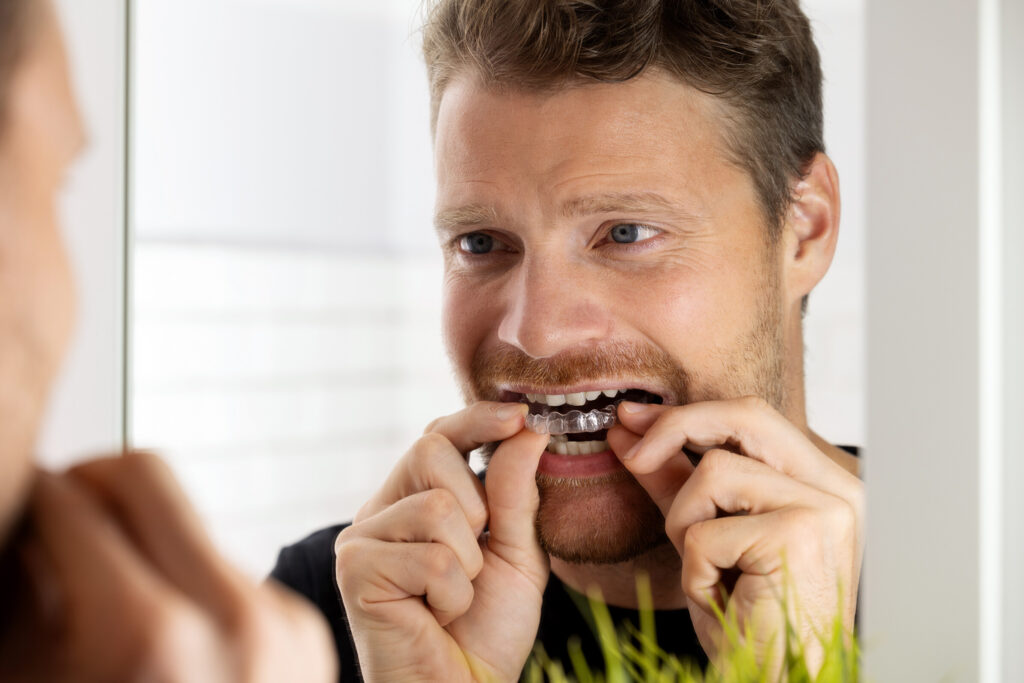
Clear removable retainers. These look similar to clear aligners and are made from thin, transparent plastic molded to the teeth. They are nearly invisible and comfortable. However, they can wear out, crack, or warp if exposed to heat, and they need replacement every few years. They also cover the biting surfaces, which some people find affects their bite slightly.

Hawley retainers. These are the traditional removable retainers made of an acrylic plate with a wire across the front teeth. They are durable, adjustable, and allow the upper and lower teeth to touch naturally. The wire is visible, and some people find the acrylic plate affects speech for a few days.

Bonded (fixed) retainers. A thin wire is bonded to the back surfaces of the front teeth, usually the lower ones and sometimes the upper ones. Because they cannot be removed, they work constantly without relying on the patient to remember. They do make flossing more challenging, and the wire or bonding can occasionally break without the patient noticing.

Many orthodontists combine approaches, such as a bonded retainer on the lower front teeth with a clear removable retainer worn at night for the upper teeth.

How Long Retainers Should Be Worn

Retention schedules vary between practices and patients, but a typical plan looks like this:

  • First several months: Removable retainers worn most of the day and night, removed only for eating and cleaning.
  • After that: Nightly wear, often for a year or more.
  • Long term: Several nights per week, indefinitely.

The idea that retainers can be stopped after a year or two is the main reason relapse is so common. Many orthodontists now advise patients to think of nighttime retainer wear as a lifelong habit, similar to brushing.

A simple test helps: if a removable retainer feels tight when you put it in, your teeth have started to move and you should wear it more often. If it slips in comfortably, your current schedule is working.

Caring for Retainers

Retainers last longer and stay cleaner with a few habits:

  • Brush removable retainers gently with a soft toothbrush and cool water. Avoid hot water, which can warp plastic.
  • Skip regular toothpaste on clear retainers, since it can scratch them and make them cloudy. Mild soap or a retainer cleaner works better.
  • Always store retainers in their case. A large share of lost retainers end up wrapped in napkins and thrown away at restaurants.
  • Keep them away from pets. Dogs are notorious for chewing retainers.
  • With bonded retainers, use a floss threader or water flosser daily and check the wire in the mirror for any loose spots.

What to Do If Teeth Shift

If you stopped wearing retainers and notice movement, contact your orthodontist sooner rather than later. Minor shifting may be corrected by resuming wear of an existing retainer, if it still fits, or with a new retainer made from a current scan. More significant relapse may require a short course of aligners. Waiting usually makes correction more involved.

Retention for Children and Teens

For kids who had early treatment, retention may also involve holding space or maintaining jaw expansion until the next phase of care. Teens are statistically the group most likely to lose or forget removable retainers, which is one reason bonded retainers are popular for them. Parents can help by establishing a consistent routine, such as placing the retainer case next to the toothbrush every night.

A family orthodontist who follows siblings and parents over many years is in a good position to spot early shifting and adjust retention plans as each person grows and ages.

Protecting a Lasting Result

Orthodontic treatment is an investment in function, oral health, and confidence. The active phase moves the teeth, but retention is what keeps them there. Ask your orthodontist about the retention plan before treatment begins, understand the replacement policy, and treat nighttime retainer wear as a permanent part of your routine.

With a few minutes of care each day, the smile you worked hard to achieve can stay straight and healthy for decades.

Read more…

Porcelain-Veneers-vs.-Dental-Bonding.png

Cosmetic dentistry has become one of the most requested areas of dental care. Patients want brighter, more even smiles, and there are more ways to achieve that than ever before. The challenge is that the options can blur together. Whitening, bonding, veneers, and crowns all change how teeth look, but they differ greatly in how much tooth structure they affect, how long they last, and what problems they can actually solve.

Understanding these differences helps you have a more productive conversation with your dentist and choose a treatment that fits both your goals and your oral health.

Start With the Problem, Not the Procedure

The best cosmetic plans begin with a clear description of what you want to change. Common concerns include:

  • Overall yellowing or dullness
  • Isolated dark or discolored teeth
  • Small chips or rough edges
  • Gaps between teeth
  • Teeth that look too short, worn, or uneven
  • Mild crowding or rotation
  • Old fillings or crowns that no longer match

Each of these points toward different solutions. A good evaluation also checks for underlying issues such as decay, gum inflammation, grinding, or bite problems, because cosmetic work placed on an unhealthy foundation will not last.

Professional Teeth Whitening

Whitening is the most conservative cosmetic treatment because it does not remove or add any tooth structure. Peroxide-based gels break down stain molecules within the enamel and dentin, lightening the overall shade.

Best for: General yellowing from aging, coffee, tea, or wine.

Limitations: Whitening does not change the color of fillings, crowns, or veneers. It is less effective on gray discoloration caused by certain medications or on teeth darkened after trauma or root canal treatment. Results fade gradually and need occasional touch-ups.

What to expect: In-office whitening produces faster results in a single visit. Custom take-home trays from a dental office provide gradual whitening over a couple of weeks. Temporary sensitivity is common and usually resolves quickly.

Whitening is often done first when other cosmetic work is planned, because restorations are color-matched to the natural teeth and cannot be whitened later.

Composite Bonding

Bonding uses tooth-colored resin that is applied directly to the tooth, shaped by hand, hardened with a curing light, and polished. Little or no enamel needs to be removed.

Best for: Small chips, minor gaps, slightly uneven edges, and small areas of discoloration.

Limitations: Composite resin can stain over time and is not as strong as porcelain. It may chip, especially on biting edges or in people who grind their teeth. Bonding generally lasts five to ten years before it needs repair or replacement.

What to expect: Treatment is often completed in a single visit without anesthesia. Because it is additive and reversible in many cases, bonding is a good way to make modest changes or to test a new look before committing to something more permanent.

The result depends heavily on the artistic skill of the dentist, since every layer is shaped by hand.

Porcelain Veneers

Veneers are thin shells of porcelain bonded to the front surfaces of teeth. They can change the color, shape, length, and apparent alignment of teeth in a dramatic and natural-looking way.

Best for: Multiple teeth with uneven shapes, chips, stubborn discoloration, worn edges, or small gaps, especially when a patient wants a comprehensive change.

Limitations: Most veneers require removing a thin layer of enamel, which makes the treatment irreversible. Veneers can chip or debond, and they will eventually need replacement, often after ten to twenty years. They are also more expensive than bonding.

What to expect: Treatment typically involves a planning visit, often with digital design or a trial smile, followed by tooth preparation and impressions, temporary veneers, and a final bonding appointment.

Some patients are candidates for minimal-preparation veneers, which remove very little enamel. Whether this is possible depends on the current position and shape of the teeth.

Crowns

Crowns cover the entire visible portion of a tooth. They are not usually the first choice for purely cosmetic reasons because they require removing more tooth structure. However, they are often the right option when a tooth is heavily filled, cracked, or weakened, or when it has had a root canal and needs protection.

Where Orthodontics Fits In

Many patients consider veneers to fix crowding or rotated teeth. In mild cases, this can work. In more significant cases, covering crooked teeth with veneers may require removing a large amount of enamel to make them look straight. Moving the teeth first with clear aligners or braces is often more conservative and allows any veneers or bonding that follow to be thinner and more natural.

A thoughtful cosmetic plan may combine several approaches: a short course of aligners to improve position, whitening to brighten the overall shade, and bonding or veneers on a few teeth to perfect the shape.

Choosing the Right Provider

Cosmetic results depend on both clinical skill and an eye for proportion, color, and facial harmony. When evaluating a cosmetic dentist, consider:

  • Before and after photos of the dentist's own patients, especially cases similar to yours
  • Use of digital smile design or mock-ups that let you preview results
  • Willingness to recommend conservative options when they meet your goals
  • Attention to oral health first, including treating decay and gum disease before cosmetic work
  • Clear explanations of maintenance, lifespan, and replacement costs

Protecting Your Investment

Whatever treatment you choose, long-term care matters. Brush and floss consistently, keep regular cleanings, and limit staining foods and drinks after whitening or bonding. If you grind your teeth, a night guard protects both natural teeth and restorations. Avoid using your teeth to open packages or bite hard objects.

The most successful cosmetic results are the ones that look natural, last for years, and preserve as much healthy tooth structure as possible. Starting with a clear understanding of your options makes it far more likely you will end up with a smile you are happy to show.

Read more…

Bite-Adjustment.jpg

When people think about orthodontic treatment, they usually picture straighter teeth and a more confident smile. Appearance matters, but for many adults the more important issue is how the teeth come together. A bite that does not fit properly can quietly cause wear, gum problems, jaw discomfort, and failed dental work over the years. The good news is that bite problems can be corrected at almost any age, as long as the gums and supporting bone are healthy.

What a Healthy Bite Looks Like

In a well-aligned bite, the upper teeth sit slightly outside the lower teeth all the way around the arch. The upper front teeth overlap the lower front teeth by a small amount, both vertically and horizontally. When you close, the back teeth meet evenly on both sides, and when you slide your jaw forward or sideways, the front teeth and canines guide the motion so that the back teeth separate.

This arrangement distributes chewing forces evenly and protects the back teeth from sideways stress. When the bite deviates significantly from this pattern, certain teeth absorb more force than they were designed to handle.

Common Bite Problems in Adults

Deep bite. The upper front teeth cover too much of the lower front teeth. In severe cases, the lower teeth bite into the gum behind the upper teeth, and the lower front teeth may wear down over time.

Open bite. The front teeth do not touch when the back teeth are closed. This puts the entire chewing load on the back teeth and can make biting into foods like sandwiches difficult.

Crossbite. Some upper teeth sit inside the lower teeth. This can cause uneven wear, gum recession on certain teeth, and sometimes a shift of the jaw to one side.

Underbite. The lower front teeth sit ahead of the upper front teeth. Depending on severity, this may involve tooth position, jaw size, or both.

Crowding. Overlapping teeth are harder to clean, which increases the risk of decay and gum disease in tight areas.

Spacing. Gaps between teeth can trap food and sometimes indicate that teeth are drifting because of gum disease, missing teeth, or tongue pressure.

Warning Signs to Watch For

Many adults have lived with their bite so long that they do not notice the warning signs. Here are some to pay attention to:

  • Flattened or chipped edges on the front teeth, especially the lower ones
  • Small notches near the gumline, which can be associated with heavy or uneven forces
  • Gum recession on one or two specific teeth rather than evenly across the mouth
  • Jaw soreness, clicking, or fatigue after chewing
  • Frequent headaches upon waking, which may relate to clenching or grinding
  • Repeatedly broken fillings or crowns on the same teeth
  • Teeth that have shifted over the past few years, creating new gaps or crowding
  • Difficulty biting through foods with the front teeth

None of these signs alone proves that a bite problem exists, and some can have other causes. Together, though, they are good reasons to have an evaluation.

How Bite Problems Affect Other Dental Work

Bite issues often surface when an adult needs crowns, bridges, or implants. If a tooth is tipped into a space or teeth have drifted, it may be impossible to place a well-shaped restoration without first moving teeth. Placing crowns on a poorly aligned bite can also shorten their lifespan because they take on uneven forces.

For this reason, general dentists and restorative specialists often recommend orthodontic treatment before major dental work. Moving teeth into better positions first allows restorations to be more conservative, better looking, and longer lasting. This coordinated approach is sometimes called pre-restorative or adjunctive orthodontics.

The Connection to Jaw Discomfort

The relationship between bite problems and temporomandibular disorders is complex. Research does not support the idea that every bite problem causes jaw pain or that orthodontic treatment cures it. Jaw discomfort often involves muscles, stress, clenching habits, and joint health. However, a significant bite discrepancy can be one contributing factor, and an evaluation can help sort out whether orthodontic care is likely to help or whether another approach makes more sense.

Be wary of any provider who promises that braces will eliminate jaw pain. A careful evaluation and an honest explanation of what treatment can and cannot do is what you should expect.

What Adult Treatment Looks Like Today

Adult orthodontics has changed significantly. Options include clear ceramic braces that blend with the teeth, lingual braces placed on the inside surfaces, and clear aligners that are removable for eating and cleaning. Temporary anchorage devices, which are tiny titanium screws placed in the bone, allow orthodontists to make movements that once required surgery or headgear.

Treatment time for adults typically ranges from about twelve to twenty-four months depending on complexity. Before treatment begins, gum health must be stable. Adults with a history of gum disease can usually still have orthodontic care, but they will need close coordination with their dentist or periodontist.

In cases where the jaws themselves are significantly mismatched, orthodontics may be combined with jaw surgery. This is less common, and an orthodontist will explain when it is truly necessary.

Getting an Evaluation

If any of the warning signs above sound familiar, a consultation with an orthodontist is a straightforward next step. Expect a thorough exam, photos, a digital scan, and X-rays. The orthodontist will explain how your teeth come together, what risks your current bite poses, and whether treatment is likely to improve your long-term dental health.

Fixing a bite is not only about how a smile looks in photos. It is about protecting teeth from wear, keeping gums healthy, and giving future dental work the best chance to last. For many adults, that is the most compelling reason to look into treatment.

Read more…

What%20to%20Expect%20During%20Your%20First%20Month%20with%20Braces.jpg

Getting braces is a big moment. After the consultation, the planning, and the anticipation, the brackets are finally on and treatment has officially begun. The first few weeks, though, can feel strange. Your mouth is adapting to new hardware, eating requires some rethinking, and cleaning takes longer than it used to. Knowing what is normal and what to do about it makes the adjustment period much easier.

Day One: The Placement Appointment

Having braces placed is not painful. The orthodontist or assistant cleans and polish the teeth, applies a mild conditioning solution, and bonds each bracket in place with a special adhesive cured by a blue light. Then the archwire is threaded through the brackets and secured. Depending on the type of braces, this is done with small elastic ties or a built-in clip.

The whole process usually takes one to two hours. Most people leave feeling a bit of pressure but no real discomfort. Before you go, the team will show you how to clean around the brackets and give you supplies like orthodontic wax and interdental brushes.

Days Two Through Five: The Soreness Window

Within a few hours of placement, teeth usually start to feel tender. This is completely normal. The archwire is applying gentle, constant pressure, and the ligaments around each tooth respond with mild inflammation as movement begins.

Soreness tends to peak around day two or three and fades by the end of the first week. To stay comfortable:

  • Eat soft foods like yogurt, scrambled eggs, pasta, soup, mashed potatoes, and smoothies.
  • Use over-the-counter pain relief as directed on the label if needed.
  • Rinse with warm salt water to soothe irritated gums and cheeks.
  • Try cold foods and drinks, which can calm sore tissues.

Lips and cheeks also need time to toughen up against the brackets. Small sore spots are common at first. A pea-sized piece of orthodontic wax pressed over a bracket creates a smooth barrier and allows irritated tissue to heal. Within a couple of weeks, the inside of the mouth adapts and the wax is rarely needed.

Learning to Eat With Braces

Braces do not require giving up most favorite foods, but they do require changing how you eat some of them. The main goals are to avoid breaking brackets and bending wires.

Foods to avoid:

  • Hard foods such as ice, nuts, hard candy, and hard pretzels
  • Sticky foods such as caramel, taffy, and gummy candies
  • Chewy foods such as bagels and tough breads, unless cut small
  • Foods you bite into directly, such as whole apples or corn on the cob

Smart adjustments:

  • Cut fruits and raw vegetables into bite-sized pieces.
  • Slice corn off the cob.
  • Tear bread and pizza crust into small pieces.
  • Chew with your back teeth rather than biting with your front teeth.

Breaking these habits takes a little effort at first, but most people adjust within a few weeks. Fewer broken brackets mean fewer emergency visits and a better chance of finishing treatment on schedule.

A New Cleaning Routine

Brackets and wires create many new places for plaque and food to hide. If plaque sits against the teeth for long periods, it can cause white spots, which are early areas of mineral loss that may remain visible after the braces come off. Gum inflammation is also common when cleaning is rushed.

A strong routine includes:

  1. Brushing after every meal. Angle the toothbrush toward the gumline above and below the brackets, then clean the brackets themselves. An electric toothbrush can make this easier.
  2. Using interdental brushes. These small, cone-shaped brushes slip under the wire and clean between brackets.
  3. Flossing daily. Floss threaders, orthodontic floss with a stiff end, or a water flosser help reach between teeth.
  4. Using fluoride. A fluoride toothpaste and, if recommended, a fluoride rinse help protect enamel.

Carrying a small travel kit with a toothbrush, toothpaste, and interdental brushes makes it easier to clean after lunch at school or work.

Speaking, Sports, and Instruments

Some people notice a slight change in speech at first, especially with certain sounds. This usually resolves within days as the tongue and lips get used to the brackets.

If you play contact sports, wear a mouthguard designed for braces. These guards are made to fit over brackets and protect both teeth and soft tissue. People who play wind or brass instruments often need a short adjustment period, and wax on the front brackets can help.

Your First Adjustment Visit

Typically four to eight weeks after placement, you will return for your first adjustment. The orthodontist checks progress, may change the archwire to a slightly stiffer or differently shaped one, and replaces the elastic ties. Some mild soreness may return for a day or two afterward, but it is usually less intense than the first week.

This is a good time to ask questions about cleaning, mention any brackets that feel loose, and let the team know if a wire is poking.

What Counts as an Emergency

True orthodontic emergencies are rare. Most problems, like a poking wire or loose bracket, can be managed temporarily at home with wax and handled at the next visit or with a quick call to the office. Contact your orthodontist promptly if you experience significant swelling, trauma to the mouth, or a broken appliance that causes ongoing pain.

Settling Into the Rhythm

By the end of the first month, most patients barely notice their braces most of the time. Eating and cleaning become routine, the soreness after adjustments becomes predictable and manageable, and progress starts to become visible in the mirror.

Treatment usually lasts a year and a half to two years, and the habits you build in the first month largely determine how smoothly that time goes. Protect the brackets, keep the teeth clean, and keep every appointment, and you will be in a strong position to finish on time with a healthy, confident smile.

Read more…

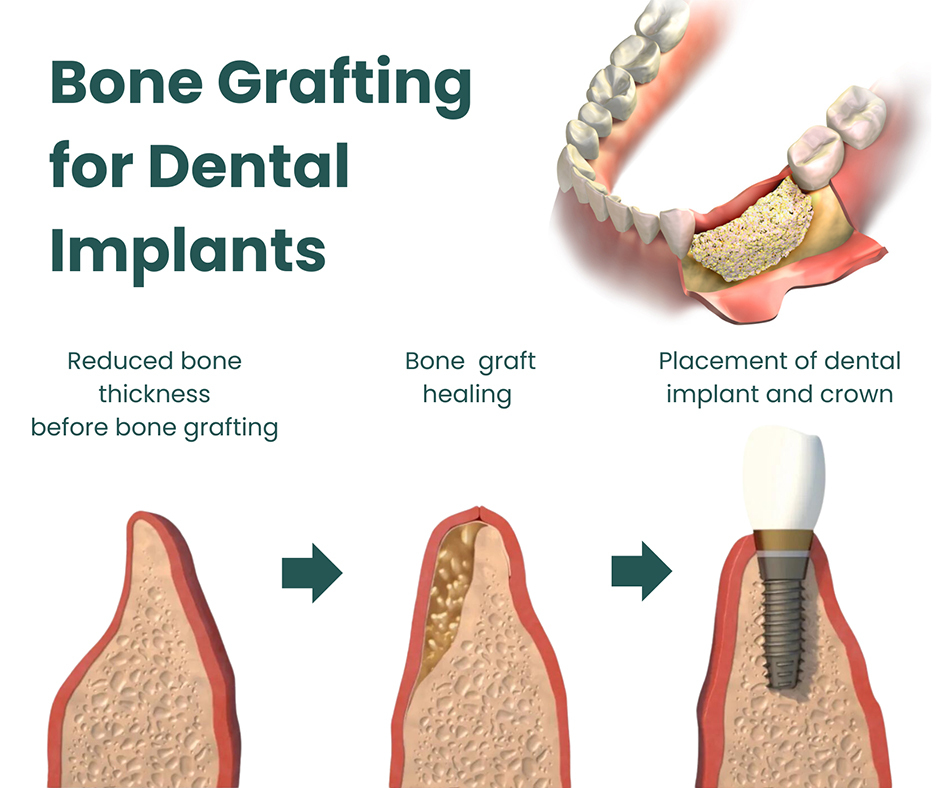
bone-grafting-for-dental-implants.jpg

If you're considering a dental implant, you may have heard that you need a bone graft first. For many people, that's the moment the process starts to sound more complicated than they expected. In reality, bone grafting is one of the most common procedures in implant dentistry, and understanding why it's done makes the whole treatment plan easier to follow.

Why Bone Matters for Implants

A dental implant is a small post placed into the jawbone to act as a replacement root. For it to work, the bone has to grow tightly against the implant surface, a process called osseointegration. That requires enough bone height and width to surround the implant completely, with enough density to hold it firmly under chewing forces.

If the bone is too thin, too short, or too soft, the implant may not be stable, may be positioned poorly, or may leave part of its surface exposed. A graft rebuilds the foundation first.

Why Bone Goes Missing

The jawbone around a tooth exists to support that tooth. When the tooth is lost, the body begins to resorb, or break down, the bone that's no longer being used. The most rapid loss happens in the first several months after an extraction, and it continues gradually for years.

Other causes include:

  • Periodontal disease, which destroys the bone that supports teeth
  • Infection around a tooth or a failed root canal
  • Trauma to the face or jaw
  • Long-term denture wear, since dentures put pressure on the ridge without stimulating the bone beneath
  • Natural anatomy, such as an enlarged sinus in the upper back jaw

Common Types of Bone Grafts

Socket preservation. Placed at the time a tooth is extracted. Graft material is packed into the empty socket to limit bone loss while it heals. If an implant is planned for later, this is one of the simplest ways to protect the site.

Ridge augmentation. Used when the jaw ridge has become too narrow or too short. Graft material is added to the side or top of the ridge, often covered with a protective membrane, to rebuild its shape.

Sinus lift. The upper back teeth sit just below the maxillary sinuses. After tooth loss, the sinus can expand downward, leaving little bone. A sinus lift gently raises the sinus membrane and places graft material beneath it to create room for an implant.

Block grafts. For larger defects, a solid piece of bone may be secured to the jaw with small screws. This is less common and is usually reserved for significant bone loss.

Where Graft Material Comes From

Graft materials fall into a few categories:

  • Autograft: Bone taken from your own body, often from another area of the jaw
  • Allograft: Processed human donor bone from a tissue bank
  • Xenograft: Processed bovine (cow) bone mineral
  • Synthetic materials: Biocompatible substances that mimic bone mineral

Most graft materials act as a scaffold. Your body gradually replaces them with your own new bone over the following months. The choice depends on the size and location of the defect and on your surgeon's assessment.

What the Procedure Is Like

Most grafts are performed with local anesthesia, often combined with sedation for comfort. The gum is opened, the graft is placed, and the area is closed with stitches. Many grafts take about an hour or less.

Afterward, swelling and mild discomfort for several days are normal. Some people notice a few small granules of graft material in their mouth during the first week, which is common and usually not a concern.

Healing and Timing

Healing time varies with the type and size of the graft:

  • Socket preservation often heals enough for an implant in about three to four months
  • Ridge augmentation and sinus lifts typically need four to nine months
  • In some cases, a graft can be placed at the same time as the implant, shortening the overall timeline

Your surgeon uses X-rays or 3D scans to confirm the new bone is ready before the implant is placed.

Tips for Healing Well

Follow your surgeon's specific instructions first. In general:

  • Eat soft foods and avoid chewing directly on the graft site
  • Don't smoke, which significantly increases the risk of graft failure
  • Avoid using straws and spitting forcefully for the first few days
  • After a sinus lift, avoid blowing your nose and sneeze with your mouth open
  • Take medications exactly as prescribed
  • Attend every follow-up appointment

Why the Surgeon's Training Matters

Grafting and implant placement involve working around nerves, blood vessels, and the sinuses. An oral surgeon is trained specifically in surgery of the mouth, jaws, and face, including complex grafting and sedation. Often the oral surgeon handles the extraction, graft, and implant, and your general dentist places the final crown, bridge, or denture once everything has healed.

The Takeaway

Bone grafting is a way of preparing the foundation so an implant has the best chance of lasting. The longer a gap goes untreated, the more bone tends to be lost, and the more involved grafting may become. If you've recently lost a tooth or are about to have one removed, asking about socket preservation and your long-term replacement options early can keep your choices simpler.

Read more…

what-you-should-include-in-your-emergency-dental-kits.jpg

Most households have a first-aid kit with bandages and antiseptic. Very few have anything ready for a dental injury. Yet a chipped tooth, a lost crown, or a knocked-out tooth tends to happen at home, on a playing field, or on a weekend, when getting to an office takes time.

A small dental kit, plus a basic understanding of how to use it, can protect a tooth until it can be properly treated. Here is what to include and what each item is for.

What to Put in the Kit

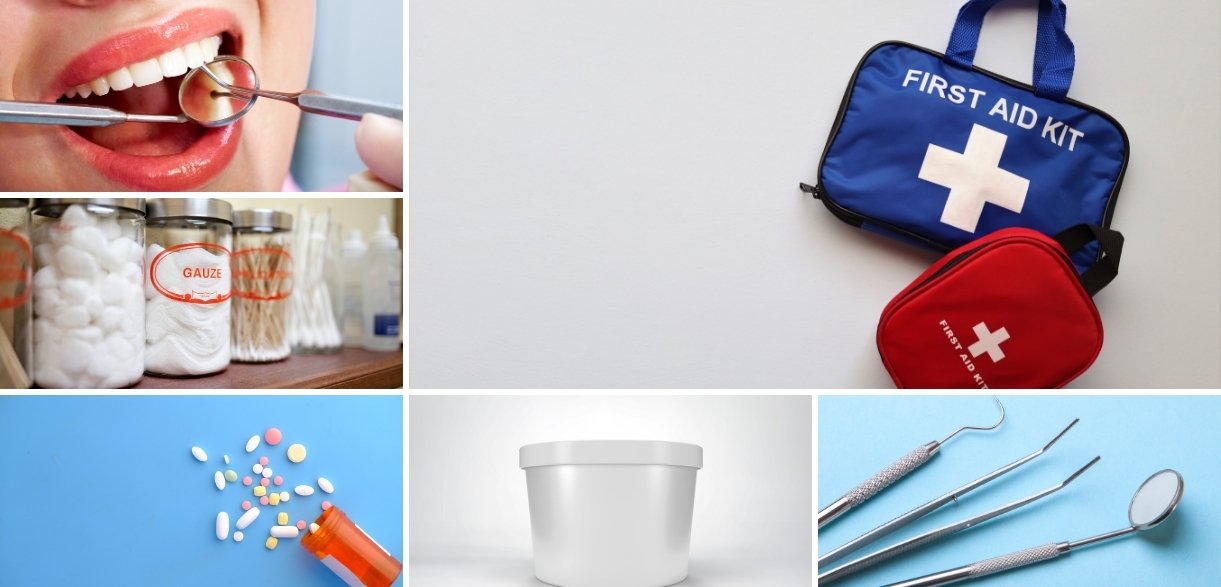
You can fit all of this into a small zippered bag or a plastic container:

  • A small container with a lid. For transporting a knocked-out tooth or broken pieces.
  • Saline solution or a tooth preservation kit. Saline keeps root cells alive far better than water. Commercial tooth-saving kits contain a balanced solution designed for this exact purpose.
  • Sterile gauze. For controlling bleeding and for biting down to hold a tooth in place.
  • A cold pack. For swelling after a blow to the face.
  • Over-the-counter pain reliever. Choose one that is safe for everyone in the household, and follow the label.
  • Temporary dental cement. Sold at most pharmacies. It can hold a loose crown or cover a lost filling for a short time.
  • Orthodontic wax. For covering a broken wire or bracket that is cutting the cheek.
  • Dental floss. For removing something wedged between teeth.
  • A small flashlight. Looking inside a mouth is hard without one.
  • A card with your dentist's phone number and after-hours instructions.

Using It: Knocked-Out Tooth

Handle the tooth by the crown only. If it is dirty, rinse it briefly in saline or milk, without scrubbing. Try to place it back into the socket and have the person bite gently on gauze. If that isn't possible, put the tooth in the container with saline or milk and seek care immediately. The best outcomes occur when a tooth is replanted within about an hour.

Do not reinsert a baby tooth. Store it and bring the child in for an exam, since replanting a primary tooth can harm the adult tooth beneath it.

Using It: Bleeding From the Mouth

Lips, tongue, and cheeks have a rich blood supply, so even minor cuts can look alarming. Rinse gently, then press folded gauze firmly against the area for 15 minutes without lifting to check. A cold pack on the outside of the face helps too.

Bleeding that continues after two rounds of steady pressure, a deep cut through the lip, or a cut that gapes open should be seen promptly, since some need stitches.

Using It: Lost Filling or Crown

Keep the crown if you find it. Clean it gently and check whether it fits back on comfortably. A small amount of temporary cement can hold it in place for a day or two until you can be seen. Never use household glue. Superglue and similar products can damage the tooth and make the crown impossible to reuse.

For a lost filling, temporary cement or even sugar-free gum pressed into the hole can reduce sensitivity briefly. Avoid chewing on that side.

Using It: Broken Braces or Wires

A poking wire is uncomfortable but rarely urgent. Press a small ball of orthodontic wax over the sharp end. If a wire is loose, you can sometimes use the eraser end of a pencil to push it to a less irritating position. Don't cut wires yourself unless your orthodontist has told you how. Call the orthodontic office to schedule a repair.

Using It: Toothache

Use floss first. A surprising number of "toothaches" turn out to be a popcorn hull or a seed lodged under the gum. Then rinse with warm salt water and take a pain reliever as directed. Do not hold aspirin against the gum. A cold pack on the cheek can help with throbbing.

If the pain is severe, keeps you awake, or comes with swelling, the problem is likely inside the tooth and needs professional treatment.

When the Kit Isn't Enough

The kit is for buying time. It doesn't treat the underlying problem. Facial swelling that spreads, difficulty swallowing or breathing, a suspected broken jaw, or a head injury along with a dental injury all mean going to an emergency room first.

For tooth-specific problems, it helps to know in advance where you'd go for emergency dental care, and whether your regular office reserves time for urgent cases. Many general dental practices can repair cracked teeth, recement crowns, treat infections, and stabilize injured teeth, then refer to a specialist if needed.

Kids, Sports, and Prevention

Children and teens account for a large share of dental injuries, most of them from falls and sports. A properly fitting mouthguard is the single most effective way to prevent them. Custom-fitted guards made by a dentist tend to be more comfortable, and players who are comfortable actually keep them in.

A few other habits help everyone:

  • Avoid chewing ice, hard candy, and popcorn kernels
  • Don't open packages or bottles with your teeth
  • Address teeth grinding, which weakens teeth over time
  • Keep up with checkups so worn fillings and small cracks are caught early

Check the kit every few months, replace anything expired, and make sure everyone in the house knows where it is. It takes ten minutes to put together and can make the difference between saving a tooth and losing it.

Read more…

teeth-bonding-vs-veneers.jpg

Maybe your teeth have dulled from years of coffee. Maybe there's a small chip on a front tooth, a gap you've always noticed, or a couple of teeth that don't quite line up. None of it may be a health concern, but it can still make you hesitate to smile.

The three most common cosmetic treatments, whitening, bonding, and veneers, solve different problems. Comparing them by what they fix, how long they last, and whether they can be reversed makes the choice much clearer.

Teeth Whitening

What it fixes: Overall discoloration on healthy teeth.

Coffee, tea, red wine, dark sodas, and tobacco stain the outer enamel over time. Aging also plays a role, as enamel thins and the darker layer beneath it shows through more.

Professional whitening uses a stronger bleaching gel than over-the-counter products, either applied in the office or in custom trays you wear at home. The gums are protected during in-office treatment, and custom trays keep the gel where it belongs.

Things to know:

  • Whitening only works on natural tooth structure. It won't change the color of crowns, veneers, fillings, or bonding.
  • Temporary sensitivity is common and usually fades within a few days.
  • Some stains, especially gray discoloration from certain medications or from trauma, respond poorly to bleaching.
  • Results fade gradually and can be maintained with occasional touch-ups.

Reversible? It isn't undone, but it doesn't remove enamel either. It's the least invasive option.

Dental Bonding

What it fixes: Small chips, minor gaps, isolated stains, and small shape irregularities.

Bonding uses a tooth-colored composite resin, the same type of material used for white fillings. The dentist lightly roughens the tooth surface, applies the resin in layers, sculpts it, hardens it with a curing light, and polishes it.

It works well for:

  • Repairing a chipped edge
  • Closing a small space between teeth
  • Covering a single dark spot
  • Lengthening a short tooth or evening out an irregular one

Things to know:

  • It's often done in one visit, typically with little or no drilling and frequently without numbing.
  • Composite is less stain-resistant and less durable than porcelain. It can pick up stains and may chip, especially on the biting edges.
  • Bonding typically lasts several years before it needs repair or replacement.
  • If you plan to whiten, do it first. Bonding is matched to your tooth shade at the time it's placed and won't lighten afterward.

Reversible? Largely, since little or no enamel is removed.

Porcelain Veneers

What it fixes: Color, shape, size, and the appearance of mild misalignment across several teeth.

Veneers are thin, custom-made shells of porcelain bonded to the front surfaces of the teeth. Because they cover the entire visible surface, they can make substantial changes, including stains that whitening can't reach, worn edges, and teeth of uneven sizes.

Things to know:

  • A thin layer of enamel is usually removed so the veneer sits flush and looks natural.
  • The process generally takes at least two visits: preparation and impressions or scans, then bonding the final veneers. Temporary veneers may be worn in between.
  • Porcelain is highly stain-resistant and reflects light similarly to natural enamel.
  • With good care, veneers commonly last 10 to 15 years or longer.
  • They can still chip or debond, especially in people who grind their teeth or bite hard objects.

Reversible? No. Once enamel is removed, the teeth will always need some kind of covering.

A Quick Comparison


Whitening

Bonding

Veneers

Best for

Overall discoloration

Small, localized fixes

Larger changes to several teeth

Enamel removed

None

Little or none

A thin layer

Typical visits

1 or home trays

Often 1

Usually 2 or more

Durability

Fades gradually

Several years

10 to 15+ years

Relative cost

Lowest

Moderate

Highest


When a Combination Makes Sense

Many smiles benefit from more than one treatment. A common sequence is orthodontic treatment, such as clear aligners, to improve alignment first, then whitening to set the shade, then bonding or veneers on just the teeth that still need it. Straightening first can mean fewer veneers and less enamel removed.

Planning this kind of combination is a core part of cosmetic dentistry. Good results depend on more than color. Tooth proportions, the line of your lips when you smile, and how your teeth meet when you bite all affect whether the outcome looks natural.

Questions to Ask Yourself

  1. What bothers me most? Color, chips, gaps, shape, or alignment?
  2. How much change do I want? A subtle refresh or a dramatic transformation?
  3. How important is reversibility? If you're unsure, start with the least invasive option.
  4. Are my teeth and gums healthy? Cavities and gum disease need to be treated before cosmetic work.
  5. Do I grind my teeth? Grinding affects the durability of bonding and veneers, and a night guard may be recommended.

Keeping Results Looking Good

  • Keep up with cleanings and checkups
  • Rinse with water after coffee, tea, or wine
  • Wear a night guard if you clench or grind
  • Avoid chewing ice, pens, or fingernails
  • Use a non-abrasive toothpaste, especially with bonding

Some people come in expecting to need veneers and find that whitening and a little bonding achieve what they wanted. Understanding the trade-offs is the best way to choose a treatment that fits your goals, your budget, and your teeth.

Read more…

If you've been told you need a "deep cleaning," you might wonder what makes it different from the cleaning you normally get, and whether it's really necessary. It's a fair question. The short answer is that a regular cleaning and a deep cleaning treat two different situations.

Here's what scaling and root planing is, why it's recommended, what the appointment is like, and what happens afterward.

Regular Cleaning vs. Deep Cleaning

A routine cleaning, called a prophylaxis, is preventive. It removes plaque and tartar from the tooth surfaces above the gumline and slightly below it. It's designed for gums that are healthy or only mildly inflamed.

A deep cleaning, known as scaling and root planing, is a treatment for periodontitis, the more advanced stage of gum disease. In periodontitis, the gums have pulled away from the teeth and formed pockets. Bacteria and hardened tartar collect deep in those pockets on the root surfaces, where neither a toothbrush nor a routine cleaning can reach.

Put simply, a regular cleaning maintains healthy gums. A deep cleaning treats an active infection under them.

How Dentists Decide You Need One

The recommendation usually comes from three pieces of information.

Pocket depths. During a gum exam, a thin measuring probe is placed gently between each tooth and the gum. Healthy measurements are generally 1 to 3 millimeters. Readings of 4 millimeters or more, particularly with bleeding, indicate that the gum has detached from the tooth.

X-rays. These show the level of bone around each tooth. Bone loss confirms that gum disease has moved beyond gingivitis.

Tartar below the gumline. Hardened deposits on the roots act as a constant irritant and a place for bacteria to grow.

When these findings line up, a routine cleaning would only clean the visible part of the problem.

What Happens During the Procedure

Scaling and root planing is often done one or two sections of the mouth at a time, sometimes over two visits. The area is numbed with local anesthetic, so most people feel pressure and vibration rather than pain.

Scaling removes plaque and tartar from the tooth surfaces and from the roots down to the bottom of each pocket. This is done with a combination of ultrasonic instruments, which use vibration and water, and fine hand instruments.

Root planing smooths the root surfaces. Rough spots on the root make it easier for bacteria to cling. A smoother surface helps the gum tissue heal and reattach more snugly to the tooth.

In some cases, an antimicrobial rinse or a locally placed antibiotic is used in deeper pockets to help control bacteria.

What Recovery Feels Like

Expect some tenderness for a few days. Gums may feel sore and teeth may be more sensitive to cold, since root surfaces that were covered by tartar are now exposed. This sensitivity usually fades over several weeks, and a sensitivity toothpaste can help.

General recovery tips:

  • Eat softer foods for a day or two
  • Rinse with warm salt water to soothe the gums
  • Use an over-the-counter pain reliever as directed
  • Keep brushing and cleaning between teeth gently, even if it's a little tender
  • Avoid smoking, which slows gum healing

You may also notice that your gums look slightly lower afterward. As swelling goes down, the tissue tightens around the teeth. This is a sign of healing, not damage.

The Follow-Up Visit

A few weeks after treatment, your pockets are measured again. In many cases, the depths decrease noticeably because inflammation has resolved and the gum has tightened against the root. Shallower pockets are easier to keep clean at home.

If some pockets remain deep, your dental team may discuss additional options, which can include referral to a periodontist, a specialist in gum disease.

Why Maintenance Visits Matter

Periodontitis is managed rather than cured. The bacteria that cause it return over time, and pockets can deepen again if they aren't monitored. For that reason, patients who've had scaling and root planing are usually placed on periodontal maintenance, often every three to four months instead of every six.

These visits clean below the gumline and track pocket depths so any change is caught early. Skipping them is one of the most common reasons gum disease comes back.

Who Is More at Risk

Anyone can develop periodontitis, but risk is higher with:

  • Smoking or vaping
  • Diabetes
  • A family history of gum disease
  • Crowded or overlapping teeth that are hard to clean
  • Long gaps between professional cleanings
  • Chronic stress and poor sleep

Because gum disease often runs in families and habits are shared at home, it makes sense for everyone in a household to have their gums evaluated. A family dentist who sees multiple generations can often spot these patterns early.

Is It Worth Doing?

Untreated periodontitis is one of the leading causes of tooth loss in adults. The bone that holds your teeth in place doesn't regrow on its own once it's lost. Scaling and root planing is a conservative, nonsurgical way to stop that process while it's still manageable.

If a deep cleaning has been recommended, ask to see your pocket measurements and X-rays. Understanding the numbers makes it much easier to see why the treatment matters, and to track your progress afterward.

Read more…

teens-braces.jpg

Middle school and high school are when most people get braces, and there are good reasons for that timing. It's also a stage of life when looks, sports, music, and social life all feel high-stakes, so teens and parents naturally have a lot of questions. This article explains why the teen years are such a common time for orthodontic treatment, how traditional and self-ligating braces differ, and practical ways to make the months in braces go well.

Why the Teen Years Are Prime Time

By about age 12 or 13, most children have lost their baby teeth and the permanent teeth, except the wisdom teeth, have come in. That gives the orthodontist a complete set of adult teeth to work with.

Just as important, most teens are still growing. The jaws are still developing, which allows an orthodontist to correct certain bite problems, such as some overbites, by working with growth instead of against it. Once growth finishes in the late teens or early twenties, some of those same problems can only be corrected with more complex treatment or surgery.

Teens also tend to adapt quickly. Bone remodels readily at this age, and teens generally get used to the feel of braces within a week or two.

Common Problems Braces Correct

  • Crowding, when there isn't enough room for all the teeth to line up
  • Spacing, gaps between teeth
  • Overbite, where the upper front teeth overlap the lower ones too much
  • Underbite, where the lower teeth sit in front of the upper teeth
  • Crossbite, where some upper teeth sit inside the lower teeth
  • Open bite, where the front teeth don't meet when the back teeth are closed

Beyond appearance, correcting these problems makes teeth easier to clean, spreads chewing forces more evenly, and can reduce the risk of chipping protruding front teeth.

Traditional Braces

Traditional braces use brackets bonded to each tooth, an archwire that carries the force needed to move the teeth, and small elastic ties, called ligatures, that hold the wire in each bracket. The elastics come in dozens of colors, and many teens enjoy changing them to match holidays or school colors at each visit.

Metal brackets are durable and cost-effective, and they handle complex movements well.

Ceramic brackets are tooth-colored or clear, making them much less noticeable. They can be slightly more fragile and may cost more.

Self-Ligating Braces

Today's options in braces for teens also include self-ligating systems, such as Damon braces. Instead of elastic ties, each bracket has a small built-in door or clip that holds the wire. That design has a few practical advantages:

  • Fewer places for plaque to collect, since there are no elastic ties that trap food
  • Lower friction, which allows lighter, more continuous forces
  • Shorter adjustment appointments, because the orthodontist simply opens and closes the clips
  • A clear version is available for teens who want something less visible

Research comparing self-ligating and conventional braces has not consistently shown dramatically shorter total treatment times, so it's best to view self-ligating systems as a comfort and hygiene improvement rather than a shortcut. Many patients do report less soreness after adjustments.

What About Clear Aligners?

Clear aligners are an option for some teens, especially those with mild to moderate crowding or spacing. They work well only when worn 20 to 22 hours a day, which requires discipline. For more complex bites, or for teens who might forget or lose their trays, fixed braces often produce more predictable results. An orthodontist can explain which option suits a specific case.

Living With Braces: Practical Tips for Teens

The first week. Teeth usually feel sore for three to five days after braces go on and after some adjustments. Soft foods, cold drinks, and over-the-counter pain relievers help. Orthodontic wax covers any bracket that rubs against the cheeks.

Food. Hard, sticky, and chewy foods are the biggest threats to brackets: hard candy, caramel, gum, popcorn, nuts, ice, and biting straight into apples or corn on the cob. Cutting food into small pieces makes a big difference.

Cleaning. Brush after every meal, and clean between teeth daily with a floss threader, orthodontic floss, or a water flosser. Plaque left around brackets can cause white spots that remain after the braces come off.

Sports. Wear an orthodontic mouthguard for contact sports and anything involving a ball. It protects both the teeth and the inside of the lips from the brackets.

Music. Brass and woodwind players usually adjust within a couple of weeks. Wax over the front brackets helps early on.

Emergencies. A loose bracket or poking wire is rarely urgent but should be reported to the office so it can be fixed at or before the next visit. Most orthodontic offices keep simple instructions for handling these at home.

Confidence During and After Treatment

Braces are so common among teenagers that they rarely draw attention. Many teens report that the hardest part is the first week. By the time braces come off, usually after 18 to 24 months, most say they're glad they did it. Straighter teeth often bring a real boost in confidence during a stage of life when self-image matters a lot.

Retainers: The Final Step

When braces come off, the teeth are straight, but the bone and gum fibers around them need time to stabilize. Teeth also keep shifting slightly throughout life. Wearing a retainer as directed, often every night long term, protects the result. Some orthodontists also bond a thin wire behind the lower front teeth.

The Bottom Line

The teen years are an ideal time for orthodontic treatment because the permanent teeth are in and growth can still help. Traditional braces remain reliable and versatile, while self-ligating systems offer added comfort and easier cleaning. With good hygiene, some adjustments to snacking habits, and faithful retainer wear, braces can deliver a healthy, confident smile that lasts well beyond high school.

Read more…

2568149.jpg

Being told you need oral surgery can be unsettling, even when the procedure is routine. Most of that worry comes from not knowing what will happen: Will I be awake? Will it hurt? How long will I be out of commission? This guide walks through what oral surgeons do, the anesthesia choices available, the procedures people are most often referred for, and what recovery actually looks like day by day.

Who Performs Oral Surgery?

Many general dentists handle simple extractions. More complex procedures are usually referred to an oral and maxillofacial surgeon, a dental specialist who completes a hospital-based surgical residency of four to six years after dental school. Some also earn a medical degree during that training. The residency covers surgery of the mouth, jaws, and face, along with extensive training in anesthesia and managing medical emergencies.

That combination of surgical and anesthesia training is the main reason patients are referred. An oral surgeon can remove a deeply impacted tooth, place an implant, and rebuild bone, all while keeping the patient safely sedated in an office setting.

Anesthesia and Sedation Options

The right level of anesthesia depends on the procedure, your medical history, and how anxious you are.

Local anesthesia. The area is numbed with an injection, and you're fully awake. This works well for simple extractions and many implant placements.

Nitrous oxide. "Laughing gas" is breathed through a small nose mask. It takes the edge off anxiety and wears off within minutes, so many patients can drive themselves home.

Oral sedation. A prescribed pill taken before the appointment produces a relaxed, drowsy state. You'll need someone to drive you.

IV sedation. Medication delivered through a vein produces deep relaxation. Most patients remember little or nothing of the procedure. This is the most common choice for wisdom teeth removal.

General anesthesia. You're fully asleep. It's used for extensive procedures, some jaw surgeries, and patients with severe anxiety or special needs.

Some practices have a certified registered nurse anesthetist on staff who focuses entirely on monitoring the patient's breathing, heart rate, and oxygen levels while the surgeon concentrates on the procedure. It's a reasonable question to ask any practice: who will be watching my vital signs while I'm sedated?

If you'll be sedated, you'll usually be asked not to eat or drink for several hours beforehand and to arrange for a responsible adult to drive you home and stay with you for the first few hours.

The Most Common Oral Surgery Procedures

Wisdom teeth removal. Third molars often don't have room to erupt properly. Impacted wisdom teeth can cause infection, cysts, damage to neighboring teeth, and gum problems. Removal is usually easiest in the late teens and early twenties, when the roots aren't fully developed.

Surgical extractions. Teeth that are broken at the gumline, badly decayed, or have curved roots may need a surgical approach rather than a simple extraction.

Dental implants. A titanium or zirconia post is placed in the jawbone to replace a missing tooth root. After healing, a crown, bridge, or denture is attached. Full-arch techniques such as All-on-4 can replace an entire arch of teeth with as few as four implants.

Bone grafting. When bone has shrunk after tooth loss, grafting rebuilds it so an implant can be placed securely. Grafts are often placed at the time of extraction to preserve the socket.

Corrective jaw surgery. Also called orthognathic surgery, this repositions the upper jaw, lower jaw, or both to correct bites that braces alone can't fix. It's planned together with an orthodontist.

Biopsies and pathology. Suspicious sores, lumps, or discolored patches in the mouth may be sampled and sent to a lab.

Facial trauma. Oral surgeons repair fractured jaws, cheekbones, and eye sockets, and treat knocked-out teeth and facial lacerations.

Infection management. Serious dental infections that spread into the jaw or face sometimes require surgical drainage.

Same-Day Surgery: Is It an Option?

Some practices can perform a consultation and procedure on the same day, particularly for straightforward extractions and wisdom teeth, as long as the patient has followed fasting instructions and brought a driver. This saves a trip and reduces the time spent worrying. Whether it's appropriate depends on your health history, the complexity of the case, and whether insurance pre-authorization is needed.

A Realistic Recovery Timeline

Every procedure and patient is different, but after a typical wisdom tooth removal:

Day 1. Bite on gauze to control bleeding. Use ice packs on the cheeks, 20 minutes on and 20 off. Stick to cool, soft foods like yogurt, applesauce, and smoothies eaten with a spoon. Rest with your head elevated.

Days 2 to 3. Swelling usually peaks. Take pain medication as directed. Begin gentle warm saltwater rinses if your surgeon recommends them.

Days 4 to 7. Swelling and soreness steadily improve. Most people return to work or school within three to five days. Gradually reintroduce soft solid foods such as pasta, eggs, and fish.

Week 2 and beyond. The gums continue to close over the sockets. Bone fills in over the following months.

Avoiding Dry Socket

Dry socket happens when the blood clot in an extraction site dislodges or dissolves too early, exposing bone. It causes a throbbing pain that often starts two to four days after surgery and can radiate to the ear. To lower the risk:

  • Don't use straws for at least a week
  • Don't smoke or vape
  • Avoid vigorous rinsing or spitting in the first 24 hours
  • Follow all aftercare instructions from your surgeon

If you develop severe pain a few days after surgery, call the office. Dry socket is very treatable with a medicated dressing.

Questions to Ask Before Your Procedure

  • What anesthesia do you recommend for me, and why?
  • Who monitors me while I'm sedated?
  • Can the consultation and surgery happen on the same day?
  • What will the total cost be, and will you submit to my dental and medical insurance?
  • Who do I call after hours if I have a problem?
  • How many days should I plan to take off?

Final Thoughts

The phrase oral surgery sounds intimidating, but for most patients the anticipation is worse than the experience. Modern sedation keeps procedures comfortable, and most recoveries follow a predictable course of a few uncomfortable days followed by steady improvement. Choose a surgeon who explains the plan clearly, ask about anesthesia and monitoring, follow the aftercare instructions closely, and you'll be back to normal sooner than you expect.

Read more…

images?q=tbn:ANd9GcSLc735vFVxEKC9I06xEoP5s74Gz5LGCpfaMXw0ZOwgBhtaq7uuhLFwkw4&s=10

Gum disease is one of the most common chronic conditions in adults, and it's the leading cause of tooth loss in grown-ups. Yet many people put off treatment for years because they imagine the worst: scalpels, stitches, and a long, painful recovery. Dental lasers have given patients and dentists another option. This article explains how gum disease progresses, how traditional surgery and laser treatment compare, and what questions to ask before choosing either one.

A Quick Refresher on Gum Disease

Gum disease starts with plaque, the sticky film of bacteria that builds up on teeth every day. When plaque isn't removed, it hardens into tartar and irritates the gums.

Gingivitis is the early stage. The gums are red, puffy, and bleed when you brush or floss, but the bone that supports the teeth hasn't been damaged. Gingivitis is reversible with better home care and professional cleanings.

Periodontitis is the advanced stage. Inflammation spreads below the gumline, the gums detach from the teeth, and pockets form. Bacteria thrive in those pockets and gradually destroy the ligament and bone that anchor the teeth. The damage from periodontitis can be slowed or stopped, but lost bone doesn't grow back on its own.

Risk factors include smoking, diabetes, genetics, certain medications, stress, and hormonal changes such as pregnancy.

How Dentists Measure Severity

During a periodontal exam, the dentist or hygienist uses a small probe to measure the depth of the space between each tooth and the gum. Healthy pockets are about one to three millimeters deep. Readings of four to five millimeters suggest early to moderate disease, and six millimeters or more usually indicate advanced disease. Bleeding on probing, gum recession, loose teeth, and bone loss on X-rays complete the picture.

Non-Surgical Treatment Comes First

Most patients start with scaling and root planing, often called a deep cleaning. The clinician removes tartar and bacteria from below the gumline and smooths the root surfaces so the gums can tighten back around the teeth. Local anesthetic keeps the procedure comfortable. Some practices add antibiotic gels or prescription trays that hold medication against the gums at home.

For mild to moderate disease, this may be all that's needed, followed by periodontal maintenance cleanings every three to four months. When pockets stay deep after a deep cleaning, surgery becomes the next step.

Traditional Periodontal Surgery

The most common conventional procedure is flap surgery, also called pocket reduction surgery. The surgeon makes incisions in the gum, folds the tissue back to expose the roots, removes tartar and infected tissue, reshapes damaged bone if necessary, and then sutures the gum back in a tighter position.

Other traditional procedures include bone grafting to rebuild lost bone, guided tissue regeneration using a membrane that encourages bone and ligament to regrow, and gum grafting to cover exposed roots.

These techniques have decades of research behind them and remain the right choice in many situations. The trade-off is recovery: patients often experience swelling, tenderness, and some bleeding for several days, and stitches may need to be removed at a follow-up visit.

How Laser Gum Surgery Works

Dental lasers deliver concentrated light energy at specific wavelengths. Different lasers interact with tissue in different ways, but in gum treatment they're generally used to:

  • Remove the diseased lining of the gum pocket
  • Reduce bacteria in the pocket
  • Seal blood vessels and nerve endings as they work
  • Encourage a stable blood clot that helps the gum reattach to the root

Because the laser targets diseased tissue selectively, a well-performed laser gum surgery typically involves little or no cutting and few or no stitches. The root surfaces are still cleaned thoroughly with instruments, since lasers don't replace mechanical removal of tartar.

One of the best-studied laser approaches is the LANAP protocol, which uses a specific type of Nd:YAG laser. It has research supporting the regrowth of attachment tissue in some cases. Other laser systems are widely used for gum reshaping, bacterial reduction, and soft-tissue procedures such as frenectomies.

Comparing the Two Approaches

Factor

Traditional surgery

Laser gum surgery

Incisions and stitches

Yes, usually

Minimal or none

Bleeding during treatment

More

Less, since lasers seal vessels

Post-op discomfort

Moderate for several days

Often milder

Recovery time

About one to two weeks

Often a few days

Gum recession after healing

More likely

Often less

Long-term research

Extensive

Growing, varies by laser type

Cost

Often better covered by insurance

May cost more; coverage varies


These are general tendencies, not guarantees. The result in either case depends heavily on the clinician's training and experience and on how well the patient keeps up with home care and maintenance visits afterward.

Who Is a Good Candidate for Laser Treatment?

Laser gum surgery is often a good fit for:

  • Patients with moderate to advanced pockets who want a less invasive option
  • People anxious about incisions and stitches
  • Patients who take blood thinners, since lasers reduce bleeding (always coordinate with your physician)
  • Those who want to minimize gum recession for cosmetic reasons

It may be less appropriate when there are severe bone defects that need grafting, or when the practitioner doesn't have specific training in the laser protocol being used.

Questions to Ask Before Treatment

  • What stage is my gum disease, and what are my pocket depths?
  • Which laser do you use, and what is it cleared to do?
  • How many laser procedures of this type have you performed?
  • What results should I expect, and how will we measure them?
  • What does recovery involve, and when can I eat normally?
  • What maintenance schedule will I need afterward?
  • How much will my insurance cover?

After Treatment: Maintenance Is Everything

No surgery, laser or traditional, cures gum disease permanently. Periodontitis is a chronic condition, and bacteria will recolonize the pockets if plaque control slips. Expect maintenance cleanings every three to four months, daily brushing and flossing or interdental brushes, and follow-up measurements to confirm that pockets are shrinking. If you smoke, quitting is one of the most effective things you can do to protect the result.

The Bottom Line

Both traditional periodontal surgery and laser gum surgery can stop gum disease from progressing and help save teeth. Lasers offer a gentler experience for many patients, with less bleeding and faster recovery, while conventional surgery remains the best choice for certain complex cases. Get a thorough exam, ask detailed questions, and choose the approach that fits your mouth, your health history, and your comfort level.

Read more…

66dedbfeca75fac3129c0041pediatric-dental-practice

Most parents put real effort into choosing a pediatrician, but the dentist often gets picked by default: whoever the parents already see, or whoever takes the family's insurance. That works for some kids. For many others, especially toddlers, anxious children, and kids with special health care needs, a dentist who specializes in children makes a noticeable difference. This article explains what a pediatric dentist is trained to do, when a child should first be seen, and how to judge whether a practice is a good fit.

What Makes a Pediatric Dentist Different

Every dentist completes four years of dental school. A pediatric dentist then goes on to a residency, usually two to three years long, that focuses entirely on patients from infancy through the teen years. That training covers:

  • Growth and development. How baby teeth form, when they should fall out, and how the jaws and permanent teeth develop.
  • Behavior guidance. Proven techniques for helping young children cooperate, from "tell-show-do" explanations to distraction and positive reinforcement.
  • Sedation and hospital dentistry. Safe use of nitrous oxide and other sedation, and treatment under general anesthesia in a hospital or surgery center when a child needs extensive work.
  • Special health care needs. Care for children with autism, developmental delays, heart conditions, bleeding disorders, and other medical conditions that affect dental treatment.
  • Trauma. Managing knocked-out, chipped, and pushed-in teeth, which are common in active kids.

Pediatric dentists who pass additional written and oral exams can become board certified through the American Board of Pediatric Dentistry. Board certification isn't required to practice, but it's a meaningful signal of commitment to the specialty.

When the First Visit Should Happen

The American Academy of Pediatric Dentistry recommends a first dental visit by a child's first birthday, or within six months of the first tooth appearing. Parents are often surprised by how early that is. The visit itself is short and gentle. The dentist usually examines the child on the parent's lap, checks the first teeth and gums, and talks through brushing, fluoride, teething, feeding habits, and pacifier or thumb use.

The real value of that first visit is prevention. Early childhood cavities are one of the most common chronic diseases of childhood, and they're largely preventable. Catching risk factors such as frequent juice, bedtime bottles, or thin enamel before a cavity starts is far easier than treating decay in a two-year-old.

What Good Preventive Care Looks Like

A strong pediatric practice spends most of its effort keeping children out of the drill. Expect to see:

  • Cleanings and exams every six months, with X-rays only when needed for the child's risk level.
  • Fluoride varnish painted on the teeth to strengthen enamel.
  • Sealants on the chewing surfaces of back molars, where most childhood cavities begin.
  • Diet counseling about snacking frequency, sugary drinks, and sticky foods.
  • Risk assessment that adjusts the visit schedule to each child rather than a one-size-fits-all plan.

Some practices also use silver diamine fluoride, a liquid that can stop small cavities from progressing without drilling. It's a useful option for very young or anxious children, although it darkens the treated spot.

When Treatment Is Needed

Even with good habits, children sometimes need fillings, crowns on baby teeth, extractions, or space maintainers that hold room for a permanent tooth when a baby tooth is lost early. Parents often ask why baby teeth are worth fixing. The short answer is that some baby molars stay in place until around age 12, they guide the permanent teeth into position, and an infected baby tooth can cause pain, disrupt sleep and eating, and even affect the adult tooth forming underneath.

Where Pediatric Dentistry Meets Orthodontics

Pediatric dentists watch how the bite develops at every visit. The American Association of Orthodontists recommends an orthodontic evaluation around age seven, and a pediatric dentist is often the first to notice a crossbite, crowding, or a habit that's pushing teeth out of place. Some practices combine pediatric dentistry and orthodontics under one roof, which can make the handoff from checkups to early orthodontic care smoother and keeps a child's records and history in one place.

Questions to Ask When Choosing a Practice

When families search for the best pediatric dentist for their child, online ratings are only part of the picture. These questions help reveal how a practice actually operates:

  1. Is the dentist a pediatric specialist, and are they board certified?
  2. Can parents come back to the treatment room? Policies vary. Some practices welcome parents for every visit; others invite them for exams and ask them to wait during certain treatments. Neither is wrong, but you should know in advance.
  3. How do you handle a nervous or uncooperative child? Listen for specific behavior guidance techniques rather than vague reassurance.
  4. What sedation options do you offer, and who monitors the child?
  5. How are dental emergencies handled after hours?
  6. Do you have experience with children who have special health care needs? Ask even if your child doesn't, since it reflects the depth of the team's training.
  7. How are costs and insurance explained? A good office gives written estimates before treatment.

Signs You've Found the Right Fit

After the first couple of visits, pay attention to how your child reacts. A child who walks in willingly, talks about the hygienist by name, or looks forward to picking a prize is a sign the team is building trust. Parents should also leave feeling informed: you should know what was found, what was done, and what to work on at home before the next visit.

Helping Your Child at Home Before the Visit

  • Use positive, simple language. Avoid "it won't hurt" or "don't be scared," which plant the idea that something might.
  • Read a picture book or watch a short video about going to the dentist.
  • Schedule morning appointments for toddlers, when they're usually rested.
  • Brush together at home so the routine feels familiar.

The Bottom Line

A pediatric dentist brings specialized training in child development, behavior guidance, and preventive care that can shape how a child feels about dental visits for life. Start by the first birthday, ask direct questions about training and approach, and choose the team that makes both you and your child feel comfortable. Those early experiences tend to last far longer than the baby teeth themselves.

Read more…

bg-mob.webp

Implant surgery gets nearly all the attention, and the surgery is generally the easy part. Well-placed implants have high survival rates over a decade and beyond. What ends them early is almost always what happened in the years afterward.

Implants cannot decay, which is the problem

Because the post is titanium and the crown is ceramic, neither can develop a cavity. Patients hear this and reasonably conclude that an implant needs less attention than a natural tooth.

The opposite is closer to true. The gum tissue and the bone around an implant are entirely susceptible to inflammation, and unlike a natural tooth, there is no periodontal ligament providing a blood supply and immune access at the interface. Once inflammation establishes around an implant, it tends to progress faster than it would around a tooth.

Peri-implant mucositis and peri-implantitis

The first is inflammation of the soft tissue around the implant, indicated by redness, swelling, and bleeding when the area is cleaned or probed. It is reversible with better cleaning and professional intervention.

The second means the inflammation has reached the bone, and bone is being lost around the post. That loss is not reversible. Treatment aims to stop the progression, and success is variable.

The progression from the first to the second is silent. There is usually no pain until the implant becomes mobile, and by then the situation is advanced. This is why monitoring matters.

What monitoring looks like

Probing around the implant at recall visits, recorded and compared over time. Periodic x-rays to check bone levels against the baseline taken when the restoration was placed.

That baseline image is important. Without it, there is nothing to compare against, and gradual bone loss is very difficult to identify from a single film. Ask whether a baseline was taken and make sure it stays in your record if you change practices.

Cleaning at home

The area to clean is right where the restoration meets the gum. A regular toothbrush handles the accessible surfaces; the spaces between and behind usually need something more.

Interdental brushes sized to the space work well. Floss designed for implants and bridges, with a stiffened end for threading, reaches under and around. Water flossers are effective and are often the option patients actually keep using.

Technique matters more than product. Ask to be shown specifically on your restoration rather than given a general instruction, because the right tool depends on the shape of what was made.

Professional cleaning is different too

Instruments used on natural teeth can scratch implant surfaces, and a scratched surface accumulates bacteria more readily. Hygienists working around implants should be using instruments appropriate for the material.

This is worth asking about, particularly if you move practices after treatment. It is a routine part of implant maintenance in practices that place them and occasionally overlooked in those that do not.

The risk factors that carry forward

Smoking raises failure rates measurably, both during healing and long term.

A history of periodontal disease is the strongest predictor of peri-implantitis. If you lost the original tooth to gum disease, the bacterial environment that caused it is still present, and your maintenance interval should reflect that rather than defaulting to six months.

Uncontrolled diabetes impairs healing and tissue response. Grinding applies loads that loosen screws and fracture crowns, which is why a night guard belongs in the plan for anyone who clenches.

The mechanical side

Screws loosen occasionally. Crowns chip. These are serviceable problems rather than failures, and they are considerably easier to address if the restoration is screw-retained rather than cemented, because it can be removed and remade without cutting anything off.

Ask which yours is. If you are still at the planning stage, ask whether screw retention is possible for your case, since it simplifies everything that comes later.

Ask also which implant system is being used and whether components will still be obtainable in fifteen years. Established manufacturers cost more and that is much of what you are paying for.

Recall after implant treatment

Most patients with implants do better on three- or four-month intervals than on six, particularly those with a periodontal history. Each visit should include probing, cleaning with appropriate instruments, and periodic imaging.

Practices that place implants and then never see the patient again are treating this as a procedure rather than a long-term restoration.

What early trouble looks like

Bleeding when you clean around the implant. Tenderness that was not there before. A change in how food packs around the restoration. Any looseness at all, which is late rather than early and needs immediate attention.

None of these are reasons for alarm on their own, and all of them are reasons to be seen rather than to wait for the next scheduled visit. Peri-implant problems addressed at the soft tissue stage usually resolve; the same problems addressed after bone loss usually do not.

Choosing with the long term in mind

Ask a dentist what the maintenance schedule will be after treatment, what those visits involve, and what happens if a problem is found.

A practice that answers that in detail before you have paid anything is planning for the twenty-year outcome. That conversation predicts the result better than any feature of the surgery itself.

Read more…

More adult teeth are lost to gum disease than to decay, and almost nobody who has it knows. It progresses without pain, without obvious symptoms, and often without anything the patient would think to mention.

periodontal_therapy-patient.jpg

The measuring is therefore the whole thing.

What the numbers at your cleaning mean

When a hygienist calls out a series of numbers around each tooth, those are pocket depths in millimeters: the space between the gum and the point where it attaches to the tooth root.

One to three millimeters is healthy and cleanable at home. Four begins to be problematic, because a toothbrush and floss cannot reach the bottom. Five and above means the attachment has been lost and the bone underneath is receding.

Bleeding when probed is recorded separately and is a sign of active inflammation. Gums that bleed when you brush are not normal, however common that belief is.

The two stages

Gingivitis is inflammation of the gum tissue only. It is reversible, and it responds to professional cleaning and better home care within weeks.

Periodontitis means the inflammation has reached the bone and the bone is being lost. That loss is not reversible. Treatment stops or slows the progression and can regain a small amount of attachment, but the aim is stabilization rather than restoration.

The transition between the two is silent, which is why the charting matters so much. It catches the crossing.

What treatment involves

The first line is scaling and root planing: cleaning the root surfaces below the gumline, usually with local anesthetic, often across two or more appointments by section. The aim is to remove the bacterial deposits the pockets are harboring so the tissue can reattach.

Reassessment follows, typically six to eight weeks later, with re-charting to see which sites responded.

Sites that remain deep may need surgical treatment: procedures that allow direct access to clean root surfaces and, in some cases, regenerative techniques using grafting material to rebuild lost bone in specific defect shapes.

Ongoing maintenance is then permanent, usually at three- or four-month intervals rather than six, because the bacteria below the gumline re-establish on roughly that cycle.

The maintenance interval is not an upsell

This is the most common point of friction. Patients with treated periodontal disease are told they need cleanings four times a year rather than twice, and it can sound like a sales tactic.

It is not. The recolonization timeline is well established, and stretching intervals is how stable disease becomes progressive again. Ask to see your charting numbers and ask which sites justify it. A good practice will show you.

What makes it worse

Smoking is the largest modifiable risk factor and it also masks the signs, because it reduces bleeding. Smokers often present with more advanced disease and less obvious symptoms.

Uncontrolled diabetes and gum disease worsen each other in both directions. Certain medications cause gum overgrowth that traps bacteria. Grinding does not cause periodontal disease but accelerates bone loss where it is already present.

Genetics matter too. Some patients maintain excellent hygiene and still lose attachment, and some do very little and keep everything. That is unfair and it is real, and it means diligent patients with a family history need closer monitoring rather than reassurance.

When a specialist is warranted

Periodontists complete three additional years of training after dental school focused on this and on implant surgery.

Referral makes sense for advanced or rapidly progressing disease, for sites that do not respond to initial therapy, for cases where regenerative surgery or grafting is being considered, and for gum recession requiring tissue grafting.

Plenty of periodontal treatment is handled well in general practice. What you want is a dentist who measures consistently and refers when the numbers stop improving, rather than repeating the same non-surgical treatment indefinitely.

What you can do

Cleaning between the teeth daily is where periodontal outcomes are actually decided, because a toothbrush does not reach the surfaces where this starts. Floss works, interdental brushes often work better for adults with larger spaces, and water flossers help people who will not do either.

Brushing twice daily for two minutes with soft bristles angled toward the gumline. Not harder, which causes recession, but more thoroughly at the margin.

And keeping the maintenance interval you were given.

Recession is a related but separate problem

Gums can recede without deep pockets, and the causes are usually mechanical rather than bacterial: brushing too hard, brushing side to side rather than at the gumline, thin tissue inherited rather than acquired, or teeth positioned outside the arch.

Exposed root surfaces are sensitive to cold and considerably more prone to decay than enamel, because root surfaces are softer.

Mild recession is monitored and managed by correcting technique and using a soft brush. Progressive recession, or recession approaching the point where there is little attached tissue left, is where gum grafting is considered, and that is specialist work.

The measure that matters is whether it is changing. Photographs and measurements at recall visits answer that; memory does not.

Getting assessed properly

If it has been years since anyone charted your pockets, that is the place to start regardless of how your gums feel.

A dental practice who charts at every recall, shows you the numbers, and tracks them over time is doing the thing that determines whether you keep your teeth. The disease is manageable when it is found early and difficult when it is not, and the only difference between those two situations is measurement.

Read more…

There is a large group of people who have not seen a dentist in five, ten, or twenty years, and the reason is almost never indifference. It is fear, often traceable to a specific bad experience, sometimes decades old.

Dental_Anxiety.jpg

The avoidance is self-reinforcing. The longer the gap, the more there is to find, and the more embarrassing the return feels. Sedation options exist largely to break that cycle.

The levels, from lightest to deepest

Nitrous oxide, inhaled through a small nose mask, produces a relaxed, slightly detached feeling. It takes effect within minutes and wears off within minutes of the mask coming off, so you can drive yourself home. You remain fully conscious and able to respond. For mild to moderate anxiety it is often enough, and it is the lowest-commitment option available.

Oral sedation involves a tablet taken before the appointment, usually from the benzodiazepine family. You are drowsy and relaxed, often with little memory of the procedure afterward, though you remain rousable. You will need someone to drive you both ways and to stay with you afterward.

IV sedation is administered by a trained provider through a vein, allowing the depth to be adjusted during treatment. Most patients remember very little. It requires more monitoring, a longer recovery, and an escort.

General anesthesia, where you are fully unconscious, is reserved for specific circumstances and is usually delivered in a surgical setting.

What determines which is appropriate

Your level of anxiety, the length and complexity of the treatment, your medical history, and the medications you take. Some conditions and drug interactions rule out particular options, which is why a thorough medical history is taken before anything is decided.

This should be a conversation rather than a menu. A practice that assesses your history and recommends the lightest option that will work is doing it properly. One that offers the deepest option first is not.

What the appointment looks like

For oral or IV sedation, expect instructions about eating beforehand, a review of your medications, and a requirement for an escort. Expect monitoring during treatment, including blood pressure and oxygen levels.

Expect the practice to ask about your medical conditions in detail. This is not bureaucracy. It is the part that keeps sedation safe, and a practice that skips it should give you pause.

Ask who administers the sedation and what their training is. Ask what monitoring equipment is used and what happens if you respond unexpectedly. These are reasonable questions and any properly equipped practice answers them readily.

Sedation is not the only tool

For many anxious patients, the things that help most are not pharmacological. A longer appointment so nothing feels rushed. An agreed signal to stop, honored every time. An explanation of each instrument before it is used. Being told what will happen next rather than having it happen.

Topical anesthetic applied before an injection, and slow delivery of the anesthetic itself, removes most of the discomfort people associate with the injection.

Some patients do best with a first appointment where nothing is done at all beyond a conversation and a look. Practices willing to schedule that are worth finding.

The embarrassment question

Dentists see long absences constantly, and the ones worth going to have no interest in making you feel worse. If you have avoided care for years, say so when you book. It changes how the appointment is planned, how much time is allocated, and what is attempted on the first visit.

Nobody should be lectured. If you are, that tells you the practice is wrong rather than that you were.

What the first visit back involves

Usually an examination and x-rays rather than treatment. A comprehensive assessment, a periodontal charting, and then a plan sequenced by urgency: infection and pain first, then decay threatening the nerve, then structural work, then anything elective.

Seeing the whole plan can be overwhelming. Ask for it phased across months or years. A practice that helps you do that is working with you.

Cost and coverage

Sedation is usually billed separately from the treatment, and nitrous oxide is considerably less expensive than IV sedation. Insurance coverage varies and is often limited, though medical necessity can apply in some circumstances.

Ask for the sedation fee alongside the treatment fee so you can weigh whether a lighter option would serve.

Finding the right practice

Look for one that treats anxiety as a clinical issue to be managed rather than a personality trait to be tolerated. Ask what they offer, ask how they handle patients who have been away a long time, and pay attention to whether the answer sounds practiced or genuine.

A dentist who offers a consultation with no treatment attached, and who will start with the lightest intervention that works, is the right place to restart. The first appointment is the hardest one, and it is worth choosing carefully where you have it.

Read more…

images?q=tbn:ANd9GcSR0IG_5piFkAV7gypoATE_PqM61Kgo3gY2AMX1Vke06ZnHtyXgDe_tSrI&s=10

Between a conventional denture that moves and a full mouth of fixed implant bridgework sits an option that suits more people than either, and it is the one least likely to come up unprompted at a consultation.

The four options, plainly

A complete denture rests on the gum tissue, held by suction in the upper jaw and by shape and muscle control in the lower. Least expensive, least stable.

A partial denture replaces some teeth and clasps to the remaining ones, which gives it considerably more stability because it has natural teeth to hold onto.

An implant-retained overdenture uses two to four implants fitted with attachments that the denture snaps onto. It still comes out for cleaning, but it does not lift or rock while you eat and speak.

A fixed implant bridge never comes out and is cleaned in the mouth. Most expensive, closest to natural teeth.

Why the lower denture is the real problem

The upper jaw offers a palate for suction and a broad surface area, and most upper dentures can be made to work reasonably well.

The lower jaw offers a narrow horseshoe of ridge, a tongue moving underneath it, and cheek muscles pressing from either side. There is very little to hold onto, and that is anatomy rather than craftsmanship.

If you have spent years being told that another adjustment will fix a loose lower denture, the honest answer is that some lower dentures cannot be made stable by adjustment. Two implants with locator attachments will do what no amount of relining can, and for most patients that single change matters more than anything else in this article.

What the snap-in version actually involves

Two implants in the lower front jaw, where bone is generally most plentiful, is the common configuration. Four gives more stability and costs more.

The implants integrate over three to six months, then attachments are fitted and the denture is adapted to snap onto them. Existing dentures can sometimes be converted rather than remade, which reduces cost.

Day to day, the denture comes out at night for cleaning and goes back in the morning. It holds firmly during meals, and most patients report that the difference in what they can eat is the thing they notice most.

The attachments contain nylon inserts that wear and are replaced periodically, usually annually. That is routine maintenance, inexpensive, and worth knowing about in advance.

The fabrication process for any denture

Several appointments, and none of them should feel rushed. Preliminary impressions, then final impressions in a custom tray made for your mouth. A bite registration, because with no teeth remaining there is nothing to indicate where the jaw should close. A wax try-in where the teeth are set for you to evaluate. Then processing and delivery.

The try-in is your decision point. Look at it in daylight. Assess the shade against your complexion rather than against the model. Check the length when you smile and at rest. Bring a photograph of yourself with your natural teeth if you have one, because it gives the technician a target rather than an average.

Anything you want changed should be raised here. After processing, changes mean a remake.

The first several weeks

Sore spots are expected and adjustment appointments are part of the plan, not evidence of a mistake. Two or three in the first month is typical and each takes minutes.

Speech settles within a week or two, faster if you read aloud. Eating takes longer: start soft and cut small, chew on both sides simultaneously to keep the denture seated, and add textures over several weeks.

Long-term care and honest expectations

The ridge continues to resorb slowly, so relines every few years are maintenance rather than failure. Clean dentures daily with a brush and denture cleanser, never with regular toothpaste, which is abrasive enough to scratch acrylic. Leave them out overnight in water.

Keep attending checkups even with no natural teeth remaining. Oral cancer screening still matters, and tissue health and fit need professional assessment.

Asking the right question at the consultation

If you are being quoted for a conventional denture, ask directly what an implant-retained version would cost and whether you have the bone for it. If you are being quoted for a full fixed bridge, ask what the overdenture alternative would cost and how the two compare for your case.

Talking this through with a dentist who both places implants and fabricates dentures means you get all four options weighed honestly rather than whichever one the practice is set up to provide.

The measure of a good outcome

A denture you have stopped thinking about by mid-morning. If you are still conscious of it at the end of a normal day three months after delivery, something is adjustable and it is worth going back rather than adapting around a problem that has a solution.

Read more…

images?q=tbn:ANd9GcT0aQQa8_TdxzFKkNVFvVV8FjxIu0JV70V433QXIM_JXmnpc2ltt7wGjBk_&s=10

Replacing a back molar with an implant is largely an engineering exercise. Replacing a front tooth is that plus an aesthetic problem that is considerably harder, and the difference is not always explained to patients before they commit.

Why the front is harder

A molar needs to be strong, positioned correctly, and cleanable. Nobody examines it closely.

A central incisor is looked at every time you speak. It has to match the tooth beside it in color, translucency, shape, and surface texture, and the gum around it has to sit at the right height with a natural triangle of tissue filling the space between the teeth.

That tissue is the hard part. Gum contour around an implant is dictated by the bone underneath it, and bone in the front of the mouth is thin. A small amount of loss produces a visible dip.

The thin-tissue problem

Some people have thick, robust gum tissue that tolerates surgery well and holds its shape. Others have thin tissue through which underlying structures show.

In a thin-tissue patient with a high smile line, a titanium post can cast a faint gray shadow through the gum. This is one of the few genuine indications for a zirconia implant, which is ceramic and white, or for techniques that add tissue thickness at the time of surgery.

A consultation that assesses your tissue type and smile line is doing the aesthetic planning. One that quotes a front tooth the same way it quotes a molar is not.

Timing and the immediate placement question

Placing an implant into the socket at the moment the tooth is removed preserves the tissue architecture better than waiting, because the gum has not yet collapsed into a healed ridge.

It is not always possible. It requires enough bone beyond the socket to stabilize the implant, no active infection, and favorable anatomy. When it is possible in the aesthetic zone, it is often the better route.

When it is not, socket preservation grafting at the time of extraction holds the shape while the site heals, and it is by far the cheapest intervention in the whole process. It has to be decided before the extraction, not after.

The temporary matters more than usual

Nobody accepts a gap in the front for six months, so a temporary is essential rather than optional.

Options include a bonded temporary bridge, a removable partial, or in some cases a temporary crown attached directly to the implant and kept out of biting contact.

The last of these has an additional benefit: it shapes the gum tissue during healing, so the final crown emerges from a contour that has already been formed. Ask whether it is possible in your case.

The final restoration

Shade matching a single central incisor to its neighbor is the most demanding job in aesthetic dentistry. Natural teeth are not one color: translucent at the edge, more opaque in the body, often warmer near the gum, with subtle characteristics the eye reads without noticing.

What helps: photographs sent to the laboratory with a shade tab held beside the tooth, multiple exposures, and where available a custom shade appointment where the technician looks at your tooth directly.

What also helps is a dentist willing to send it back. Occasionally a first attempt comes back not quite right, and the correct response is a remake rather than persuading you to accept it.

Screw-retained where possible

A screw-retained crown can be removed and remade without cutting anything off, which makes every future adjustment simpler. Cemented crowns risk residual cement below the gum, which is a known cause of inflammation around implants.

In the aesthetic zone the angle of the implant determines whether screw retention is possible, which is one reason the case should be planned digitally from a cone beam scan before surgery rather than decided afterward.

Questions worth asking

How many front-tooth implants do you place in a typical year. Will the case be digitally planned from a scan. What is the plan for the temporary. Is a custom shade appointment available. What happens if the shade comes back wrong and who pays for a remake. What is my tissue type and does it change the approach.

A dentist who handles these cases regularly will answer all six without hesitation, because they are the questions that determine the result.

Considering the alternatives honestly

For a single front tooth with healthy neighbors, an implant avoids damaging them and is usually the right answer.

Where the adjacent teeth already have crowns or large restorations, a bridge may achieve a better aesthetic result more predictably, because the whole segment is made together and matched to itself rather than to a natural neighbor.

That is a legitimate trade and a good consultation raises it. The best aesthetic outcome and the most conservative option are not always the same thing, and you should be told which you are choosing.

Read more…

images?q=tbn:ANd9GcR76E3L2-1pRnpEYZRrh4CIW9QdhHv4NovSaBDcSzygqtOyQQ7y1PP-XXM&s=10

A patient finally hears the words, "Your braces can come off." The mirror reflects a beautifully aligned smile, and years of treatment seem complete. Yet, several years later, a small gap appears, or one tooth begins to twist slightly out of place. Many people are surprised when this happens, especially after investing significant time and effort into orthodontic care.

The reality is that teeth are not permanently fixed in one position. Throughout life, they respond to pressure, aging, habits, and changes within the mouth. Because of these ongoing influences, some patients experience orthodontic relapse, a term used to describe tooth movement after treatment has been completed.

Key Takeaways

  • Orthodontic relapse refers to teeth shifting after braces or aligner treatment.
  • Inconsistent retainer use is one of the leading causes of post-treatment movement.
  • Natural changes in the jaw, face, and surrounding tissues can affect tooth alignment over time.
  • Habits such as clenching, tongue thrusting, and nail biting may contribute to relapse.
  • Gum and bone health play an important role in keeping teeth stable.
  • Identifying movement early can often make correction easier and less extensive.

Teeth Need Time to Stabilize

Many patients believe their teeth are permanently locked into place once orthodontic appliances are removed. However, the tissues that support teeth need time to adjust to their new positions.

During treatment, teeth are carefully guided through bone and surrounding structures. Afterward, the gums, ligaments, and supporting tissues continue adapting. This adjustment period is critical because these tissues naturally tend to pull teeth toward their previous positions.

That is why orthodontic treatment does not truly end when braces come off. The retention phase is designed to help teeth remain stable while the surrounding structures settle and reorganize. Routine check-ups with a reliable orthodontist in Shelby Township, MI can help monitor these changes, ensure retainers are working effectively, and identify early signs of relapse before they become more difficult to correct.

Retainers Are Essential for Long-Term Success

One of the most common reasons for relapse is inconsistent retainer use.

After treatment, retainers help hold teeth in their corrected positions while the mouth adapts. When retainers are worn as instructed, they significantly reduce the likelihood of unwanted movement. When they are neglected, teeth can gradually begin shifting.

Some patients stop wearing retainers because they feel their smile already looks stable. Others lose them, forget them during travel, or simply become less consistent over time. Unfortunately, teeth can begin moving even when those changes are not immediately visible.

Maintaining a retainer routine remains one of the simplest and most effective ways to preserve orthodontic results.

The Effects of Aging on Tooth Alignment

The mouth continues changing throughout adulthood. As people age, subtle alterations occur in the jaw, facial muscles, and supporting structures around the teeth.

These gradual changes can influence tooth position, particularly in the lower front teeth where crowding commonly develops over time. Even individuals who never required orthodontic treatment may notice minor shifts as they get older.

These age-related changes are a normal part of the body's development and do not necessarily indicate that orthodontic treatment was unsuccessful.

Everyday Habits Can Create Unwanted Pressure

Teeth respond to repeated forces, even when those forces seem minor. Certain habits place ongoing pressure on the teeth and surrounding structures. Over time, that pressure can influence alignment and contribute to movement.

Common habits associated with shifting teeth include:

  • Teeth grinding or clenching
  • Nail biting
  • Chewing on pens, pencils, or other objects
  • Tongue thrusting during swallowing
  • Chronic mouth breathing

Because these behaviors often occur unconsciously, many patients are unaware of their impact until noticeable tooth movement develops.

Bite Changes Can Affect Tooth Stability

A balanced bite allows chewing forces to be distributed evenly throughout the mouth. When the bite changes, certain teeth may absorb more pressure than others.

Several factors can alter bite relationships, including:

  • Missing teeth
  • Worn or damaged dental restorations
  • Uneven tooth wear
  • Gum disease
  • Untreated dental problems

As the bite adapts to these conditions, teeth may gradually shift in response to the changing forces. Addressing underlying dental concerns can help reduce the risk of further movement.

Healthy Gums and Bone Provide the Foundation

Strong gums and healthy bone are essential for maintaining tooth stability. When periodontal disease develops, the supporting structures around the teeth can weaken. As bone loss and gum recession progress, teeth may become more mobile and susceptible to movement.

Even patients who followed all orthodontic instructions carefully can experience shifting if their periodontal health declines. Consistent oral hygiene practices and regular dental visits help protect both oral health and orthodontic outcomes.

Small Changes Should Not Be Ignored

Relapse often begins with subtle changes. A slight overlap, a minor rotation, or a small gap may seem insignificant at first.

However, tooth movement can become more pronounced over time. Addressing these issues early often allows for simpler and more conservative treatment options. Waiting until the alignment has significantly changed may require more extensive correction. Regular monitoring helps identify concerns before they become larger problems.

Maintaining Your Results for Years to Come

Orthodontic treatment is a major investment in both oral health and appearance. Protecting that investment requires ongoing care long after braces or aligners are removed.

Wearing retainers as directed, maintaining excellent oral hygiene, attending regular dental appointments, and addressing harmful habits all contribute to long-term stability. These simple steps can help reduce the risk of relapse and support a healthier smile.

Although some natural tooth movement is normal throughout life, proactive care can make a significant difference. With consistent attention and professional guidance, patients can enjoy the benefits of their orthodontic treatment for many years after their appliances are gone.

Read more…

A teenager smiles in a family photo but keeps their lips closed. Not because of crooked teeth, but because their bite feels off. Maybe the upper teeth sit too far forward. Maybe chewing feels uneven. Years ago, the answer often meant metal braces and frequent adjustments. Today, many people wonder if clear aligners can handle the same challenges.

Man-putting-in-a-clear-aligner-1024x683.jpeg

The short answer is that aligners have come a long way. Advances in digital planning, 3D imaging, and customized treatment have expanded what they can achieve. Still, not every bite problem is the same, and some cases remain more difficult than others.

Key Takeaways

  • Clear aligners can now treat many moderate and complex bite issues.
  • Modern treatment planning allows for highly precise tooth movements.
  • Some severe bite problems may still require braces or combined treatments.
  • Success depends on the type of bite issue, patient compliance, and clinical expertise.
  • A personalized evaluation is the best way to determine whether aligners are suitable.

Complex Bite Problems Are Not All Alike

The phrase "complex bite problem" covers a wide range of conditions. One person may have a deep bite, where the upper front teeth overlap the lower teeth too much. Another may struggle with an overbite, underbite, crossbite, or open bite.

Each condition affects how the teeth meet when the mouth closes. Some can create uneven wear, jaw discomfort, speech changes, or chewing difficulties.

During a consultation, an experienced orthodontist in Lehigh Acres, FL might evaluate far more than tooth alignment alone. Jaw relationships, facial structure, and bite function all play a role in deciding the right treatment path.

Why Aligners Are More Capable Than Before

Older aligner systems were often limited to mild crowding and spacing concerns. Today's technology is different.

Advanced software creates a detailed digital map of tooth movement before treatment even begins. Small attachments placed on selected teeth help aligners apply targeted pressure. This allows movements that were once difficult to achieve with removable trays.

Many patients are surprised to learn that aligners can now address:

  • Deep bites
  • Certain overbites
  • Mild to moderate underbites
  • Crossbites
  • Open bites
  • Crowding combined with bite irregularities

The ability to plan treatment step by step has improved predictability in many cases.

The Real Key: Controlled Tooth Movement

Think of aligners as a series of tiny instructions. Each set of trays guides teeth toward a specific position.

Complex cases often require movements such as:

  • Rotating teeth
  • Intruding teeth slightly into the gums
  • Extruding teeth into better contact
  • Moving teeth forward or backward
  • Coordinating upper and lower arches

These adjustments may sound small, but together they can create meaningful bite improvements.

Success often depends on how accurately those movements are planned and monitored throughout treatment.

Where Aligners May Have Limits

Despite significant advancements, clear aligners are not a universal solution. Some severe skeletal problems involve jaw positioning rather than tooth positioning. In those situations, aligners alone may not fully correct the underlying issue.

Examples include:

  • Significant jaw discrepancies
  • Severe underbites
  • Major facial asymmetries
  • Cases requiring jaw surgery

For certain patients, braces may still provide greater control over complex tooth movements. Others may benefit from a combination approach that includes aligners, braces, temporary anchorage devices, or surgical treatment.

This is why a professional assessment remains essential before choosing a treatment option.

Patient Habits Matter More Than Many People Realize

Even the most advanced aligner system cannot work properly if it spends most of the day sitting in its case. Unlike braces, aligners are removable. That convenience comes with responsibility.

Patients generally need to wear them for the recommended number of hours each day. Missing wear time can slow progress and reduce the effectiveness of treatment.

A treatment plan may be carefully designed and even recommended by an orthodontist, but consistent use remains one of the biggest factors influencing results.

What the Future Looks Like

Clear aligners continue to evolve. Artificial intelligence, improved materials, and enhanced digital scanning are helping providers treat increasingly challenging cases.

As technology advances, the line between cases suitable for braces and cases suitable for aligners continues to shift. Conditions that once required traditional braces may now have aligner-based solutions.

That does not mean every complex bite problem can be solved with clear trays alone. It does mean patients have more options than ever before.

Final Thoughts

Clear aligners can successfully treat many complex bite problems today, including deep bites, crossbites, and certain overbites. Their capabilities have expanded significantly thanks to digital treatment planning and more precise tooth movement techniques.

The best results come from matching the treatment method to the specific bite issue. While some severe cases still require braces or additional procedures, many patients who once had limited choices can now achieve meaningful improvements with clear aligners. A thorough evaluation remains the first step toward finding the most effective path to a healthier, more balanced smile.

Read more…

PPC advertising is one of the fastest ways for a dental practice to reach people who are actively looking for a dentist. It is also one of the easiest ways to waste thousands of dollars each month.

31199431684?profile=RESIZE_710x

Dental keywords are expensive, competition includes national chains with large budgets, and many practices track clicks and leads without knowing how many became patients. A strong Google Ads for dentists strategy should be built around procedures, patient value, and cost per booked appointment.

This post covers what dental PPC costs, how to structure campaigns, which negative keywords protect your budget, and how to measure the number that matters: cost per booked patient.

What This Post Covers

  • What PPC advertising does for a dental practice
  • What dental PPC typically costs
  • Building campaigns around procedures
  • Keyword strategy by search intent
  • Negative keywords that prevent wasted spend
  • Local Services Ads and Search campaigns
  • Landing pages that generate appointments
  • Conversion tracking focused on patients
  • Budget allocation
  • Monthly performance reviews

1. What PPC Advertising Does for a Dental Practice

PPC puts your practice at the top of Google for the procedures you want to promote, and you pay when someone clicks.

The reason it works well for dentists is timing. Someone searching for an emergency dentist early Tuesday morning is probably not casually researching. They are in pain and may call the first qualified practice that answers.

Speed is another advantage. SEO can take months to produce meaningful rankings, while a PPC campaign can begin generating calls shortly after launch. That makes it useful when you need to fill open chair time or build a schedule for a new associate.

What PPC cannot do is fix a broken intake process. If your team misses calls during lunch or fails to follow up with after-hours form submissions, you are paying for leads and throwing them away.

Answer the phone first. Then run ads.

Question to Answer: How many calls did your practice receive last week, and how many were answered by a person?

2. What Dental PPC Costs

Dental is one of the more expensive categories in Google Ads, and costs vary significantly by procedure and market.

General dentistry terms may cost roughly $3 to $8 per click, while Invisalign and clear-aligner searches can run from $8 to $15. Dental implant keywords are usually the most expensive, often ranging from $12 to $25 per click and exceeding $50 in competitive metropolitan areas.

Branded searches for your own practice name are usually the least expensive and may cost less than $2 per click.

Lead costs follow the same pattern. General dentistry leads may land near $50, while implant and Invisalign leads frequently exceed $100. General dentistry acquisition costs often fall between $150 and $300 per new patient, with competitive markets running higher.

Two factors drive the difference.

The first is competition. Large dental groups run continuous campaigns with substantial budgets, raising click costs throughout the markets they target.

The second is patient value. A dental implant case worth several thousand dollars can support a much higher acquisition cost than a routine cleaning.

That is why a single blended cost-per-patient figure is not very useful. Separate branded traffic and compare each procedure against the value of the patients it generates.

Question to Answer: What is the first-year value of a new patient at your practice, broken down by procedure?

3. Build Campaigns Around Procedures

One of the most common dental PPC mistakes is placing implants, emergency services, Invisalign, cleanings, and general dentistry in a single campaign.

Those searches have different click costs, conversion rates, patient values, landing pages, and levels of urgency. When they share one budget, cheaper clicks can consume the money before higher-value procedures receive enough traffic.

A practical campaign structure for a single-location practice may include the following.

Branded Campaign

Target your practice name and common misspellings. Branded clicks are usually inexpensive, convert at a high rate, and help prevent competitors from capturing searches for your name.

Emergency Campaign

Target searches related to tooth pain, broken teeth, emergency dentists, and same-day appointments. These searches have some of the highest intent in dentistry and may justify a longer advertising schedule.

General Dentistry Campaign

Target family dentistry, teeth cleanings, new-patient exams, and general “dentist near me” searches. This campaign primarily helps fill the hygiene and general-care schedule.

Dental Implant Campaign

Give implants their own budget, ads, keywords, and landing page. Mixing expensive implant searches into a general dentistry campaign makes it difficult to control spending or measure performance.

Cosmetic and Orthodontic Campaign

Group services such as Invisalign, veneers, and whitening when the search intent and landing-page experience are similar. These patients often have a longer consideration period, so expect more form submissions and fewer immediate calls.

Separate budgets give you control over how much money goes toward high-value procedures versus general schedule filling.

Question to Answer: Do your implant and Invisalign keywords currently share a budget with general dentistry?

4. Group Keywords by Search Intent

Keywords should be grouped by what the searcher is trying to accomplish. That intent determines what the ad should say and where the click should land.

Ready to Book

Examples include “emergency dentist,” “dentist open Saturday,” and “same-day tooth extraction.”

These patients want an available appointment and a phone number. Lead with availability, convenience, and the ability to call immediately.

Comparing Providers

Examples include “dental implants cost,” “Invisalign near me,” and “best dentist in [city].”

These patients are comparing practices. They want pricing or financing information, reviews, before-and-after photos, and a clear reason to choose you. A consultation offer will often perform better than a generic contact form.

Researching

Examples include “how much do veneers cost,” “does Invisalign hurt,” and “what is a root canal.”

These searches may generate inexpensive clicks but relatively few appointments. Most practices should address informational searches through SEO and blog content rather than paid search.

Generic “dentist near me” keywords still matter, but they should not be your entire strategy. More specific procedure searches often produce higher-value patients and clearer intent.

Start with phrase and exact match keywords. Consider expanding into broad match only after the campaign has meaningful conversion data and a strong negative keyword list.

Question to Answer: Which three procedures do you most want to grow, and does each have a dedicated ad group or campaign?

5. Use Negative Keywords to Protect Your Budget

When clicks cost $8 to $25, irrelevant traffic becomes expensive quickly.

Build an account-level negative keyword list before launching. At minimum, consider blocking the following categories.

Employment Searches

Examples include jobs, careers, salary, dental assistant jobs, hygienist jobs, and dental school.

Free or Low-Cost Care

Examples include free dental care, free clinics, charity care, sliding-scale services, and Medicaid dentists when your practice does not accept Medicaid.

DIY and Educational Searches

Examples include at home, how to, home remedy, symptoms, pictures, definition, and Reddit.

Unsupported Insurance Plans

Add insurance companies or plans your practice does not accept.

Product Searches

Examples include toothpaste, whitening strips, floss, water flossers, and denture cream.

Academic and Professional Searches

Examples include continuing education, dental boards, CE credits, and professional-association searches unrelated to patient care.

Review the search terms report every week during the first month. Dental campaigns can attract unusual traffic, particularly around whitening products, dentures, and employment.

After the account stabilizes, review search terms at least every two weeks.

Question to Answer: When did you last review your search terms report line by line?

6. Run Local Services Ads Alongside Search

Local Services Ads appear above standard text ads and the Google Maps results. They use a pay-per-lead model rather than charging for each click.

Their main advantages are visibility, the Google Screened badge, and the ability to pay for calls or messages instead of website traffic. Practices may also dispute leads that are clearly unrelated or invalid.

There are tradeoffs.

Verification can require licensing information, insurance documentation, and background checks. The process may take several weeks, so it should be started before you need the leads.

Local Services Ads also offer less control than Search campaigns. There are no traditional keyword lists to manage and no dedicated landing pages to optimize. Lead costs can still be substantial.

For most practices, the best approach is to run both.

Local Services Ads can capture high-intent local searches and add credibility through the screening badge. Search campaigns can target specific procedures such as implants and Invisalign, where specialized ad copy and landing pages have more influence.

Question to Answer: Has your practice completed Google Screened verification?

7. Send Traffic to Procedure-Specific Landing Pages

Sending paid dental traffic to the homepage is one of the most common conversion leaks in this market.

Someone who clicks an implant ad should land on a page about dental implants. Someone looking for emergency care should not have to search through the website to find appointment information.

Each procedure landing page should include:

  • A click-to-call phone number near the top
  • A short appointment request form
  • Pricing guidance or financing information
  • Before-and-after photos where appropriate
  • Accepted insurance information
  • Reviews and ratings
  • Dentist names, photos, and credentials
  • A clear next step

Keep forms short. Name, phone number, email address, and preferred appointment time are usually enough. Every unnecessary field can reduce submissions.

Pricing transparency also matters. Patients comparing implants, Invisalign, or cosmetic services want useful financial information. A starting price or financing explanation is more helpful than “call for pricing.”

Most dental clicks happen on mobile devices, especially emergency searches. Open the landing page on an actual phone and try to request an appointment.

If it takes more than about 30 seconds, improve the page before increasing the campaign budget.

Question to Answer: Does every campaign lead to a page about the exact procedure advertised?

8. Track Patients, Not Just Leads

Most dental practices measure leads. Growing practices measure booked and completed appointments.

The gap between those numbers is often where advertising money is lost.

A useful tracking setup should include the following.

Calls With a Duration Threshold

Consider counting a phone call as a conversion only after it lasts at least 60 seconds. Short calls are frequently wrong numbers, hang-ups, or inquiries that did not go anywhere.

Counting every call teaches Google’s bidding system to generate more calls, not necessarily more patients.

Calls and Forms Tracked Separately

Phone calls and form submissions usually become patients at different rates. Keep them as separate conversion actions so you can evaluate them accurately.

Different Values by Procedure

An implant consultation and a cleaning request are not worth the same amount. Assigning different values can help bidding systems prioritize more valuable opportunities.

Offline Conversion Imports

Where possible, send information back to Google about which leads became scheduled or completed appointments.

This helps the platform distinguish between someone who submitted a form and someone who became a patient.

Dental advertising also falls under Google’s healthcare policies. Do not pass patient health information through URLs, form fields, event names, or conversion labels. Track the conversion while keeping clinical details inside your own systems.

Question to Answer: How many of last month’s PPC leads became scheduled and completed appointments?

9. Set a Realistic Budget

Many dental practices spend between $1,500 and $5,000 per month on PPC, excluding management costs.

Practices focused on implants, Invisalign, or larger cosmetic cases may need $3,500 to $10,000 or more because the keywords are more expensive.

There is also a minimum level below which the channel becomes difficult to optimize.

At $8 per click, a $500 monthly budget purchases approximately 60 clicks. That may not be enough traffic to generate reliable conversion data, causing performance to fluctuate from month to month.

When the budget is limited, it is better to run one focused campaign well than five campaigns that never receive enough traffic.

For a general practice, one possible starting allocation is:

  • Approximately 10% for branded searches
  • Approximately 30% for emergency and general dentistry
  • The remaining budget focused on the high-value procedure you most want to grow

Adjust that allocation using cost per booked patient rather than cost per lead. Move budgets gradually, usually in increments of 10% to 20%, to avoid unnecessary performance disruption.

Question to Answer: What percentage of your budget currently supports the procedure you most want to grow?

10. Review the Right Numbers Every Month

You do not need a dashboard with dozens of tabs. You need to know which campaigns produce patients and where unsuccessful leads are dropping out.

Review the following numbers by campaign every month:

  • Spend
  • Clicks
  • Phone calls
  • Form submissions
  • Cost per lead
  • Appointments booked
  • Completed appointments
  • Cost per booked patient

Look for patterns rather than isolated metrics.

High click volume with few calls or forms usually points to a landing-page problem.

Many calls with few booked appointments may indicate a front-desk or intake problem. Increasing the advertising budget will not fix it.

Low impression share combined with an efficient cost per patient usually means the campaign is underfunded.

Rising costs with flat conversion volume may indicate increased competition. Review the auction insights report to see whether new advertisers have entered the market.

The order of optimization matters. Fix the landing page first, then the phone and follow-up process, then the keywords, and finally the bids.

Many practices do the opposite and spend months adjusting bids on campaigns that were never prepared to convert.

Question to Answer: Of your last 20 PPC leads, how many scheduled appointments, and where did the others drop off?

In Summary

Dental PPC works best when campaigns are structured around procedures and performance is measured in patients.

Give implants, Invisalign, emergency care, and general dentistry separate campaigns or budgets when their economics are different. Send each searcher to a page about the service they searched for, and avoid judging the entire account using one blended cost-per-lead figure.

From there, the work is consistent rather than complicated. Review negative keywords, improve mobile landing pages, answer calls, and track each lead through the scheduled appointment.

Local Services Ads are usually worth running alongside Search rather than replacing it. Begin the Google Screened verification process early because approval can take time.

If you change one thing, improve the tracking. Profit is determined by booked appointments, completed visits, and accepted treatment—not clicks or form submissions.
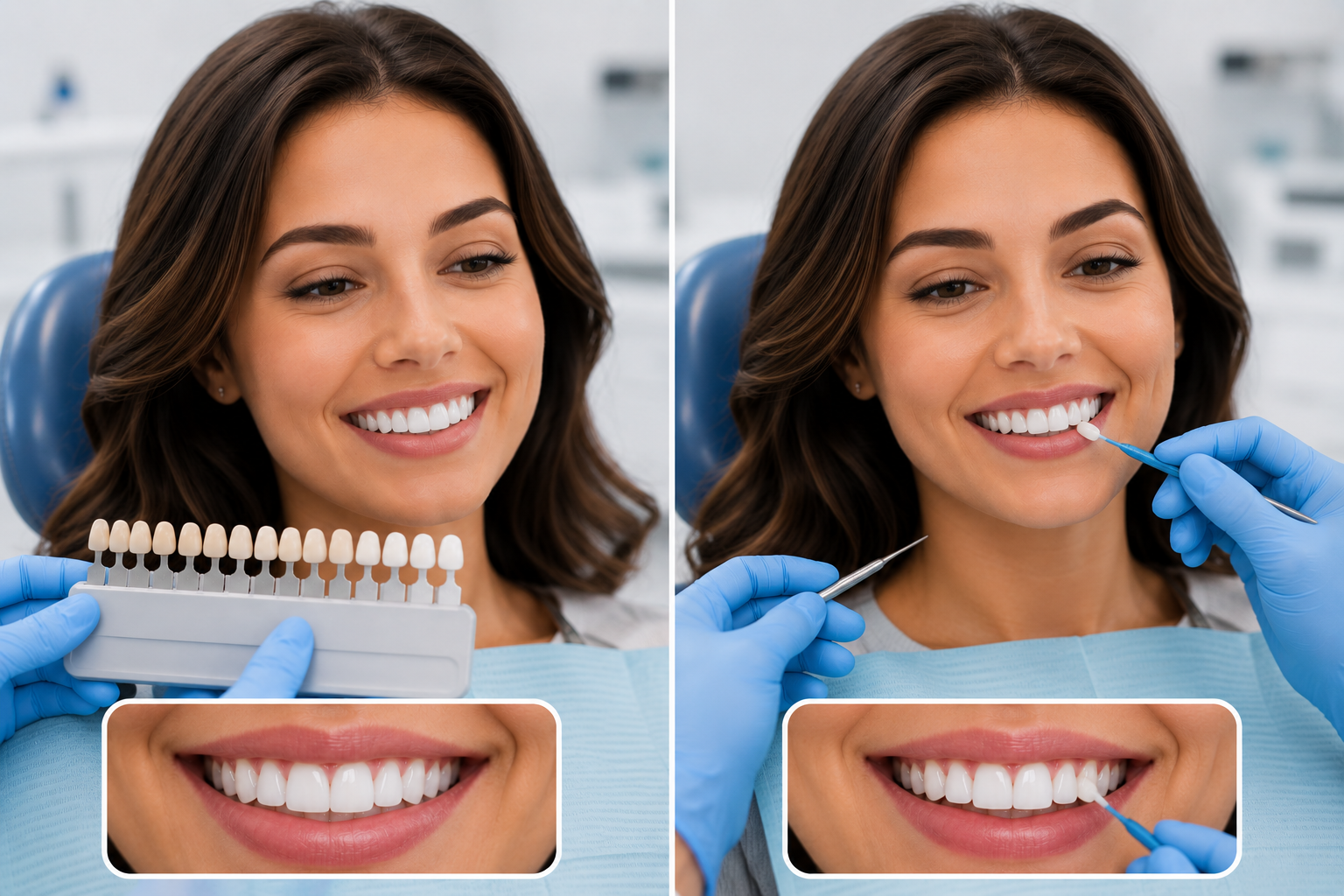
Read more…